
Professional Boat Removal Services in St. Peters, MO

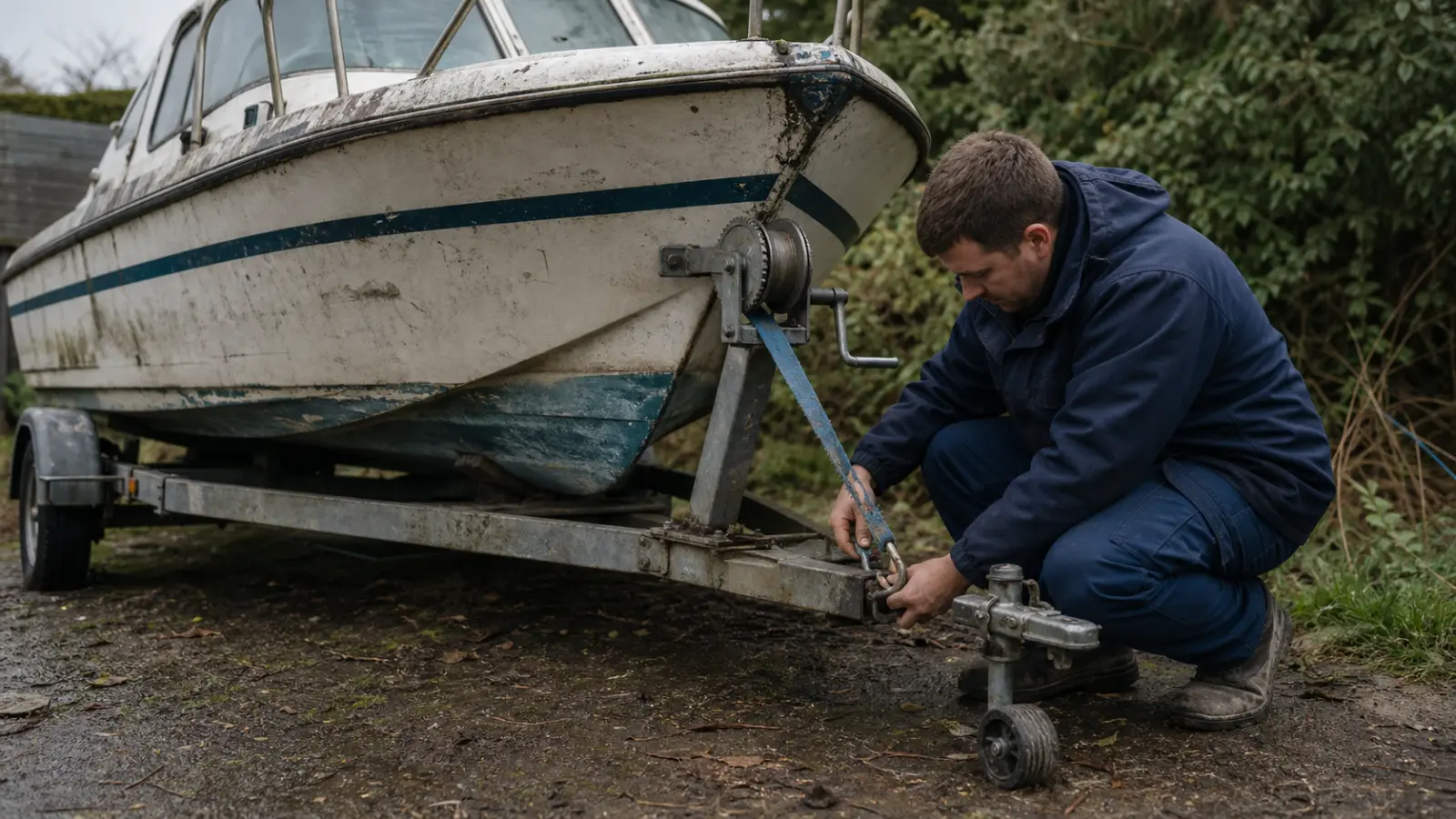
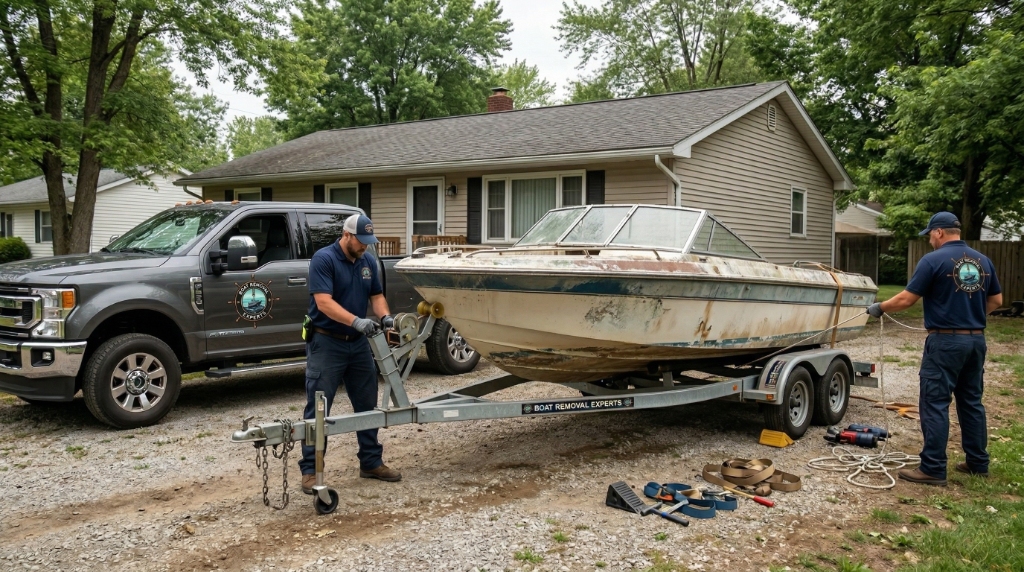
An old boat resting behind a garage in St. Peters, MO often stays right where it sits because taking it away presents too many immediate obstacles. The tires on the trailer flattened years ago, sinking directly into the soft earth, while the engine remains locked in place after a failed rebuild attempt that cost far more than the vessel is worth. In other cases, a property sale in St. Charles County leaves the current owner stuck with a neglected hull left by a former tenant, or a slip manager issues a stern notice demanding the immediate clearance of an unpaid space. When these problems accumulate, the vessel transitions from a recreation idea into a persistent physical burden.

Is there boat removal near me in St. Peters, MO? Yes, Boat Removal Experts provides professional boat removal services to haul away unwanted vessels directly from residential yards, commercial properties, and local storage sites.

Transferring a hull does not always involve a formal title exchange, but our team always provides a signed release of liability. Many basic hauling outfits take an old vessel away without completing a single piece of formal documentation, which leaves the registered owner fully exposed to future fines, impound fees, or abandoned property notices. Asking for written liability protection ensures that once the vessel leaves your driveway, your legal and financial responsibility for the craft ends completely.

Moving a vessel is vastly more complicated than pulling a standard utility trailer. Keels and custom storage cradles require specialized rigging, while broad beams frequently barely clear narrow side yard gates. A truck cannot simply back across soft turf without sinking, and locked hubs or rotted axles will stop a routine tow immediately.

Call 636-268-1344 to start.

Send photos through the contact form.

What Is Boat Removal and When You Need It

Full boat disposal involves far more than simply hooking a hitch to a truck and driving down the highway. When a junk boat sits abandoned boat on private land, in a commercial lot, or inside a paid slip, the process begins by evaluating the structural condition of the vessel and identifying the clear path of ownership. Having a title simplifies the legal clearance, but when paperwork is missing or lost after a property acquisition, specific protocols must be followed to ensure the derelict craft is cleared legally. Landlords, property buyers, and yard managers frequently inherit an abandoned boat left behind by previous occupants, requiring formal steps before any crew can haul the vessel away.
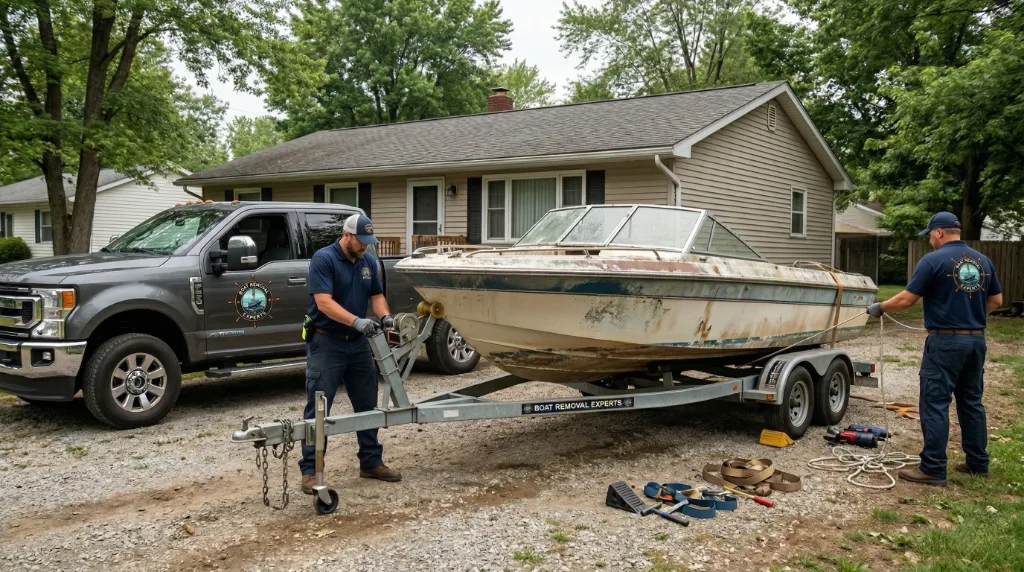
The overall approach for complete boat removal depends heavily on the physical state of the hull and the precise location of the craft. A vessel that has been resting undisturbed on sunken blocks requires an entirely different extraction strategy than one tied off along the water. Factors such as structural integrity, rot within the back panel, and access obstacles dictate whether a vessel can travel on wheels or if it must be loaded directly onto a flatbed trailer. Handling the situation correctly prevents property damage and ensures that all municipal waste guidelines are fully respected throughout the process.
When St. Peters Residents Call Us

The changing seasons in St. Peters take a heavy toll on a fiberglass or aluminum craft left outdoors without proper protection. Freezing rain and persistent heat crack the outer gelcoat, while standing rainwater pooling inside the cabin rots internal plywood decking, ruins upholstery, and delaminates structural floor frames. Whether dealing with an overgrown pontoon, a heavy fiberglass sailboat, or a small aluminum fishing boat, weather damage turns a solid structure into a fragile, waterlogged shell. This severe structural breakdown complicates extraction, as weak hulls can snap or flex excessively during lifting if they are not supported correctly.
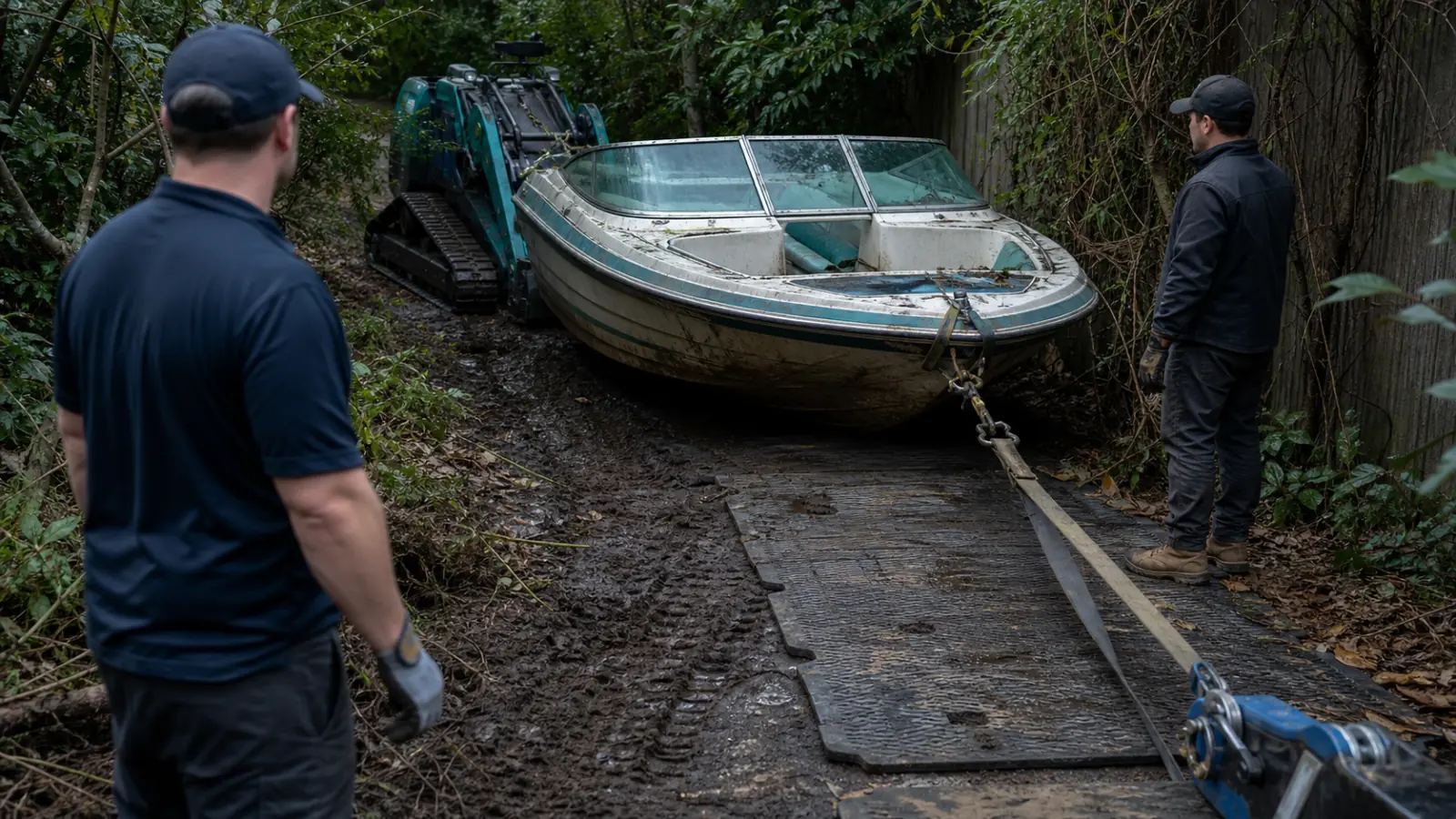
Local access points create additional technical challenges that determine how the crew handles the extraction. Tight residential driveways, overhead power lines, low tree branches, and narrow side yard gates limit the type of heavy equipment that can reach the site. The ground surface beneath the craft also plays a major role, as soft dirt or wet clay prevents standard vehicles from getting traction. Crews must evaluate whether the vessel rests on a roadworthy trailer, sits supported on wooden blocks, or remains tied along the water in nearby Cottleville or St. Charles before choosing the safest extraction gear.
Every Type of Boat We Handle

Situations We Handle

Need Help? We’re Ready.

Contact boat removers directly or request free quotes. We dispatch crews fast.

Our Step-by-Step Process

Assessment

We evaluate the boat’s size, current location, condition, and any environmental or access challenges before we schedule boat removal.

Planning

A detailed plan is built around your vessel — equipment, logistics, timeline, and safety. Services include drainage of oil and fuel before transport.

Execution

Our experienced crew mobilizes to your current location and we tow, haul, or dismantle the vessel using professional marine equipment.

Completion

The vessel is recovered, recycled, or routed to certified boat junkyards for environmentally responsible disposal. The site is left clean.

Equipment & Capabilities

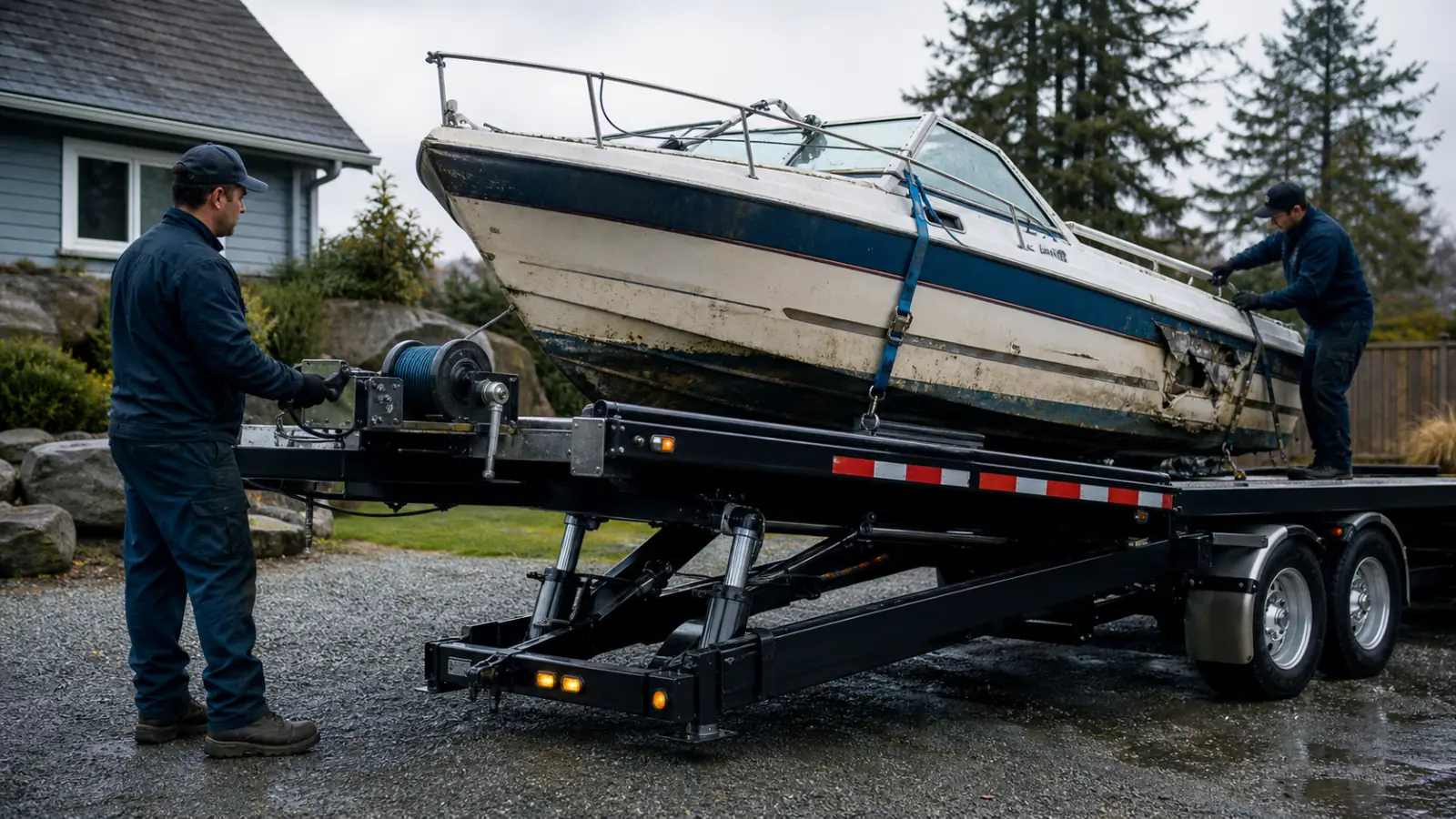
When a vessel cannot roll out on its own tires, specialized equipment is brought in to complete the extraction. Powerful winches, hydraulic jacks, crane arms, and heavy-duty flatbeds allow crews to move craft that have lost all structural rolling capability. In situations where broad beams or severe structural rot make highway transport impossible, workers must dismantle the hull right on site using heavy cutting tools. Before any cutting or transport begins, all hazardous materials are systematically removed. Crews drain leftover fuel, collect motor oil, disconnect heavy marine batteries, and strip out old electronic equipment to prevent environmental contamination.

Once hazardous fluids and metals are isolated, the remaining fiberglass, wood, and metal components are separated based on material composition. Metal hulls made from aluminum or steel are sorted for direct recycling, while heavily degraded fiberglass sections are prepared for specialized processing or approved landfill disposal. The crew evaluates the vessel on site to determine whether salvageable metal parts can be recovered or if the entire structure must be broken down into manageable debris. Every decision made by the team balances site safety, structural limitations, and proper environmental standards.

Our boat removal experience covers everything from start to finish  assessment, planning, execution, dismantling, and final cleanup. Marina operators and property owners across St. Charles County trust us to get rid of your junk boat without damage to surrounding property.

FAQ

Boat Removal Questions - Frequently Asked

Common questions from property owners about our junk removal service, dismantling, and marine recovery.

We handle every type of vessel — sailboat, pontoon, fishing boats, jon boats, yachts, and commercial craft. Whether your boat or sailboat floats (or used to), we’ll remove it from any current location.

Yes. Sunken and partially submerged vessel recovery is a core part of our salvage work in St. Charles County. We use lift bags, salvage pumps, and marine cranes to safely raise vessels from underwater.

We respond to inquiries quickly — usually within hours, with same-day service available. For emergency situations, we mobilize as fast as possible. Call us directly for time-sensitive jobs.

No. Every job is handled in-house by our own team and equipment. No middlemen, no handoffs, no surprises.

Cost depends on the boat’s size, current location, condition, and complexity of the job. We provide free assessments and free quotes for every case — contact us and we’ll give you an honest estimate.

Yes. Our boat removal and disposal services include hazardous materials handling, oil and fuel drainage, hull dismantling, and recycling at certified yards — all in compliance with environmental regulations and environmentally responsible standards.

Absolutely. We regularly work in tight marinas, shallow waterways, private docks, backyards, and remote areas. We bring the right gear to reach any current location.

Yes. We frequently work with insurance adjusters on salvage and recovery claims and provide the documentation needed for your claim.

Browse Our Services - Ready to Get Started?

We handle everything from start to finish. Call us now or request a free quote – we’ll dispatch crews and haul your vessel away fast.