
Professional Boat Removal Services in Stevens Point, WI

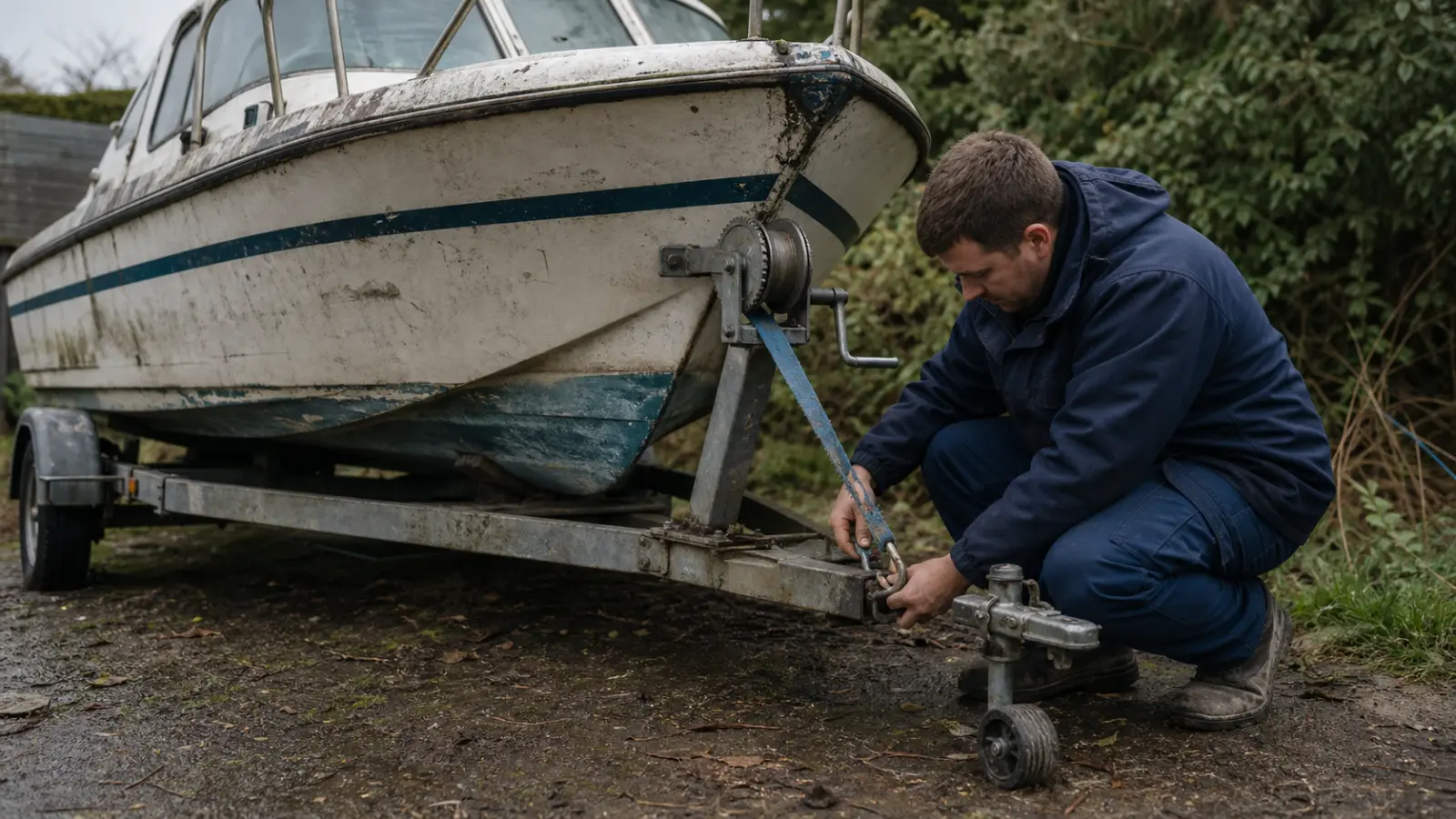
A hull sits on a deflated trailer behind a garage where the tires have settled deep into the soil over six unmoving seasons. Perhaps a notice arrived from a marina regarding unpaid slip fees, or a property transfer closed with an abandoned cabin cruiser remaining in the yard. Sometimes an outboard engine suffers major internal failure, making a mechanical rebuild cost far more than the vessel is worth. Leaving a junk boat in these conditions creates ongoing liabilities, property clutter, and potential structural rot that complicates future handling.

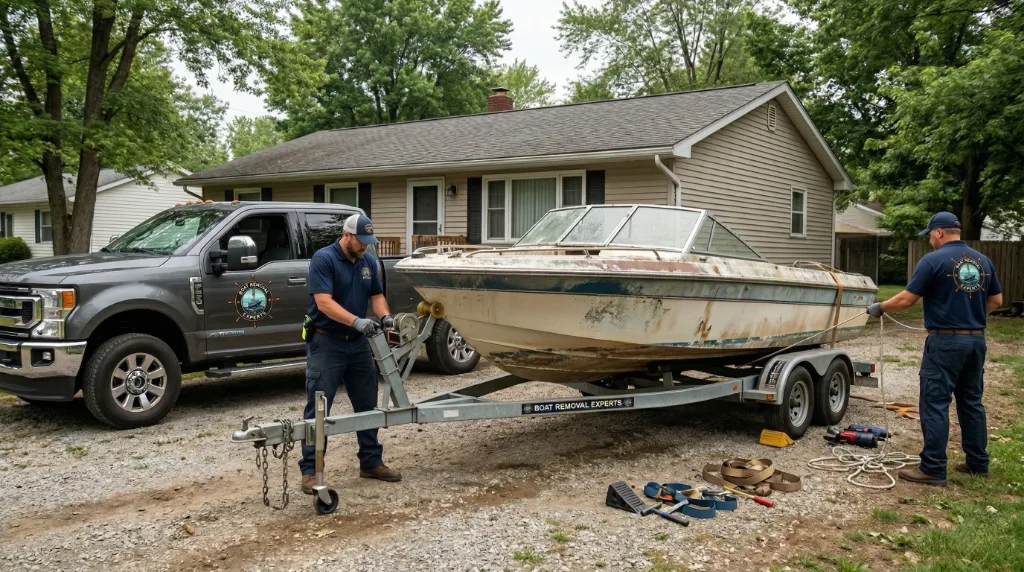
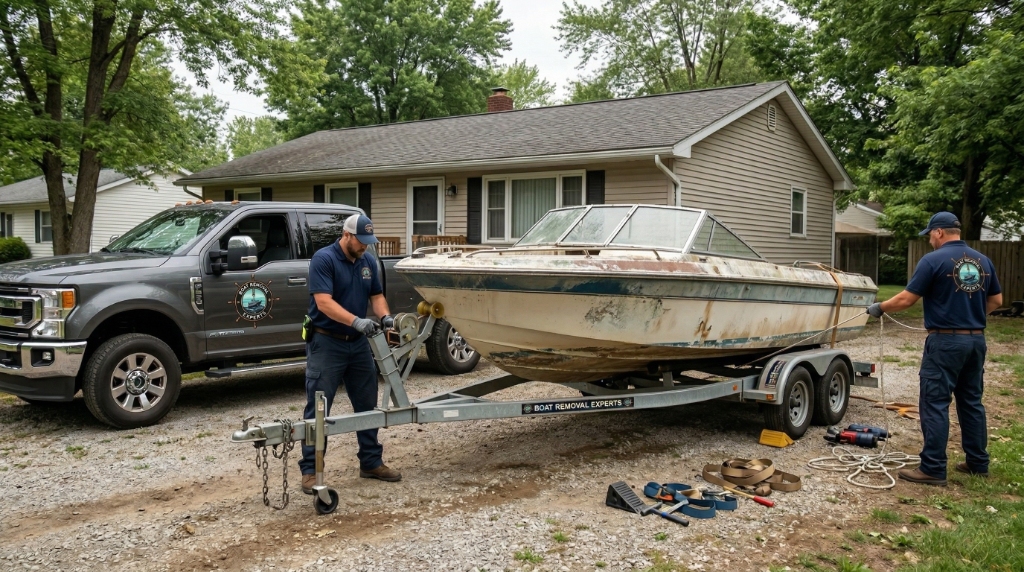
Is there boat removal near me in Stevens Point, WI? Yes, Boat Removal Experts manages the extraction, transport, and complete haulage of compromized or unwanted vessels across Stevens Point, WI and nearby locations such as Park Ridge or Whiting.

Our team does not always execute a formal title transfer, but we always issue a signed release of liability for every old boat we transport. Certain unverified operators drag a vessel away without providing clear legal paperwork, which leaves the registered owner vulnerable to future fines or abandonment citations. Verifying that a contractor provides a complete release of liability protects your financial interests once the vessel leaves your driveway or storage lot.

Hauling an old boat involves unique structural obstacles that standard towing equipment cannot manage alone. A trailer axle might be rusted solid, a deep draft keel could require custom cradling, or a wide beam may exceed the clearance of a residential access gate. Furthermore, heavy fiberglass hulls sitting on soft turf risk sinking into the earth, preventing a standard recovery truck from making direct contact without specialized equipment.

Call 715-769-6456 to start.

Send photos through the contact form.

What Is Boat Removal and When You Need It

Professional boat disposal involves far more than simply hooking a hitch to a trailer and driving down the road. Complete boat removal includes securing structural integrity, managing physical extraction from tight spaces, resolving paperwork difficulties, and handling structural derelict hulls safely. When property owners need to get rid of a boat, the condition of the hull and the status of the documentation govern the entire process. Having a clear title simplifies transport arrangements, but lost paperwork or inherited property sales present distinct challenges. In situations involving an abandoned boat, specific documentation steps are necessary before moving the structure from private or commercial land. When a vessel sits in an unpaid slip or remains on someone else's real estate, property managers and owners must establish proper legal authorization before an abandoned boat removal service can begin physical transport. Physical hull degradation, marine growth, standing bilge fluid, and structural compromise all affect how an offshore cruiser or skiff is rigged for highway travel. Whether dealing with a severe deck failure, a dry-docked derelict, or a forgotten hull left in a yard, professional contractors assess load distribution and safe securing methods to ensure the vessel moves without creating hazards on public roadways.
When Stevens Point Residents Call Us

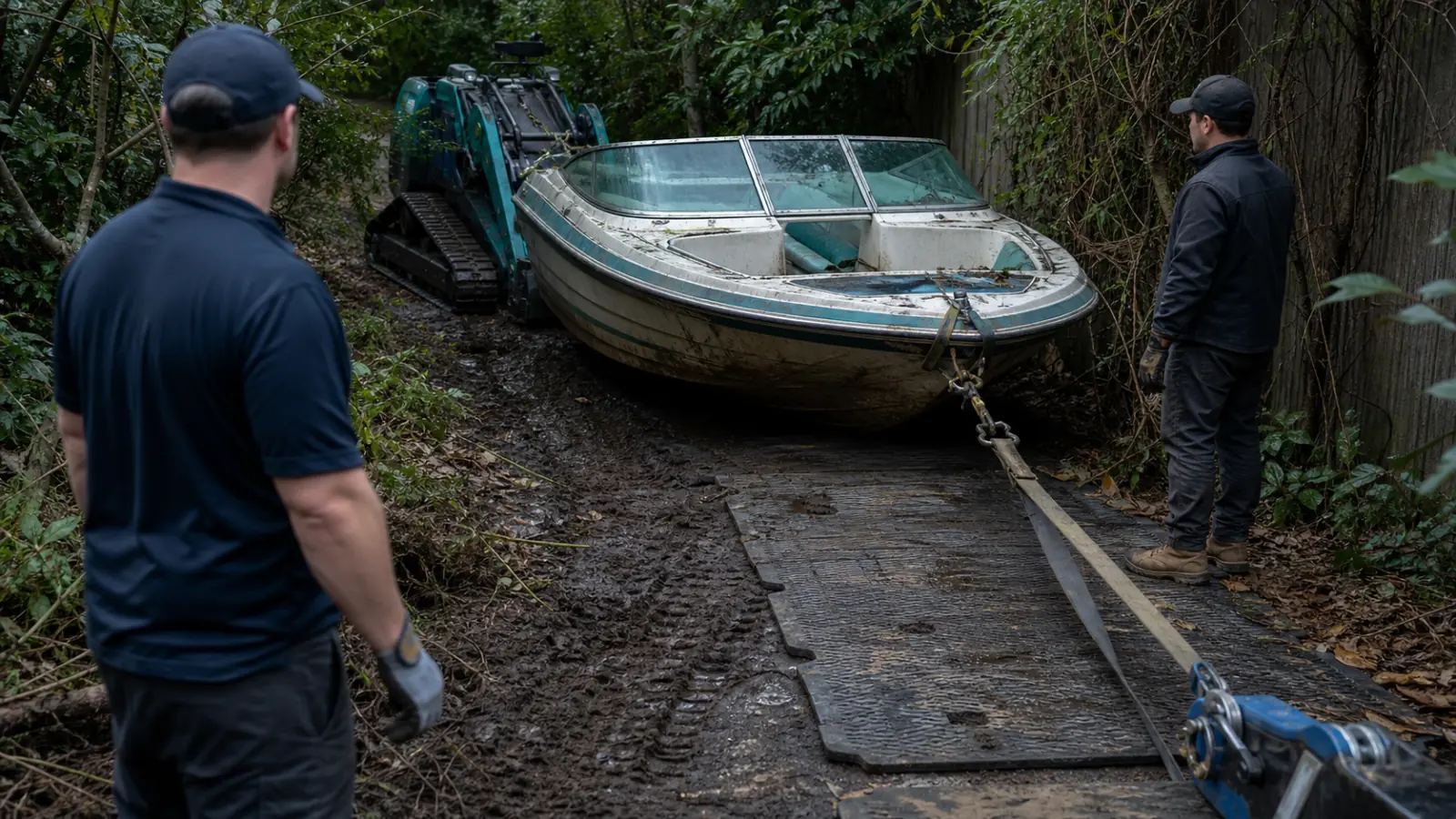
Seasonal weather patterns take a heavy toll on vessels left exposed outdoors year after year. Freeze-and-thaw cycles cause trapped water to expand inside fiberglass layers, splitting the gelcoat and rot-weakening internal wooden floor frames. Rainwater pooling inside an uncovered fishing boat or pontoon accelerates floorboard decay, ruins interior upholstery, and causes structural framing to warp under heavy ice loads. When a sailboat sits untended, moisture degrades the standing rigging and weakens the keel mounting points, making the vessel unstable during transport. Beyond hull damage caused by severe weather, site access heavily dictates how a recovery crew executes the work. Open approaches with wide pavement allow heavy trucks to position directly alongside the vessel, whereas narrow dirt tracks, soft lawns, low-hanging tree branches, and overhead power cables limit heavy machinery access. The physical positioning of the craft—whether resting on a functional trailer, balanced on wooden blocks in a backyard, or tied up at the water—changes the rigging strategy completely. In areas like Plover, Polonia, and Junction City, soft ground surfaces require timber mats to prevent support vehicles from sinking, while tight residential fence lines may require maneuvering equipment to pivot the craft safely before road haulage begins.
Every Type of Boat We Handle

Situations We Handle

Need Help? We’re Ready.

Contact boat removers directly or request free quotes. We dispatch crews fast.

Our Step-by-Step Process

Assessment

We evaluate the boat’s size, current location, condition, and any environmental or access challenges before we schedule boat removal.

Planning

A detailed plan is built around your vessel — equipment, logistics, timeline, and safety. Services include drainage of oil and fuel before transport.

Execution

Our experienced crew mobilizes to your current location and we tow, haul, or dismantle the vessel using professional marine equipment.

Completion

The vessel is recovered, recycled, or routed to certified boat junkyards for environmentally responsible disposal. The site is left clean.

Equipment & Capabilities

When a trailer has rotted axles or seized wheel bearings that prevent highway travel, specialized field equipment becomes essential. Crews utilize heavy-duty hydraulic winches, mobile cranes, slide-axle trailers, and heavy spreader bars to lift and secure compromized vessels. If a hull is too wide for road transport regulations or severely fractured, workers dismantle the structure on site using reciprocating saws, cut-off wheels, and heavy demolition shears. Prior to cutting or loading any vessel, crew members carefully drain and extract hazardous materials. Fuel tanks are pumped dry, engine oil and hydraulic fluids are captured in sealed containers, and lead-acid batteries along with electronic navigation units are isolated for targeted processing. Once the vessel is cleared of fluids and secured, materials are sorted based on their composition. Metal fittings, aluminum hulls, stainless hardware, and trailer frames are directed toward recycling facilities, whereas contaminated fiberglass and degraded wood components go toward appropriate landfill disposal services. The exact extraction strategy, whether whole-vessel hauling or systematic structural disassembly, is determined on site based on physical access, hull integrity, and environmental safety requirements across Portage County.

Our boat removal experience covers everything from start to finish  assessment, planning, execution, dismantling, and final cleanup. Marina operators and property owners across Portage County trust us to get rid of your junk boat without damage to surrounding property.

FAQ

Boat Removal Questions - Frequently Asked

Common questions from property owners about our junk removal service, dismantling, and marine recovery.

We handle every type of vessel — sailboat, pontoon, fishing boats, jon boats, yachts, and commercial craft. Whether your boat or sailboat floats (or used to), we’ll remove it from any current location.

Yes. Sunken and partially submerged vessel recovery is a core part of our salvage work in Portage County. We use lift bags, salvage pumps, and marine cranes to safely raise vessels from underwater.

We respond to inquiries quickly — usually within hours, with same-day service available. For emergency situations, we mobilize as fast as possible. Call us directly for time-sensitive jobs.

No. Every job is handled in-house by our own team and equipment. No middlemen, no handoffs, no surprises.

Cost depends on the boat’s size, current location, condition, and complexity of the job. We provide free assessments and free quotes for every case — contact us and we’ll give you an honest estimate.

Yes. Our boat removal and disposal services include hazardous materials handling, oil and fuel drainage, hull dismantling, and recycling at certified yards — all in compliance with environmental regulations and environmentally responsible standards.

Absolutely. We regularly work in tight marinas, shallow waterways, private docks, backyards, and remote areas. We bring the right gear to reach any current location.

Yes. We frequently work with insurance adjusters on salvage and recovery claims and provide the documentation needed for your claim.

Browse Our Services - Ready to Get Started?

We handle everything from start to finish. Call us now or request a free quote – we’ll dispatch crews and haul your vessel away fast.