
Professional Boat Removal Services in The Woodlands, TX
A fiberglass hull sits behind the garage, tucked out of sight until the tires on its old trailer go flat and sink deep into the coastal dirt. A marina manager mails an official notice about a slip that has not been paid for in two seasons. A property transfer closes, and the buyer finds an old cabin cruiser resting on a rotted wooden cradle in the back corner of the lot. A stern drive seizes up, and the quote from the repair shop costs twice what the vessel would fetch on the open market. These are the quiet ways a vessel turns into a burden, sitting for months while the elements break down the structure.
Is there boat removal near me in The Woodlands, TX? Boat Removal Experts handles every stage of hauling away compromized vessels, clearing out backyards, driveways, and slip spaces throughout the city.

When an old boat leaves a property, ownership documentation must be handled carefully. Our team does not always transfer the vessel title to a new owner, but we always issue a written release of liability directly to you. Some unauthorized haulers hook up a rig and pull a boat away without providing any formal paperwork, leaving the original owner legal responsibility if that hull is later dumped on a roadside. Asking for a verified release protects your name and property long after the haul truck pulls out.
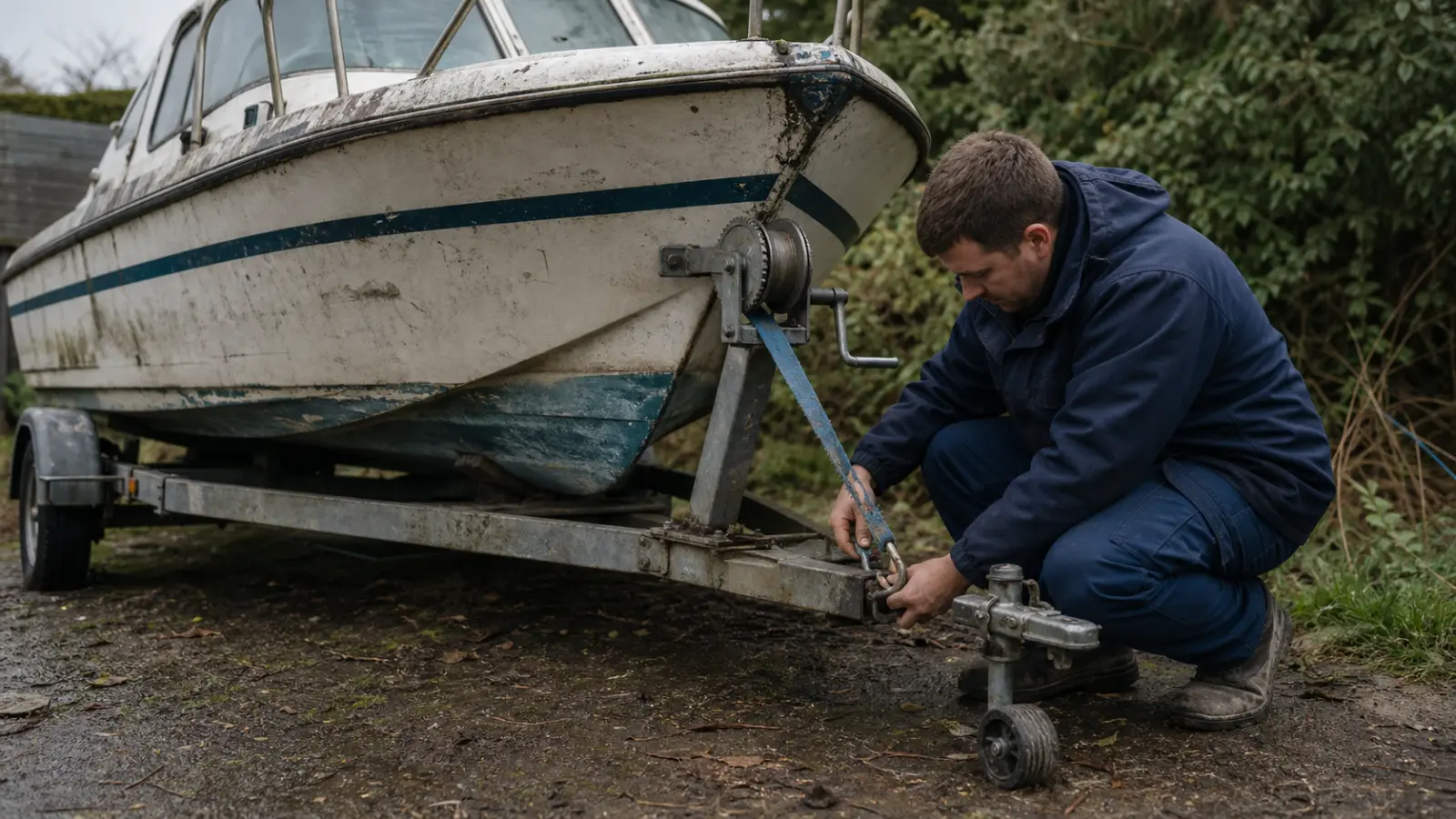
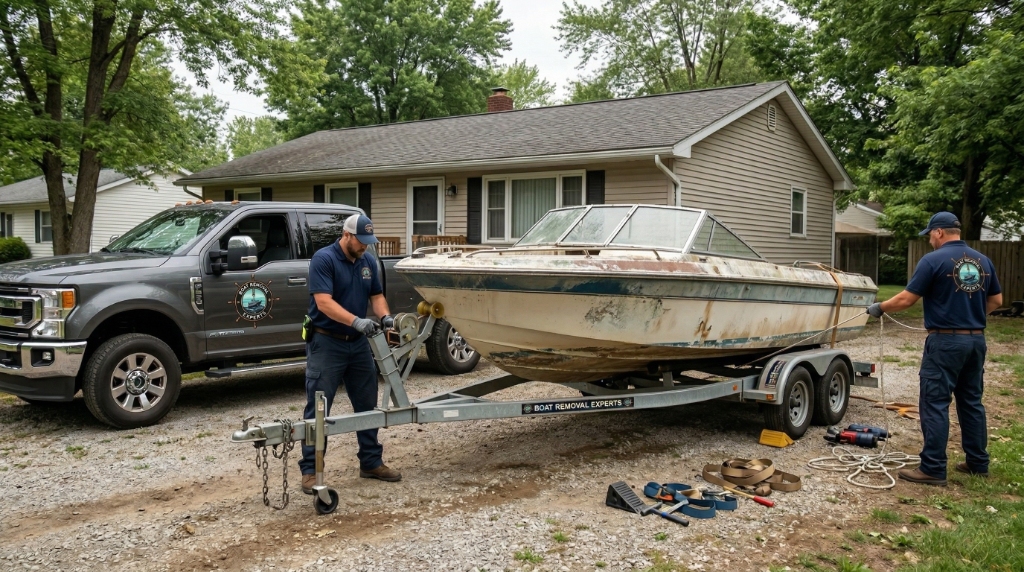
Moving a stationary vessel requires dealing with weight, dimensions, and tight physical spaces. A trailer that has sat for years often has locked hubs, rotted crossmembers, and flat tires that will not hold air. A wide hull beam can easily exceed the clearance of a residential fence gate, and a heavy boat sitting directly on soft turf can immobilize a standard tow vehicle before it reaches the street.
Call (855) 765-7931 to start.
What Is Boat Removal and When You Need It
Professional boat disposal involves far more than simply hooking a hitch to a bumper and pulling away. When a derelict vessel has sat untended on a residential lot or inside a commercial storage facility, extracting it demands specialized equipment to manage structural rot, stuck mechanicals, and broken hulls. A complete extraction process covers moving the vessel onto a heavy trailer, securing loose superstructure elements, and clearing the staging site of broken fiberglass fragments or displaced structural timber.
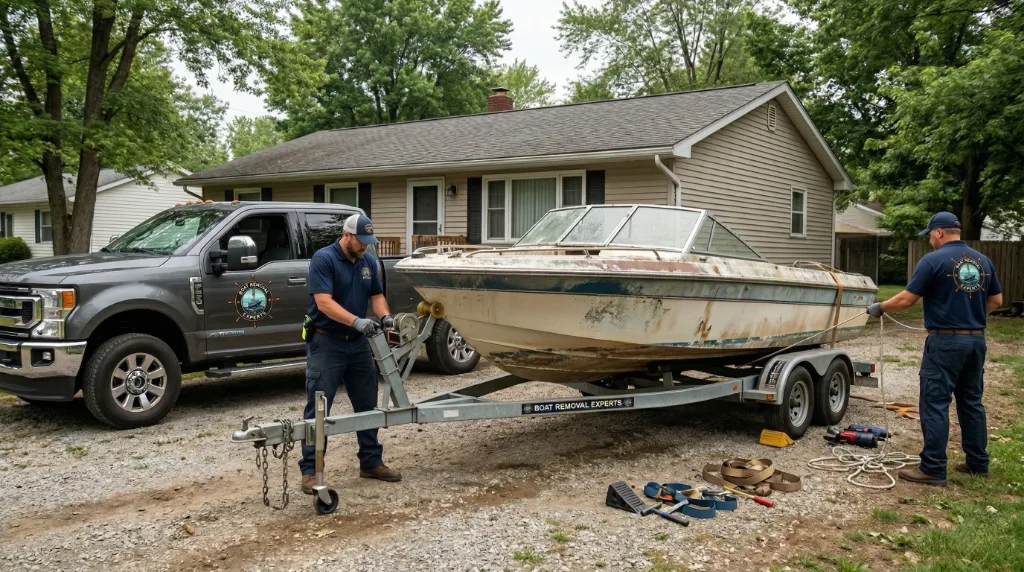
The status of the paperwork drastically shapes how an abandoned boat is handled. When an owner possesses a clean title or current registration, the transfer and clearance steps move forward without delay. If the title is missing, lost over decades, or attached to a piece of real estate acquired through a property purchase, the process requires establishing legal authorization before transport. An abandoned boat left in an unpaid slip or left on private land without permission involves specific documentation steps to clear the property owner of future legal claims before crews attempt to load the hull.
Physical condition determines whether a vessel can be hauled whole or requires sectioning. A hull with severe back panel rot, compromized floor frames, or deep structural cracks might flex and break under loading stress. In those cases, crews must stabilize the frame or dismantle sections on site to ensure safe transport off the premises.
When The Woodlands Residents Call Us
Living in the Gulf Coast region means intense heat, high humidity, and heavy rain take a quick toll on any inactive vessel. Rainwater collects in the bilges of an uncovered pontoon or open fishing boat, creating hundreds of pounds of hidden standing water that rots the interior floor frames and deck boards. Sunlight breaks down gelcoat finishes, causing fiberglass to chalk, splinter, and lose its structural integrity. Over time, foam flotation absorbs moisture like a sponge, doubling the weight of a hull, while upholstery mildews and wood transoms turn soft. A neglected sailboat sitting under tree cover in Shenandoah or Oak Ridge North can deteriorate until the deck can no longer support crew weight during an extraction.
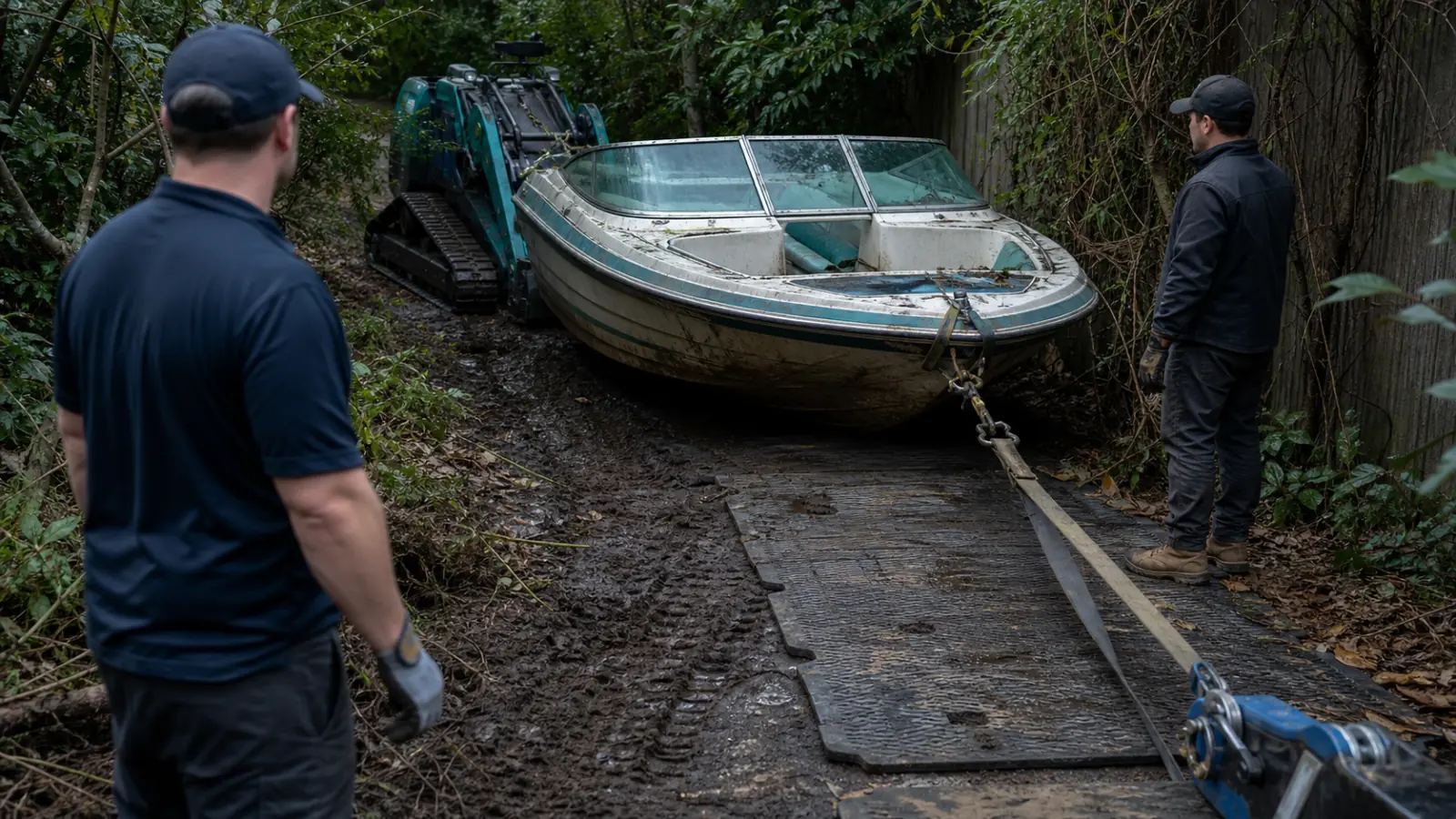
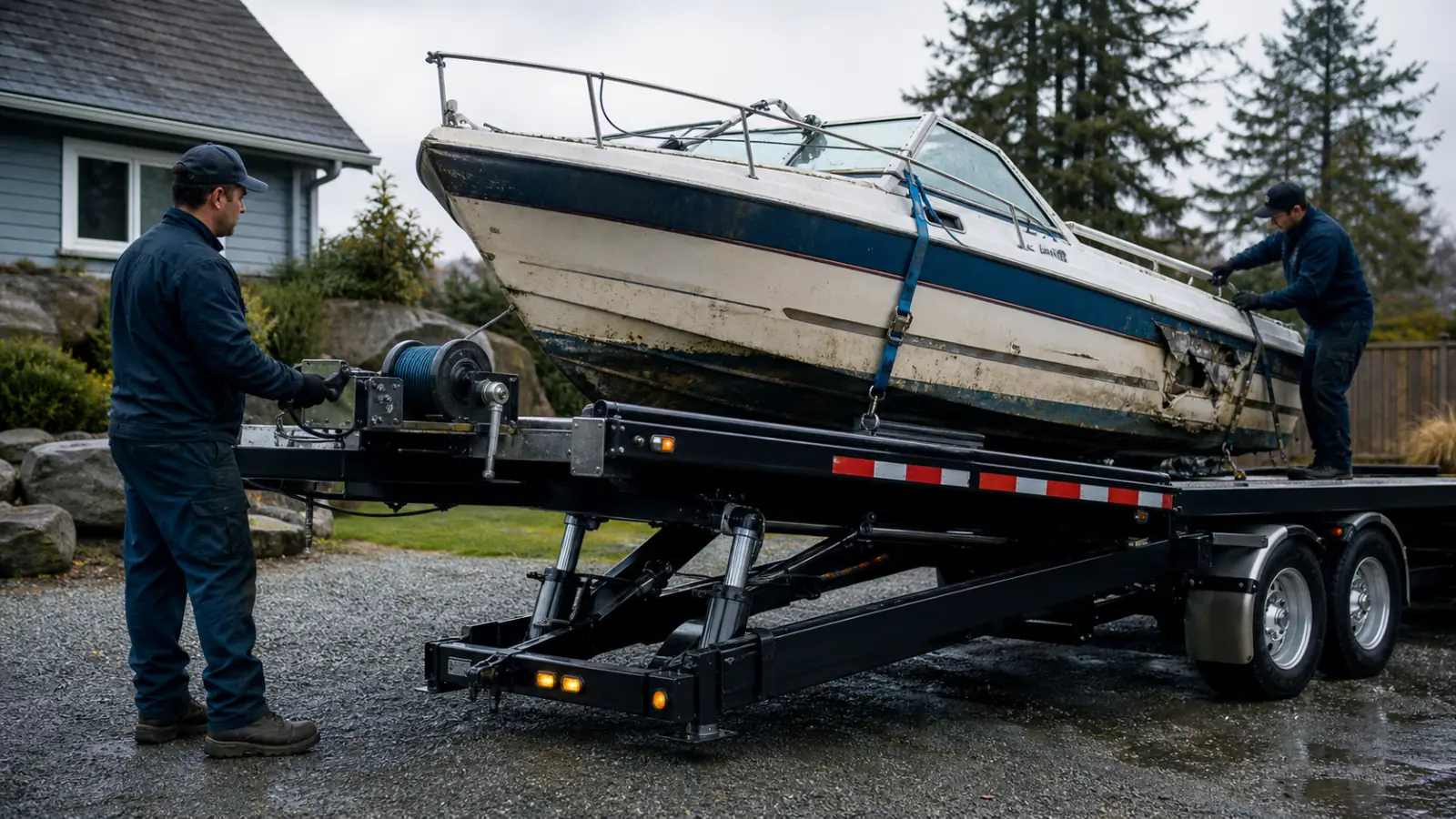
Site conditions around The Woodlands, TX heavily dictate how extraction crews approach the job. Narrow neighborhood driveways, low-hanging tree branches, and tight property fences around nearby spots like Tomball or Spring restrict where heavy transport rigs can turn. A vessel resting on wooden blocks in a backyard requires mobile hydraulic jacks and winches to lift onto a trailer safely, while a hull stuck on a muddy slope demands secondary anchor lines to prevent sliding. The extraction method changes completely based on whether the vessel rests on grass, concrete, or sits floating along a shoreline dock.
Every Type of Boat We Handle
- Sailboat & catamaran
- Motorboat, powerboat & cabin cruisers
- Fishing boats & bass boats
- Pontoon boats
- Jon boats & aluminum skiffs
- Large yachts
- Personal watercraft (jet skis)
- Houseboats
Situations We Handle
- Abandoned boat at marinas, docks, or boat lifts
- Unwanted boats on private property or in boat storage
- Vessels in backyards, fields, or vacant lots
- Derelict vessels blocking dock access or navigation
- Storm-damaged vessels requiring boat hauling
- Vessels without trailers or with flat tires
- Tight access locations (narrow driveways, wooded areas)
- Government or insurance-ordered cases
Need Help? We’re Ready.
Contact boat removers directly or request free quotes. We dispatch crews fast.
Our Step-by-Step Process

Assessment
We evaluate the boat’s size, current location, condition, and any environmental or access challenges before we schedule boat removal.

Planning
A detailed plan is built around your vessel — equipment, logistics, timeline, and safety. Services include drainage of oil and fuel before transport.

Execution
Our experienced crew mobilizes to your current location and we tow, haul, or dismantle the vessel using professional marine equipment.

Completion
The vessel is recovered, recycled, or routed to certified boat junkyards for environmentally responsible disposal. The site is left clean.
Equipment & Capabilities
Extracting a heavy hull from a tight property takes adaptable field equipment and custom loading strategies. When an old trailer has flat tires, seized wheel bearings, or a snapped axle, crews deploy heavy-duty winches, ground skids, and hydraulic jack systems to maneuver the vessel onto a flatbed transport without causing property damage. If a wide cabin cruiser or pontoon cannot pass through narrow access gates or around tight building corners, technicians dismantle the upper superstructure, clearing windshields, hardtops, and rails to create the necessary clearance.
Environmental safety comes first whenever a boat is prepared for haul-away. Before a vessel leaves the property, crews isolate and remove all hazardous materials from the hull. Technicians drain fuel tanks, extract residual engine oil, disconnect marine batteries, and collect old electronics to prevent toxic spills during transit. Once environmental risks are contained, the crew evaluates the structural integrity of the hull to pick the proper route for processing.
The destination of the vessel depends on the materials present and the condition of the frame. Sound metal components, aluminum pontoons, and usable hardware move toward metal recycling pathways, while degraded fiberglass hulls and rotted interior core materials go through specialized processing units. Every step of the operation adapts to the actual state of the vessel when the crew arrives on site.
Our boat removal experience covers everything from start to finish assessment, planning, execution, dismantling, and final cleanup. Marina operators and property owners across Harris County trust us to get rid of your junk boat without damage to surrounding property.
FAQ
Boat Removal Questions - Frequently Asked
Common questions from property owners about our junk removal service, dismantling, and marine recovery.
What type of boat do you remove?
We handle every type of vessel — sailboat, pontoon, fishing boats, jon boats, yachts, and commercial craft. Whether your boat or sailboat floats (or used to), we’ll remove it from any current location.
Do you handle sunken or partially submerged vessels?
Yes. Sunken and partially submerged vessel recovery is a core part of our salvage work in Harris County. We use lift bags, salvage pumps, and marine cranes to safely raise vessels from underwater.
How quickly can you respond?
We respond to inquiries quickly — usually within hours, with same-day service available. For emergency situations, we mobilize as fast as possible. Call us directly for time-sensitive jobs.
Do you use subcontractors?
No. Every job is handled in-house by our own team and equipment. No middlemen, no handoffs, no surprises.
How much does cheap boat removal cost?
Cost depends on the boat’s size, current location, condition, and complexity of the job. We provide free assessments and free quotes for every case — contact us and we’ll give you an honest estimate.
Do you handle boat disposal and recycling?
Yes. Our boat removal and disposal services include hazardous materials handling, oil and fuel drainage, hull dismantling, and recycling at certified yards — all in compliance with environmental regulations and environmentally responsible standards.
Can you reach a hard-to-access location?
Absolutely. We regularly work in tight marinas, shallow waterways, private docks, backyards, and remote areas. We bring the right gear to reach any current location.
Do you work with insurance companies?
Yes. We frequently work with insurance adjusters on salvage and recovery claims and provide the documentation needed for your claim.
Other Boat Removal Locations
Browse Our Services - Ready to Get Started?
We handle everything from start to finish. Call us now or request a free quote – we’ll dispatch crews and haul your vessel away fast.