
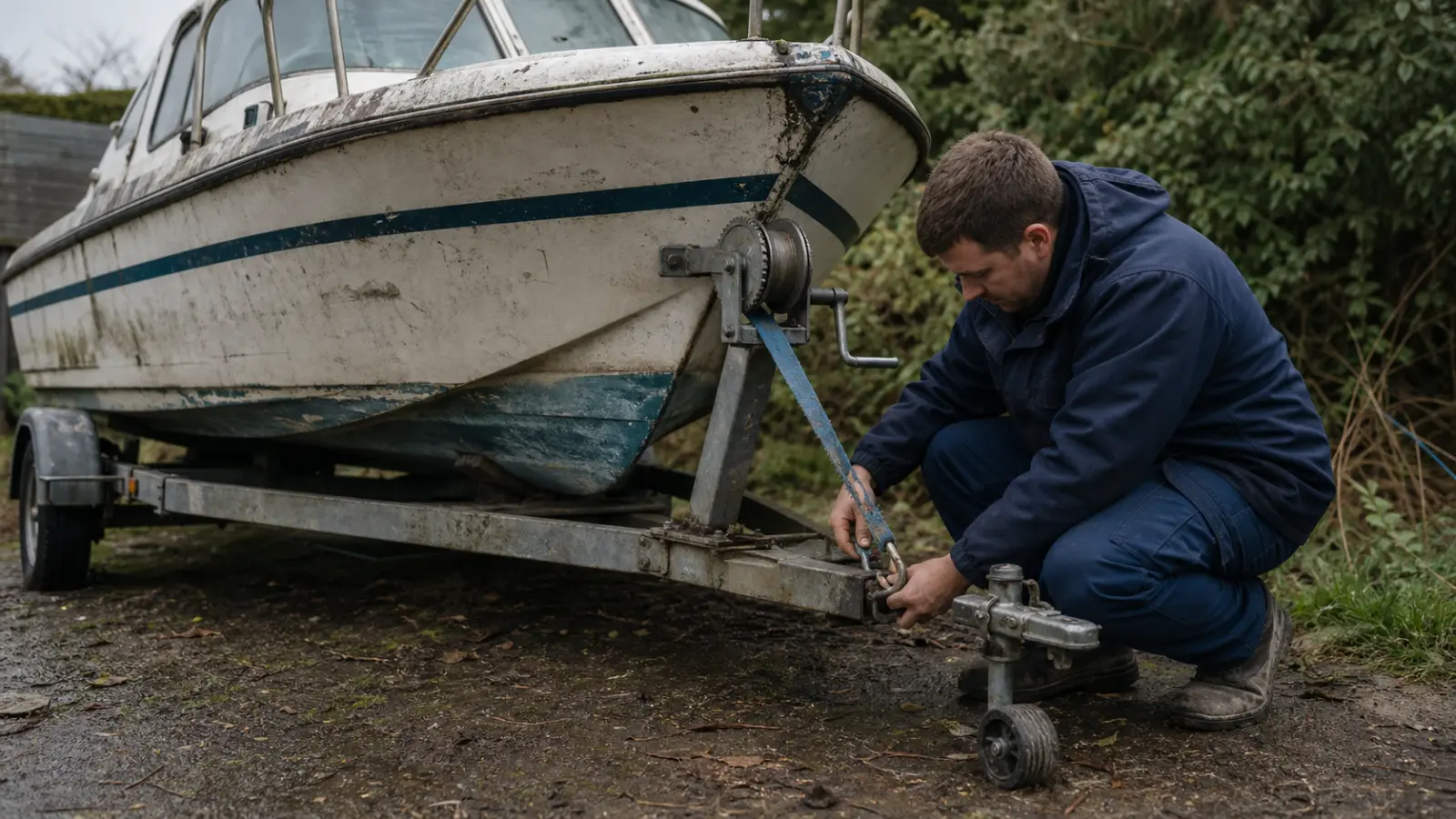
Professional Boat Removal Services in Toledo, OH

The hull has sat on a rusty trailer behind the garage for six seasons, and the tires have long since flattened into the dirt. In another part of town, a marina sent a final notice regarding an unpaid slip that is costing money every month. Sometimes a property is sold with an old cabin cruiser left on the lot, or an outboard engine seized up and the quote for a rebuild far exceeds what the vessel is actually worth. These are the situations where keeping an old boat becomes an ongoing burden that takes up space and creates liability. Getting a heavy vessel off your property requires proper planning, the right transport equipment, and a clear understanding of what happens to the title before any work begins.

Is there boat removal near me in Toledo, OH? Yes, Boat Removal Experts provides complete vessel extraction and transport services directly from your driveway, yard, or slip.

When you hire our team, we always issue a formal release of liability to protect you moving forward. We do not always transfer the title into our name, but securing that release is essential. Some haulers will load a vessel onto a flatbed without signing any legal paperwork, leaving the original owner fully responsible if that hull is abandoned later on a public road or in a parking lot. It is always worth asking a hauler how liability is handled before letting them move a hull.

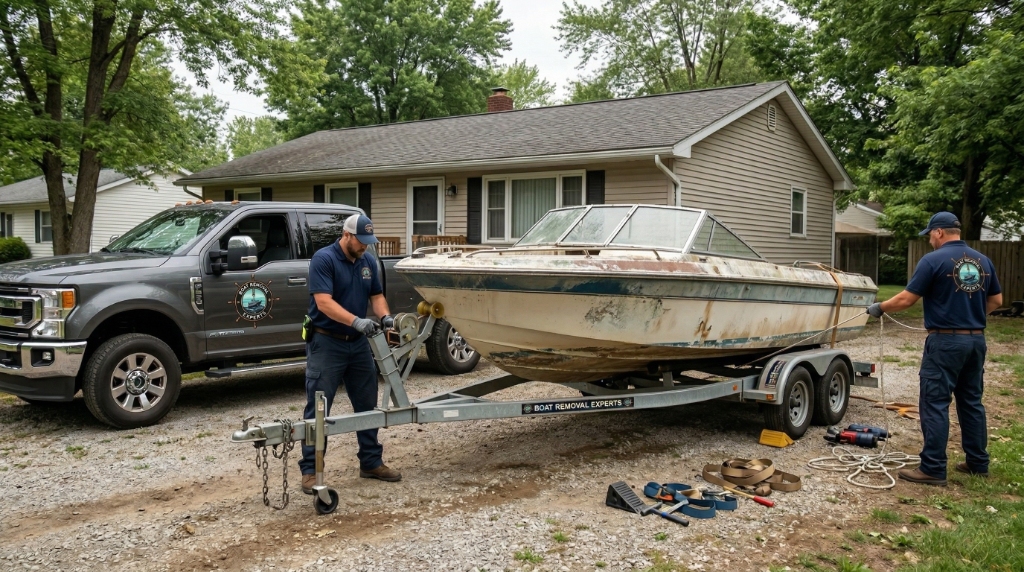
A junk boat is much harder to haul than a standard vehicle because the support structure is often compromized. A trailer sitting in Ottawa Hills or Rossford might have rusted axles that will not roll, or the hull may sit on wooden cradles that cannot handle a highway tow. Narrow side yards, overhead branches, and soft ground make extraction complex, especially when the beam is wider than the fence gate or the towing truck cannot drive onto a delicate lawn without sinking.

Call 419-595-5982 to start.

What Is Boat Removal and When You Need It

Professional boat removal covers far more than simply hooking a winch to a trailer and driving down the road. When a vessel sits idle for years, the structural integrity of the deck and back panel degrades, making standard towing impossible. A proper disposal service handles the logistics of winching, lifting, and securing a compromized hull so it can be safely transported off the site. This includes managing complex extractions from backyards in Northwood, tight driveway pads in Holland, or restricted slips near Walbridge. Whether the vessel is an abandoned boat resting on cinder blocks or a derelict sitting in deep mud, specialized rigging is used to haul it away without causing property damage.
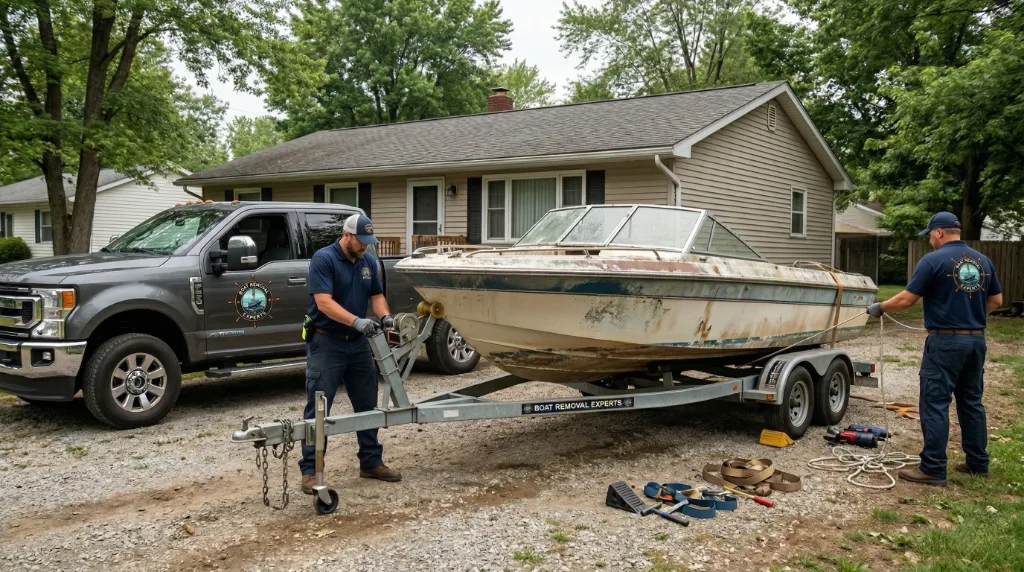
The status of the title plays a significant role in how boat disposal is executed. When the registered owner holds clear paperwork, the process moves forward without delay. However, when a vessel comes with a newly purchased property, or when the paperwork was lost decades ago, alternative procedures must be followed. A derelict hull left on private land or sitting in a forgotten storage unit requires clear verification before haulers can step in. What affects the outcome is whether the property owner has legal standing to authorize extraction, the condition of the hull, and whether the vessel can be safely loaded onto a trailer or must be broken down on site.
When Toledo Residents Call Us

Living in Toledo, Ohio brings severe seasonal weather changes that accelerate the breakdown of any unused vessel. Winter freeze and thaw cycles push water deep into small fiberglass cracks, expanding the damage until the hull loses its structural strength. Rainwater pooling inside an uncovered fiberglass hull adds thousands of pounds of dead weight, rotting internal floor frames and saturating wood cores. Upholstery turns to mold, gelcoat chalks and peels, and electrical systems corrode beyond repair. Whether you own a waterlogged pontoon, a heavy center-console fishing boat, or a deep-draft sailboat, prolonged exposure to severe weather turns a quick repair project into a total loss that must be removed.
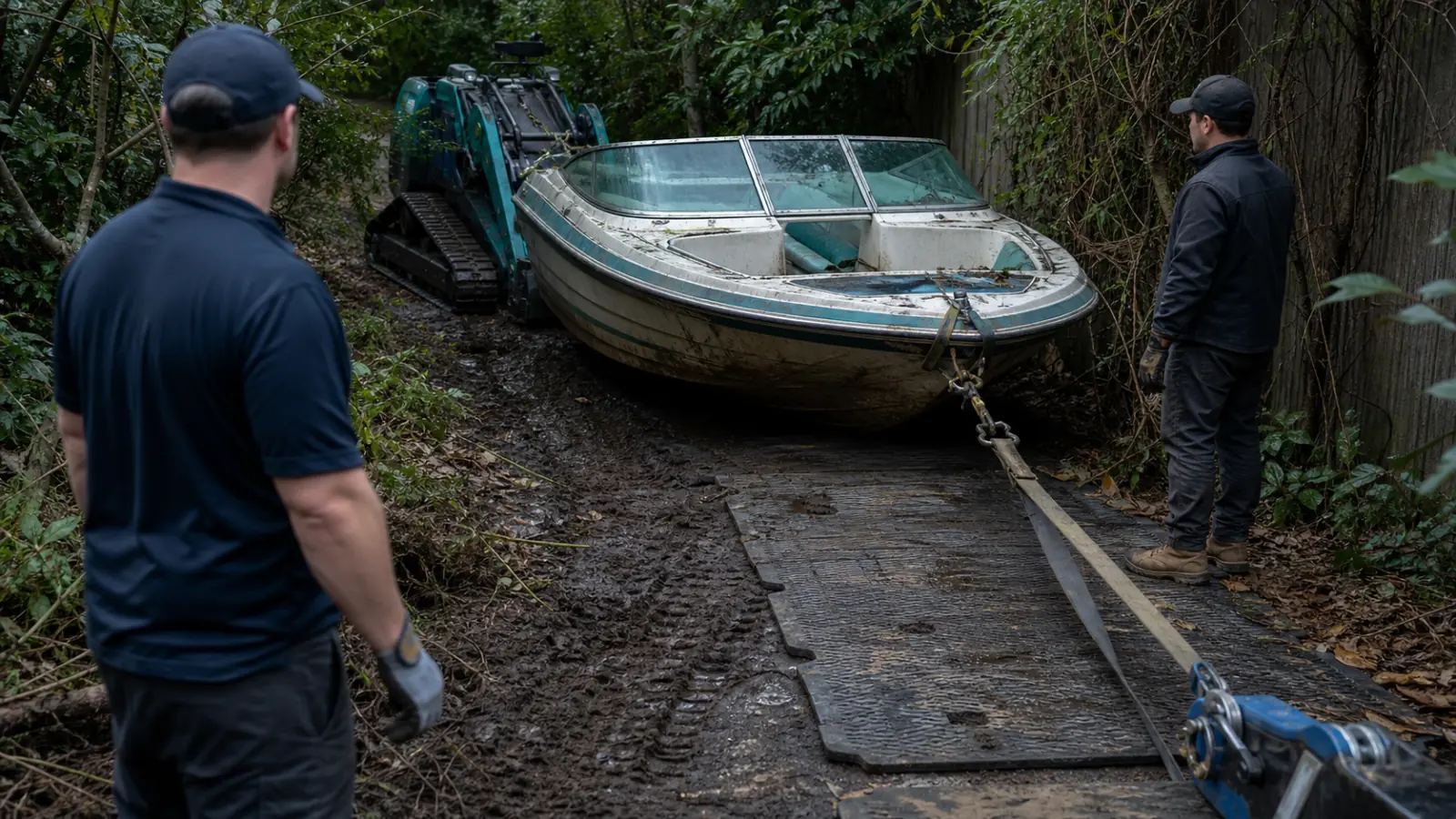
Local site conditions heavily influence how a vessel is extracted from a property. In older Lucas County neighborhoods, narrow alleys, low-hanging tree branches, and tight overhead utility lines prevent large commercial rigs from backing up directly to the hull. A boat resting on soft grass or mud cannot be hauled until timber mats or winches are deployed to pull it onto solid pavement. Sitting on sunken blocks, jammed in a wet slip, or wedged behind a garage, the position of the hull determines whether heavy equipment, crane lifts, or specialized flatbeds are needed to complete the job safely.
Every Type of Boat We Handle

Situations We Handle

Need Help? We’re Ready.

Contact boat removers directly or request free quotes. We dispatch crews fast.

Our Step-by-Step Process

Assessment

We evaluate the boat’s size, current location, condition, and any environmental or access challenges before we schedule boat removal.

Planning

A detailed plan is built around your vessel — equipment, logistics, timeline, and safety. Services include drainage of oil and fuel before transport.

Execution

Our experienced crew mobilizes to your current location and we tow, haul, or dismantle the vessel using professional marine equipment.

Completion

The vessel is recovered, recycled, or routed to certified boat junkyards for environmentally responsible disposal. The site is left clean.

Equipment & Capabilities

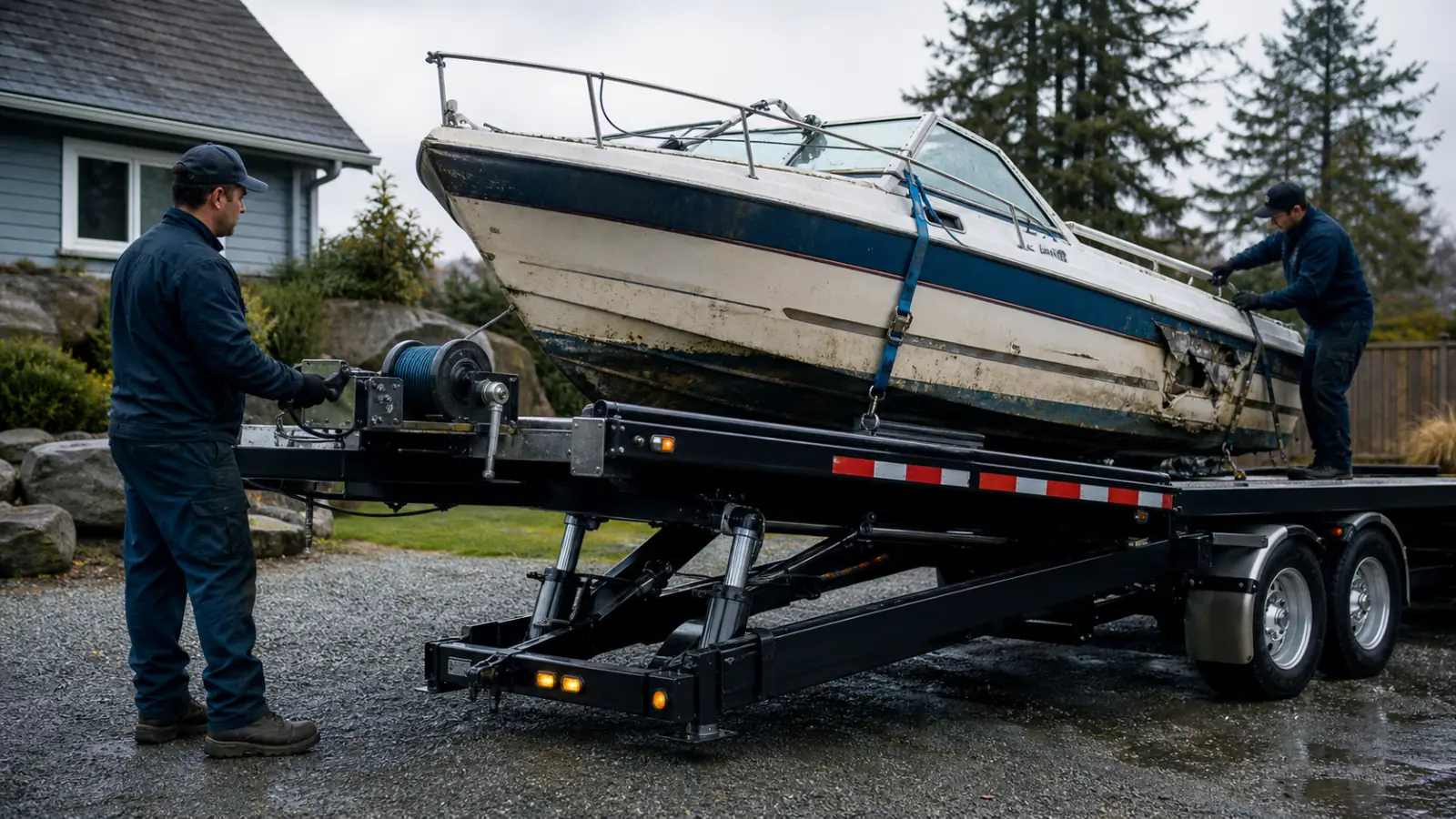
Extracting a vessel requires specific gear tailored to the condition of the hull and the surrounding terrain. When a trailer has frozen bearings, flat tires, or a rusted frame that will collapse under load, crews use heavy-duty winches, slide axles, and hydraulic tilt beds to drag the boat safely onto a transport vehicle. If the vessel is too wide to fit through gate openings or sits in a restricted backyard, crews must dismantle the structure on site using reciprocating saws, cut-off wheels, and heavy cutting tools to reduce the hull into manageable sections.

Before any hull is loaded or broken down, all hazardous materials must be safely drained and isolated. Fluids such as old fuel, crankcase oil, bilge water, and hydraulic line liquids are pumped out, while marine batteries, electronics, and mercury switches are removed for proper handling. Once the crew evaluates the vessel on site, they determine the best path forward for material sorting. Clean metals like aluminum hulls, stainless steel rails, and brass fittings are separated for metal recycling. Fiberglass pieces and saturated structural timber that cannot be repurposed are routed to the proper landfill or designated disposal facilities according to state and local guidelines.

Our boat removal experience covers everything from start to finish  assessment, planning, execution, dismantling, and final cleanup. Marina operators and property owners across Lucas County trust us to get rid of your junk boat without damage to surrounding property.

FAQ

Boat Removal Questions - Frequently Asked

Common questions from property owners about our junk removal service, dismantling, and marine recovery.

We handle every type of vessel — sailboat, pontoon, fishing boats, jon boats, yachts, and commercial craft. Whether your boat or sailboat floats (or used to), we’ll remove it from any current location.

Yes. Sunken and partially submerged vessel recovery is a core part of our salvage work in Lucas County. We use lift bags, salvage pumps, and marine cranes to safely raise vessels from underwater.

We respond to inquiries quickly — usually within hours, with same-day service available. For emergency situations, we mobilize as fast as possible. Call us directly for time-sensitive jobs.

No. Every job is handled in-house by our own team and equipment. No middlemen, no handoffs, no surprises.

Cost depends on the boat’s size, current location, condition, and complexity of the job. We provide free assessments and free quotes for every case — contact us and we’ll give you an honest estimate.

Yes. Our boat removal and disposal services include hazardous materials handling, oil and fuel drainage, hull dismantling, and recycling at certified yards — all in compliance with environmental regulations and environmentally responsible standards.

Absolutely. We regularly work in tight marinas, shallow waterways, private docks, backyards, and remote areas. We bring the right gear to reach any current location.

Yes. We frequently work with insurance adjusters on salvage and recovery claims and provide the documentation needed for your claim.

Browse Our Services - Ready to Get Started?

We handle everything from start to finish. Call us now or request a free quote – we’ll dispatch crews and haul your vessel away fast.