
Professional Boat Removal Services in Twin Falls, ID

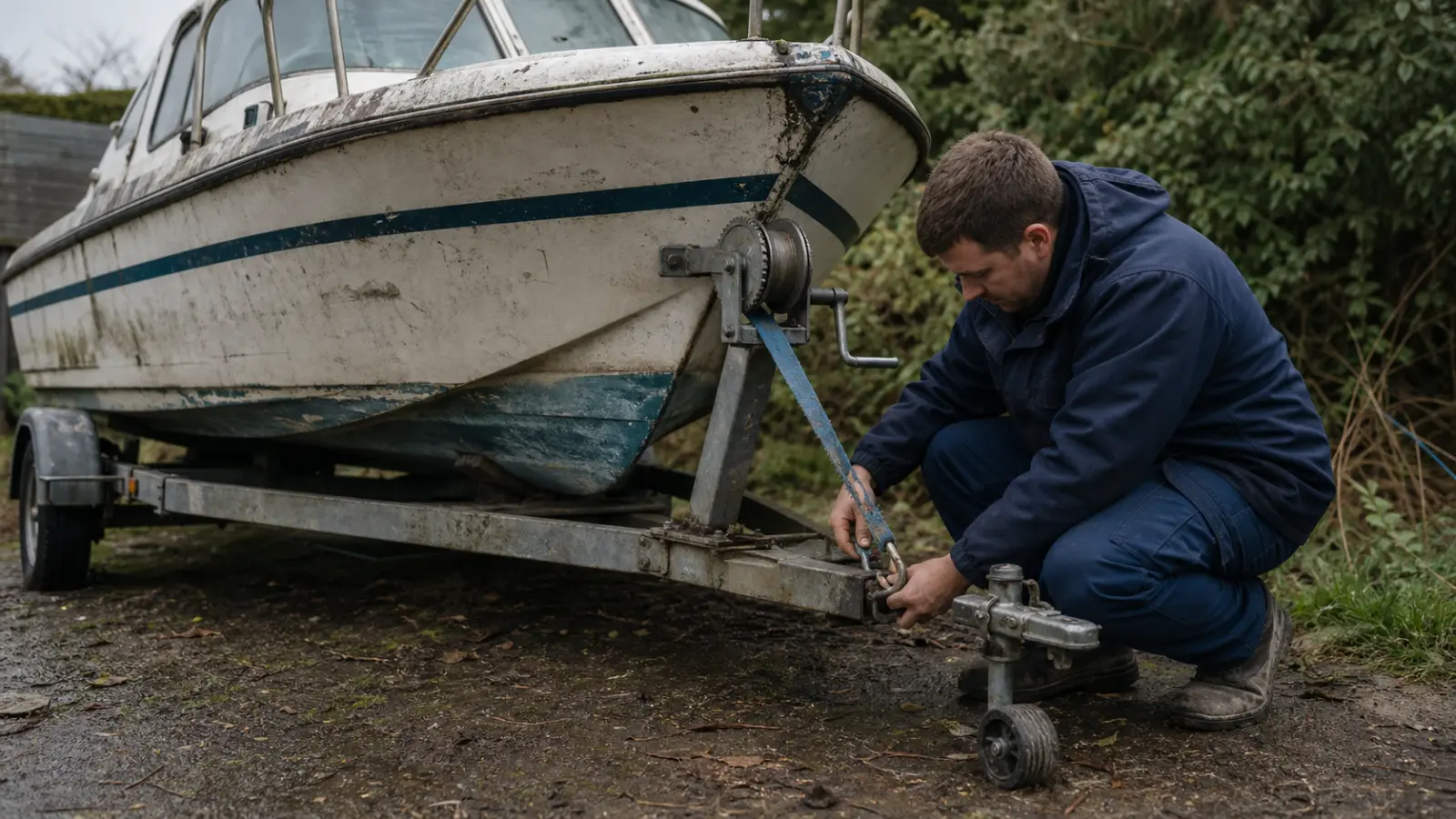
The fiberglass hull has rested on a rusty twin-axle trailer behind the garage for six seasons, and the tires have long since flattened into the dry dirt. A property changed hands with a 26-foot cabin cruiser resting on wooden cribbing along the fence line, or an outboard engine suffered a catastrophic freeze crack that makes a mechanical rebuild cost far more than the vessel is worth. Marinas sometimes issue formal cleanup notices regarding an unpaid slip, leaving property managers and owners scrambling for a permanent solution. When an old boat becomes an immovable burden on private land, trying to tow it away yourself often risks damaging vehicles, fences, and lawns.

Is there boat removal near me in Twin Falls, ID? Yes, Boat Removal Experts manages the complete extraction, hauling, and clearance of unwanted vessels directly from residential yards, commercial lots, and storage facilities throughout the city.

When clearing an old vessel, long-term liability is a major concern for property owners. While our service does not always transfer the title, we always issue a formal release of liability to protect you. Some unverified outfits haul a vessel away without providing any paperwork, which leaves the original owner legally responsible if the hull is later dumped on public land. It is always worth asking how documentation is handled before allowing anyone to hitch up your craft.

Extracting a vessel is rarely as simple as hooking up a trailer. A keel sitting deep in soft ground, a cradle frozen into place, or a beam wider than the side gate can halt a quick haul. If the boat sits on a sunken trailer with locked hubs, rolling it across a delicate lawn requires specialized rigging to prevent structural damage.

Call 208-907-3626 to start.

Send photos through the contact form.

What Is Boat Removal and When You Need It

Professional boat removal covers far more than basic towing. When an abandoned boat sits on private land or within a commercial yard, simply moving it a few feet can be a massive physical challenge. Boat disposal addresses the entire lifecycle of an unwanted vessel, from initial structural rigging and site extraction to responsible transport and final material handling. Whether a vessel is sitting in a driveway, settled on a muddy shoreline, or resting on decaying wooden blocks, specialized recovery work ensures the hull is managed safely without damaging surrounding structures.
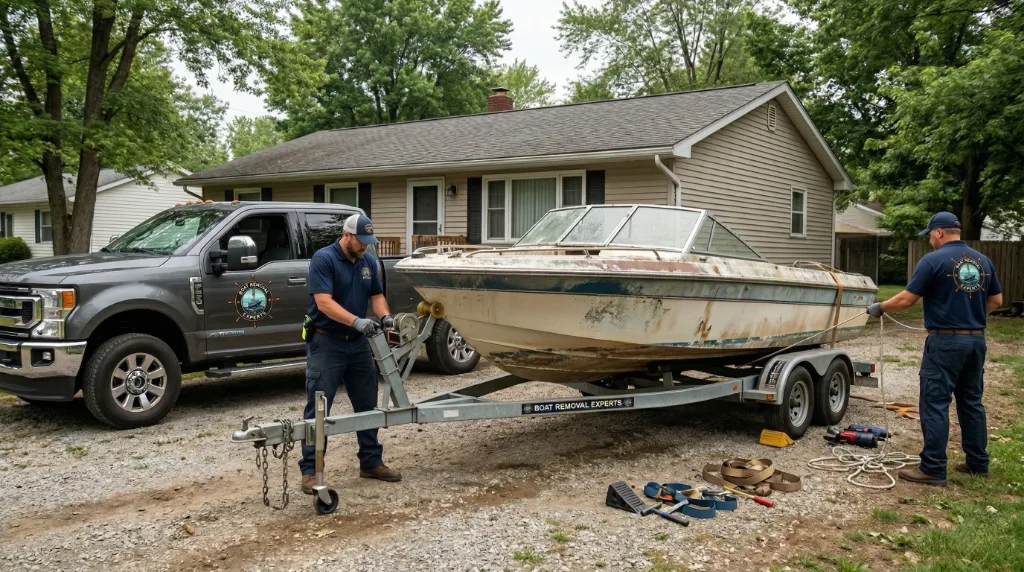
The administrative process changes significantly based on the documentation you hold. When a clear title is present, scheduling a pickup and transferring physical possession proceeds smoothly. When paperwork is lost, missing, or the craft came with a recent real estate purchase, alternative documentation standards apply. An abandoned boat left on commercial land or inside a long-unpaid slip requires specific notification steps to ensure all local property laws are respected before heavy machinery moves the hull.

Several physical factors dictate how a derelict vessel is processed. Hulls constructed from heavy fiberglass require different transport gear than light aluminum craft. The structural integrity of the back panel, the presence of heavy inboard engines, and whether the hull can still float or support its own weight on a flatbed trailer all determine the exact methods required to clear the property safely.
When Twin Falls Residents Call Us

Harsh seasonal climate in Twin Falls, ID rapidly degrades watercraft left outdoors without protective covers. Intense summer sun bakes the gelcoat until it chalks and cracks, while severe winter freezes cause trapped water to expand inside fiberglass seams, floorboards, and transoms. Upholstery rots out, wooden decking breaks down, and a hull that holds rainwater becomes a heavy, stagnant pool that breeds mosquitoes and threatens to crush its own support frame. An old fishing boat, aging pontoon, or forgotten sailboat left exposed to these harsh elements quickly turns into a severe eyesore and a safety hazard on any property.
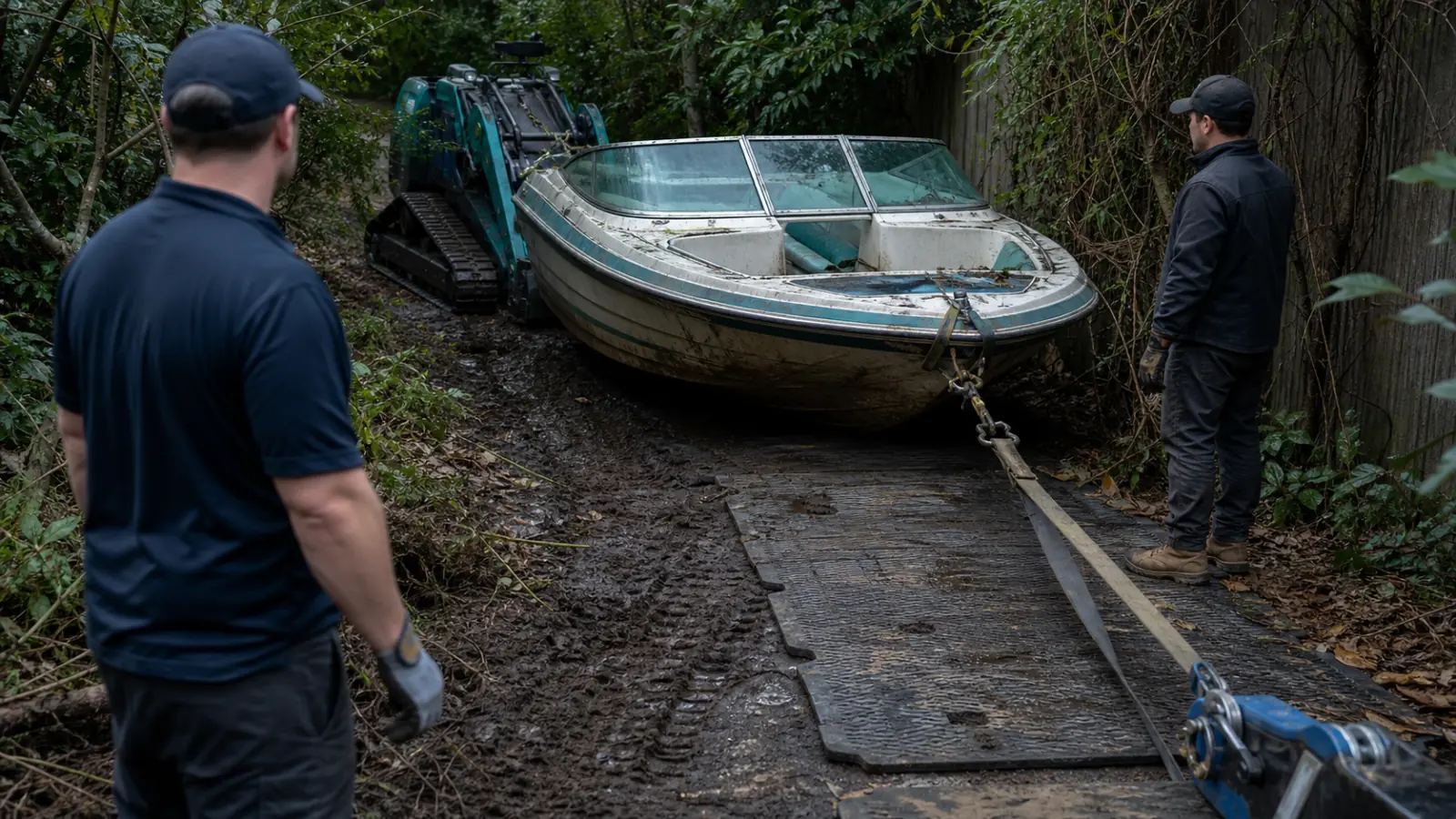
Site access heavily influences how our team approaches a project. Narrow residential driveways, tight alleyways, soft soil, and overhead power lines all change how heavy extraction equipment must be positioned. A vessel sitting on a rotting trailer with flat tires requires a completely different approach than a deep-draft hull sitting on timber blocks or an unattended craft drifting in a quiet slip. In Twin Falls County, working around steep slopes, unpaved approaches, and tight perimeter gates requires precise planning before any vehicle backs onto the lot.

Owners of an unwanted pontoon or sailboat call for help when manual moving is no longer possible. Tight quarters around outbuildings or tight property boundaries in nearby communities like Kimberly, Filer, Hansen, Jerome, and Eden make professional site maneuvering essential to avoid costly property damage.
Every Type of Boat We Handle

Situations We Handle

Need Help? We’re Ready.

Contact boat removers directly or request free quotes. We dispatch crews fast.

Our Step-by-Step Process

Assessment

We evaluate the boat’s size, current location, condition, and any environmental or access challenges before we schedule boat removal.

Planning

A detailed plan is built around your vessel — equipment, logistics, timeline, and safety. Services include drainage of oil and fuel before transport.

Execution

Our experienced crew mobilizes to your current location and we tow, haul, or dismantle the vessel using professional marine equipment.

Completion

The vessel is recovered, recycled, or routed to certified boat junkyards for environmentally responsible disposal. The site is left clean.

Equipment & Capabilities

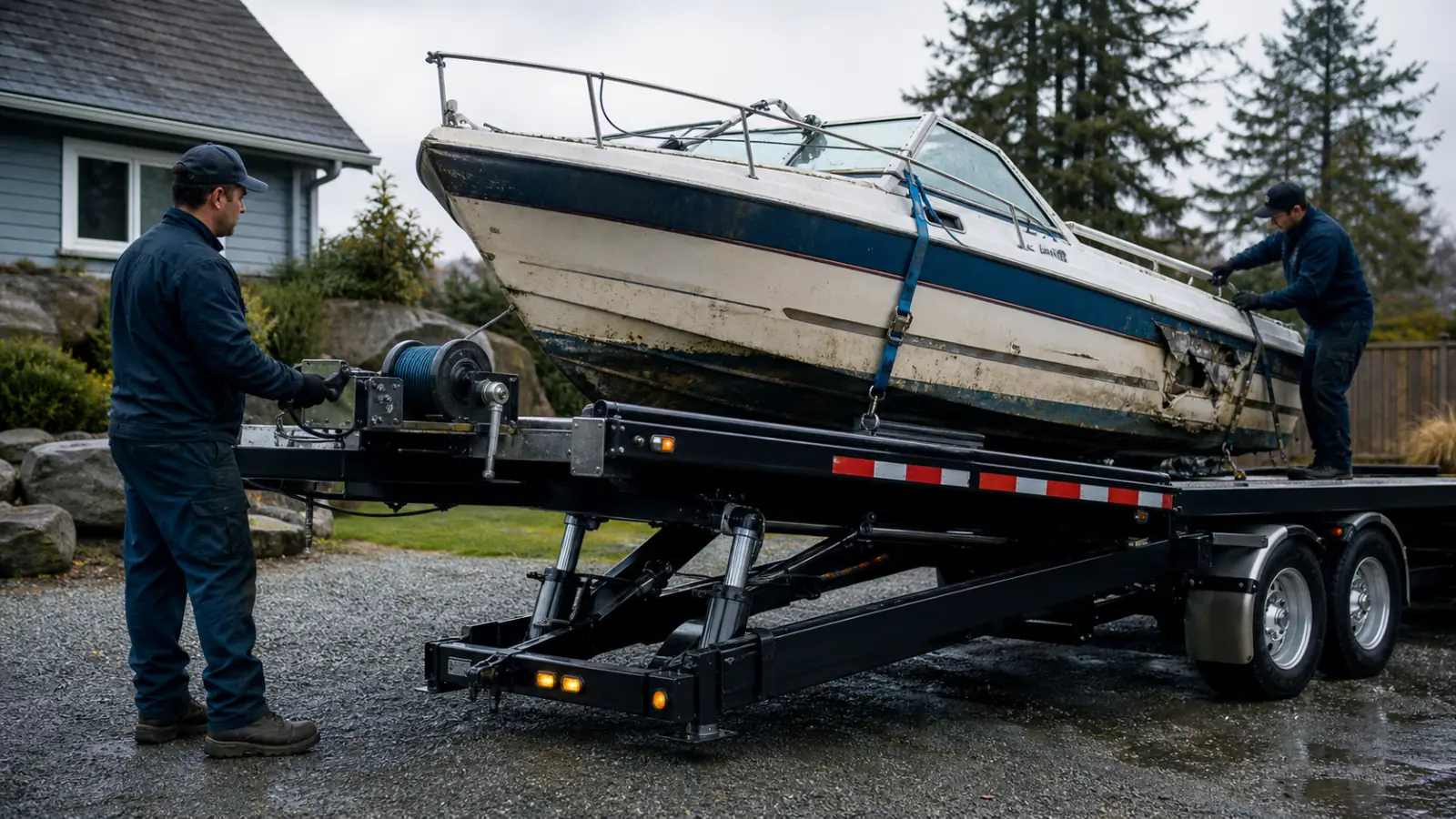
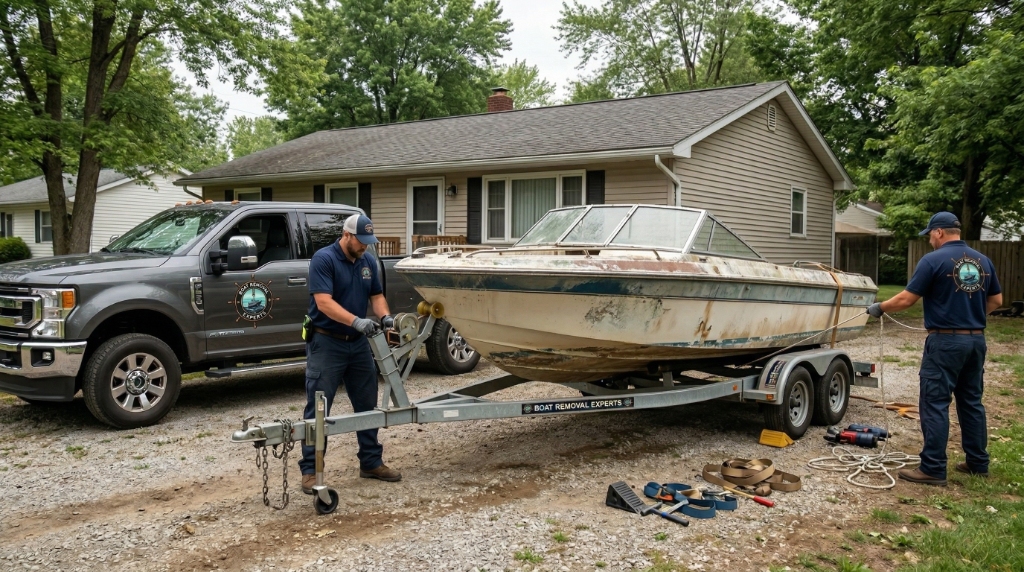
Getting an immobile vessel off a property requires specialized recovery equipment and trained personnel. When an old trailer has rotted away, missing wheels, or locked bearings, the crew utilizes heavy-duty winches, hydraulic jacks, slide ramps, and articulated trailers to load the hull without causing further site damage. If a large cabin cruiser or wide trimaran cannot pass through narrow gates or down tight access roads, technicians carefully dismantle the upper deck, cabin superstructure, or sides directly on site before loading the pieces.

Before any hull leaves the property, all hazardous materials must be carefully identified, contained, and safely drained. Fuel tanks, engine oil, hydraulic fluids, heavy marine batteries, and old electronic displays are stripped out to prevent environmental contamination during transport. Once these dangerous fluids and components are secured, the remaining structural materials are evaluated for proper processing.

Where the materials end up depends entirely on what the crew finds during the initial site assessment. Intact aluminum hulls, lead keel weights, bronze fittings, and stainless steel hardware are sorted for scrap metal recycling. Broken fiberglass sections, rotten back panel wood, and unusable interior components are prepped for appropriate industrial disposal services. Every step of the extraction, from initial fluid mitigation to final site cleanup, is tailored to the specific condition and location of the craft.

Our boat removal experience covers everything from start to finish  assessment, planning, execution, dismantling, and final cleanup. Marina operators and property owners across Twin Falls County trust us to get rid of your junk boat without damage to surrounding property.

FAQ

Boat Removal Questions - Frequently Asked

Common questions from property owners about our junk removal service, dismantling, and marine recovery.

We handle every type of vessel — sailboat, pontoon, fishing boats, jon boats, yachts, and commercial craft. Whether your boat or sailboat floats (or used to), we’ll remove it from any current location.

Yes. Sunken and partially submerged vessel recovery is a core part of our salvage work in Twin Falls County. We use lift bags, salvage pumps, and marine cranes to safely raise vessels from underwater.

We respond to inquiries quickly — usually within hours, with same-day service available. For emergency situations, we mobilize as fast as possible. Call us directly for time-sensitive jobs.

No. Every job is handled in-house by our own team and equipment. No middlemen, no handoffs, no surprises.

Cost depends on the boat’s size, current location, condition, and complexity of the job. We provide free assessments and free quotes for every case — contact us and we’ll give you an honest estimate.

Yes. Our boat removal and disposal services include hazardous materials handling, oil and fuel drainage, hull dismantling, and recycling at certified yards — all in compliance with environmental regulations and environmentally responsible standards.

Absolutely. We regularly work in tight marinas, shallow waterways, private docks, backyards, and remote areas. We bring the right gear to reach any current location.

Yes. We frequently work with insurance adjusters on salvage and recovery claims and provide the documentation needed for your claim.

Browse Our Services - Ready to Get Started?

We handle everything from start to finish. Call us now or request a free quote – we’ll dispatch crews and haul your vessel away fast.