
Professional Boat Removal Services in Upper Darby, PA

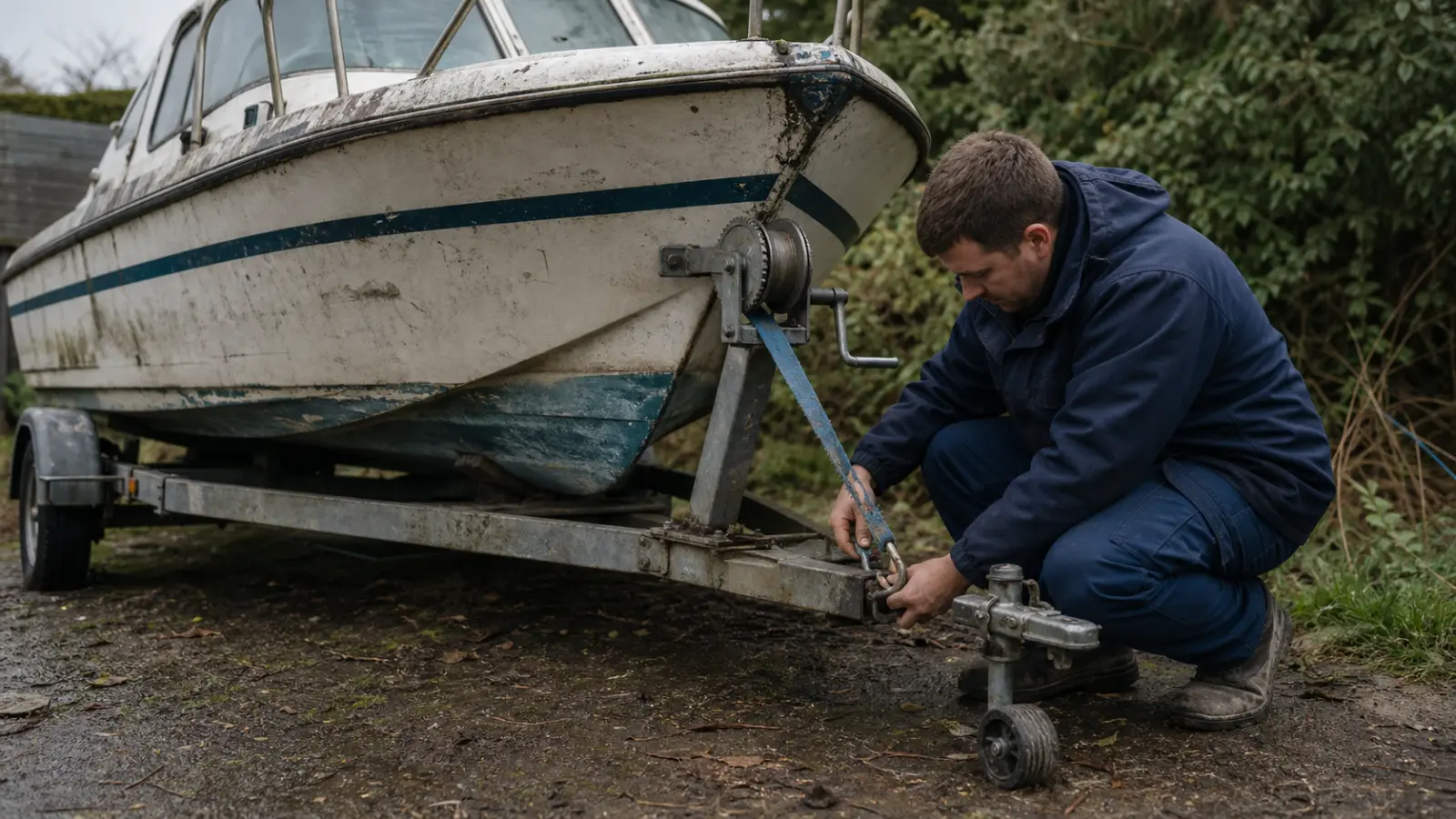
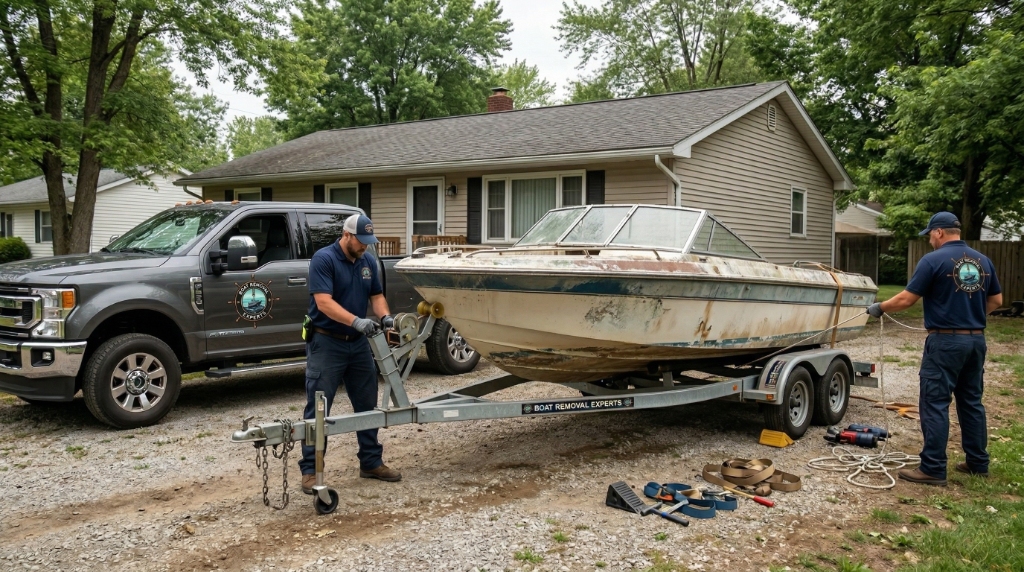
An old boat resting on a flat-tired trailer behind a garage quickly turns into a permanent property headache. After six seasons of sitting in the damp soil, the frame sinks into the dirt while the tires dry rot into useless rubber. In other cases, a property sale in Upper Darby, PA gets delayed because a cabin cruiser remains parked on the side lot, or an outboard motor seizes up and the quote for a complete mechanical rebuild far exceeds the market value of the vessel itself. Landlords and property managers also face situations where a tenant moves away and leaves a fiberglass hull sitting behind an apartment building or inside a rented storage bay.

Is there boat removal near me in Upper Darby, PA? Yes, Boat Removal Experts handles the full process of extracting, hauling, and clearing out unwanted vessels directly from your residential or commercial property.

Before any equipment moves, owners must consider their ongoing legal responsibility. Our standard process means Boat Removal Experts always provides an official release of liability, even when a formal title transfer is not executed for a damaged hull. Some unlicensed haulers simply tow a vessel away without issuing any written documentation, which leaves the original owner entirely exposed to future municipal fines or environmental penalties if that junk boat is later dumped along a roadside or left floating in a public waterway.

Hauling a vessel is rarely as simple as hooking up a hitch and driving off. Years of exposure often lock up trailer wheel bearings, collapse rusty axles, or rot out the wood bunks holding the keel. Narrow access gates, low tree branches over driveways, and soft ground that sinks heavy trucks make moving a junk boat a dangerous task without proper rigging gear.

Call 610-831-3188 to start.

What Is Boat Removal and When You Need It

Professional boat disposal involves far more than hooking a winch line to a hitch and pulling a vessel down the road. Complete boat removal requires managing structural integrity issues, securing loose cabin fixtures, clearing out physical debris, and organizing the proper transport documentation. When an owner holds a clean title in hand, the turn-over process moves forward smoothly. However, when paperwork is missing, lost over decades, or completely absent because an abandoned boat came with a newly purchased real estate parcel, alternative documentation methods must be established before transit begins.
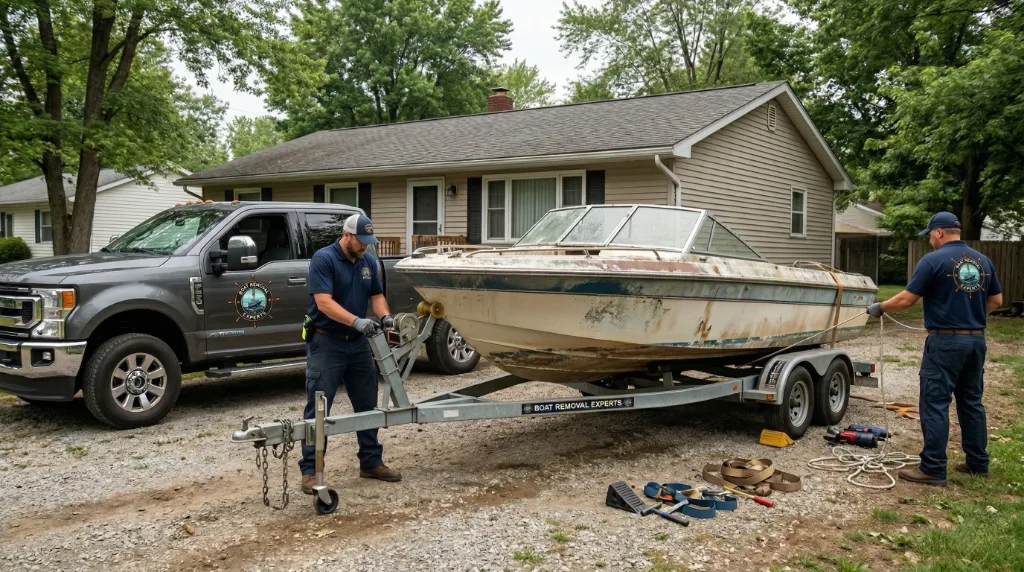
The overall outcome of a haul is heavily influenced by where the vessel sits and who legally controls the land. A derelict craft left sitting in a commercial slip with unpaid balance fees presents different access challenges than a vessel sitting on private residential ground. If a vessel is left on third-party real estate without permission, formal notification procedures may be required before crew members can legally winching it onto a flatbed. Furthermore, a vessel that has sustained severe hull fractures or bottom rot requires specialized rigging straps to keep the fiberglass from splitting during transport. Whether dealing with a degraded skiff or an abandoned boat on a commercial site, physical access and legal standing dictate how the job proceeds.
When Upper Darby Residents Call Us

Property owners in Upper Darby, PA frequently request clearing services after severe weather cycles take their toll on outdoor storage spaces. The regional climate, with its freezing winter temperatures and humid summer rain, causes severe physical breakdown in neglected marine materials. Rainwater collects inside open cockpits, freezes in the winter, and expands within structural seams. This freeze-thaw action cracks open the outer gelcoat, rots internal wooden floor frames, saturates floor foam, and destroys vinyl upholstery. A hull that holds hundreds of gallons of trapped water becomes exponentially heavier and structurally unstable, making manual handling dangerous.
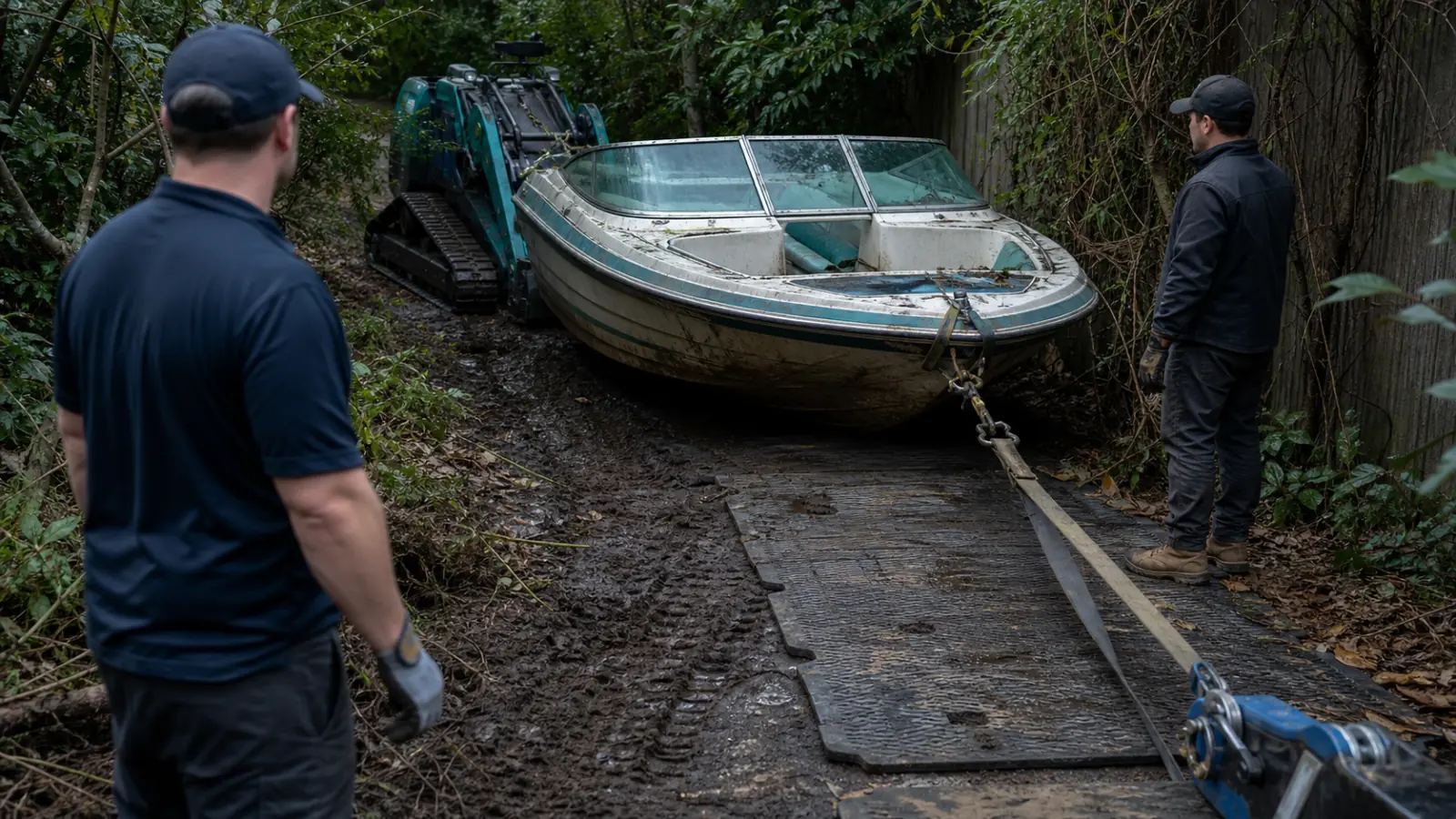
Local site conditions dictate how our crew approaches every recovery. A pontoon sitting on flat pavement presents a straightforward loading process, but a heavy sailboat resting on wooden blocks inside a narrow backyard requires extra planning. Crews evaluate the approach path, checking for soft lawn surfaces that could cause heavy machinery to sink, overhead power lines that restrict crane booms, and tight fence gaps that block wide beams. Whether the vessel is a light aluminum fishing boat resting on a rotted trailer frame or a heavy fiberglass cruiser resting in mud, physical site clearance determines the equipment needed to safely extract the vessel.
Every Type of Boat We Handle

Situations We Handle

Need Help? We’re Ready.

Contact boat removers directly or request free quotes. We dispatch crews fast.

Our Step-by-Step Process

Assessment

We evaluate the boat’s size, current location, condition, and any environmental or access challenges before we schedule boat removal.

Planning

A detailed plan is built around your vessel — equipment, logistics, timeline, and safety. Services include drainage of oil and fuel before transport.

Execution

Our experienced crew mobilizes to your current location and we tow, haul, or dismantle the vessel using professional marine equipment.

Completion

The vessel is recovered, recycled, or routed to certified boat junkyards for environmentally responsible disposal. The site is left clean.

Equipment & Capabilities

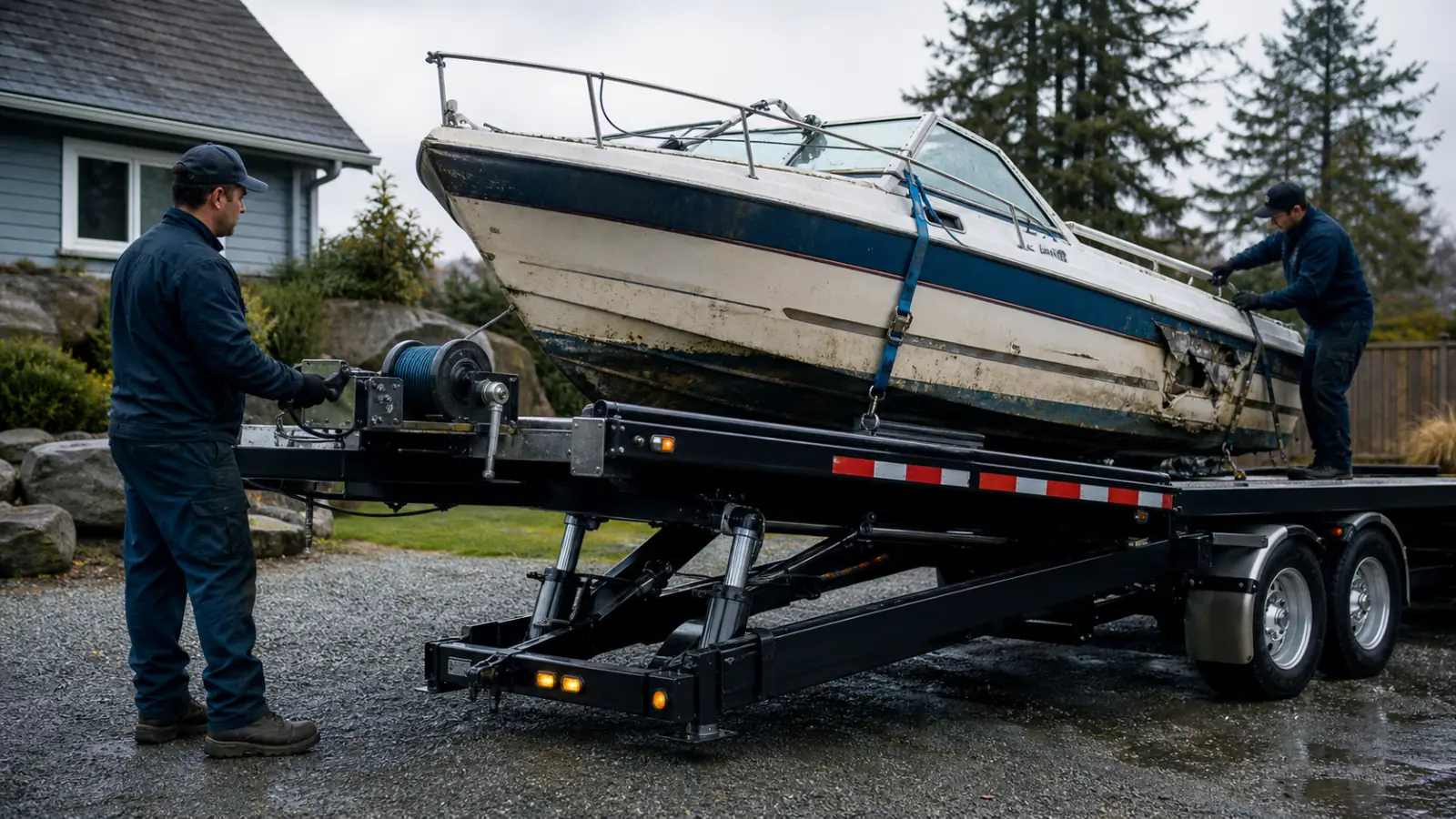
When a vessel cannot roll out on its own tires, specialized load equipment must be brought to the site. The crew evaluates the structural state of the vessel to choose between winching the complete rig onto a hydraulic tilt-bed trailer or breaking the structure down where it sits. If a rotted hull is too wide to clear surrounding structures or too weak to survive highway speeds, workers dismantle the deck and sides using heavy-duty saws and metal cutting tools directly on the lot.

Before any hull moves or gets cut down, all hazardous materials must be safely removed and separated. Crews extract remaining gasoline, diesel, crankcase oil, lead-acid batteries, and electronic components to ensure environmental safety. Once these fluids and electrical items are secured, the remaining glass, wood, and metal parts are sorted for processing. Materials are taken to targeted facilities, where metal fittings go toward scrap recycling and non-recyclable fiberglass structural debris is routed to an approved landfill. The physical state of the vessel and local processing facilities dictate exactly how each component is managed during final disposal services.

Our boat removal experience covers everything from start to finish  assessment, planning, execution, dismantling, and final cleanup. Marina operators and property owners across Delaware County trust us to get rid of your junk boat without damage to surrounding property.

FAQ

Boat Removal Questions - Frequently Asked

Common questions from property owners about our junk removal service, dismantling, and marine recovery.

We handle every type of vessel — sailboat, pontoon, fishing boats, jon boats, yachts, and commercial craft. Whether your boat or sailboat floats (or used to), we’ll remove it from any current location.

Yes. Sunken and partially submerged vessel recovery is a core part of our salvage work in Delaware County. We use lift bags, salvage pumps, and marine cranes to safely raise vessels from underwater.

We respond to inquiries quickly — usually within hours, with same-day service available. For emergency situations, we mobilize as fast as possible. Call us directly for time-sensitive jobs.

No. Every job is handled in-house by our own team and equipment. No middlemen, no handoffs, no surprises.

Cost depends on the boat’s size, current location, condition, and complexity of the job. We provide free assessments and free quotes for every case — contact us and we’ll give you an honest estimate.

Yes. Our boat removal and disposal services include hazardous materials handling, oil and fuel drainage, hull dismantling, and recycling at certified yards — all in compliance with environmental regulations and environmentally responsible standards.

Absolutely. We regularly work in tight marinas, shallow waterways, private docks, backyards, and remote areas. We bring the right gear to reach any current location.

Yes. We frequently work with insurance adjusters on salvage and recovery claims and provide the documentation needed for your claim.

Browse Our Services - Ready to Get Started?

We handle everything from start to finish. Call us now or request a free quote – we’ll dispatch crews and haul your vessel away fast.