
Professional Boat Removal Services in Urbana, IL
A fiberglass hull sits behind the garage in Urbana, Illinois, resting on a trailer whose tires flattened into the soil six seasons ago. A property owner takes over a lot in Champaign County with an unwanted cabin cruiser taking up space near the fence, or a marina manager issues a formal notice because an unpaid slip has held a non-running vessel for months. When an outboard engine seizes up and a full mechanical rebuild costs vastly more than the market value of the vessel itself, the owner is left managing a heavy burden that cannot simply be towed away. These situations leave people searching for practical boat removal solutions that deal with the physical reality of a stranded vessel.
Is there boat removal near me in Urbana, IL? Boat Removal Experts provides complete vessel extraction, transport, and disposal options directly from residential properties, storage yards, and local slips throughout the city.

When getting rid of an old boat, paperwork is just as critical as heavy equipment. Boat Removal Experts does not always transfer the title of every vessel handled, but we always issue a formal release of liability to the owner. Some haulers take a vessel away without providing any written record, leaving the original owner legally responsible if the hull is later abandoned on public property. Securing signed documentation protects you from future municipal fines or unexpected legal claims down the road.
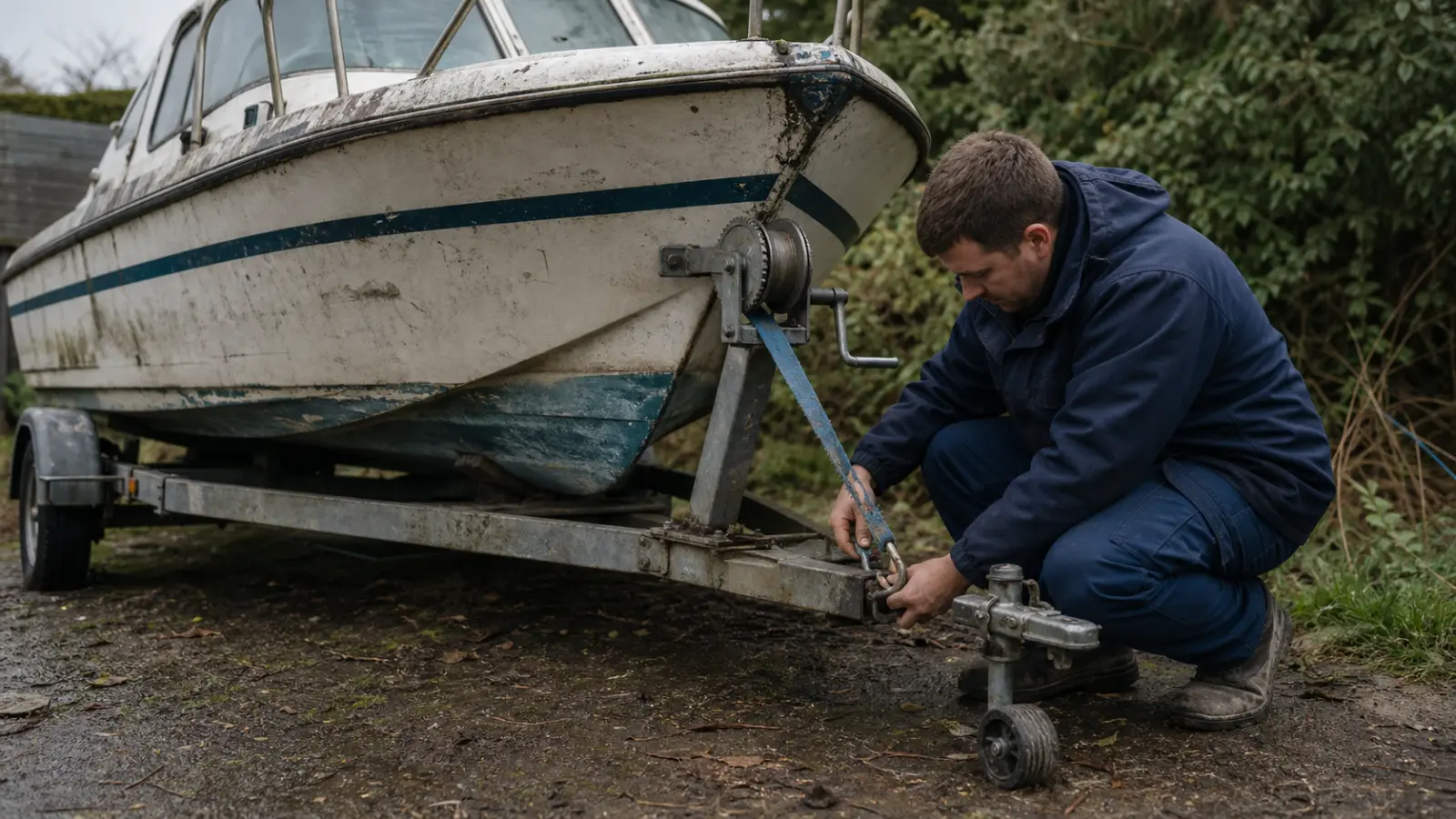
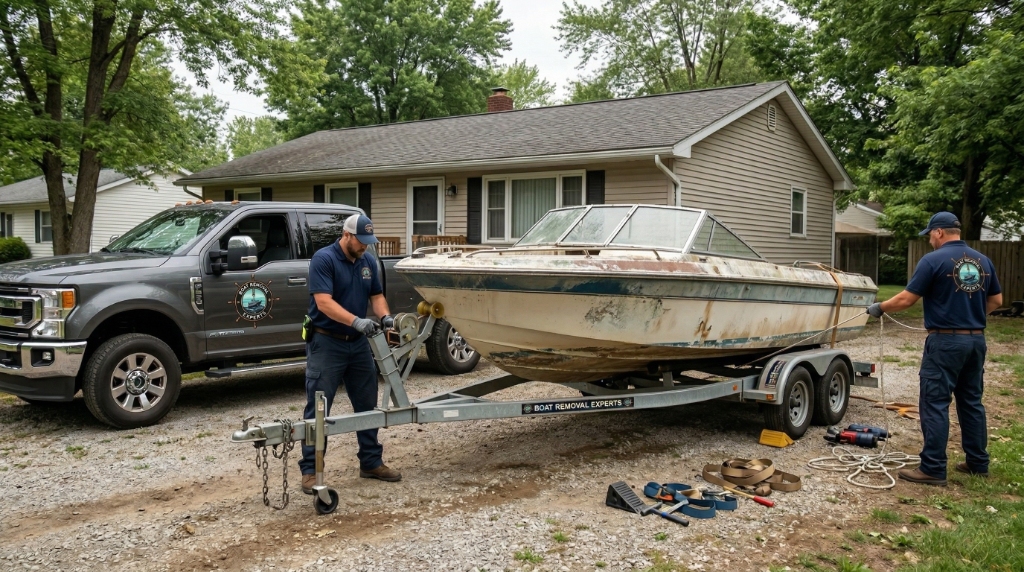
Moving a junk boat is rarely as simple as hooking up a trailer. Couplers rust solid, tires rot out, and structural cradles sink into soft ground. Narrow side gates, low tree branches, and soft lawns present physical obstacles that prevent standard tow vehicles from reaching the hull, making specialized removal equipment necessary.
Call 937-632-2085 to start.
Send photos through the contact form.
What Is Boat Removal and When You Need It
Professional boat disposal involves far more than snapping a hitch onto a bumper and pulling away. When a vessel has been sitting for years, extracting it requires assessing structural integrity, clear site access, and legal authority. When an owner possesses a clear title, the process remains straightforward, but options are also available when paperwork is lost, missing, or attached to real estate purchased with an abandoned boat already on site. Property managers handling a derelict left in a private slip or landowners dealing with an illegal dumping situation must clear specific legal requirements before haulers can haul the craft away.
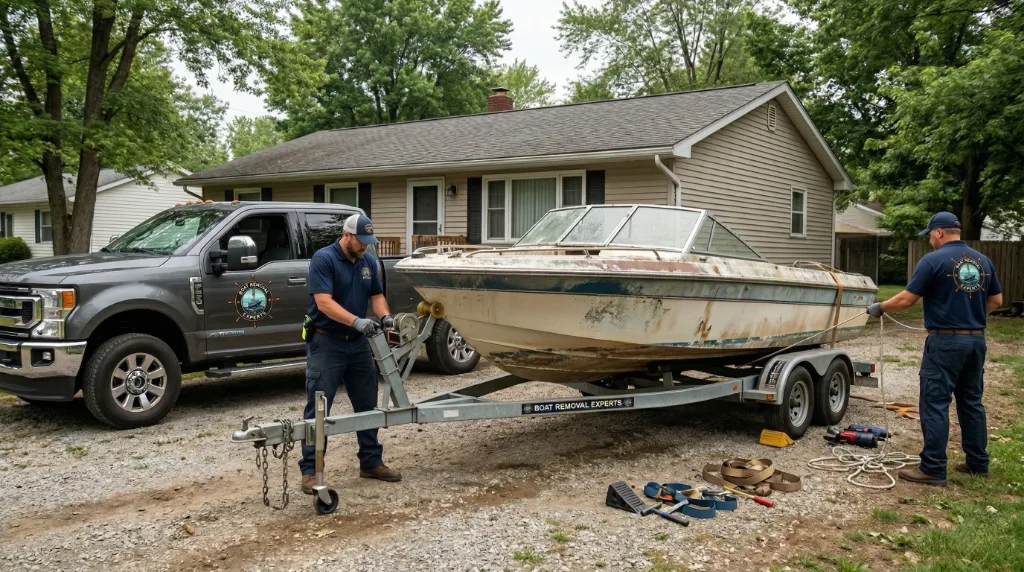
What happens to a vessel depends entirely on its size, construction material, and overall condition. An abandoned boat left open to the elements slowly accumulates trapped rainwater, leading to severe hull damage and rotting internal floor frames. When a vessel cannot safely travel on public roads, crews must adapt by securing the structural frame or preparing the unit for safe transport. Factors such as structural soundess, onboard weight, and access route conditions dictate whether a hull can be towed intact or must be dismantled on site. Handling a derelict vessel properly ensures that no hazardous materials leak onto the surrounding soil or public waterways during the extraction process.
When Urbana Residents Call Us
The climate in Urbana takes a heavy toll on exposed watercraft stored outdoors year after year. Freeze-and-thaw cycles crack gelcoat surfaces, allowing moisture to penetrate beneath the fiberglass layer. Trapped rainwater fills the bilge, saturating wood decking and rotting floor frames until the deck collapses under pressure. Upholstery holds dampness, fostering thick mold that degrades vinyl seating on an unused pontoon or open fishing boat. Once water sits inside a hull through multiple winter months, the added weight and weakened structural integrity completely change how crews must handle the extraction.
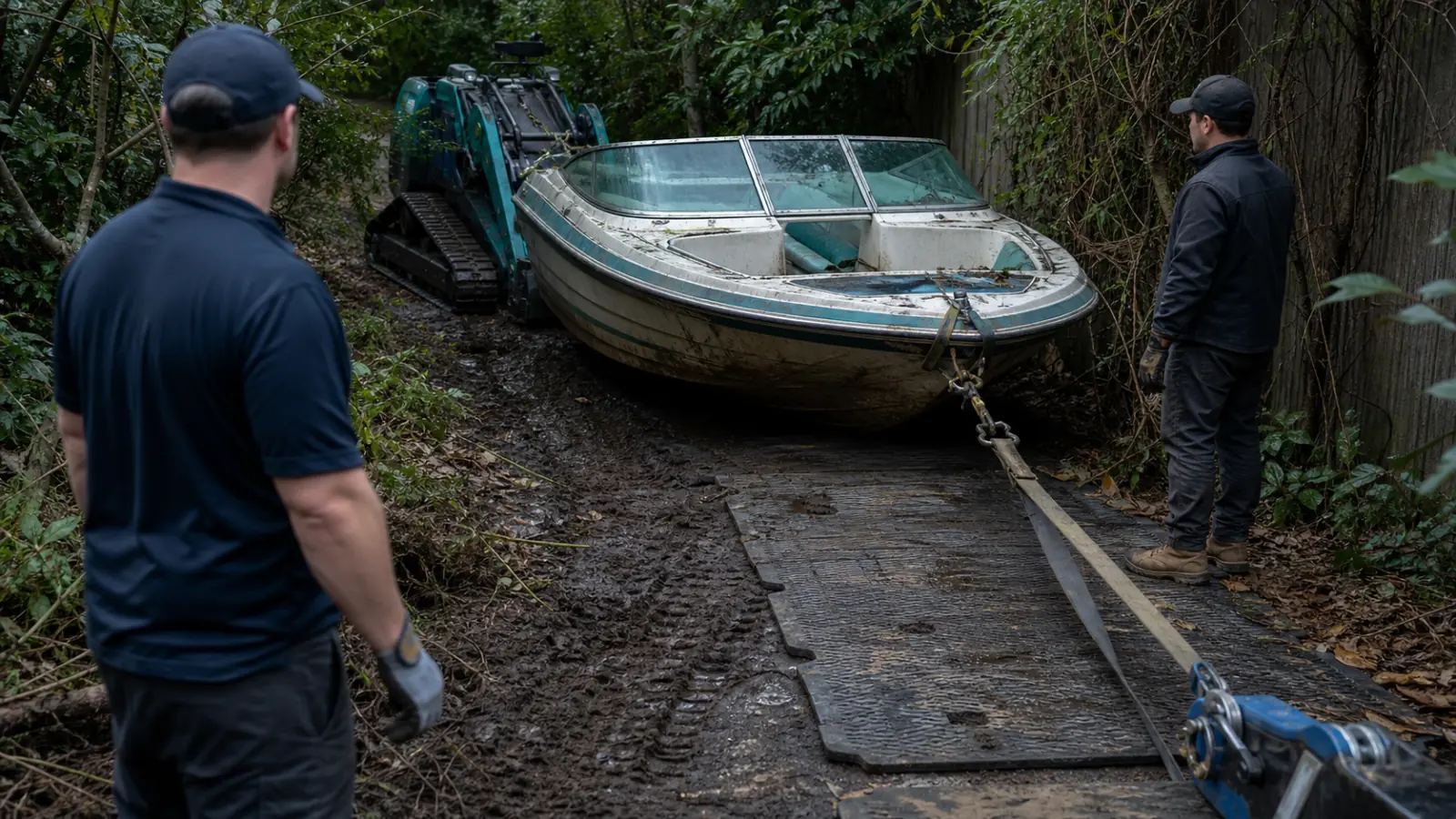
Site conditions across Urbana, Philo, and Savoy present unique physical challenges for hauling equipment. A sailboat parked on wooden blocks on a soft grass yard requires a different approach than a vessel parked on a clear concrete driveway. Crew members must evaluate the approach terrain, checking for low overhead power lines, narrow driveways, and tight side gates before bringing in heavy machinery. Soft ground might sink heavy truck tires, requiring riggers to lay down support pads or winch the vessel onto hard pavement. Whether a hull sits deep in a backyard, inside a tight storage shed, or at the water edge, physical access dictates the exact tools needed for safe extraction.
Every Type of Boat We Handle
- Sailboat & catamaran
- Motorboat, powerboat & cabin cruisers
- Fishing boats & bass boats
- Pontoon boats
- Jon boats & aluminum skiffs
- Large yachts
- Personal watercraft (jet skis)
- Houseboats
Situations We Handle
- Abandoned boat at marinas, docks, or boat lifts
- Unwanted boats on private property or in boat storage
- Vessels in backyards, fields, or vacant lots
- Derelict vessels blocking dock access or navigation
- Storm-damaged vessels requiring boat hauling
- Vessels without trailers or with flat tires
- Tight access locations (narrow driveways, wooded areas)
- Government or insurance-ordered cases
Need Help? We’re Ready.
Contact boat removers directly or request free quotes. We dispatch crews fast.
Our Step-by-Step Process

Assessment
We evaluate the boat’s size, current location, condition, and any environmental or access challenges before we schedule boat removal.

Planning
A detailed plan is built around your vessel — equipment, logistics, timeline, and safety. Services include drainage of oil and fuel before transport.

Execution
Our experienced crew mobilizes to your current location and we tow, haul, or dismantle the vessel using professional marine equipment.

Completion
The vessel is recovered, recycled, or routed to certified boat junkyards for environmentally responsible disposal. The site is left clean.
Equipment & Capabilities
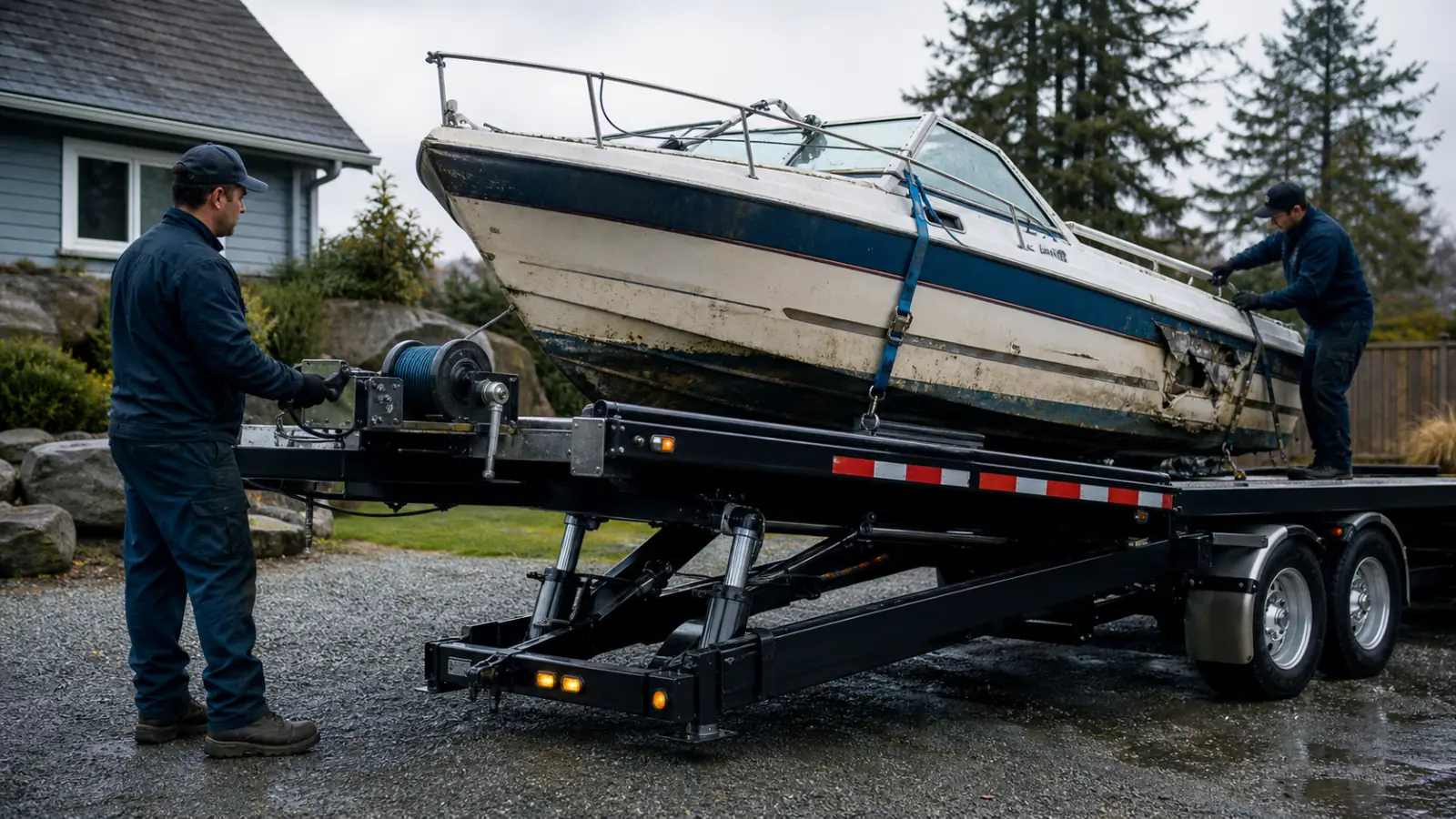
When an old vessel cannot move on its own wheels, the crew assesses the site to choose the correct extraction tools. If a trailer frame has rusted through or the tires are buried in dirt, heavy-duty winches, hydraulic jacks, and specialized transport flatbeds are deployed to lift and load the hull safely. When narrow gates, overhanging trees, or structural obstacles prevent heavy trucks from reaching the vessel, workers use specialized machinery to dismantle the craft on site. Cutting a hull into manageable sections allows the crew to clear space without damaging surrounding structures or tearing up the landscape.
Before any hull is loaded or cut, crew members carefully drain all fluid systems and manage potential hazardous materials. Technicians strip out residual fuel, engine oil, steering fluids, marine batteries, and old electronics so contaminants do not spill during transport. Once these materials are safely captured and separated, the crew sorts the remaining components for proper processing. Reusable metal hardware, aluminum framing, and lead keels are separated for metal recycling, while crushed fiberglass and non-recyclable interior materials head to an authorized municipal landfill for final disposal. Decisions regarding transport, cutting, and sorting are made directly on site based on the physical state of the craft.
Our boat removal experience covers everything from start to finish assessment, planning, execution, dismantling, and final cleanup. Marina operators and property owners across Champaign County trust us to get rid of your junk boat without damage to surrounding property.
FAQ
Boat Removal Questions - Frequently Asked
Common questions from property owners about our junk removal service, dismantling, and marine recovery.
What type of boat do you remove?
We handle every type of vessel — sailboat, pontoon, fishing boats, jon boats, yachts, and commercial craft. Whether your boat or sailboat floats (or used to), we’ll remove it from any current location.
Do you handle sunken or partially submerged vessels?
Yes. Sunken and partially submerged vessel recovery is a core part of our salvage work in Champaign County. We use lift bags, salvage pumps, and marine cranes to safely raise vessels from underwater.
How quickly can you respond?
We respond to inquiries quickly — usually within hours, with same-day service available. For emergency situations, we mobilize as fast as possible. Call us directly for time-sensitive jobs.
Do you use subcontractors?
No. Every job is handled in-house by our own team and equipment. No middlemen, no handoffs, no surprises.
How much does cheap boat removal cost?
Cost depends on the boat’s size, current location, condition, and complexity of the job. We provide free assessments and free quotes for every case — contact us and we’ll give you an honest estimate.
Do you handle boat disposal and recycling?
Yes. Our boat removal and disposal services include hazardous materials handling, oil and fuel drainage, hull dismantling, and recycling at certified yards — all in compliance with environmental regulations and environmentally responsible standards.
Can you reach a hard-to-access location?
Absolutely. We regularly work in tight marinas, shallow waterways, private docks, backyards, and remote areas. We bring the right gear to reach any current location.
Do you work with insurance companies?
Yes. We frequently work with insurance adjusters on salvage and recovery claims and provide the documentation needed for your claim.
Other Boat Removal Locations
Browse Our Services - Ready to Get Started?
We handle everything from start to finish. Call us now or request a free quote – we’ll dispatch crews and haul your vessel away fast.