
Professional Boat Removal Services in Washington, DC

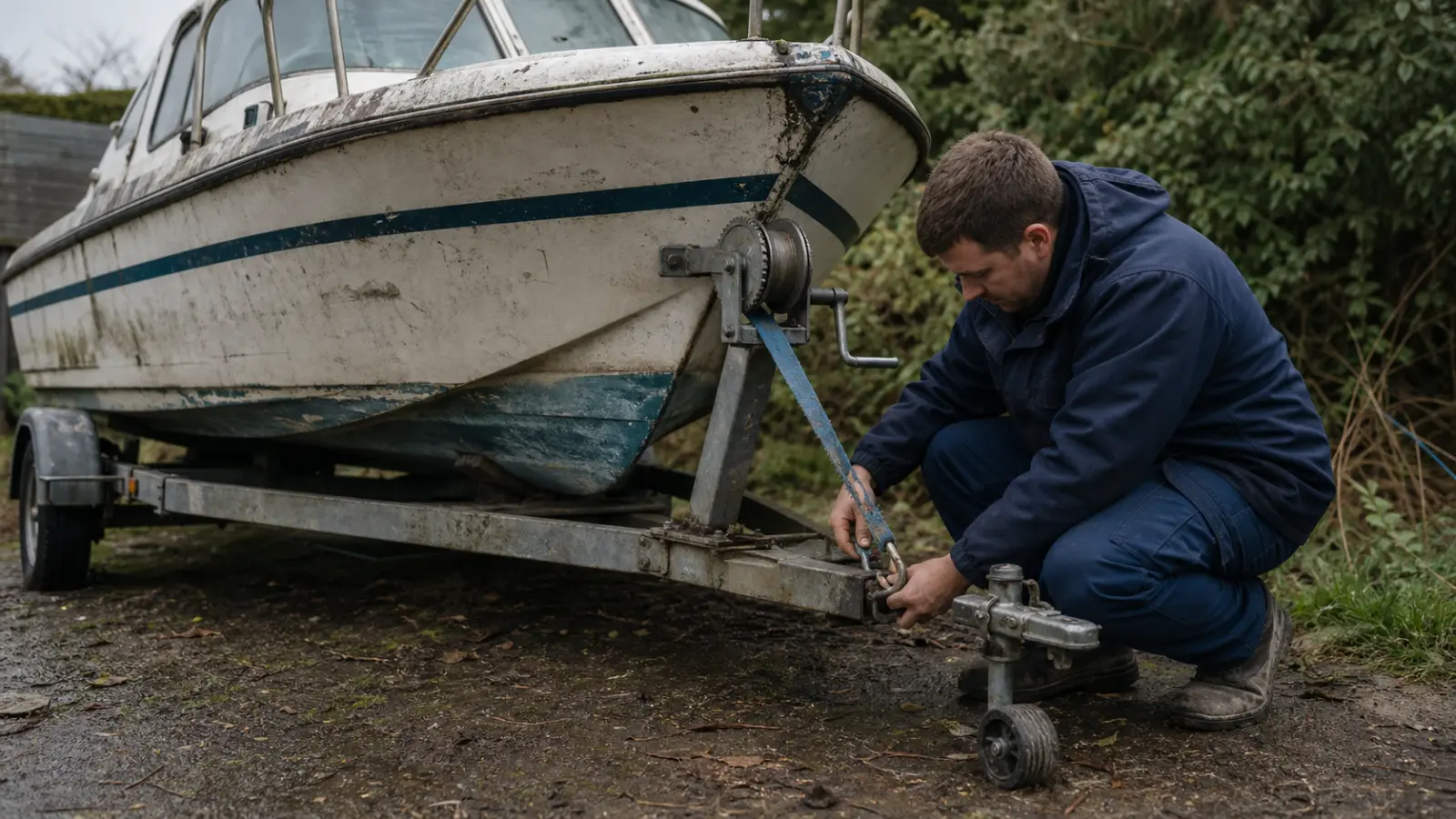
An old boat resting on a flat-tired trailer behind a garage quickly turns into a serious property headache. The hull collects rainwater season after season while the tires sink directly into the soil. A marina sends a formal notice regarding unpaid slip fees for a vessel that no longer runs. A buyer acquires a commercial lot in Washington, DC, only to find a rotting cabin cruiser left behind near the fence line. An outboard engine seizes completely, and the local marine shop quotes a rebuild price that far exceeds the total value of the craft itself. Owners often feel stuck with a massive fiberglass shell that occupies valuable driveway space and drains money each month.

Is there boat removal near me in Washington, DC? Yes, our team provides complete extraction and hauling services for unwanted vessels across the city, handling difficult extractions from residential yards, commercial properties, and local waterfront slips regardless of the craft's size or current structural condition.

Transferring an official vessel title is not always possible when handling junk boat extractions, particularly when original paperwork has been misplaced over time. Our position is clear: Boat Removal Experts always issues a complete release of liability to the owner upon pickup. Some unverified hauling operations take a vessel away without providing proper documentation, leaving the original owner legally responsible if that hull is later abandoned on a public road or waterway. Asking for proper documentation before work begins protects your legal interests.

Extracting a vessel is rarely a simple towing job. Trailer tires rot into the dirt, keels catch on high curbs, and wide beams frequently exceed narrow gate clearances. Heavier hulls sink deep into soft lawns, making it impossible for standard trucks to gain traction without specialized loading gear.

Call 202-949-2248 to start.

Send photos through the contact form.

What Is Boat Removal and When You Need It

Professional boat disposal covers much more than hitching a trailer to a pickup truck and driving away. When a craft sits idle, it often requires heavy rigging, winching, or complete structural support just to reach a flatbed. Owners who possess clear title documents can complete the extraction process quickly. However, when paperwork has been lost, damaged, or never passed along during a real estate purchase, the situation requires specific legal steps. An abandoned boat left on private commercial land or sitting in an unpaid slip at a marina cannot simply be moved without establishing clear authorization or proper release forms.
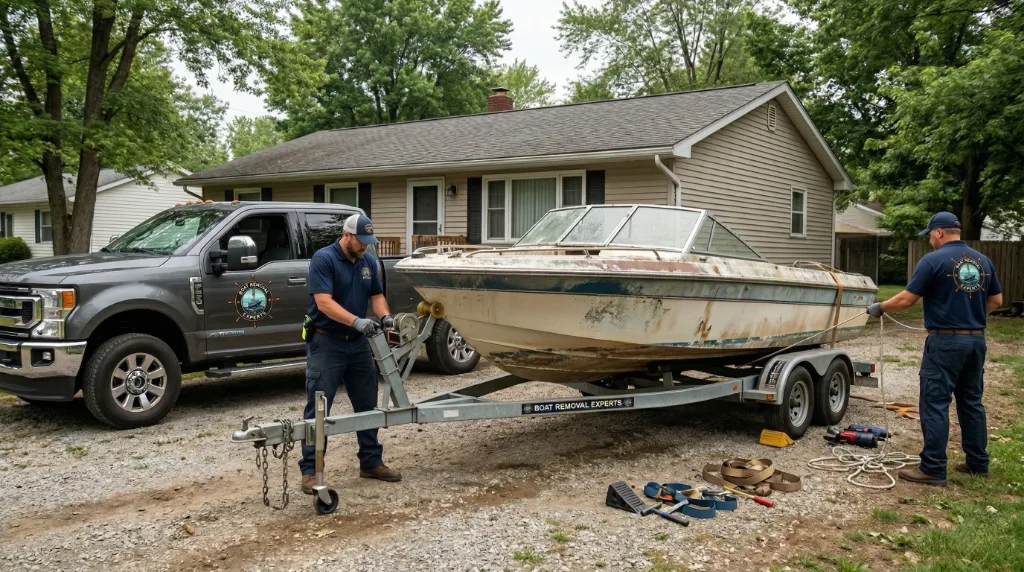
Several critical factors affect how an abandoned boat removal is executed. The physical condition of the hull dictates whether the vessel can be towed intact or must be dismantled on site. If a derelict sits directly on the ground without a cradle or working trailer, specialized lifting equipment is required to raise the structure safely. Hulls that have taken on heavy water or collected dense debris inside the cabin present significant weight challenges that change the loading approach. Access to the property also plays a major role; narrow alleyways, soft mud, low-hanging tree branches, and tight fences determine what size recovery vehicles can reach the vessel without damaging the surrounding ground or structures.
When Washington Residents Call Us

Property owners in Washington, DC call for assistance when outdoor storage becomes unmanageable or local municipal codes mandate the clearing of unmaintained equipment. The regional climate takes a heavy toll on exposed vessels over time. Summer heat bakes gelcoat finishes until they crack, while rain penetrates deep into fiberglass seams, soaking structural plywood decks and rotting interior cabin upholstery. In freezing weather, trapped water inside a hull expands, splitting fiberglass floor frames and causing severe structural collapse. A degraded hull that holds standing water becomes excessively heavy, complicating any recovery effort.
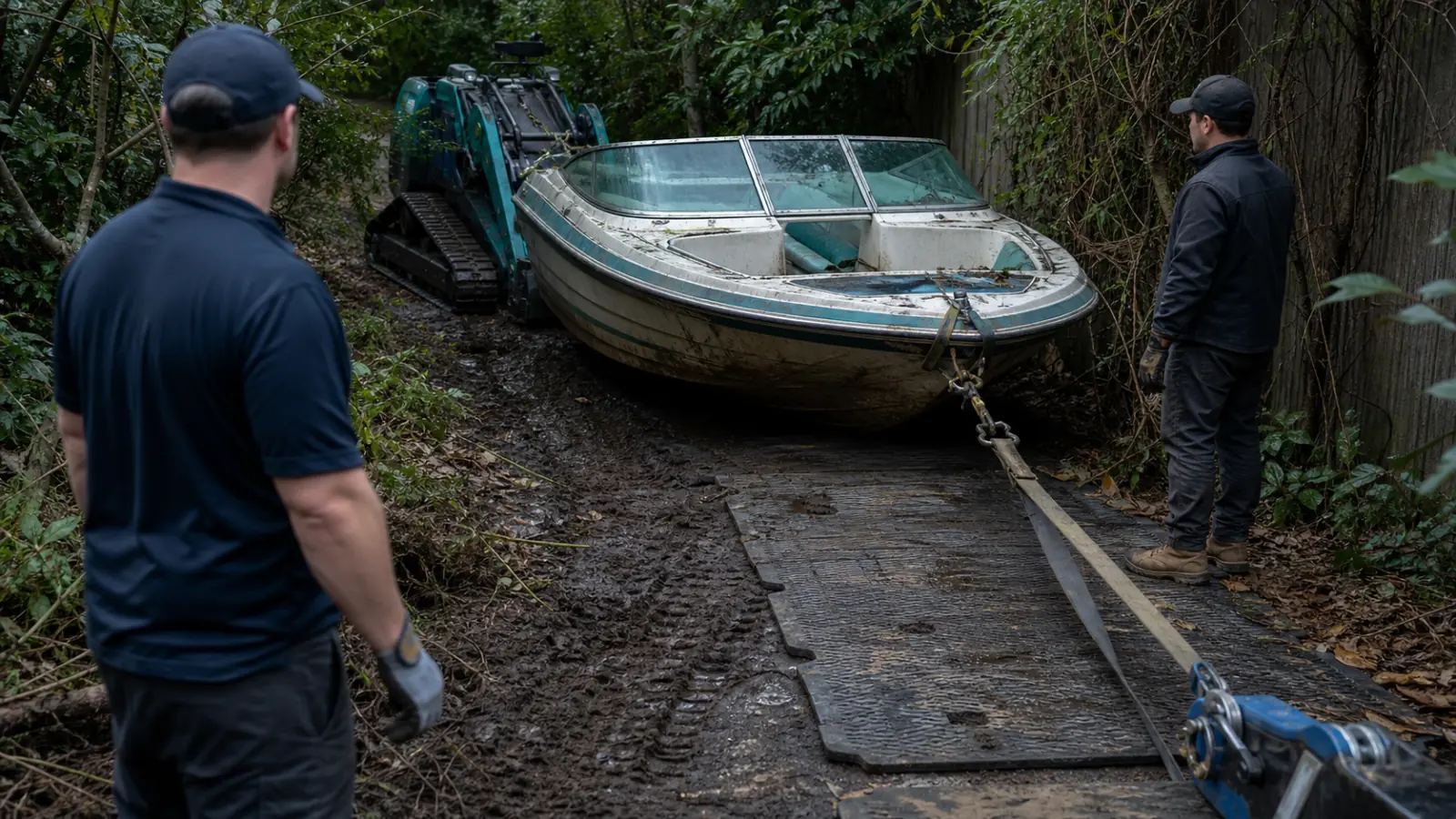
Local site conditions across District of Columbia County heavily influence how the recovery crew handles the job. Navigating a large truck through tight urban street layouts requires precise planning. The crew must evaluate the physical approach, looking at asphalt conditions, ground stability, overhead power lines, and tight residential fence gates. Whether a craft sits on a flat-tired trailer, rests on wooden blocks over soft earth, or remains moored in the water, every access path dictates the choice of winches, blocking, and transport equipment needed to complete the extraction safely.
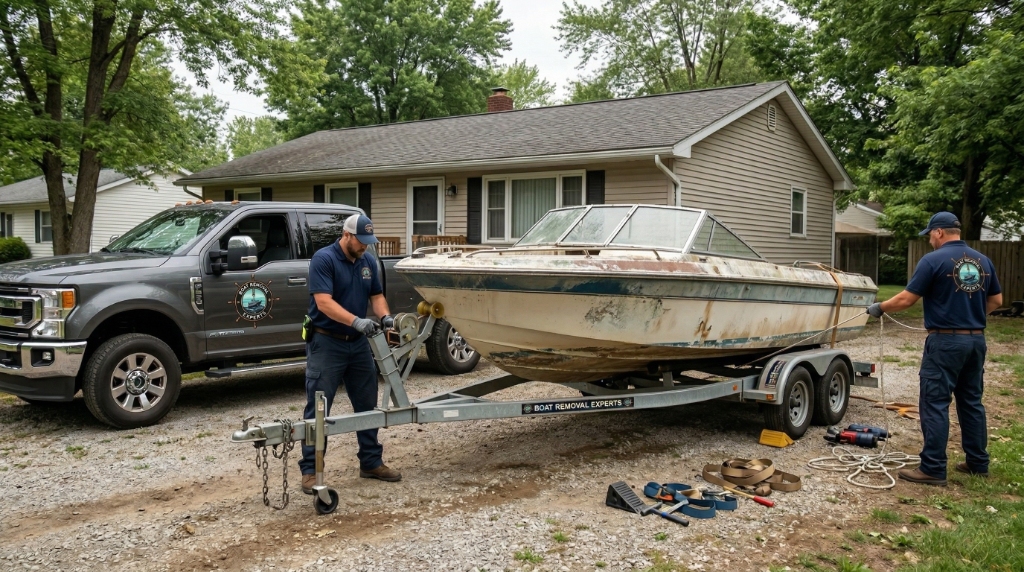
Every Type of Boat We Handle

Situations We Handle

Need Help? We’re Ready.

Contact boat removers directly or request free quotes. We dispatch crews fast.

Our Step-by-Step Process

Assessment

We evaluate the boat’s size, current location, condition, and any environmental or access challenges before we schedule boat removal.

Planning

A detailed plan is built around your vessel — equipment, logistics, timeline, and safety. Services include drainage of oil and fuel before transport.

Execution

Our experienced crew mobilizes to your current location and we tow, haul, or dismantle the vessel using professional marine equipment.

Completion

The vessel is recovered, recycled, or routed to certified boat junkyards for environmentally responsible disposal. The site is left clean.

Equipment & Capabilities

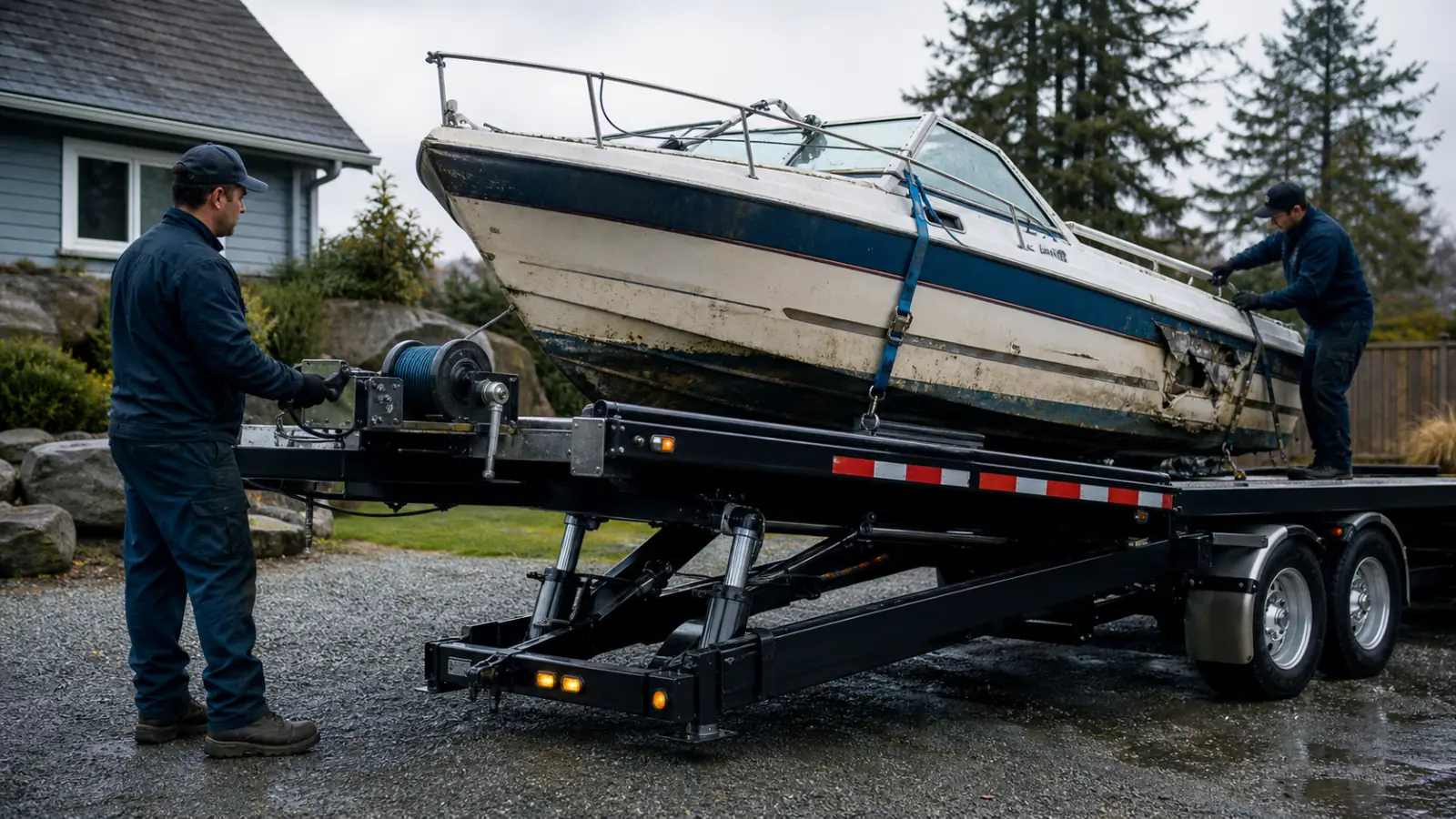
When a vessel's original trailer is completely rusted or missing wheels, specialized equipment gets the load safely onto a transport truck. Heavy-duty winches, drop-deck trailers, hydraulic cranes, and industrial spreading bars allow the crew to lift and secure difficult hulls. When a craft is too wide for narrow gates or too structurally compromized to haul intact, the team must dismantle the fiberglass superstructure directly on site using specialized cutting tools.

Before any hull is moved or broken down, hazardous materials must be carefully identified and removed from the craft. The crew drains remaining fuel, engine oil, bilge fluids, and hydraulic lines, while safely disconnecting marine batteries and removing old electronic components. These regulated fluids and materials are separated for proper handling according to local environmental standards.

Once the vessel is safely cleared and loaded, the crew decides where the materials go based on the physical state of the craft. Usable metal fittings, stainless steel rails, aluminum frames, and lead keels are separated for metal recycling facilities. The remaining fiberglass debris, rotted wood structural members, and compromized cabin materials are taken to permitted regional facilities capable of handling bulk waste material responsibly.

Our boat removal experience covers everything from start to finish  assessment, planning, execution, dismantling, and final cleanup. Marina operators and property owners across District of Columbia trust us to get rid of your junk boat without damage to surrounding property.

FAQ

Boat Removal Questions - Frequently Asked

Common questions from property owners about our junk removal service, dismantling, and marine recovery.

We handle every type of vessel — sailboat, pontoon, fishing boats, jon boats, yachts, and commercial craft. Whether your boat or sailboat floats (or used to), we’ll remove it from any current location.

Yes. Sunken and partially submerged vessel recovery is a core part of our salvage work in District of Columbia. We use lift bags, salvage pumps, and marine cranes to safely raise vessels from underwater.

We respond to inquiries quickly — usually within hours, with same-day service available. For emergency situations, we mobilize as fast as possible. Call us directly for time-sensitive jobs.

No. Every job is handled in-house by our own team and equipment. No middlemen, no handoffs, no surprises.

Cost depends on the boat’s size, current location, condition, and complexity of the job. We provide free assessments and free quotes for every case — contact us and we’ll give you an honest estimate.

Yes. Our boat removal and disposal services include hazardous materials handling, oil and fuel drainage, hull dismantling, and recycling at certified yards — all in compliance with environmental regulations and environmentally responsible standards.

Absolutely. We regularly work in tight marinas, shallow waterways, private docks, backyards, and remote areas. We bring the right gear to reach any current location.

Yes. We frequently work with insurance adjusters on salvage and recovery claims and provide the documentation needed for your claim.

Browse Our Services - Ready to Get Started?

We handle everything from start to finish. Call us now or request a free quote – we’ll dispatch crews and haul your vessel away fast.