

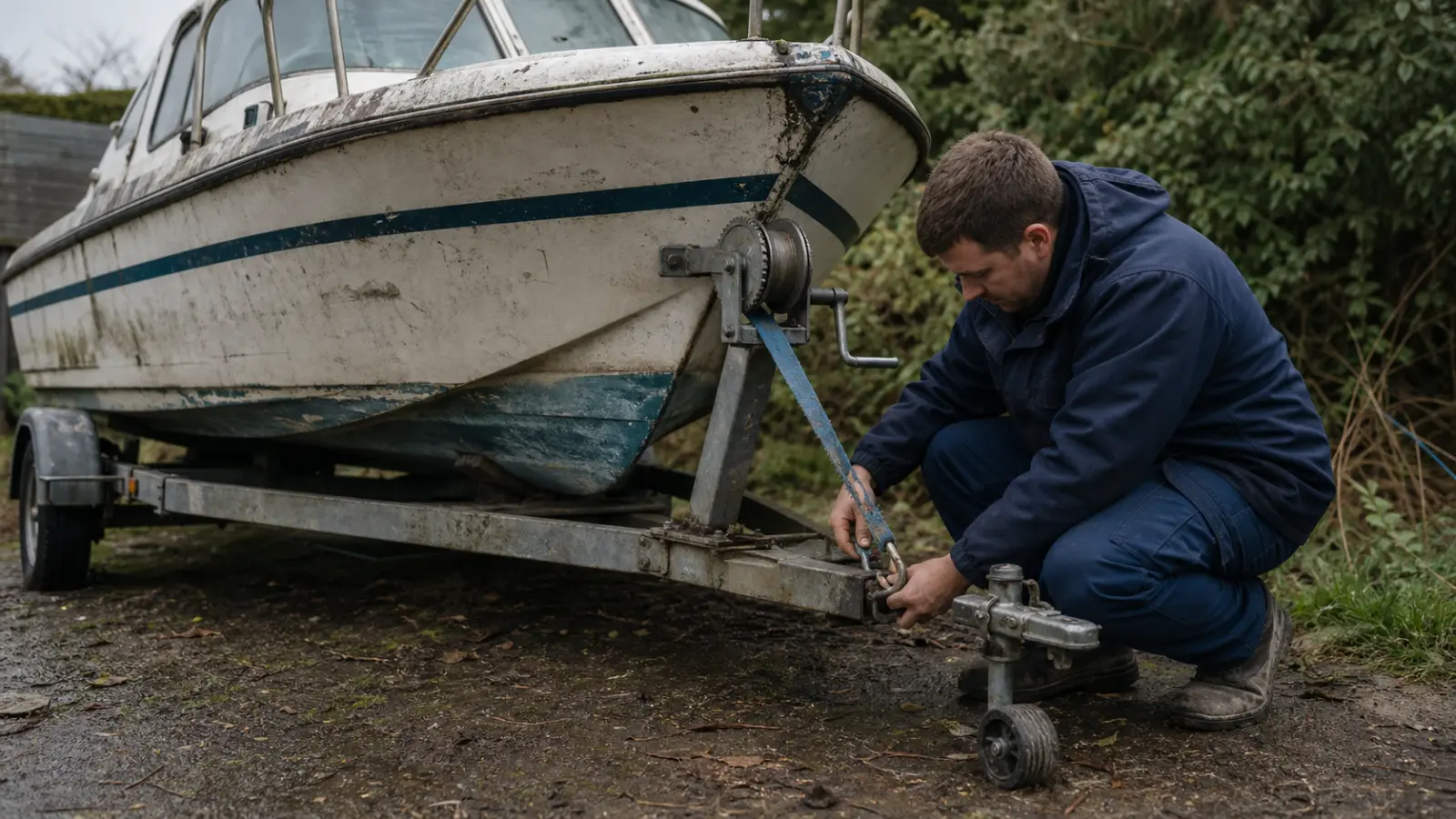
When you clear a junk boat from your property, managing legal liability is just as crucial as hauling the fiberglass away. Our company position is straightforward: we do not always transfer the title into our name, but we always issue a formal release of liability to the owner. Some unregistered outfits will simply haul an old boat down the road with zero paperwork, leaving you legally exposed if that hull is later abandoned along a highway or public launch. Asking about legal release documentation before anyone hitches up to your vessel protects you permanently.
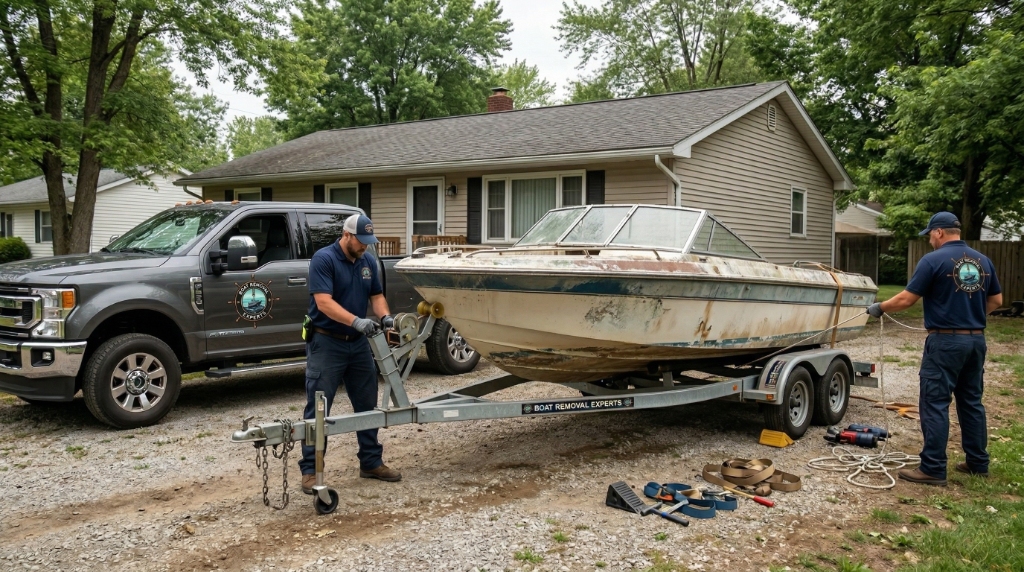
Moving a vessel is far more complex than towing a basic utility trailer. A trailer that has rested in the weeds for years will usually have frozen bearings, dry-rotted tires, and rusted structural crossmembers. The beam of the boat may be wider than your side yard gate, or the hull might rest on custom wooden storage blocks on a soft lawn where a standard tow truck would instantly sink and get stuck.
Call (855) 765-7931 to start.
Send photos through the contact form.
Professional boat disposal goes well beyond simply pulling a vessel down the road with a hitch. When an owner hires a dedicated crew, the work includes evaluating structural integrity, clearing hazardous fluids, handling heavy crane or winch load-ins, and managing the legal paperwork required for proper transport. A derelict hull that has been submerged, broken by ice, or sitting open to the sky requires specialized rigging equipment so it does not collapse into pieces during transport. Understanding these operational requirements ensures the property is cleared without leaving debris behind.
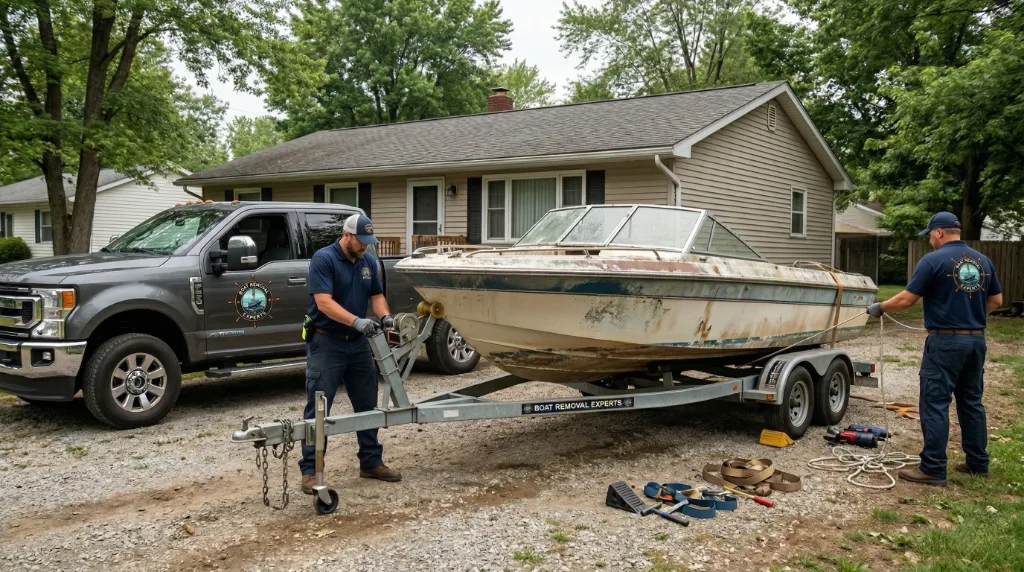
Having a clean title in hand streamlines the hauling process, but property owners frequently need to remove an abandoned boat left behind by a former tenant, a relative, or a previous property buyer. When title paperwork is missing or the vessel lacks a clear HIN, alternative documentation and municipal abandon process forms are utilized to establish proper authorization. This verification step prevents legal disputes after the vessel leaves the site.
When an abandoned boat is left on commercial property, in a private storage lot, or in a slip where fees have ceased, the process depends entirely on land access and current structural conditions. Vessels without mechanical propulsion or working steering cannot simply be towed over water, requiring specialized land-based retrieval tools. Factors such as structural soundess, hull material, ground stability, and legal documentation dictate how the crew safely secures and removes the vessel.
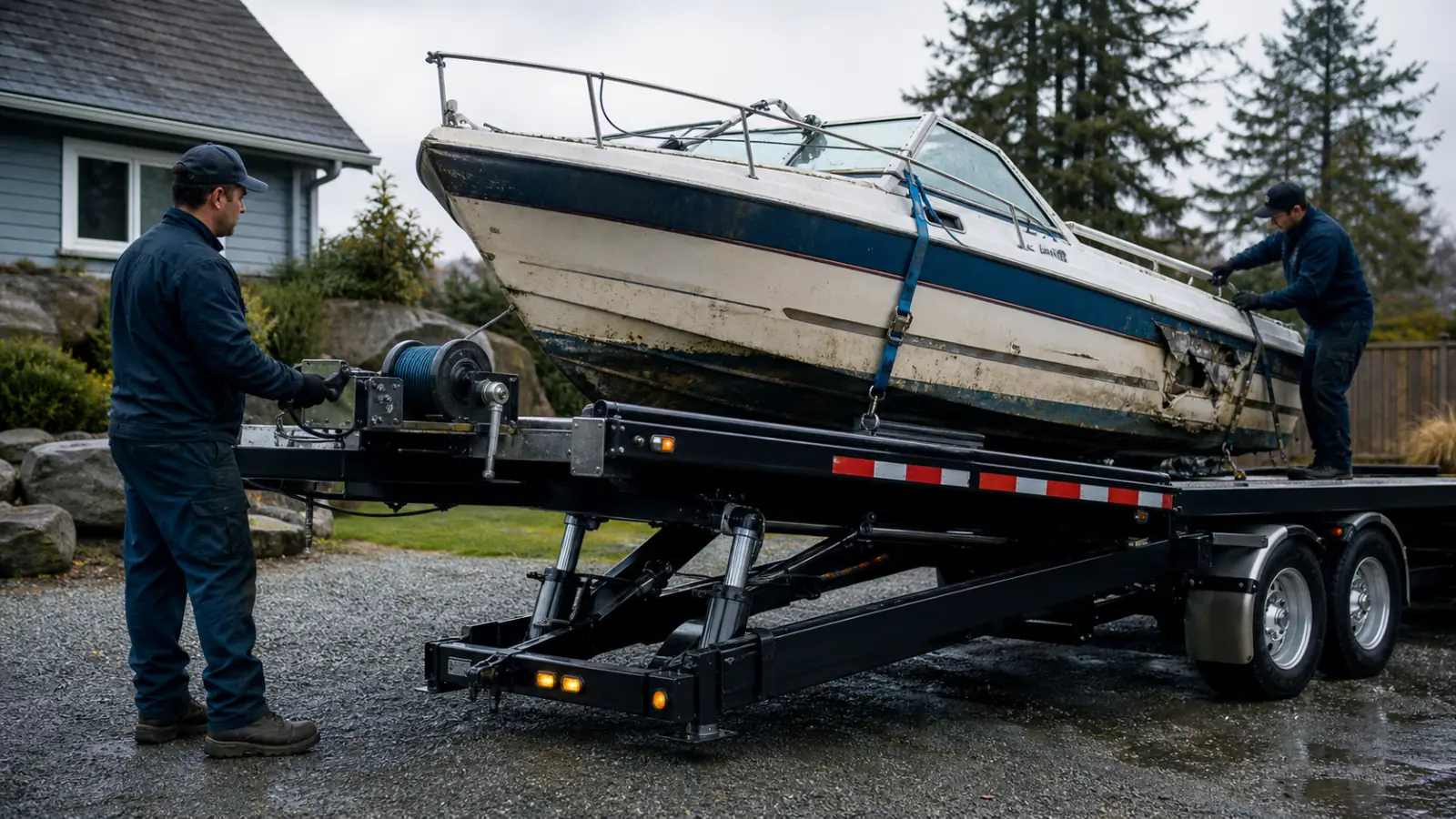
Property owners in White Lake, MI often request assistance when severe weather conditions turn an unused vessel into an environmental hazard. The regional climate inflicts heavy damage on watercraft left exposed through freezing winters and damp springs. Moisture collects in the bilges, freezes, and expands, which cracks gelcoat layers and separates fiberglass laminates. Rain soaking into wooden floor frames, transoms, and upholstery causes severe rot, mold, and deep structural failure. A sitting pontoon, sailboat, or fiberglass fishing boat rapidly accumulates weight from trapped water and debris, making safe handling much more difficult.
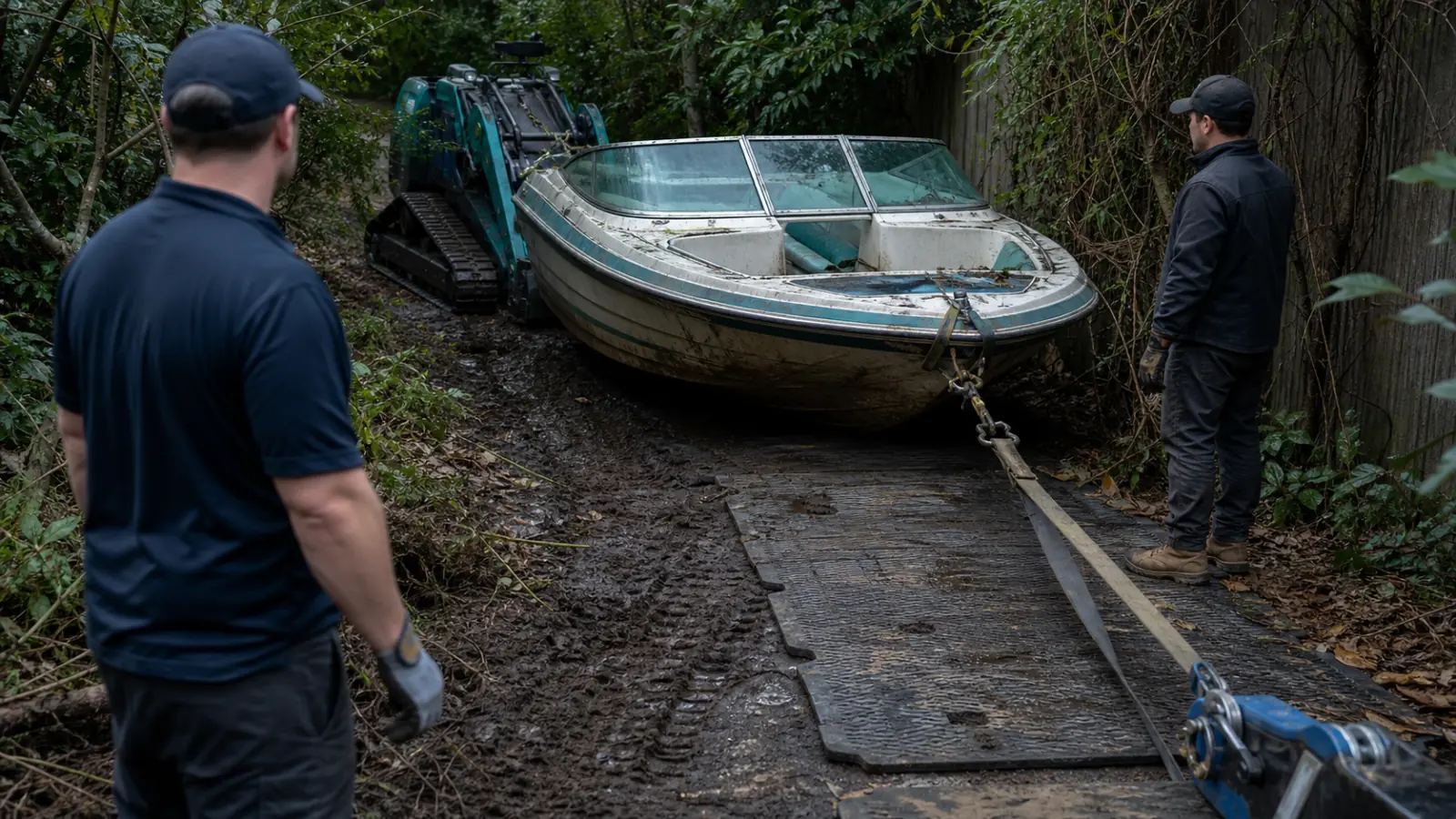
Local terrain and site layouts strongly dictate how a vessel must be extracted from a yard or waterfront location. A heavy pontoon resting on rotting carpeted bunks requires different rigging than a deep-keel sailboat supported by an iron cradle on uneven ground. Crews must evaluate narrow residential driveways, low-hanging tree branches, overhead power lines, and soft soil before moving heavy machinery into place.
Whether a fishing boat rests on an unroadworthy trailer in a back lot, sits on concrete blocks behind a shed, or remains tied to a dock, physical access determines the extraction strategy. Soft earth along the shoreline might prevent heavy truck positioning, requiring long-line winches or specialized transfer dollies to roll the hull out to pavement safely without damaging the surrounding landscape.

Assessment
We evaluate the boat’s size, current location, condition, and any environmental or access challenges before we schedule boat removal.

Planning
A detailed plan is built around your vessel — equipment, logistics, timeline, and safety. Services include drainage of oil and fuel before transport.

Execution
Our experienced crew mobilizes to your current location and we tow, haul, or dismantle the vessel using professional marine equipment.

Completion
The vessel is recovered, recycled, or routed to certified boat junkyards for environmentally responsible disposal. The site is left clean.