
Professional Boat Removal Services in Wilson, NC

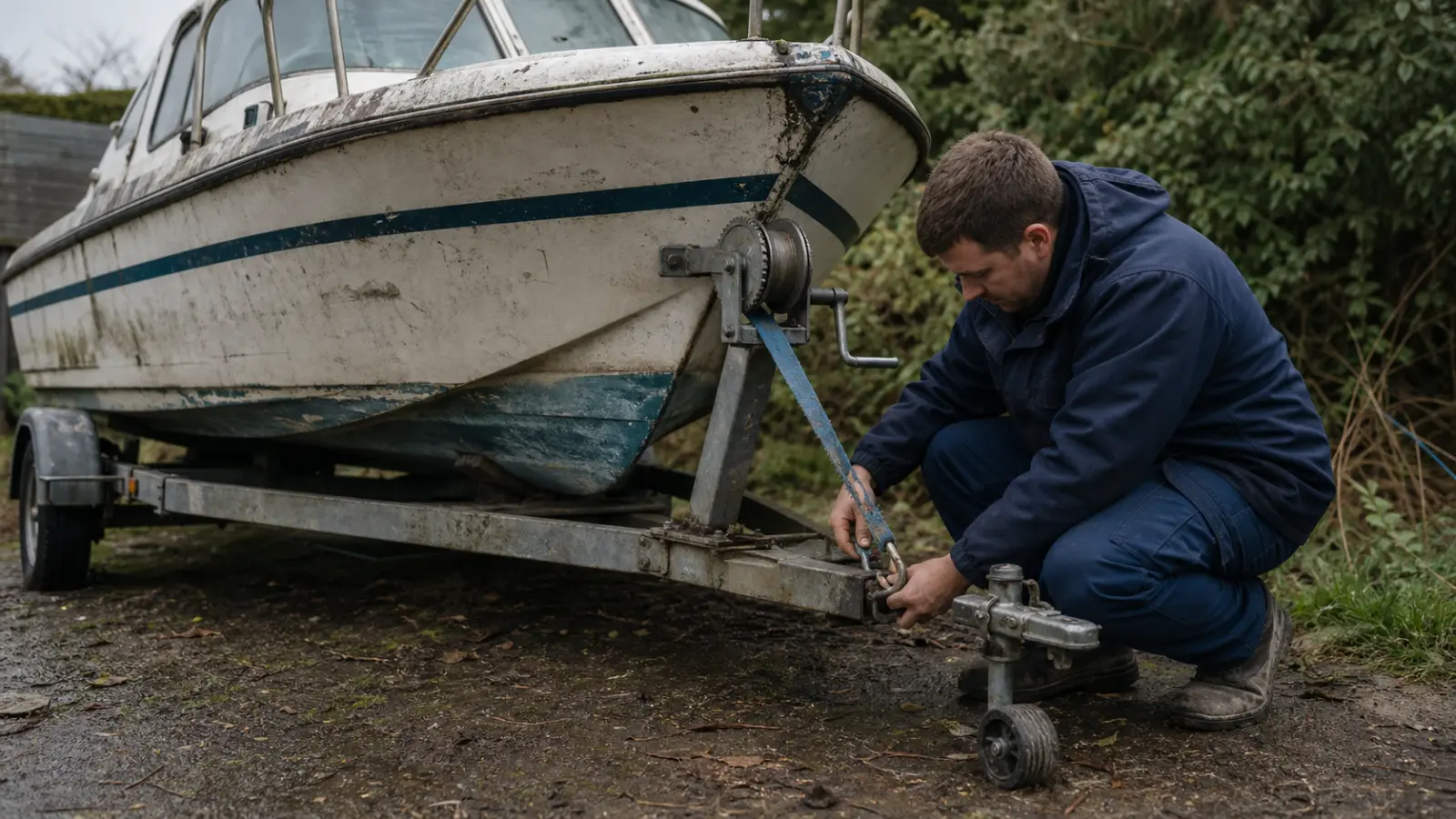
An old boat resting on flat tires behind a shed for six seasons gradually sinks into the soil while weather wears down the deck. In other cases, a property sale in Wilson, NC leaves a buyer holding an unwanted cabin cruiser, or an outboard motor seizes up and the repair bill easily exceeds the actual market value of the vessel. Marinas also send formal notices regarding unpaid slips, forcing quick action before fees multiply. Whatever the situation, an unwanted hull sitting on your land quickly transforms into a major burden that requires specialized junk boat handling.

Is there professional boat removal near me in Wilson, NC? Yes, our crew manages complete extraction, hauling, and physical disposal for any size vessel directly from your property, trailer, or slip.

When our team handles your project, we issue an official release of liability to ensure you are no longer legally responsible for the vessel. While a boat removal service might not always take over the title itself, this documentation guarantees that future liabilities do not follow you. Some operations simply haul an old boat away without signing any paperwork, leaving the original owner fully exposed if the hull is later dumped illegally or abandoned on public land.

Moving a vessel is rarely as simple as hooking up a trailer. A boat remover often faces seized wheel bearings, dry-rotted tires that will not roll, or custom cradles resting on soft turf where heavy trucks sink. Narrow yard gates, low branches, and hulls wider than standard paths present complex physical barriers that demand specialized rigging equipment.

Call 252-888-7819 to start.

Send photos through the contact form.

What Is Boat Removal and When You Need It

True boat disposal involves far more than simply hooking a vehicle to a trailer and driving down the road. When a vessel has been sitting for years, the extraction process must account for structural integrity, legal documentation, environmental hazards, and site clearance. A complete project requires proper rigging, heavy equipment, transit security, and managed sorting of materials long after the hull leaves its resting place in Wilson County.

The status of the paperwork directly impacts how a job proceeds. When an owner possesses a clean title, processing the abandoned boat moves quickly. However, when paperwork is misplaced, missing, or attached to real estate purchased with a derelict vessel left behind, specific documentation steps are required before moving the structural frame. Moving an abandoned boat left on private property or within an unpaid slip requires careful legal verification to ensure the property owner is protected from secondary claims.
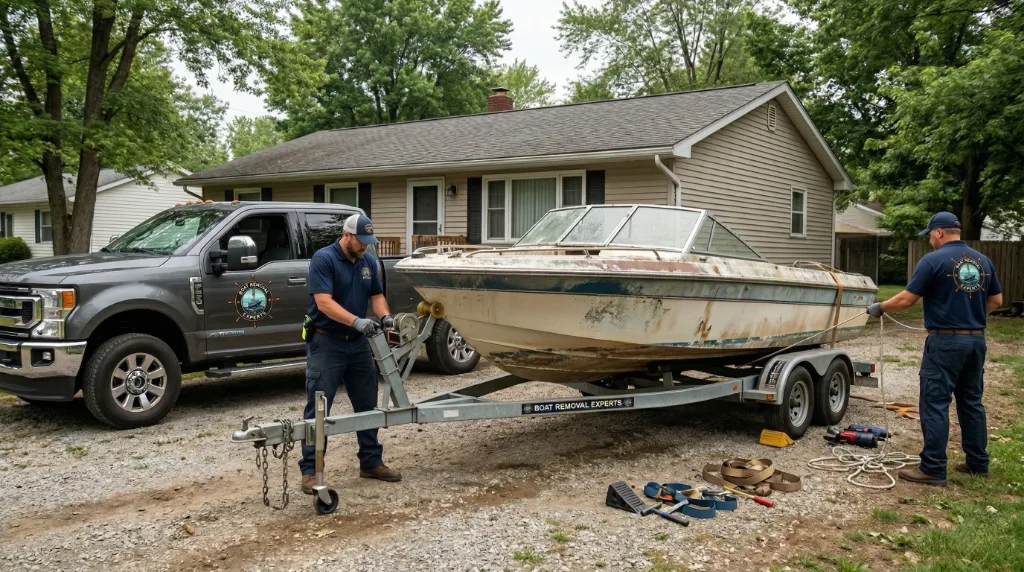
The condition of the vessel dictates every step of the removal strategy. A solid fiberglass hull resting on a highway-ready trailer requires simple transport techniques, whereas an abandoned boat with a compromized floor, missing structural supports, or a rotted back panel requires crane straps, skids, or full on-site breakdown. Whether a hull can be loaded whole or must be split depends on frame stability, weight distribution, and highway haul requirements.
When Wilson Residents Call Us

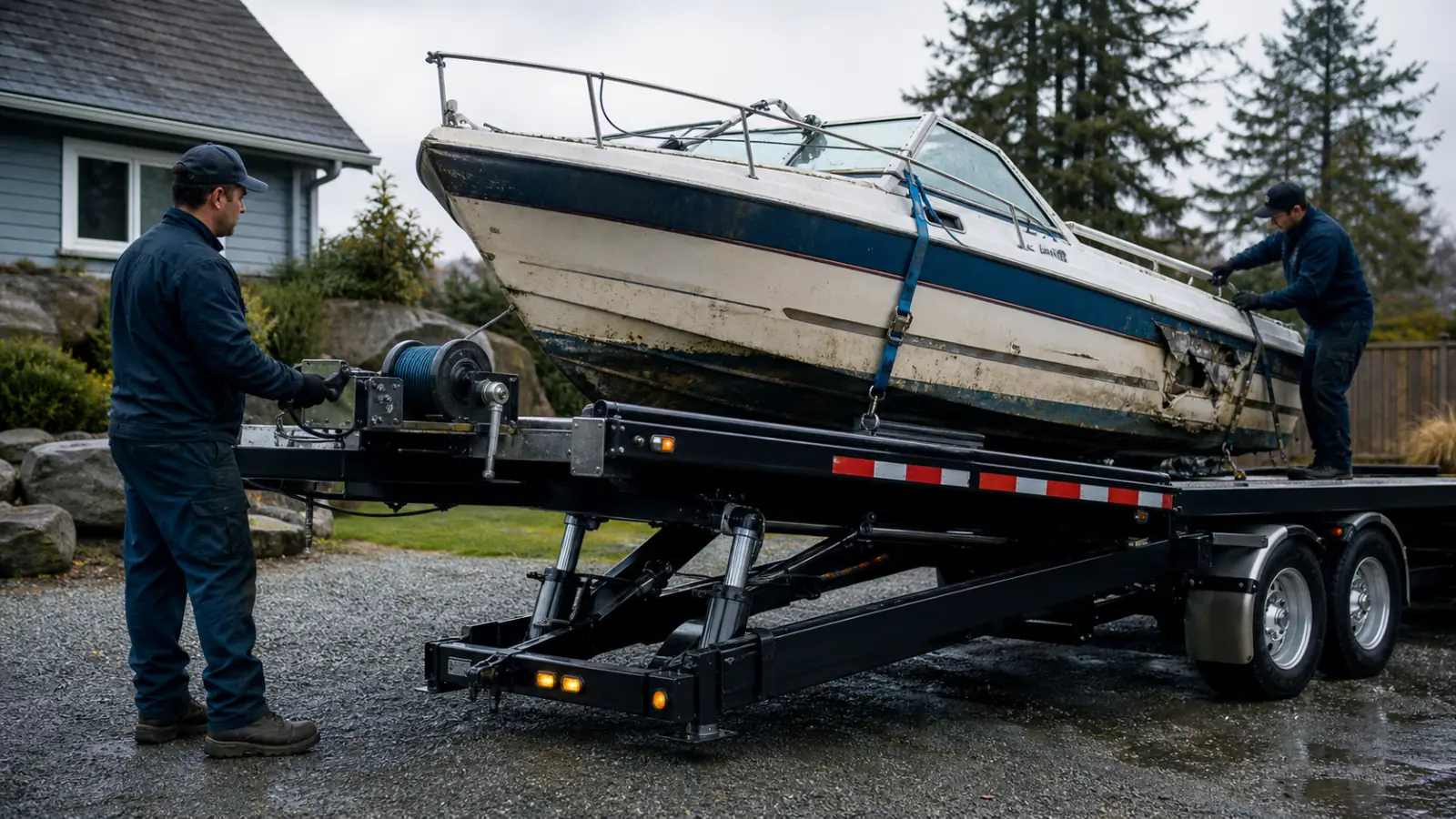
Property owners around Elm City and Black Creek often call for assistance when seasonal weather damages their craft beyond sensible repair. Rainwater accumulation, intense humidity, and severe winter freezes cause rapid deterioration in fiberglass gelcoat, structural plywood, and interior upholstery. When a hull collects stagnant water over long periods, the internal floor frames absorb moisture, adding immense weight while softening the floor until the entire structure becomes dangerous to move using basic winches.
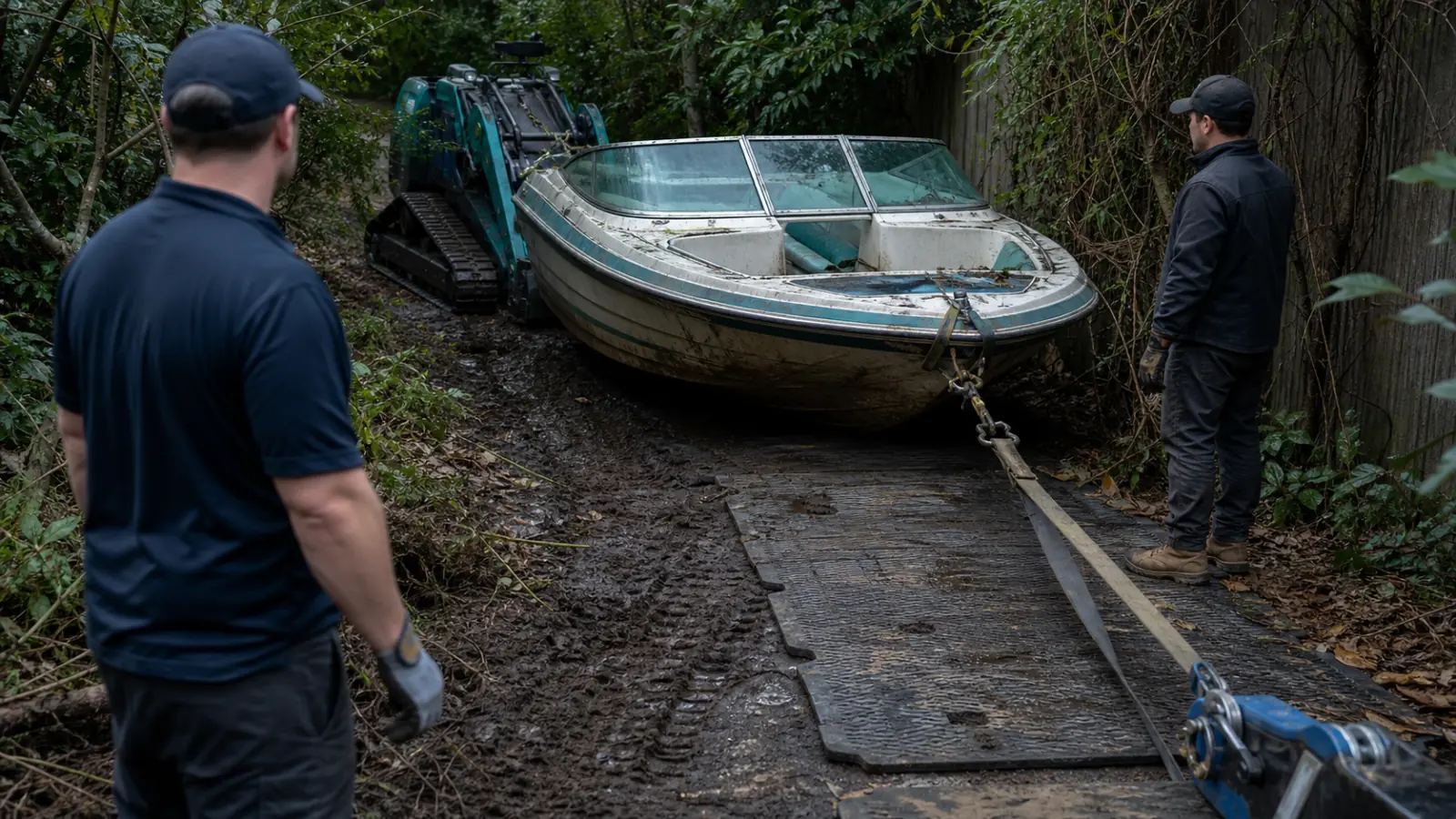
Local geography and yard layouts present unique challenges for extraction teams across Lucama, Sims, and Saratoga. A neglected pontoon or heavy fishing boat might sit tucked behind outbuildings, perched on concrete blocks, or anchored along soft shorelines where standard tow vehicles cannot establish traction. Narrow residential access lanes, overhanging power wires, and tight side yards mean crews must carefully evaluate the approach before moving heavy equipment into position.

The type of vessel also dictates the necessary recovery gear. A wide pontoon boat requires specialized wide-bed transport, a deep-draft sailboat requires balance stands to prevent tipping during transit, and an oversized fishing boat may require cradles if its original trailer has rusted through entirely. The crew adjusts its rigging approach based on terrain, structural strength, and overhead clearances.
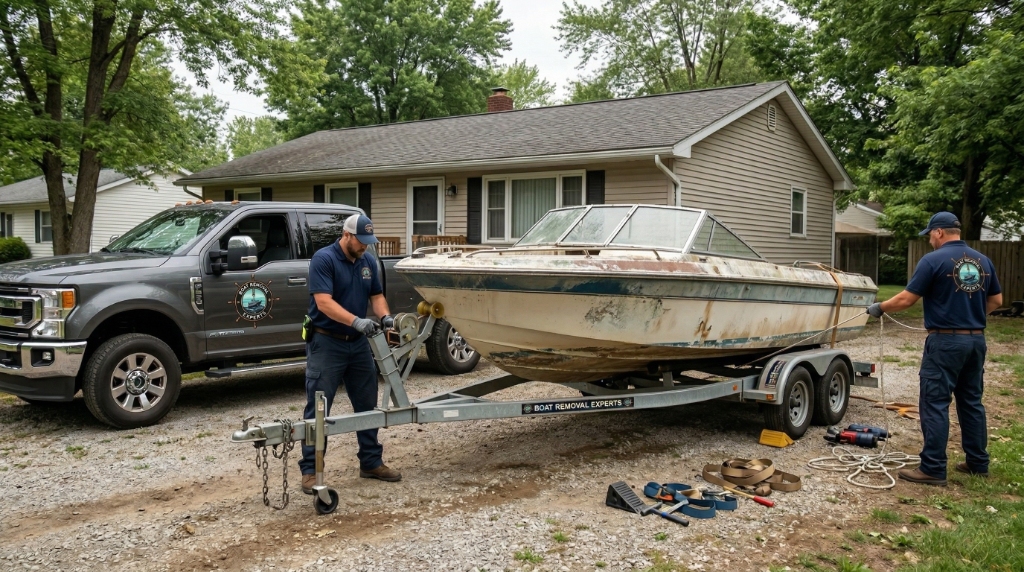
Every Type of Boat We Handle

Situations We Handle

Need Help? We’re Ready.

Contact boat removers directly or request free quotes. We dispatch crews fast.

Our Step-by-Step Process

Assessment

We evaluate the boat’s size, current location, condition, and any environmental or access challenges before we schedule boat removal.

Planning

A detailed plan is built around your vessel — equipment, logistics, timeline, and safety. Services include drainage of oil and fuel before transport.

Execution

Our experienced crew mobilizes to your current location and we tow, haul, or dismantle the vessel using professional marine equipment.

Completion

The vessel is recovered, recycled, or routed to certified boat junkyards for environmentally responsible disposal. The site is left clean.

Equipment & Capabilities

When a vessel cannot roll out on its own tires, specialized heavy equipment takes over the job. Winches, hydraulic jacks, articulating cranes, and heavy-duty slide axles are used to extract a stubborn hull without damaging surrounding property. If a vessel is too wide for gates or structurally ruined, crews dismantle the frame directly on site using saws, metal cutters, and mechanical shears to safely load the sections onto flatbeds.

Before any loading or cutting begins, hazardous materials are isolated and carefully removed from the craft. Technicians drain fuel tanks, extract engine oil, collect hydraulic fluid, safely remove marine batteries, and strip out old electronic displays. Preventing fluid spills is a top priority, protecting the soil and nearby water drainage systems from contamination during the work.

Once fluids and electronics are secured, the remaining components are sorted based on material composition. Fiberglass structures, scrap metal rails, hardware, engines, and clean plastics are separated to maximize recycling opportunities and minimize volume sent to the local landfill. The crew evaluates the vessel upon arrival to choose between full-hull transport, structural sectioning, or complete breakdown depending on safety and accessibility.

Our boat removal experience covers everything from start to finish  assessment, planning, execution, dismantling, and final cleanup. Marina operators and property owners across Wilson County trust us to get rid of your junk boat without damage to surrounding property.

FAQ

Boat Removal Questions - Frequently Asked

Common questions from property owners about our junk removal service, dismantling, and marine recovery.

We handle every type of vessel — sailboat, pontoon, fishing boats, jon boats, yachts, and commercial craft. Whether your boat or sailboat floats (or used to), we’ll remove it from any current location.

Yes. Sunken and partially submerged vessel recovery is a core part of our salvage work in Wilson County. We use lift bags, salvage pumps, and marine cranes to safely raise vessels from underwater.

We respond to inquiries quickly — usually within hours, with same-day service available. For emergency situations, we mobilize as fast as possible. Call us directly for time-sensitive jobs.

No. Every job is handled in-house by our own team and equipment. No middlemen, no handoffs, no surprises.

Cost depends on the boat’s size, current location, condition, and complexity of the job. We provide free assessments and free quotes for every case — contact us and we’ll give you an honest estimate.

Yes. Our boat removal and disposal services include hazardous materials handling, oil and fuel drainage, hull dismantling, and recycling at certified yards — all in compliance with environmental regulations and environmentally responsible standards.

Absolutely. We regularly work in tight marinas, shallow waterways, private docks, backyards, and remote areas. We bring the right gear to reach any current location.

Yes. We frequently work with insurance adjusters on salvage and recovery claims and provide the documentation needed for your claim.

Browse Our Services - Ready to Get Started?

We handle everything from start to finish. Call us now or request a free quote – we’ll dispatch crews and haul your vessel away fast.