
Professional Boat Removal Services in Abilene, TX

An old boat resting on a trailer behind a garage often becomes a permanent fixture once the tires sink into the soil and dry rot cracks the sidewalls. In other cases, a property sale in Abilene, Texas leaves a buyer holding the title to an abandoned cabin cruiser left on the lot, or an outboard motor seizes and the cost to rebuild the engine far exceeds what the vessel is worth. Marinas also issue notices when slip fees go unpaid on a vessel that no longer floats. Regardless of how the vessel ended up stranded, moving a hull that has sat idle for seasons requires more than just hooking up a standard tow vehicle.

Is there boat removal near me in Abilene, TX? Yes, professional boat removal services handle everything from yard extraction to complete haul-away directly from your property.

When arranging for junk boat removal, paperwork protection is just as vital as physical hauling. While our company position does not always include taking over the title, we always issue a formal release of liability to the owner. Some operators simply haul a vessel away without signing any documentation, leaving the original owner legally responsible if the registration remains in their name. Asking for clear liability paperwork before any work begins ensures you are fully protected after the boat leaves your land.

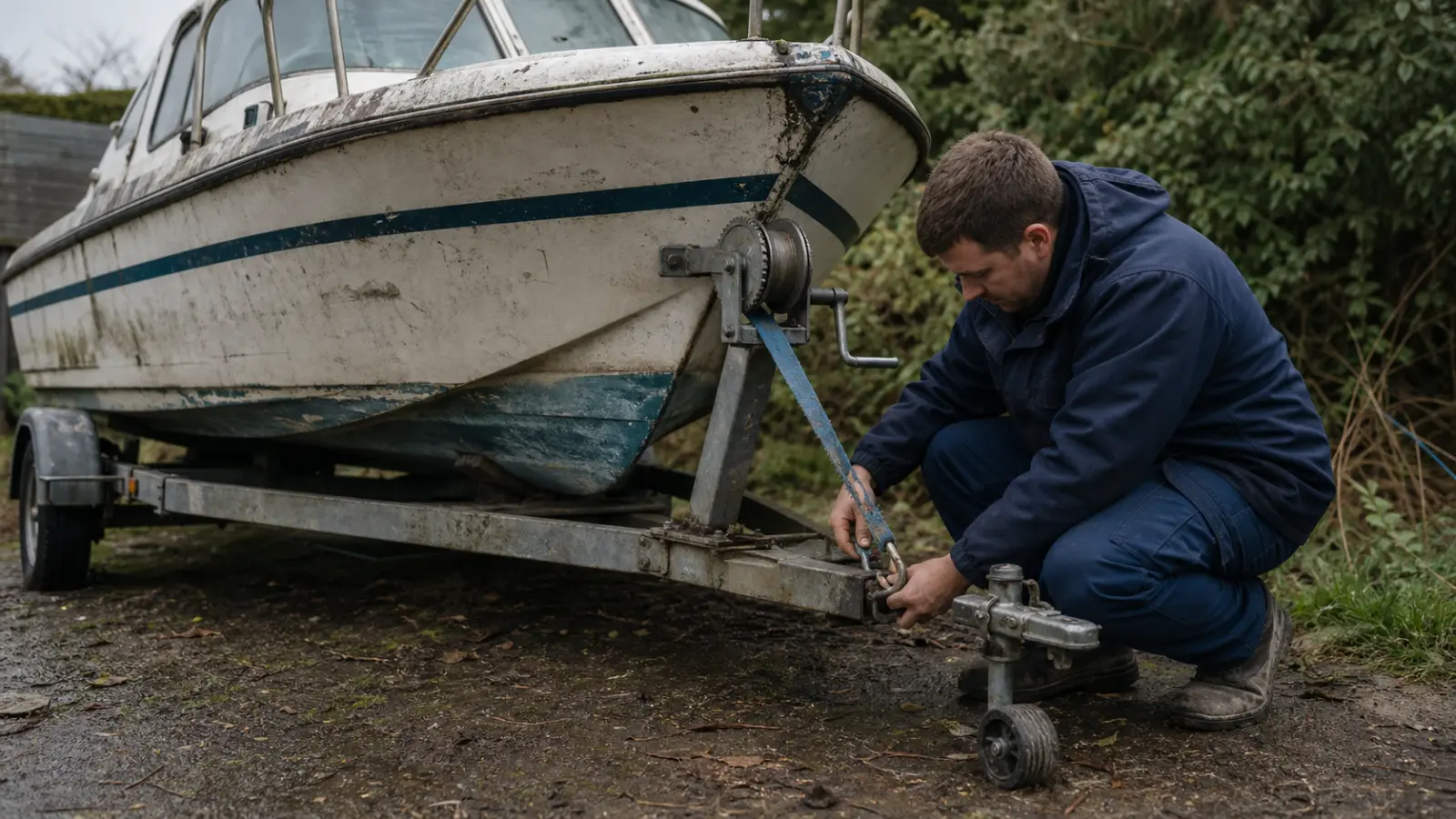
Extracting a vessel is rarely simple because a rusted trailer frame may snap under stress, or the hull may sit on custom wooden cradles off the ground. Narrow side gates, low overhead tree branches, and soft ground that prevents heavy trucks from backing up all complicate the extraction process long before reaching a main road.

Call 325-726-1636 to start.

Send photos through the contact form.

What Is Boat Removal and When You Need It

Professional boat disposal involves far more than hooking up a trailer and driving down the road. Complete service covers the assessment of structural integrity, extracting hulls trapped in tight spaces, loading non-running craft onto flatbeds, and managing the final transport of the material. When an owner possesses a clear title and current registration, the transfer process remains straightforward. However, when paperwork is lost, missing, or the vessel was inherited along with real estate, the process changes significantly. An abandoned boat left on private property or sitting in an unpaid slip requires specific documentation before any crew can clear it from the location.
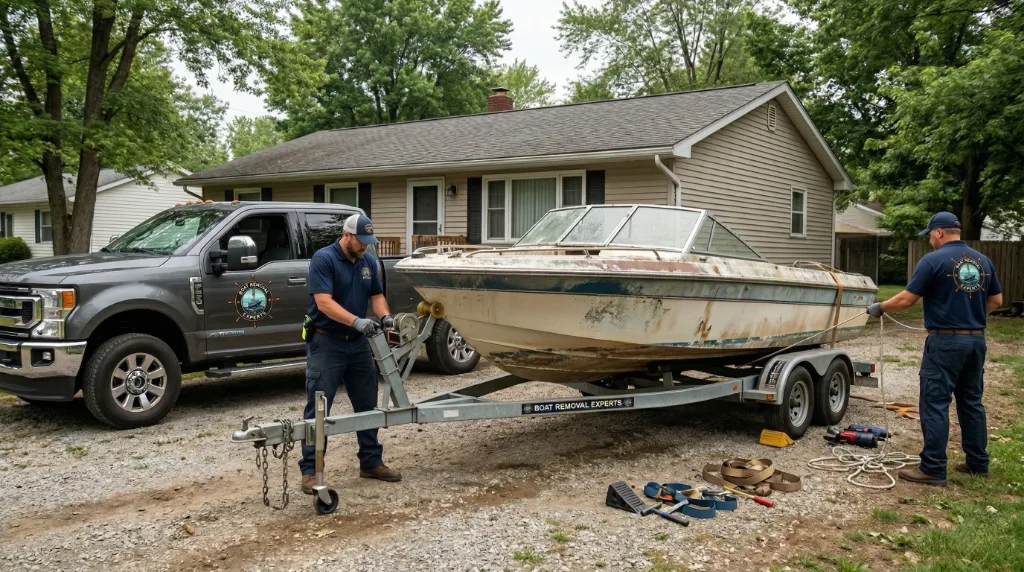
The condition of the vessel directly dictates what methods are required to complete the job. A derelict hull that has taken on water or structural damage cannot be towed safely on public roads using standard methods. Whether dealing with a runabout, an abandoned boat on a commercial lot, or a severe breakdown in a yard, the physical state of the structure, access to the site, and the legal status of the vessel determine how the crew handles the extraction and final processing.
When Abilene Residents Call Us

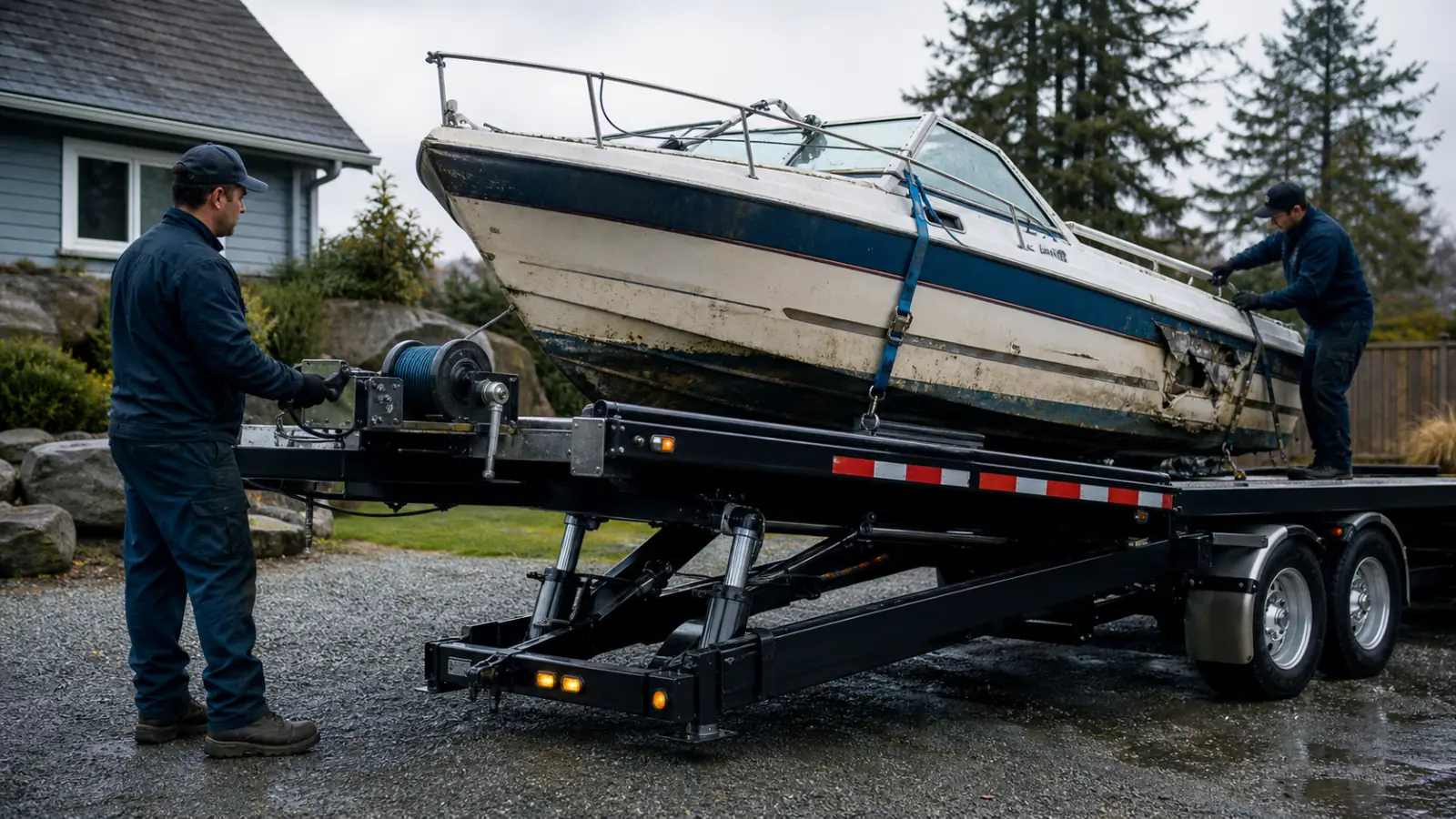
The harsh climate in Abilene, Texas takes a heavy toll on watercraft left exposed to the elements. Intense heat and sun break down fiberglass gelcoat until it chalks and cracks, while rain accumulating inside an open hull causes floorboards, back panel wood, and internal floor frames to rot completely. Upholstery splits, allowing moisture to soak deep into foam seats, adding hundreds of pounds of hidden weight to a vessel that is already difficult to move. This rot and added water weight make simple towing impossible, as weak hulls can split open if lifted incorrectly.
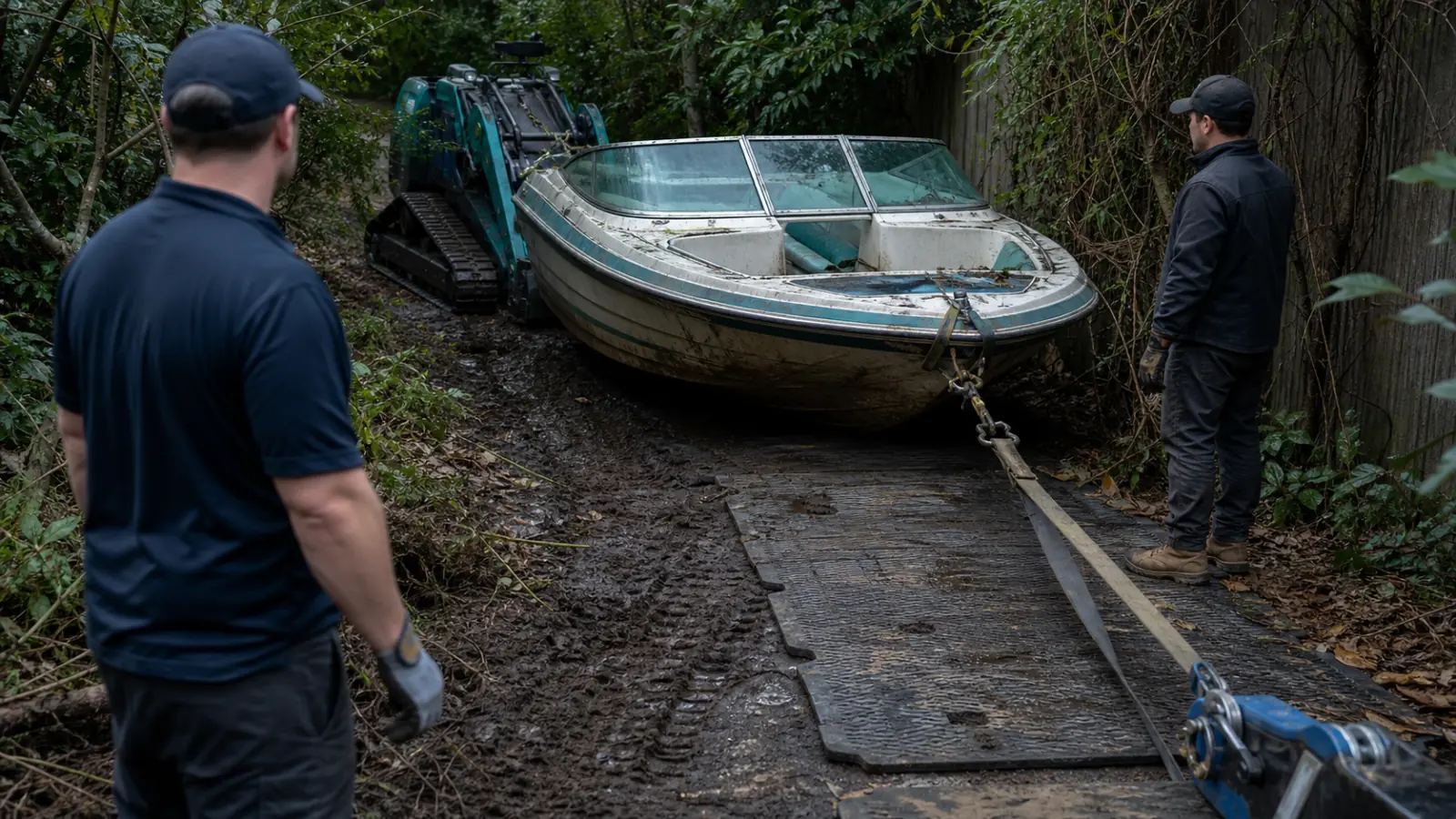
Local property layouts also dictate how a fishing boat, pontoon, or sailboat must be removed. In nearby areas like Impact, Tye, Potosi, Hawley, and Buffalo Gap, properties often feature long dirt driveways, narrow access gates, or low-hanging power lines that prevent large rigs from entering. Whether a hull rests on flat ground, raised blocks, a flat-tired trailer, or along the shoreline, the physical path from the resting spot to the street controls what equipment the crew must deploy to winch or lift the vessel safely.
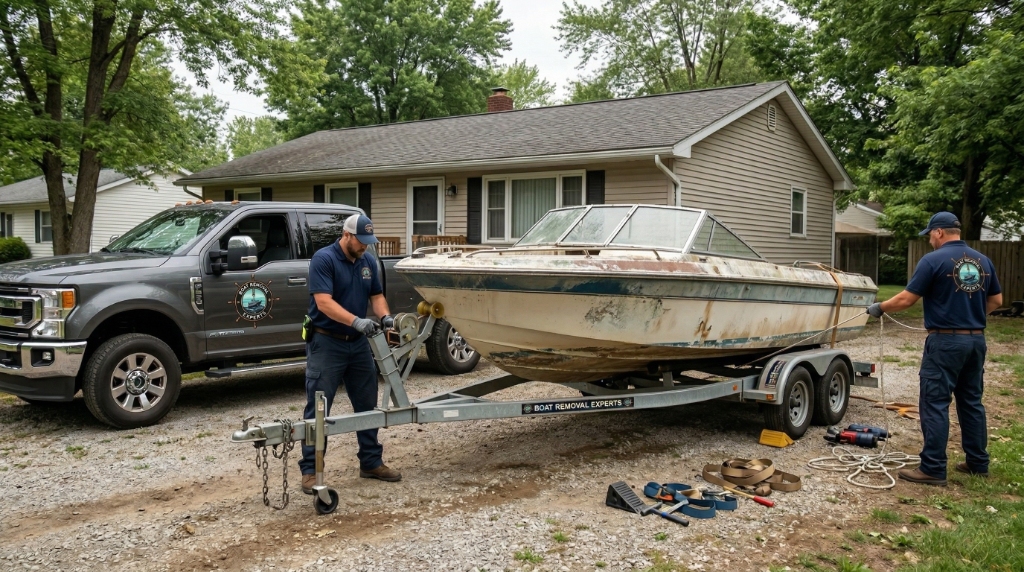
Every Type of Boat We Handle

Situations We Handle

Need Help? We’re Ready.

Contact boat removers directly or request free quotes. We dispatch crews fast.

Our Step-by-Step Process

Assessment

We evaluate the boat’s size, current location, condition, and any environmental or access challenges before we schedule boat removal.

Planning

A detailed plan is built around your vessel — equipment, logistics, timeline, and safety. Services include drainage of oil and fuel before transport.

Execution

Our experienced crew mobilizes to your current location and we tow, haul, or dismantle the vessel using professional marine equipment.

Completion

The vessel is recovered, recycled, or routed to certified boat junkyards for environmentally responsible disposal. The site is left clean.

Equipment & Capabilities

When a vessel cannot roll out on its own tires, the crew evaluates the structure to select the right recovery gear. Heavy winches, specialized bunks, and hydraulic equipment are used to pull flat-tired trailers or bare hulls onto transport vehicles. If a hull is too wide to pass through gates, structurally unsound for road transport, or impossible to maneuver out of a backyard in one piece, crews must dismantle the structure directly on site using heavy cutting tools. The layout of the property and physical condition of the vessel dictate whether full tear-down is necessary.

Before any hull cut-down or transport takes place, fluids and hazardous materials must be safely removed. Crew members drain remaining fuel, motor oil, and bilge fluids, while disconnecting marine batteries, pyrotechnics, and electronic components to ensure safe handling. Once prepped, the fate of the materials depends on their makeup. Metal fittings, aluminum hulls, and lead keels are sorted for metal recycling, while fiberglass fragments and degraded hull materials are prepared for proper landfill containment or specialized processing facilities according to environmental rules.

Our boat removal experience covers everything from start to finish  assessment, planning, execution, dismantling, and final cleanup. Marina operators and property owners across Jones County trust us to get rid of your junk boat without damage to surrounding property.

FAQ

Boat Removal Questions - Frequently Asked

Common questions from property owners about our junk removal service, dismantling, and marine recovery.

We handle every type of vessel — sailboat, pontoon, fishing boats, jon boats, yachts, and commercial craft. Whether your boat or sailboat floats (or used to), we’ll remove it from any current location.

Yes. Sunken and partially submerged vessel recovery is a core part of our salvage work in Jones County. We use lift bags, salvage pumps, and marine cranes to safely raise vessels from underwater.

We respond to inquiries quickly — usually within hours, with same-day service available. For emergency situations, we mobilize as fast as possible. Call us directly for time-sensitive jobs.

No. Every job is handled in-house by our own team and equipment. No middlemen, no handoffs, no surprises.

Cost depends on the boat’s size, current location, condition, and complexity of the job. We provide free assessments and free quotes for every case — contact us and we’ll give you an honest estimate.

Yes. Our boat removal and disposal services include hazardous materials handling, oil and fuel drainage, hull dismantling, and recycling at certified yards — all in compliance with environmental regulations and environmentally responsible standards.

Absolutely. We regularly work in tight marinas, shallow waterways, private docks, backyards, and remote areas. We bring the right gear to reach any current location.

Yes. We frequently work with insurance adjusters on salvage and recovery claims and provide the documentation needed for your claim.

Browse Our Services - Ready to Get Started?

We handle everything from start to finish. Call us now or request a free quote – we’ll dispatch crews and haul your vessel away fast.