
Professional Boat Removal Services in Big Spring, TX

An old boat sits on a trailer behind a garage for six seasons until the tires flatten into the dirt and weeds grow through the axle. In other cases, a property is sold with an unwanted cabin cruiser left on the lot, or an outboard engine seizes up and a complete rebuild costs far more than the vessel is worth. Marinas also send formal notices regarding unpaid slip fees, leaving property owners struggling to figure out how to clean up the space. Leaving an unused hull exposed to the elements only causes it to deteriorate further, making eventual transport much more complicated.

Is there boat removal near me in Big Spring, TX? Boat Removal Experts provides complete hauling and site clearing for unwanted vessels throughout Big Spring, TX, handling all loading and transport details directly from your property.

When clearing a vessel, our company position is straightforward: we do not always transfer the title, but we always issue a release of liability. Some unverified operators simply haul a vessel away without completing any paperwork, leaving the legal liability and potential abandoned property fines tied to the original owner. It is always worth asking how documentation is handled before allowing anyone to tow a vessel away. Our formal documentation ensures your legal responsibility ends the moment the load leaves your land.

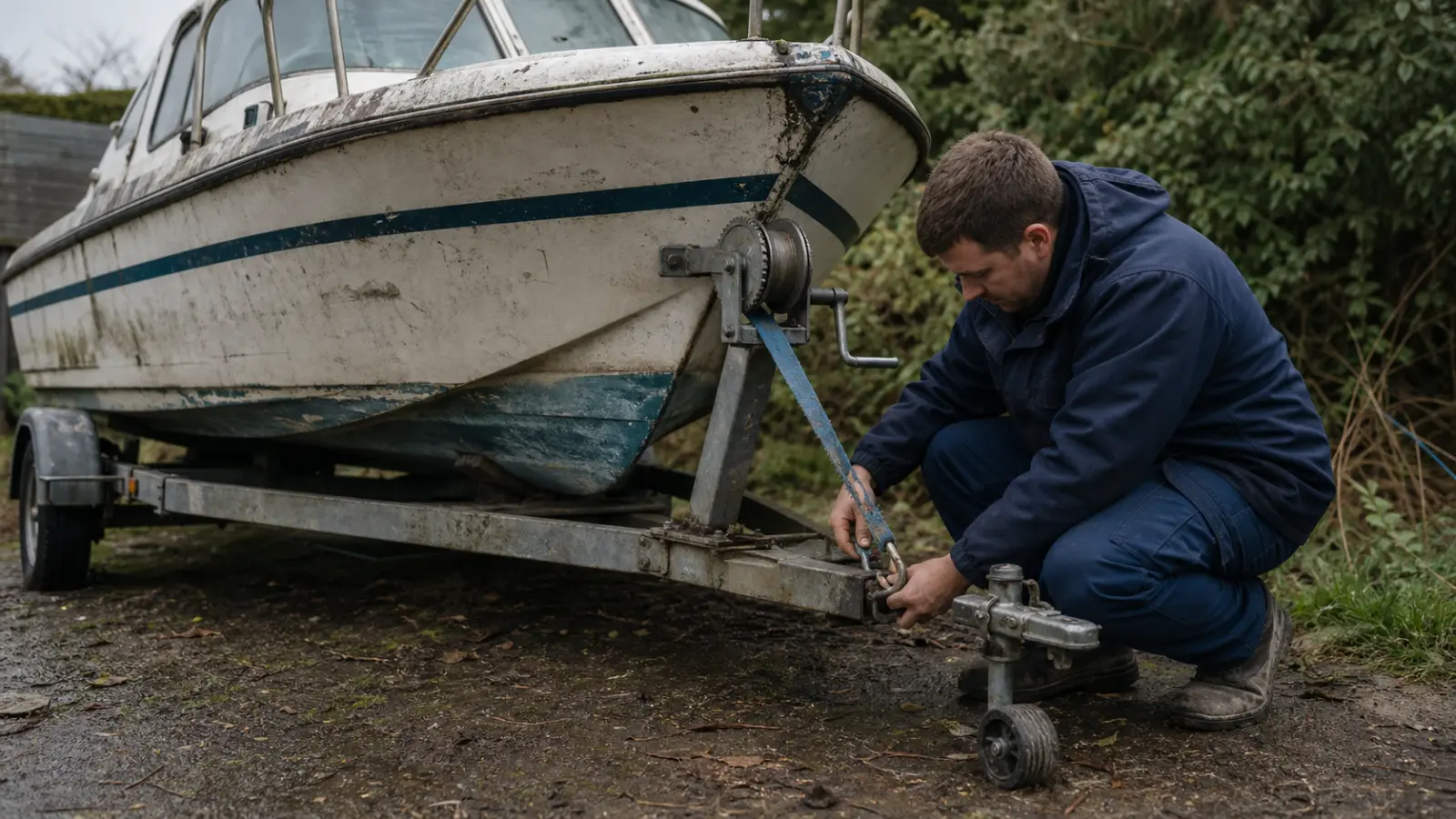
Moving a hull is rarely as simple as hooking up a hitch. A trailer sitting in the dirt often has seized wheel bearings, dry-rotted tires, or rusted frames that cannot support weight. When a vessel rests on a cradle, sits directly on the grass, or has a beam wider than a backyard gate, standard towing equipment fails, requiring specialized equipment to pull it out safely without damaging nearby structures.

Call 432-278-1133 to start.

Send photos through the contact form.

What Is Boat Removal and When You Need It

Professional boat disposal goes far beyond simply towing a hull down the road. Complete boat removal includes evaluating structural integrity, rigging specialized lifting straps, maneuvering heavy equipment into tight residential yards, and hauling the vessel to an authorized processing facility. When an owner possesses a clean title and current registration, the haul-away process is straightforward. However, when paperwork is lost, missing, or the vessel was inherited along with a newly purchased parcel of land in Howard County, specific state procedures must be followed. An abandoned boat left on private property or inside an unpaid storage yard requires legal notification steps before physical clearing can begin. What affects the ultimate path of the vessel includes the presence of a clear hull identification number, the physical state of the back panel, and whether local property laws classify the vessel as a derelict hazard. Whether dealing with a neglected craft in Sand Springs or an unwanted hull near Coahoma, having proper documentation protects property owners from future municipal fines and property disputes.
When Big Spring Residents Call Us

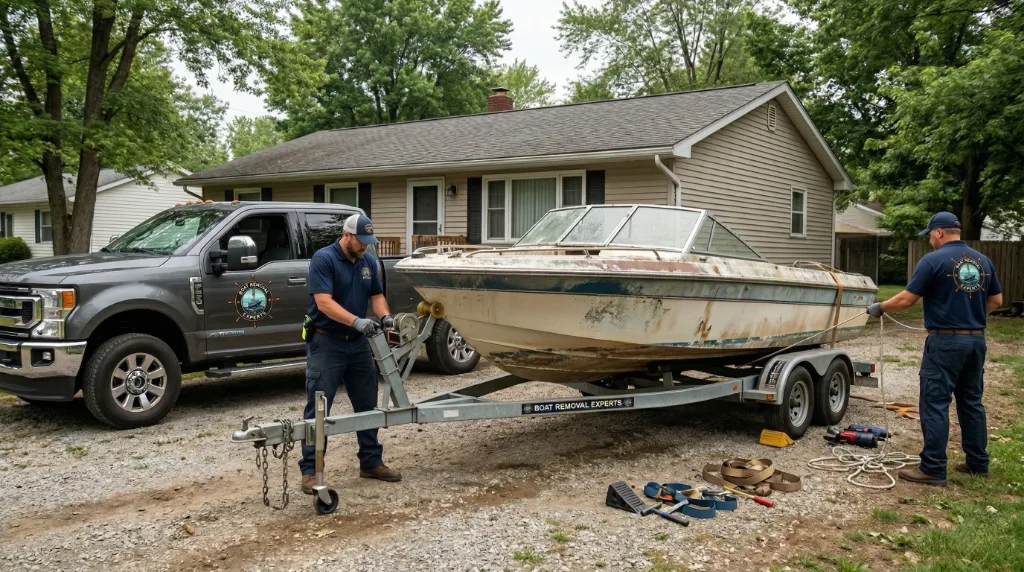
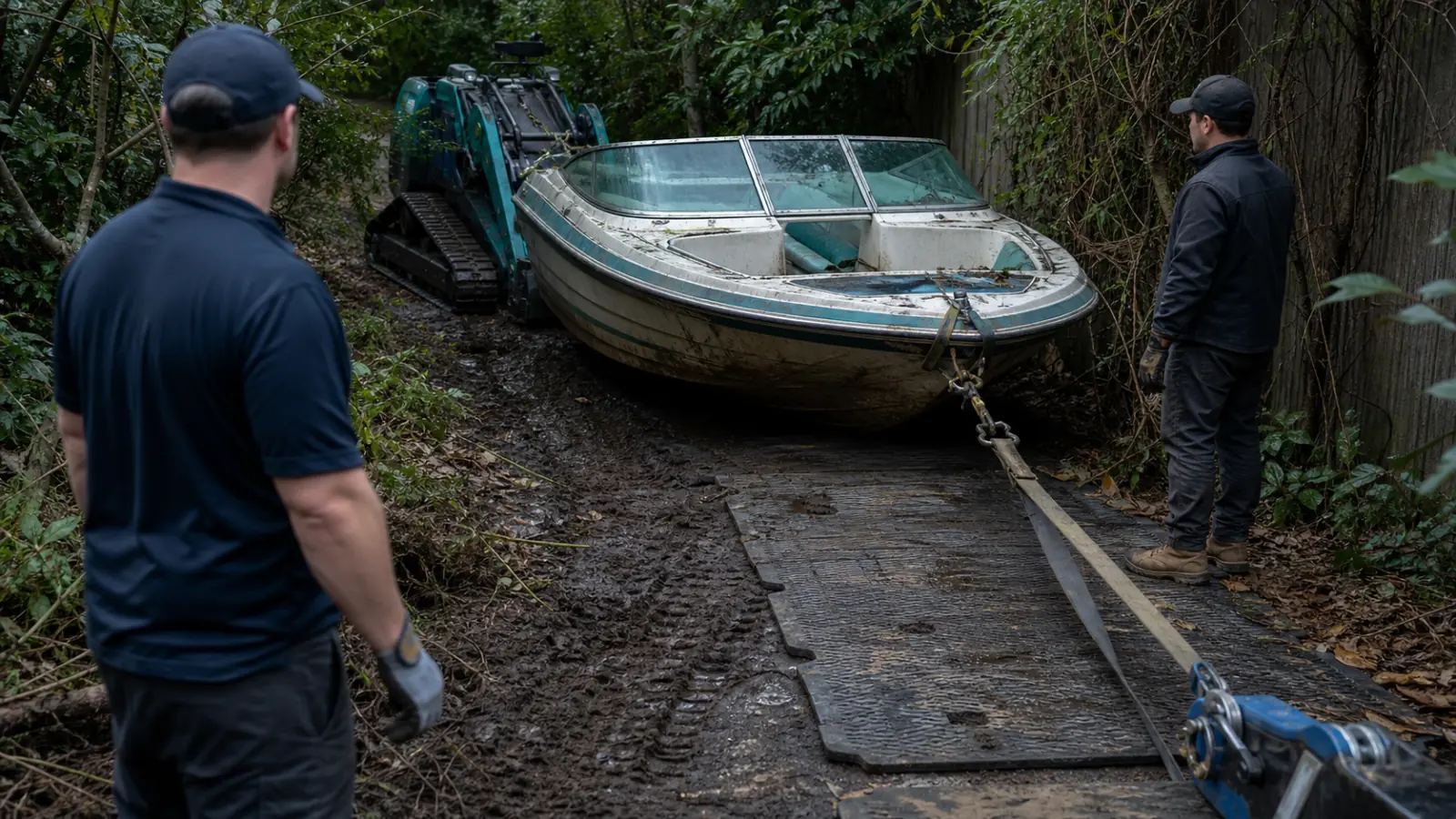
Harsh sunlight and sudden temperature shifts take a heavy toll on parked vessels left outdoors. Continuous sun exposure degrades gelcoat layers, causing severe oxidation, chalking, and structural cracking along the topsides. Rainwater collecting inside an open cockpit rots wooden deck floors, destroys upholstery, and creates heavy stagnant pools that strain aging trailer frames. Over time, a neglected pontoon, a fiberglass fishing boat, or a heavy sailboat absorbs moisture, causing fiberglass delamination and doubling the total weight of the vessel. Local site access heavily dictates how a crew approaches the job in places like Forsan, Stanton, and Ackerly. Narrow driveways, soft dirt yards, low-hanging tree branches, and overhead power lines all impact how heavy transport rigs navigate the property. Whether a hull rests on flat ground, raised wooden blocks, a rusted trailer, or along a muddy shore, the surrounding terrain determines whether crane lifts, heavy winches, or flatbed trailers are necessary to execute the transport without damaging nearby structures.
Every Type of Boat We Handle

Situations We Handle

Need Help? We’re Ready.

Contact boat removers directly or request free quotes. We dispatch crews fast.

Our Step-by-Step Process

Assessment

We evaluate the boat’s size, current location, condition, and any environmental or access challenges before we schedule boat removal.

Planning

A detailed plan is built around your vessel — equipment, logistics, timeline, and safety. Services include drainage of oil and fuel before transport.

Execution

Our experienced crew mobilizes to your current location and we tow, haul, or dismantle the vessel using professional marine equipment.

Completion

The vessel is recovered, recycled, or routed to certified boat junkyards for environmentally responsible disposal. The site is left clean.

Equipment & Capabilities

When an old trailer is too rusted to roll, crews utilize heavy-duty winches, hydraulic jacks, low-profile skids, and specialized bunk trailers to load the vessel safely. If a large hull cannot physically clear a narrow property gate or sits in a confined backyard, the crew must dismantle the fiberglass structure directly on site using commercial cutting equipment. Before any vessel is moved or broken down, all hazardous materials must be systematically cleared. Crew members drain remaining fuel tanks, strip engine crankcases of motor oil, disconnect heavy marine batteries, and remove onboard electronics to prevent environmental contamination. What happens to the structural materials afterwards depends strictly on what the crew finds during the initial physical assessment. Clean metals like aluminum hulls, stainless steel hardware, and trailer frames are separated for metal recycling, while severely degraded fiberglass and rotted internal wood are prepped for proper industrial waste containment. Each salvage project requires custom handling based on structural soundness, hull materials, and site constraints.

Our boat removal experience covers everything from start to finish  assessment, planning, execution, dismantling, and final cleanup. Marina operators and property owners across Howard County trust us to get rid of your junk boat without damage to surrounding property.

FAQ

Boat Removal Questions - Frequently Asked

Common questions from property owners about our junk removal service, dismantling, and marine recovery.

We handle every type of vessel — sailboat, pontoon, fishing boats, jon boats, yachts, and commercial craft. Whether your boat or sailboat floats (or used to), we’ll remove it from any current location.

Yes. Sunken and partially submerged vessel recovery is a core part of our salvage work in Howard County. We use lift bags, salvage pumps, and marine cranes to safely raise vessels from underwater.

We respond to inquiries quickly — usually within hours, with same-day service available. For emergency situations, we mobilize as fast as possible. Call us directly for time-sensitive jobs.

No. Every job is handled in-house by our own team and equipment. No middlemen, no handoffs, no surprises.

Cost depends on the boat’s size, current location, condition, and complexity of the job. We provide free assessments and free quotes for every case — contact us and we’ll give you an honest estimate.

Yes. Our boat removal and disposal services include hazardous materials handling, oil and fuel drainage, hull dismantling, and recycling at certified yards — all in compliance with environmental regulations and environmentally responsible standards.

Absolutely. We regularly work in tight marinas, shallow waterways, private docks, backyards, and remote areas. We bring the right gear to reach any current location.

Yes. We frequently work with insurance adjusters on salvage and recovery claims and provide the documentation needed for your claim.

Browse Our Services - Ready to Get Started?

We handle everything from start to finish. Call us now or request a free quote – we’ll dispatch crews and haul your vessel away fast.