
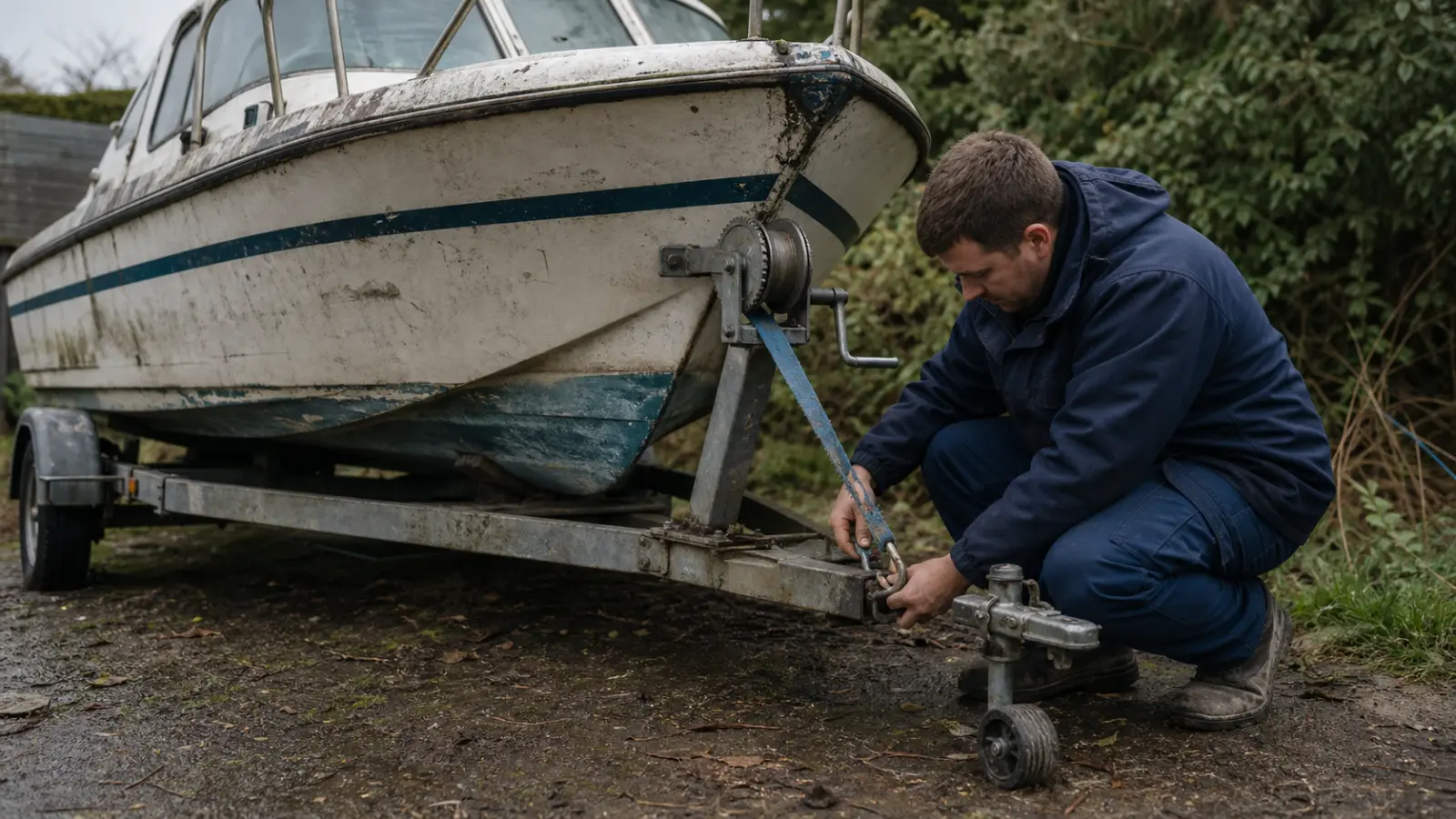
Professional Boat Removal Services in Capital, IL

The hull has sat on a trailer behind your garage for six full seasons, and the tires have flattened straight into the packed dirt. Maybe a marina sent a formal notice regarding an unpaid slip that is accruing fees, or you recently purchased a property where a cabin cruiser was left stranded on the lot. In other situations, the outboard motor seized completely, and a professional rebuild costs far more than the vessel is worth. Leaving an unwanted vessel sitting outdoors causes structural decay while taking up valuable space on your driveway or land. When a hull becomes an eyesore or a legal headache, scheduling a professional boat removal resolves the issue before local code enforcement issues fines or storage fees accumulate further.

Where can I find reliable boat removal near me in Capital, IL? Boat Removal Experts handles complete extraction, loading, and transport for sunken, stranded, or rotted vessels throughout Capital, IL.

Transferring an official title is not always required to haul an old boat away, but issuing a release of liability is mandatory. Some unqualified outfits simply haul a junk boat away without providing proper documentation, leaving the original owner legally vulnerable if the vessel is later dumped illegally or involved in an accident. Demanding a signed release of liability ensures your legal connection to the vessel ends the moment our truck pulls away from your property.

Moving a vessel is far more complex than towing a standard vehicle. A rotted trailer often has frozen axle bearings, disintegrated tires, or a rusted tongue that snaps under pressure. Furthermore, a keel or cradle might sit firmly in soft ground, a wide beam may not clear narrow gates, or the heavy vessel might rest on a soggy lawn that a standard tow truck cannot cross without sinking.

Call 217-681-3549 to start.

Send photos through the contact form.

What Is Boat Removal and When You Need It

Comprehensive boat disposal involves much more than hooking up a trailer and pulling away down the highway. A complete service includes assessing structural integrity, extracting the vessel from difficult terrain, loading broken hulls onto specialized flatbed trailers, and managing proper environmental processing. When an owner possesses a clear title, the transport process moves forward quickly. However, when paperwork is lost or an abandoned boat came with a newly acquired property, alternative legal documentation must be established. An abandoned boat left in a paid slip or on someone else's land presents unique legal challenges. The property owner or marina management must document the vessel's status before an abandoned boat removal crew can legally winched it onto a transport vehicle. Factors affecting the haul include whether the hull retains structural rigidity, if the steering linkage is locked, and whether fluid tanks contain hazardous liquids. A derelict hull that has settled deep into mud or sand requires winch cables and heavy rigging to break the suction before extraction can begin. Once the vessel is secured on the trailer, proper environmental handling ensures that fuel, motor oil, and treated wood are processed in full compliance with state guidelines, keeping your land clear and compliant.
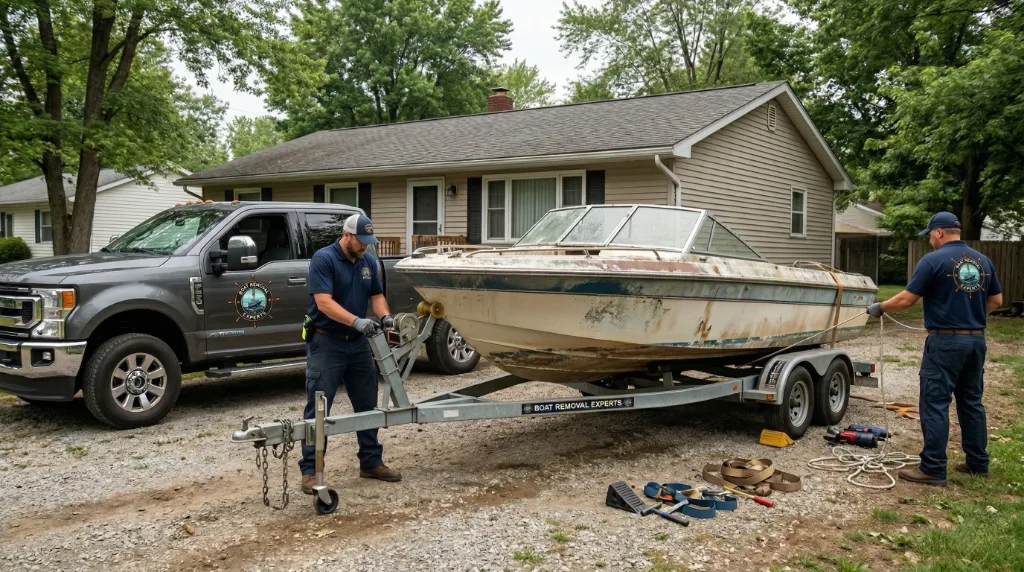
When Capital Residents Call Us

Quintessential Midwestern weather patterns in Capital, IL cause severe wear on any boat left outdoors year after year. Freeze and thaw cycles force water into tiny cracks in the fiberglass gelcoat, expanding those microscopic fissures until the outer shell delaminates completely. Untreated marine plywood floors slowly rot away, upholstery absorbs rainwater to foster deep black mold, and heavy water trapped inside an uncovered hull adds hundreds of pounds of unnecessary weight while compromizing structural strength. These environmental factors turn a neglected sailboat, aluminum fishing boat, or pontoon into a soft, unstable structure that cannot be moved by traditional means. Local site access also dictates how the crew approaches the extraction. A vessel sitting deep in a backyard behind low overhead tree branches or narrow fence gates requires careful maneuvering. When a vessel rests on blocks, sunken jack stands, or directly on soft earth, bringing in specialized boat salvage rigging becomes necessary. Soft turf, muddy access driveways, and steep inclines mean a heavy transport rig must carefully plan its approach to avoid getting stuck, ensuring the hull is safely extracted without causing structural damage to your yard or surrounding structures.
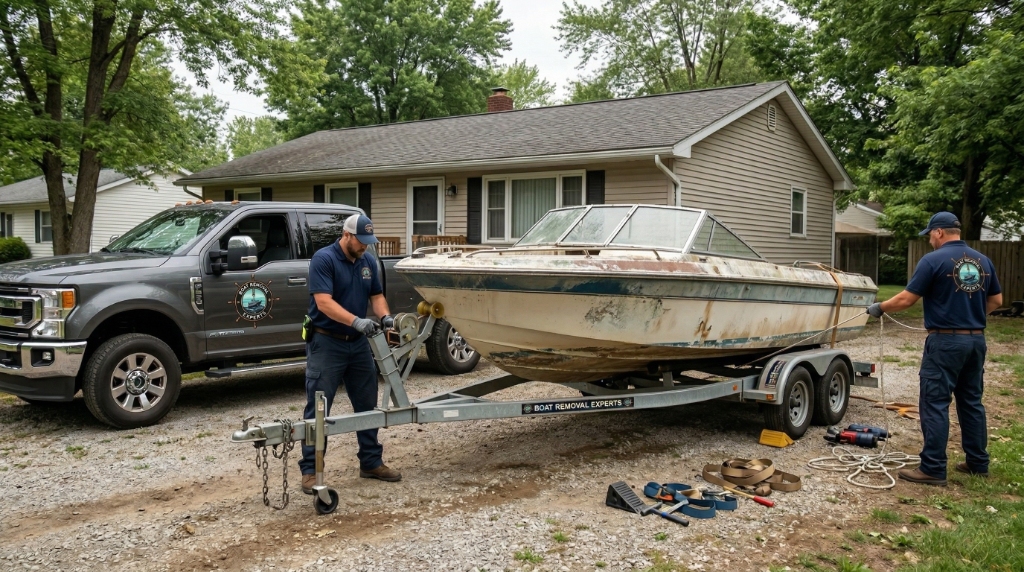
Every Type of Boat We Handle

Situations We Handle

Need Help? We’re Ready.

Contact boat removers directly or request free quotes. We dispatch crews fast.

Our Step-by-Step Process

Assessment

We evaluate the boat’s size, current location, condition, and any environmental or access challenges before we schedule boat removal.

Planning

A detailed plan is built around your vessel — equipment, logistics, timeline, and safety. Services include drainage of oil and fuel before transport.

Execution

Our experienced crew mobilizes to your current location and we tow, haul, or dismantle the vessel using professional marine equipment.

Completion

The vessel is recovered, recycled, or routed to certified boat junkyards for environmentally responsible disposal. The site is left clean.

Equipment & Capabilities

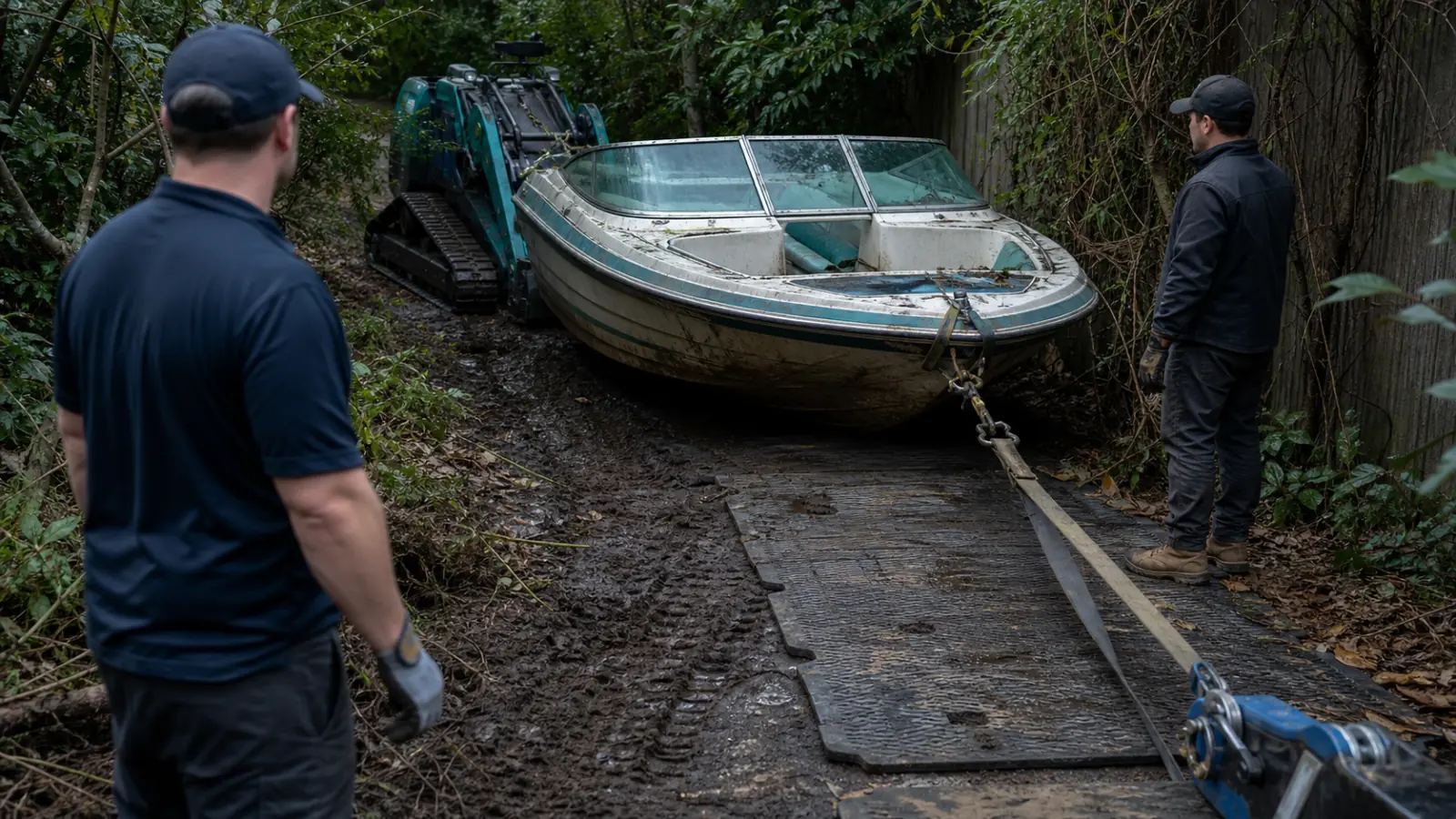
Extracting a compromized hull from a back lot or tight storage pad requires specialized equipment and experienced crew decisions. When a vessel sits on a broken trailer with seized wheels, air bags, heavy winches, and slide pads are utilized to lift and drag the frame onto a tilt-deck flatbed trailer. If the hull is too wide, severely crushed, or structural failure prevents it from being loaded in one piece, the crew must dismantle the structure directly on site using heavy-duty cutting tools. Before any hauling or cutting takes place, all hazardous materials must be safely isolated and drained. The crew removes gasoline, diesel, engine oil, lead-acid batteries, air conditioning refrigerants, and electronic navigation components to prevent environmental contamination. The destination of the vessel depends heavily on the materials involved. Aluminum and steel hulls often go through metal recycling channels, whereas contaminated fiberglass, soaked foam, and rotted floor frames are hauled to an approved landfill facility. The crew carefully inspects the vessel upon arrival, choosing whether to perform a complete winched haul, structural cutting, or specialized cradle loading based on the condition of the hull, the access route, and total weight distribution.

Our boat removal experience covers everything from start to finish  assessment, planning, execution, dismantling, and final cleanup. Marina operators and property owners across Sangamon County trust us to get rid of your junk boat without damage to surrounding property.

FAQ

Boat Removal Questions - Frequently Asked

Common questions from property owners about our junk removal service, dismantling, and marine recovery.

We handle every type of vessel — sailboat, pontoon, fishing boats, jon boats, yachts, and commercial craft. Whether your boat or sailboat floats (or used to), we’ll remove it from any current location.

Yes. Sunken and partially submerged vessel recovery is a core part of our salvage work in Sangamon County. We use lift bags, salvage pumps, and marine cranes to safely raise vessels from underwater.

We respond to inquiries quickly — usually within hours, with same-day service available. For emergency situations, we mobilize as fast as possible. Call us directly for time-sensitive jobs.

No. Every job is handled in-house by our own team and equipment. No middlemen, no handoffs, no surprises.

Cost depends on the boat’s size, current location, condition, and complexity of the job. We provide free assessments and free quotes for every case — contact us and we’ll give you an honest estimate.

Yes. Our boat removal and disposal services include hazardous materials handling, oil and fuel drainage, hull dismantling, and recycling at certified yards — all in compliance with environmental regulations and environmentally responsible standards.

Absolutely. We regularly work in tight marinas, shallow waterways, private docks, backyards, and remote areas. We bring the right gear to reach any current location.

Yes. We frequently work with insurance adjusters on salvage and recovery claims and provide the documentation needed for your claim.

Browse Our Services - Ready to Get Started?

We handle everything from start to finish. Call us now or request a free quote – we’ll dispatch crews and haul your vessel away fast.