
Professional Boat Removal Services in Springfield, IL

An old fiberglass hull has been sitting on a rusty trailer behind your garage for six seasons, and the tires have long since flattened into the dirt. Perhaps a local marina sent an urgent notice about an unpaid slip, or you recently bought a property where the previous owner left a cabin cruiser rotting on the lot. In other cases, an outboard motor seized up entirely, and a complete mechanical rebuild costs significantly more than the vessel is worth. Whatever the situation, keeping an unwanted craft on your land takes up space and creates a liability you do not need.

Is there boat removal near me in Springfield, IL? Yes, Boat Removal Experts provides professional junk boat extraction directly from your yard, driveway, or water slip.

When you clear a vessel off your property, documentation matters just as much as heavy equipment. We do not always transfer the title, but we always issue a release of liability. Some operators simply haul a boat away with no formal paperwork, leaving the legal liability attached to you. If that unrecorded vessel is later dumped on public land, you remain responsible, so asking about documentation before hiring any crew is vital.

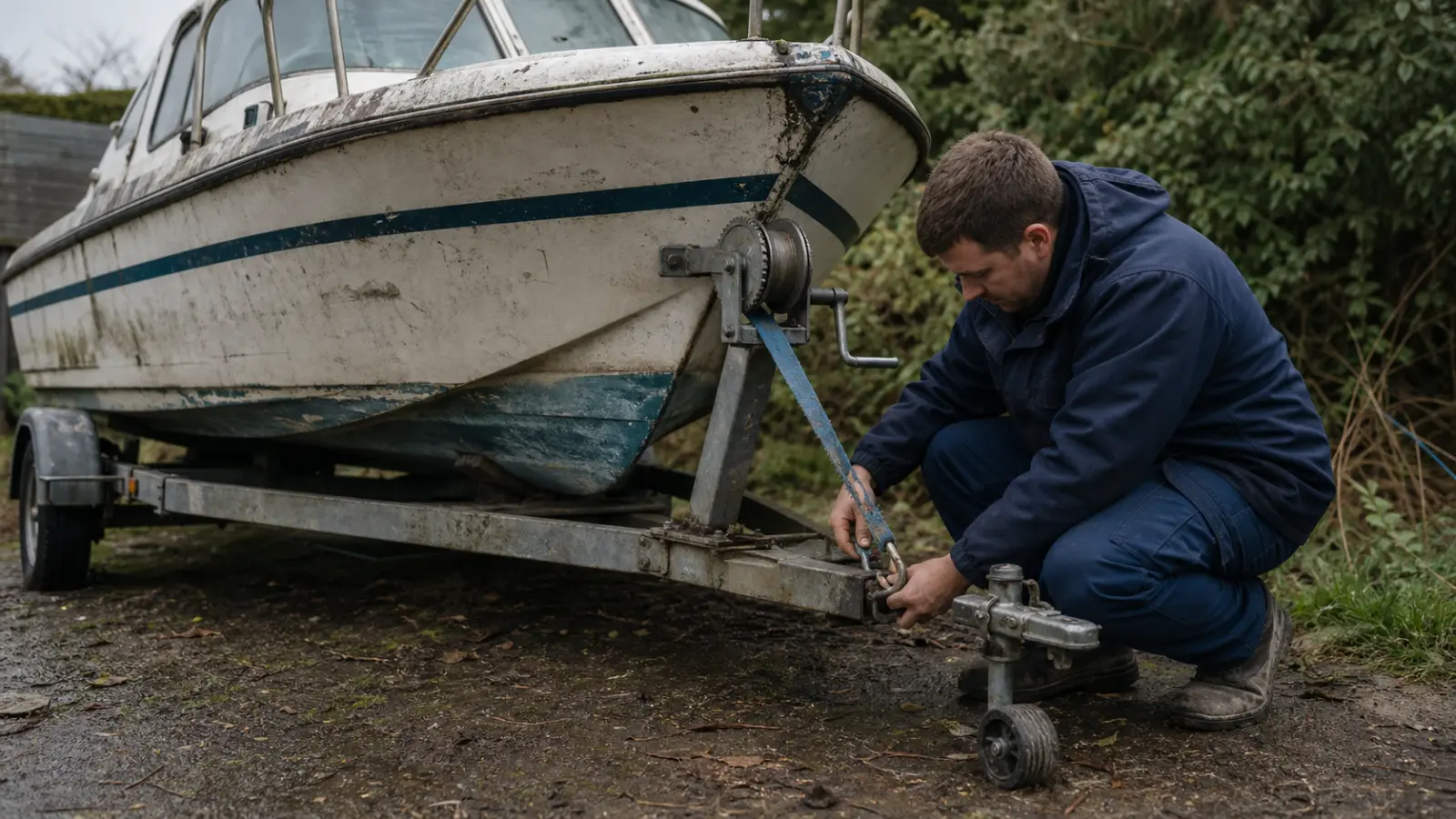
Extracting a vessel is usually far harder than typical vehicle transport. You might face a trailer with seized axles that will not roll, a custom keel resting in a sunken cradle, or a beam wider than your side gate. Often the total weight sits on soft lawn soil that a standard tow truck cannot safely cross without sinking.

Call 217-681-3549 to start.

Send photos through the contact form.

What Is Boat Removal and When You Need It

Professional boat disposal involves much more than just hooking a hitch to a truck and driving away. When you hire an expert crew to get rid of a boat, the job requires analyzing the structural integrity of the craft, managing transport hazards, and handling the underlying administrative details. Every project in Springfield, IL presents a unique mix of physical and legal challenges, whether you are dealing with an old pleasure craft or a forgotten utility vessel.
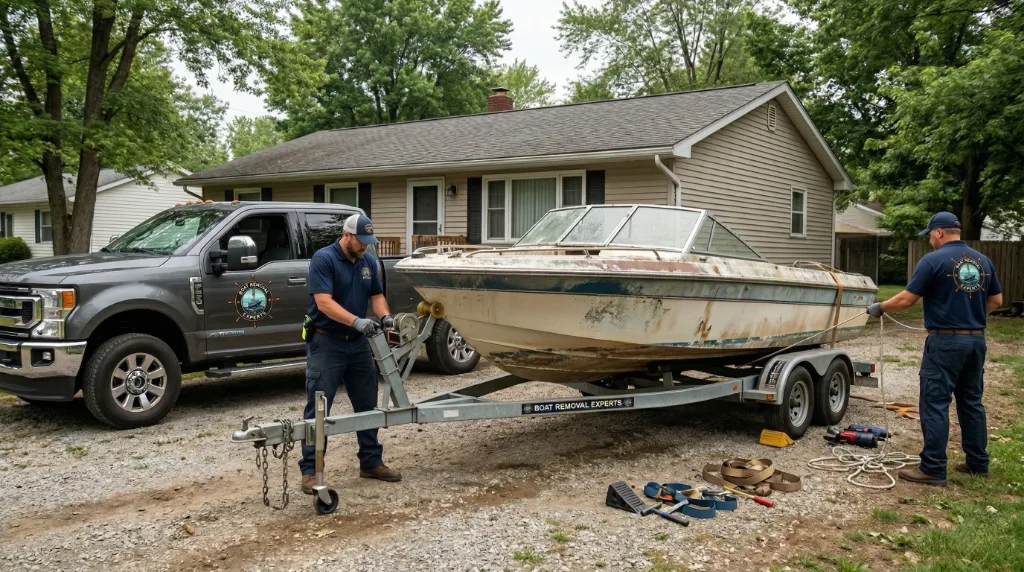
Having a clear title in hand simplifies the process, as it allows for straightforward processing. However, when paperwork is lost, missing, or attached to a foreclosed property, specific steps must be taken to verify ownership and clear claims. If an abandoned boat sits on land you recently purchased, or if a derelict craft remains in a slip with delinquent fees, the removal process relies on establishing lawful possession before the vessel can be moved.

What ultimately affects the outcome of an abandoned boat removal is the condition of the hull, the location of the vessel, and its legal status. Vessels left exposed to the elements can structural weaken, making winch operations hazardous. A crew must assess whether the hull can withstand being loaded onto a flatbed intact or if it requires specialized rigging to prevent a total collapse during transport.
When Springfield Residents Call Us

The changing seasons in Sangamon County take a heavy toll on any vessel left sitting outside without proper cover. In Springfield, Illinois, freeze-and-thaw cycles cause trapped rainwater to expand inside small cracks, quickly delaminating the gelcoat and rotting internal wood floor frames. Upholstery holds moisture and sprouts thick mold, while heavy snow loads weigh down the deck until the entire hull sags. When water sits inside a hull for years, the structural frame weakens, turning what was once a sturdy sailboat, pontoon, or fishing boat into a fragile shell that requires delicate handling to haul away without breaking apart.
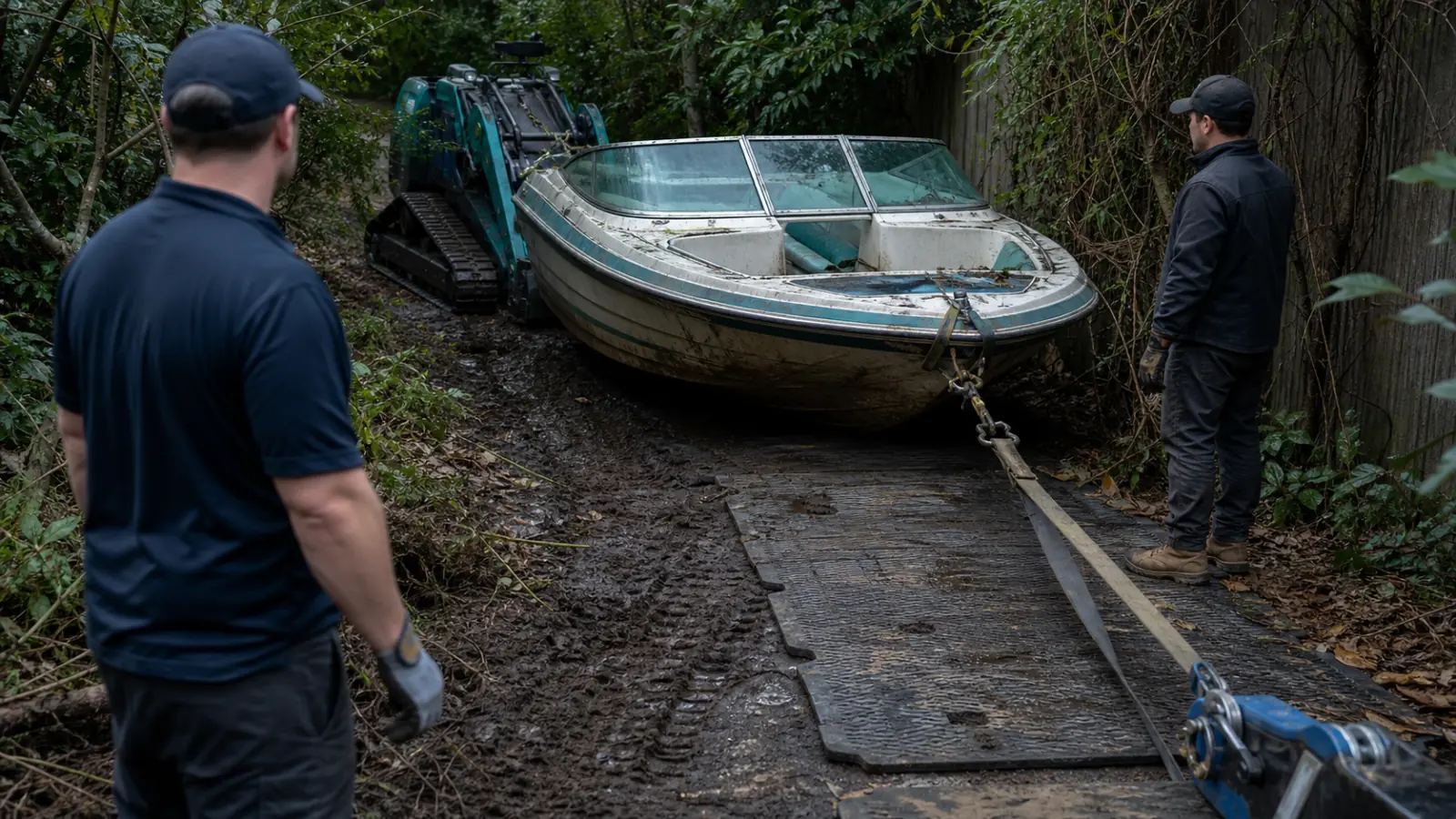
Beyond weather damage, the physical environment around the site dictates how the work must be planned. Neighborhoods around Leland Grove, Grandview, and Jerome often present tight driveways, narrow residential streets, and low-hanging tree branches that restrict large rig access. In rural pockets around Southern View and Riverton, a tow vehicle may need to cross unpaved ground or soft turf to reach the craft.

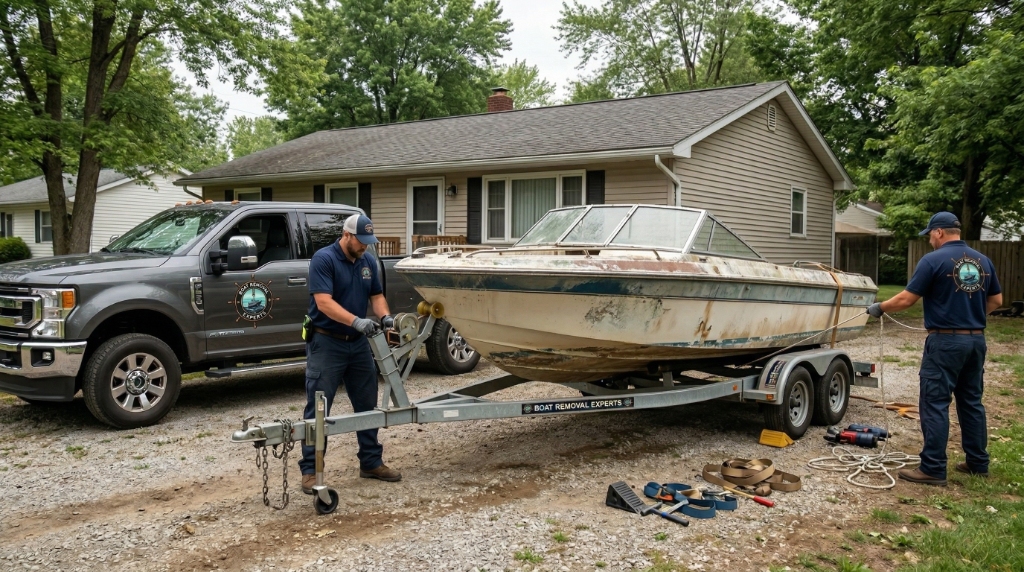
A successful boat salvage operation depends on site access and how the craft rests. A vessel sitting on a rotting trailer on asphalt requires a different approach than one resting on wooden blocks in a backyard or floating in the water at a dock. Overhead power lines, narrow side gates, and steep slopes all influence the specific equipment chosen for the job.
Every Type of Boat We Handle

Situations We Handle

Need Help? We’re Ready.

Contact boat removers directly or request free quotes. We dispatch crews fast.

Our Step-by-Step Process

Assessment

We evaluate the boat’s size, current location, condition, and any environmental or access challenges before we schedule boat removal.

Planning

A detailed plan is built around your vessel — equipment, logistics, timeline, and safety. Services include drainage of oil and fuel before transport.

Execution

Our experienced crew mobilizes to your current location and we tow, haul, or dismantle the vessel using professional marine equipment.

Completion

The vessel is recovered, recycled, or routed to certified boat junkyards for environmentally responsible disposal. The site is left clean.

Equipment & Capabilities

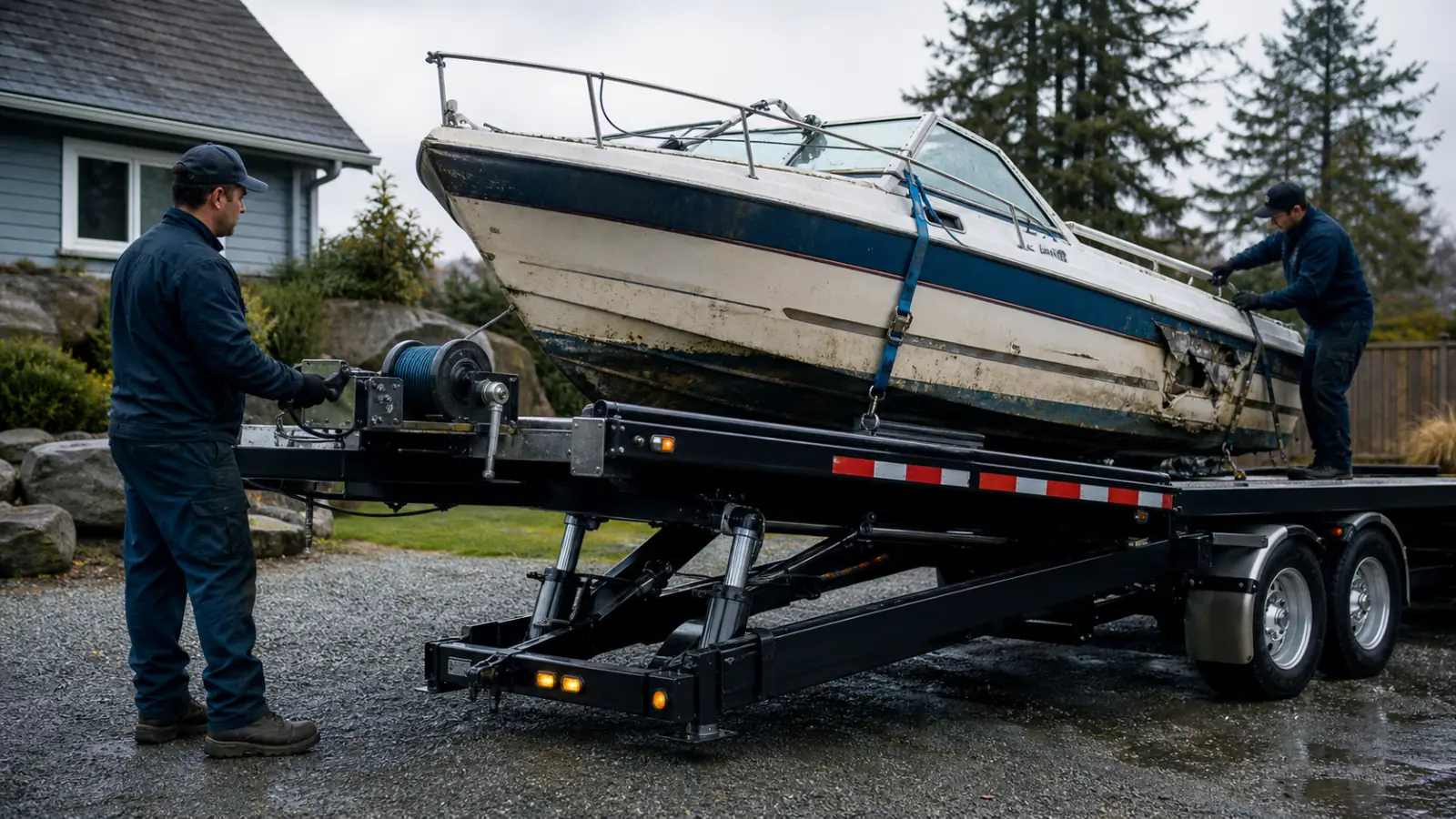
When a vessel cannot be towed because its trailer frame has rusted through or the wheels are frozen solid, specialized equipment is brought in to complete the job. Heavy winches, hydraulic drop-deck trailers, and mobile crane hoists allow a crew to safely lift a heavy hull out of a tight spot. When a vessel is too wide to pass through a gate, jammed between buildings, or structurally degraded beyond safe transport, workers may dismantle the hull on site using heavy saws and mechanical shears.

Before any hull is moved or cut apart, all hazardous materials must be carefully identified and drained. Fluids such as old fuel, crankcase oil, hydraulic fluid, and contaminated bilge water are pumped out into secure containers to prevent soil contamination. Marine batteries, electronics, signal flares, and air conditioning refrigerants are also removed prior to transport. Once the vessel is cleared of liquids and electrical components, the remaining structural materials are separated.

What happens to the materials after extraction depends entirely on what the crew finds during the initial inspection. Fiberglass, aluminum, steel, and internal ballast metals are processed differently depending on their condition. Metals are sent for industrial recycling, while non-recyclable composite materials are routed to designated facilities. The crew evaluates the physical state of the hull on site to choose the safest, most efficient path for removal and disposal.

Our boat removal experience covers everything from start to finish  assessment, planning, execution, dismantling, and final cleanup. Marina operators and property owners across Sangamon County trust us to get rid of your junk boat without damage to surrounding property.

FAQ

Boat Removal Questions - Frequently Asked

Common questions from property owners about our junk removal service, dismantling, and marine recovery.

We handle every type of vessel — sailboat, pontoon, fishing boats, jon boats, yachts, and commercial craft. Whether your boat or sailboat floats (or used to), we’ll remove it from any current location.

Yes. Sunken and partially submerged vessel recovery is a core part of our salvage work in Sangamon County. We use lift bags, salvage pumps, and marine cranes to safely raise vessels from underwater.

We respond to inquiries quickly — usually within hours, with same-day service available. For emergency situations, we mobilize as fast as possible. Call us directly for time-sensitive jobs.

No. Every job is handled in-house by our own team and equipment. No middlemen, no handoffs, no surprises.

Cost depends on the boat’s size, current location, condition, and complexity of the job. We provide free assessments and free quotes for every case — contact us and we’ll give you an honest estimate.

Yes. Our boat removal and disposal services include hazardous materials handling, oil and fuel drainage, hull dismantling, and recycling at certified yards — all in compliance with environmental regulations and environmentally responsible standards.

Absolutely. We regularly work in tight marinas, shallow waterways, private docks, backyards, and remote areas. We bring the right gear to reach any current location.

Yes. We frequently work with insurance adjusters on salvage and recovery claims and provide the documentation needed for your claim.

Browse Our Services - Ready to Get Started?

We handle everything from start to finish. Call us now or request a free quote – we’ll dispatch crews and haul your vessel away fast.