
Professional Boat Removal Services in Framingham, MA

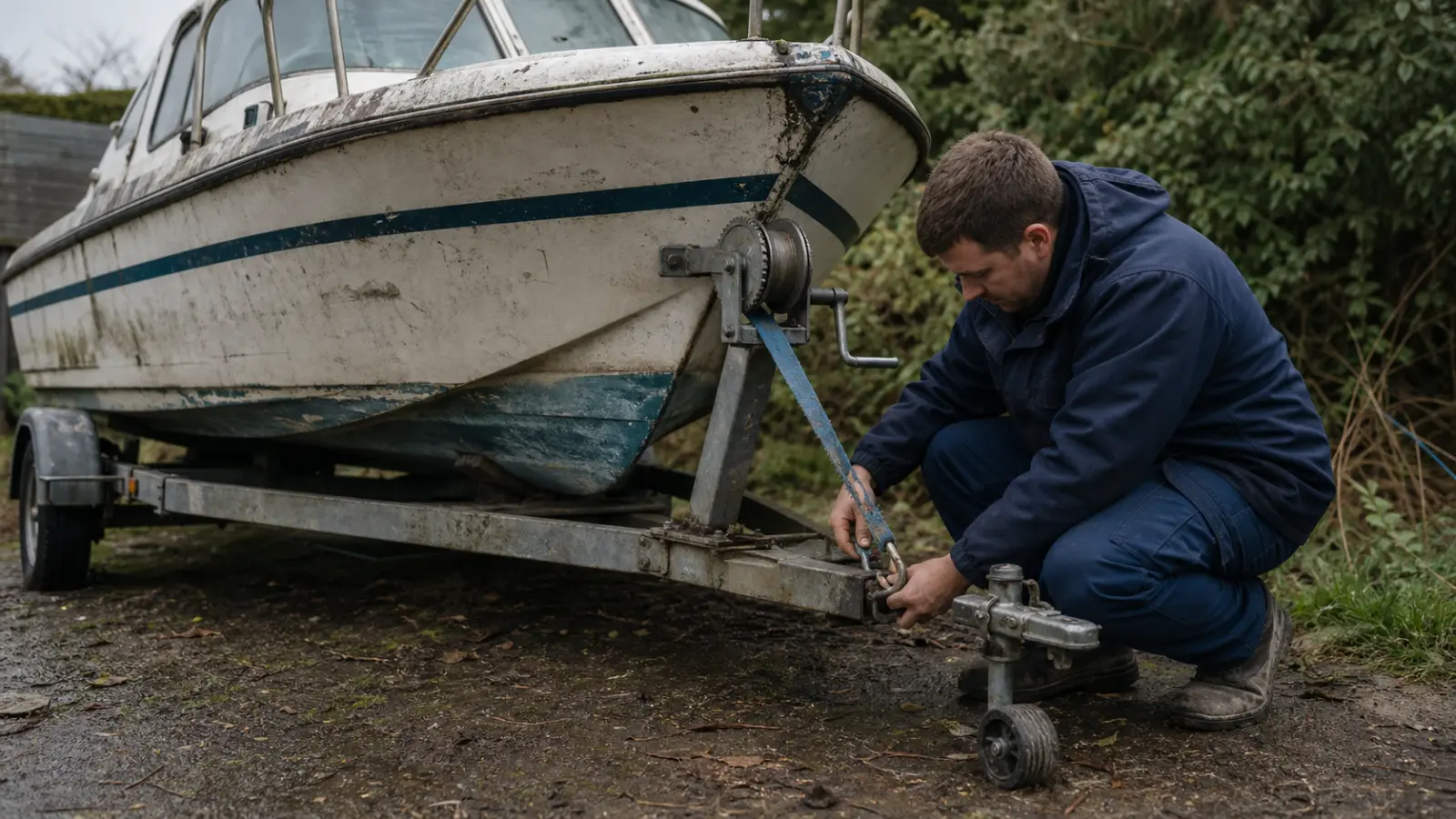
An old boat resting on a flat-tired trailer behind a garage often turns into a permanent fixture after a few rough winters. The fiberglass shell fades, the seating rots, and the outboard motor seizes up until an engine rebuild costs far more than the vessel is worth. Landlords and home buyers frequently inherit a junk boat left behind during a property sale, while other owners face mounting storage fees from a marina after letting a slip contract lapse. Moving a vessel in this state requires heavy equipment and clear planning, especially when the tires have sunk straight into the dirt and the hull is frozen to the soil.

Is there boat removal near me in Framingham, MA? Yes, our team handles complete extraction, transport, and haul-away services for local property owners needing to clear out unwanted vessels quickly.

When you hire our crew, we always issue a formal release of liability to protect you from future obligations. While our company does not always transfer the title into our own name, establishing a signed paper trail is critical. Some unregistered haulers take a vessel off your property without giving you any legal documentation, leaving you fully responsible if that same hull is later abandoned on a public road or left sitting in a parking lot.

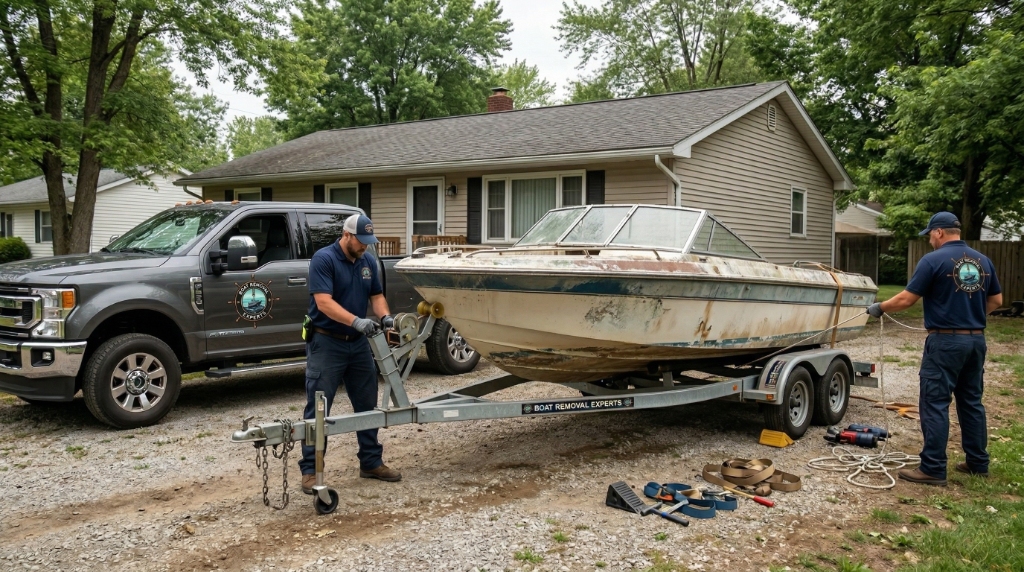
Extracting a craft is significantly more complicated than simply hooking up a hitch. Keels sink into mud, custom storage cradles rot underneath the frame, and wider beams frequently block narrow backyard gates. If your vessel sits on soft lawn soil in Middlesex County, standard tow vehicles cannot cross the grass without sinking, requiring specialized winch setups and careful rigging to pull the hull out safely.

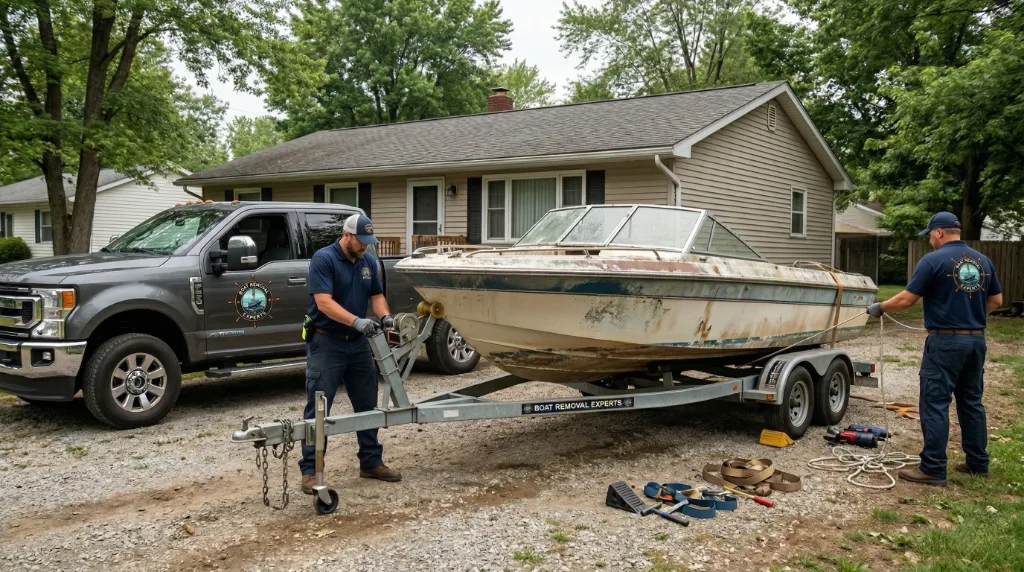
Boat Removal Experts manages the entire haul-away process from initial winch pull to final legal release, ensuring your real estate is cleared without damaging your property.

Call 508-625-5432 to start.

Send photos through the contact form.

What Is Boat Removal and When You Need It

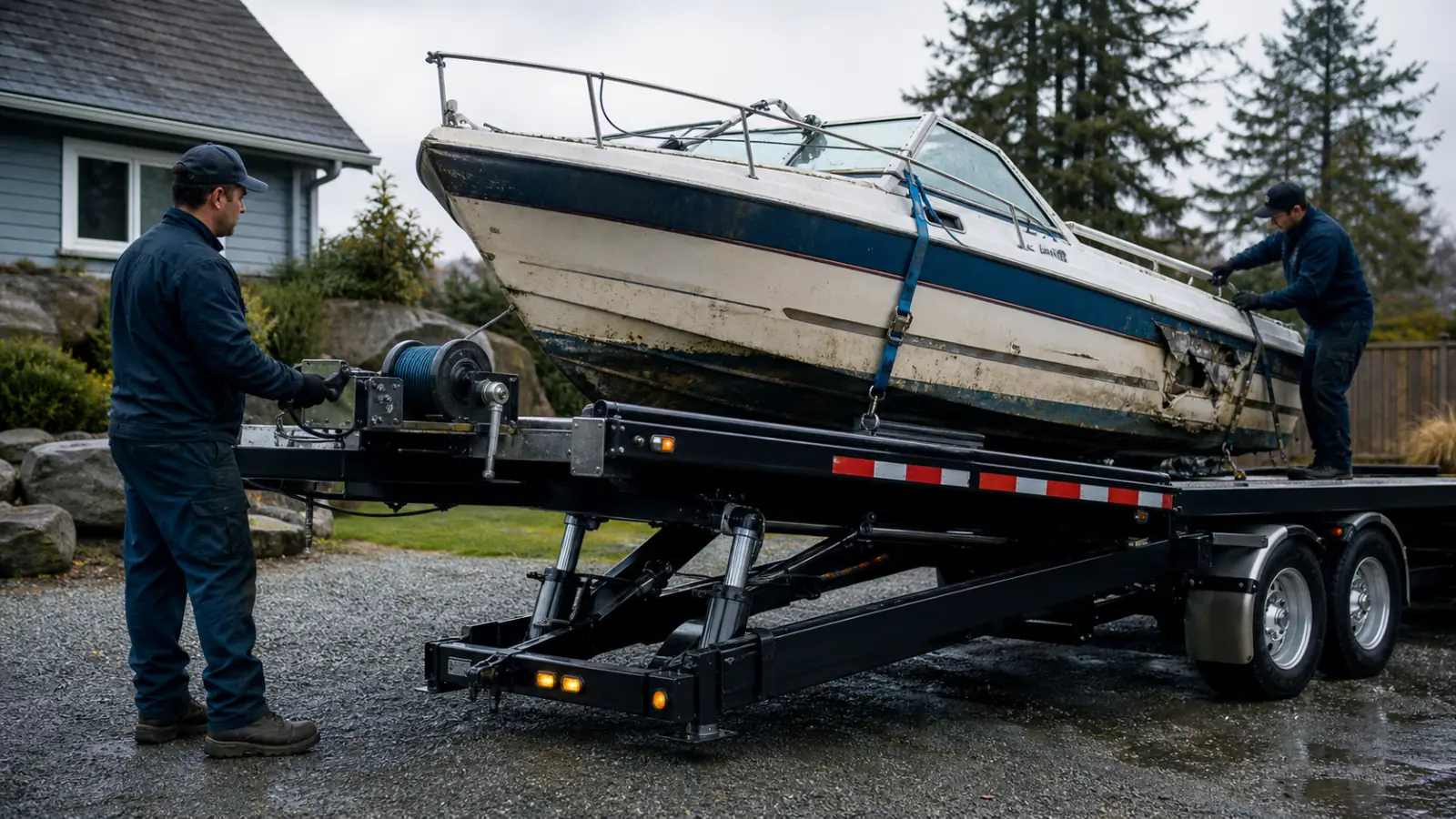
A full boat disposal service does much more than simply tow a trailer down the highway. When a derelict vessel sits neglected, the work involves managing structural rigging, clearing overgrown vegetation from around the hull, extracting seized hardware, and coordinating safe transport for a vessel that may no longer be roadworthy. Our crews assess the integrity of the back panel and floorboards before applying any tension, ensuring the hull does not collapse or break apart while being pulled onto a flatbed truck.
Paperwork issues directly impact how an abandoned boat must be handled during extraction. When an owner possesses a clean title and matching legal documents, the process moves forward immediately. However, if the registration paperwork has been lost over time or a vessel was inherited along with a newly purchased piece of real estate, additional verification steps are required. Missing titles require specific ownership affidavits or property owner consent forms before any removal team can legally haul the craft away from the premises.

Vessels left stranded on private land or sitting in unpaid marina slips present unique challenges. Landowners who discover an abandoned boat on their acreage must follow proper notification steps to clear their land of third-party property. Whether the craft sits on timber blocks, a rotted trailer, or directly on the dirt, the physical condition of the vessel dictates whether it can be loaded intact or must be dismantled on-site.
When Framingham Residents Call Us

Harsh New England weather takes a severe toll on watercraft left outdoors without winter covers. Moisture freezes inside micro-cracks in the gelcoat, expanding over time to cause severe delamination across the deck and back panel. Water logging inside internal flotation foam adds hundreds of pounds of hidden weight to a sailboat, fishing boat, or pontoon. Rainwater collecting inside an uncapped hull accelerates wood rot in the floor frames, weakens structural bulkheads, and turns interior upholstery into saturated trash that must be stripped out before transport.
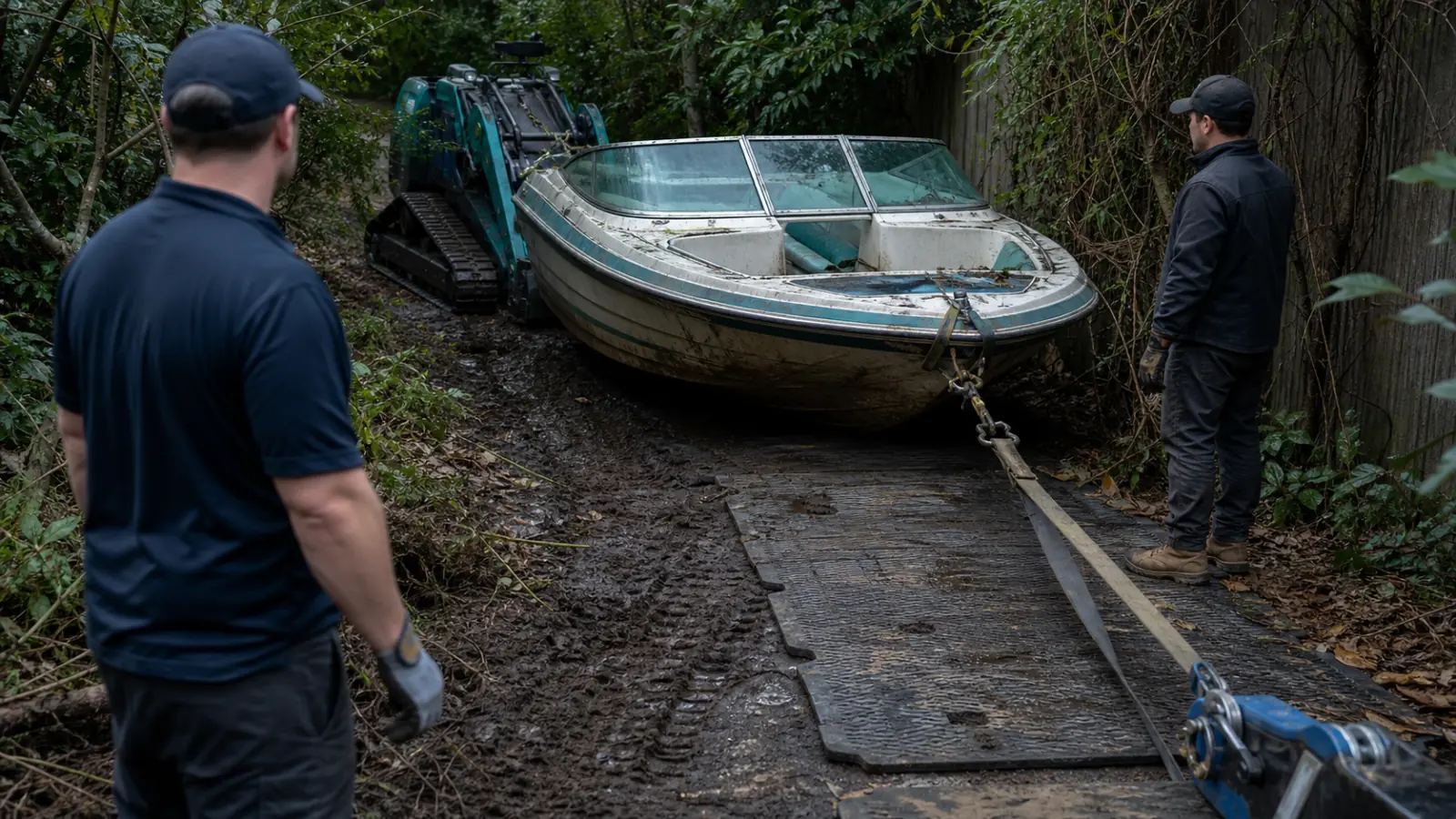
Property layout in Framingham directly influences how our crew approaches a job. Squeezing a multi-ton hull through narrow suburban driveways requires exact maneuvering, especially when low-hanging tree branches, power lines, or residential fencing restrict overhead clearance. A vessel sitting behind a home on soft grass or mud cannot be reached by heavy transport trucks without risking deep rutting or getting stuck. In these situations, extended winch cables, protective ground mats, or specialized dollies are used to guide the vessel toward paved surfaces.

Siting conditions also determine the equipment required for extraction. A vessel resting on a rotted trailer requires air bags, jacks, or flatbed winches to load safely. A craft stored on wooden blocks requires custom straps and support beams, while a hull sitting at the edge of the water requires careful pulling along the shoreline to prevent grounded keels from digging into mud banks during retrieve.
Every Type of Boat We Handle

Situations We Handle

Need Help? We’re Ready.

Contact boat removers directly or request free quotes. We dispatch crews fast.

Our Step-by-Step Process

Assessment

We evaluate the boat’s size, current location, condition, and any environmental or access challenges before we schedule boat removal.

Planning

A detailed plan is built around your vessel — equipment, logistics, timeline, and safety. Services include drainage of oil and fuel before transport.

Execution

Our experienced crew mobilizes to your current location and we tow, haul, or dismantle the vessel using professional marine equipment.

Completion

The vessel is recovered, recycled, or routed to certified boat junkyards for environmentally responsible disposal. The site is left clean.

Equipment & Capabilities

When a vessel's original trailer is rust-eaten, missing axles, or structurally unsound, our crew utilizes heavy-duty hydraulic machinery, drop-deck trailers, and industrial winches to haul the structure out. If the craft is far too wide to clear residential gate posts or too structurally degraded to survive road transport intact, technicians dismantle the hull on-site. Using specialized cutting equipment and heavy saws, crews cut fiberglass, aluminum, and wooden framework into manageable sections that can be loaded directly into high-capacity haulers without damaging the surrounding yard.

Before any physical demolition or hauling takes place, the crew removes all hazardous materials from the vessel. Workers drain remaining fuel tanks, strip out crankcase oil, remove heavy lead-acid marine batteries, and disconnect electronic equipment containing toxic heavy metals. Liquids are pumped into sealed recovery drums, while hazardous components are segregated to ensure strict environmental compliance during handling and processing.

Where the recovered materials end up depends entirely on what the crew finds upon inspecting the vessel. Unsalvageable fiberglass hulls and rotted wood interior components are prepped for designated regional waste sites. Metal components, including aluminum pontoon tubes, stainless steel rails, lead keels, and copper wiring, are sorted and sent for processing at metal recycling centers. Functional mechanical parts are evaluated separately, ensuring that every piece of the craft is routed to the appropriate facilities based on material type and condition.

Our boat removal experience covers everything from start to finish  assessment, planning, execution, dismantling, and final cleanup. Marina operators and property owners across Middlesex County trust us to get rid of your junk boat without damage to surrounding property.

FAQ

Boat Removal Questions - Frequently Asked

Common questions from property owners about our junk removal service, dismantling, and marine recovery.

We handle every type of vessel — sailboat, pontoon, fishing boats, jon boats, yachts, and commercial craft. Whether your boat or sailboat floats (or used to), we’ll remove it from any current location.

Yes. Sunken and partially submerged vessel recovery is a core part of our salvage work in Middlesex County. We use lift bags, salvage pumps, and marine cranes to safely raise vessels from underwater.

We respond to inquiries quickly — usually within hours, with same-day service available. For emergency situations, we mobilize as fast as possible. Call us directly for time-sensitive jobs.

No. Every job is handled in-house by our own team and equipment. No middlemen, no handoffs, no surprises.

Cost depends on the boat’s size, current location, condition, and complexity of the job. We provide free assessments and free quotes for every case — contact us and we’ll give you an honest estimate.

Yes. Our boat removal and disposal services include hazardous materials handling, oil and fuel drainage, hull dismantling, and recycling at certified yards — all in compliance with environmental regulations and environmentally responsible standards.

Absolutely. We regularly work in tight marinas, shallow waterways, private docks, backyards, and remote areas. We bring the right gear to reach any current location.

Yes. We frequently work with insurance adjusters on salvage and recovery claims and provide the documentation needed for your claim.

Browse Our Services - Ready to Get Started?

We handle everything from start to finish. Call us now or request a free quote – we’ll dispatch crews and haul your vessel away fast.