
Professional Boat Removal Services in Newton, MA
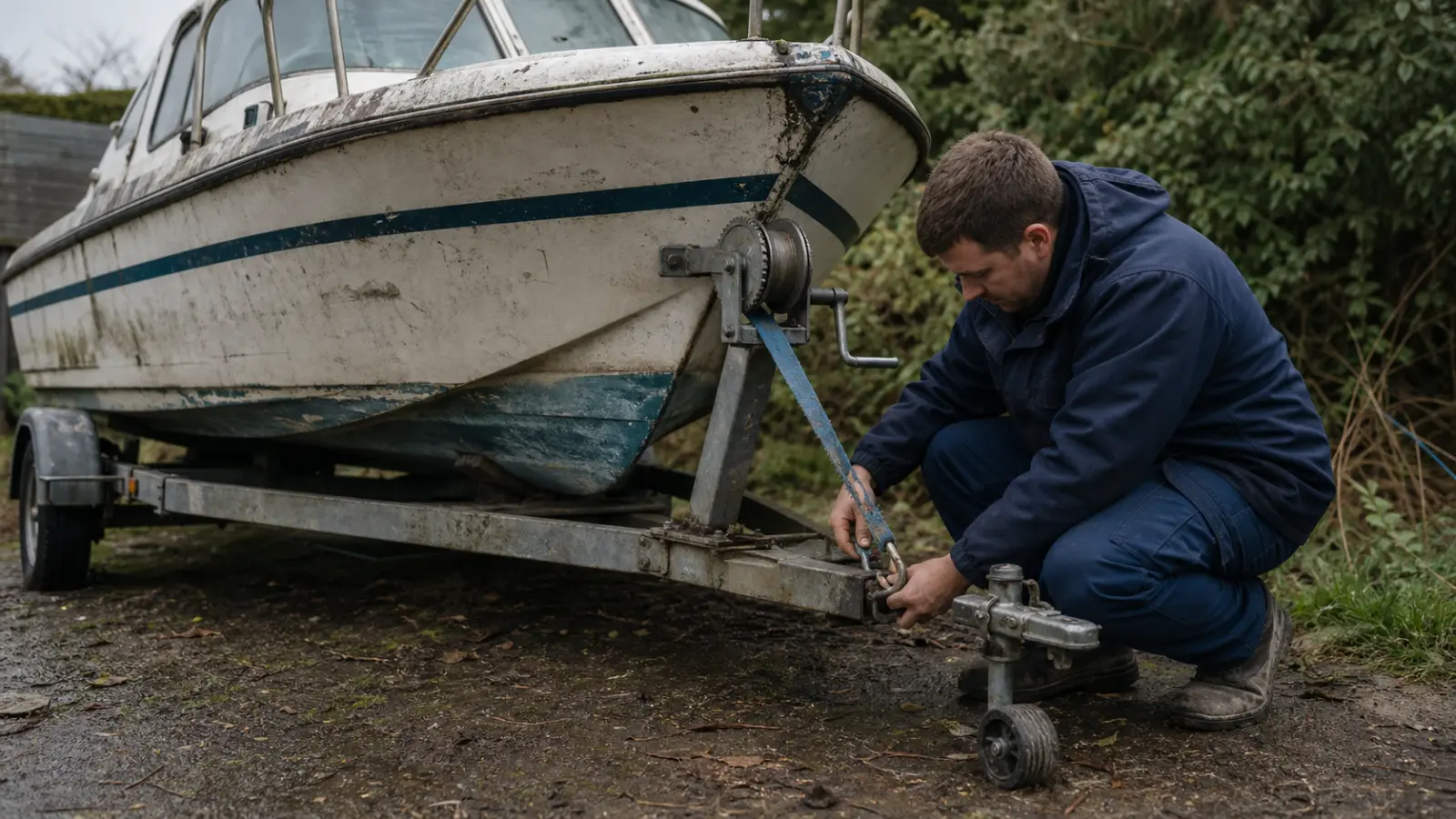
An old boat resting on a flat-tired trailer behind a residential garage often remains untouched for years because moving it seems impossible. In other situations, a property purchase includes a neglected cabin cruiser sitting deep on the lawn, or an outboard engine seizes and leaves a vessel whose repair bill far exceeds its actual value. Marina owners and residential landlords also frequently face forgotten hulls taking up valuable space after slip payments stop. A junk boat left to the elements eventually collects debris and rainwater, becoming a heavy burden for any property owner attempting to clean up their lot.
Is there boat removal near me in Newton, MA? Boat Removal Experts provides complete vessel hauling and property clearing services directly to local landowners, yard managers, and homeowners throughout the community.

Transferring an official title is not always possible when dealing with abandoned or inherited watercraft, but issuing a release of liability is standard practice for every project handled. Some hauling outfits simply tow a vessel away without completing any formal paperwork, leaving the original owner legally vulnerable if the hull is dumped illegally down the line. Demanding a written liability release ensures that once the vessel leaves your driveway or storage lot, all legal responsibility for the hull ends immediately.
Moving a vessel is rarely as simple as hooking up a hitch and driving away. Keels, custom cradles, and frozen trailer axles often prevent simple towing, while wide beams can easily block passage through standard residential gates. When a heavy hull sits on soft ground or unpaved soil, standard tow trucks cannot cross the lawn without causing severe damage, requiring specialized extraction equipment to pull the boat safely out of position.
Call (855) 765-7931 to start.
Send photos through the contact form.
What Is Boat Removal and When You Need It
Professional boat disposal goes well beyond simply pulling a vessel down the road. Complete service includes assessing structural integrity, extracting hulls from tight spaces, loading unseaworthy vessels onto flatbed trailers, and managing proper environmental staging. When an owner possesses a clear title, the transfer and haulage process moves quickly forward. However, when paperwork is missing, lost over time, or tied to a newly acquired piece of real estate, alternative documentation and property owner permissions must be established before any crew can haul the vessel away.
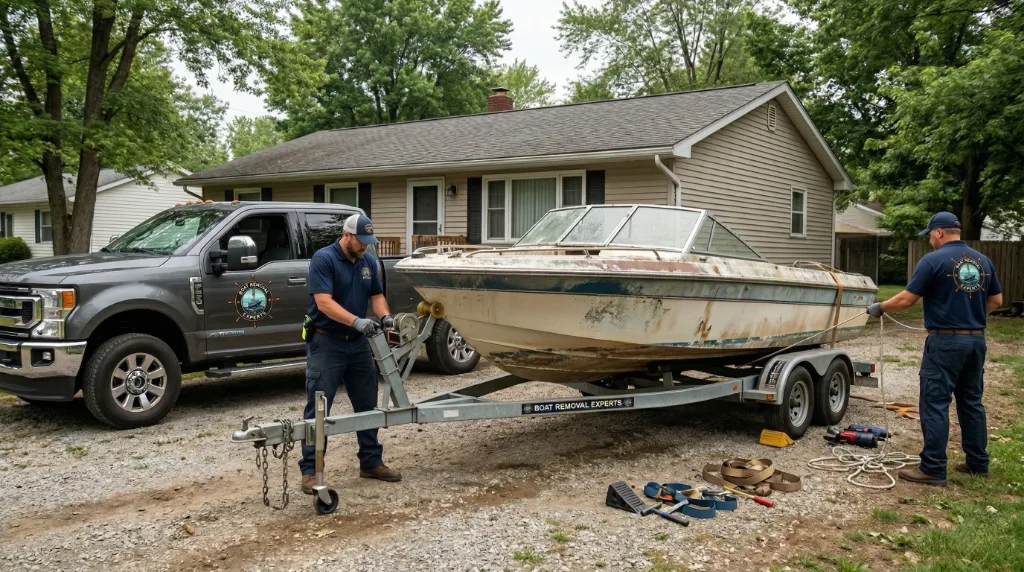
An abandoned boat left on private property or sitting in an unpaid slip presents distinct legal and logistical challenges. Landlords and property managers who inherit a derelict vessel when a tenant departs must navigate local property codes to secure authorization for removal. What changes the outcome in these cases is the physical condition of the vessel, its location on the parcel, and whether the hull can still float or roll. A derelict vessel sitting in shallow water near a public launch requires a completely different operational approach than a rotting fiberglass hull resting on wooden blocks in a backyard, but accurate documentation remains critical in both situations.
When Newton Residents Call Us
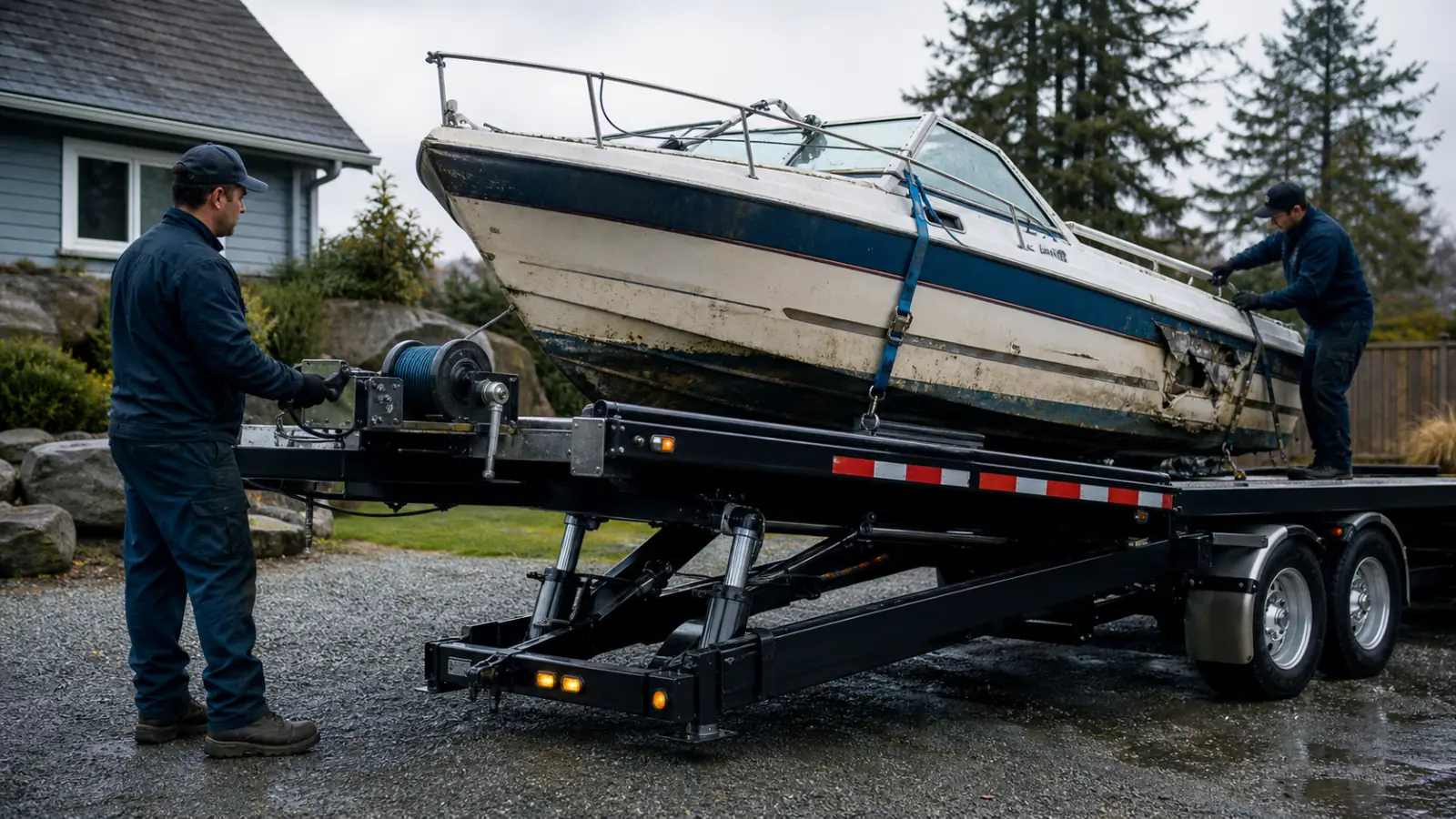
Vessels left exposed to changing New England seasons suffer rapid structural decline. Extended cold snaps, snow accumulation, and constant summer humidity cause gelcoat to crack and fiberglass layers to separate over time. Wood framing and transoms rot from trapped moisture, while cabin upholstery absorbs rainwater and breeds severe mold. A hull that holds water grows exponentially heavier with every passing storm, transforming a light runabout into a waterlogged weight that can crush a decaying trailer frame. Boat owners across Newton, MA call for vessel clearing when these winter freeze-thaw cycles finally render an old craft completely unrepairable.
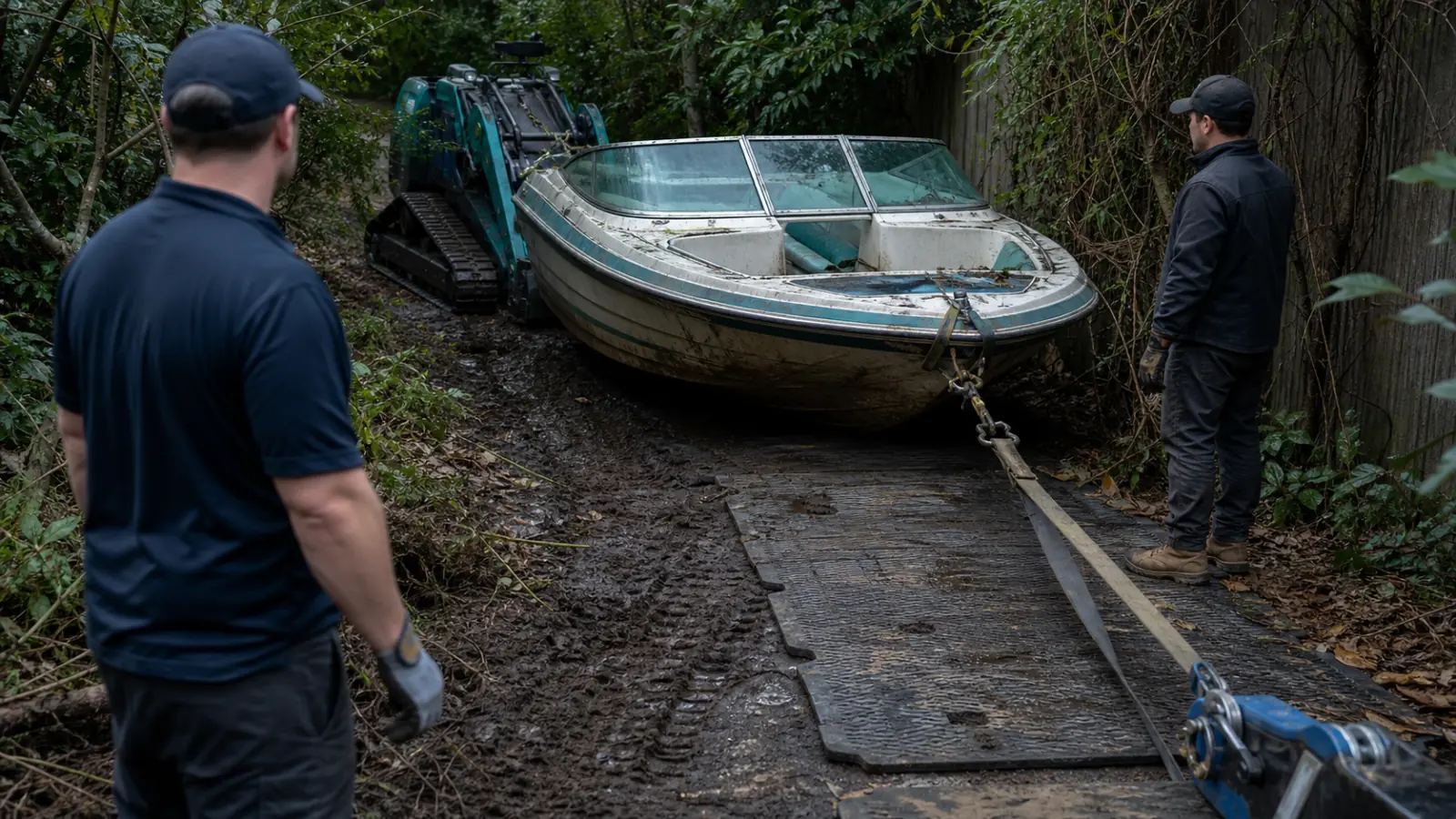
Local property layouts directly dictate how crew members access and extract a target vessel. Narrow suburban driveways, low-hanging tree branches, and overhead utility lines require careful navigation before heavy hauling equipment can enter a site. The surface beneath the craft dictates the approach, as a truck cannot safely operate across soft mud or manicured turf without ground protection mats. Whether a pontoon boat sits on a functional steel trailer, a small fishing boat rests upside down on rotting timber, or a heavy sailboat leans precariously in a cradled yard stand, site access determines whether the craft can be pulled out intact or requires specialized handling. Similar access challenges occur in nearby communities like Brookline and Needham when moving vessels out of congested residential properties in Middlesex County.
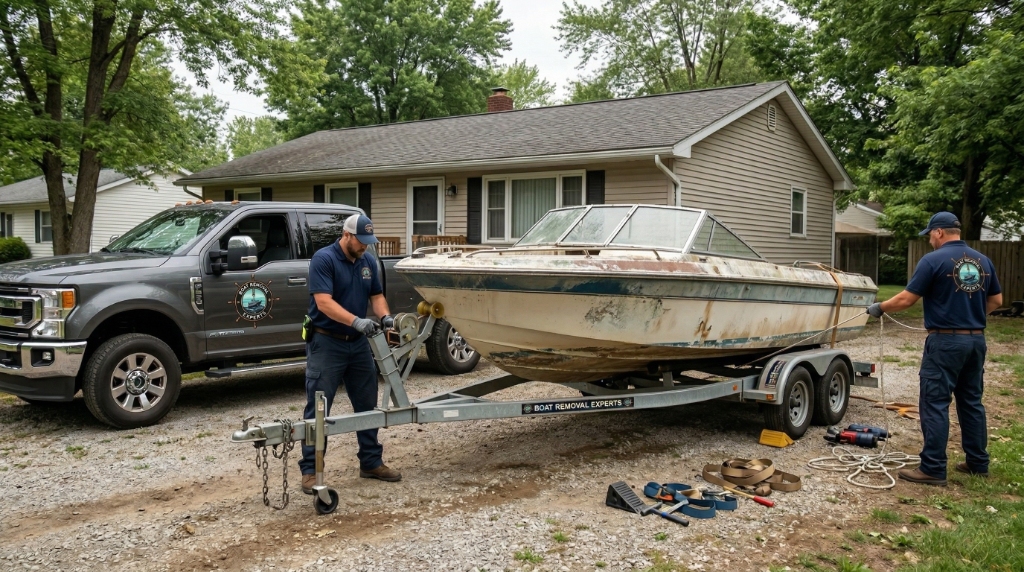
Every Type of Boat We Handle
- Sailboat & catamaran
- Motorboat, powerboat & cabin cruisers
- Fishing boats & bass boats
- Pontoon boats
- Jon boats & aluminum skiffs
- Large yachts
- Personal watercraft (jet skis)
- Houseboats
Situations We Handle
- Abandoned boat at marinas, docks, or boat lifts
- Unwanted boats on private property or in boat storage
- Vessels in backyards, fields, or vacant lots
- Derelict vessels blocking dock access or navigation
- Storm-damaged vessels requiring boat hauling
- Vessels without trailers or with flat tires
- Tight access locations (narrow driveways, wooded areas)
- Government or insurance-ordered cases
Need Help? We’re Ready.
Contact boat removers directly or request free quotes. We dispatch crews fast.
Our Step-by-Step Process

Assessment
We evaluate the boat’s size, current location, condition, and any environmental or access challenges before we schedule boat removal.

Planning
A detailed plan is built around your vessel — equipment, logistics, timeline, and safety. Services include drainage of oil and fuel before transport.

Execution
Our experienced crew mobilizes to your current location and we tow, haul, or dismantle the vessel using professional marine equipment.

Completion
The vessel is recovered, recycled, or routed to certified boat junkyards for environmentally responsible disposal. The site is left clean.
Equipment & Capabilities
Crew members evaluate each project on-site to determine whether a vessel can be loaded whole or must be modified for transport. When a boat trailer has rusted solid or lost its tires, hydraulic winches, heavy-duty skids, and crane booms are utilized to lift the hull onto a specialized flatbed. If narrow alleyways, tight yard boundaries, or severe structural collapse prevent a whole extraction, workers dismantle the vessel on site using industrial cutting tools. This process systematically breaks down the deck, cabin, and hull into manageable sections that fit safely inside standard transport containers.
Before any hull cutting or transport begins, technicians isolate and extract all hazardous materials. Crew members drain remaining fuel from tanks, pump out motor oil, remove lead-acid batteries, and disconnect onboard electronics to prevent environmental contamination. Fluids are routed to specialized handling facilities equipped for chemical disposal. Once hazardous elements are cleared, the remaining materials are sorted based on their composition. Metal fittings, aluminum hulls, and lead keel weights are separated for recycling processing, while fiberglass structural components and rotted cabin wood are routed to appropriate waste facilities according to regional environmental regulations. The ultimate disposition of each vessel depends entirely on material condition, structural soundness, and local processing guidelines.
Our boat removal experience covers everything from start to finish assessment, planning, execution, dismantling, and final cleanup. Marina operators and property owners across Middlesex County trust us to get rid of your junk boat without damage to surrounding property.
FAQ
Boat Removal Questions - Frequently Asked
Common questions from property owners about our junk removal service, dismantling, and marine recovery.
What type of boat do you remove?
We handle every type of vessel — sailboat, pontoon, fishing boats, jon boats, yachts, and commercial craft. Whether your boat or sailboat floats (or used to), we’ll remove it from any current location.
Do you handle sunken or partially submerged vessels?
Yes. Sunken and partially submerged vessel recovery is a core part of our salvage work in Middlesex County. We use lift bags, salvage pumps, and marine cranes to safely raise vessels from underwater.
How quickly can you respond?
We respond to inquiries quickly — usually within hours, with same-day service available. For emergency situations, we mobilize as fast as possible. Call us directly for time-sensitive jobs.
Do you use subcontractors?
No. Every job is handled in-house by our own team and equipment. No middlemen, no handoffs, no surprises.
How much does cheap boat removal cost?
Cost depends on the boat’s size, current location, condition, and complexity of the job. We provide free assessments and free quotes for every case — contact us and we’ll give you an honest estimate.
Do you handle boat disposal and recycling?
Yes. Our boat removal and disposal services include hazardous materials handling, oil and fuel drainage, hull dismantling, and recycling at certified yards — all in compliance with environmental regulations and environmentally responsible standards.
Can you reach a hard-to-access location?
Absolutely. We regularly work in tight marinas, shallow waterways, private docks, backyards, and remote areas. We bring the right gear to reach any current location.
Do you work with insurance companies?
Yes. We frequently work with insurance adjusters on salvage and recovery claims and provide the documentation needed for your claim.
Other Boat Removal Locations
Browse Our Services - Ready to Get Started?
We handle everything from start to finish. Call us now or request a free quote – we’ll dispatch crews and haul your vessel away fast.