
Professional Boat Removal Services in Cambridge, MA
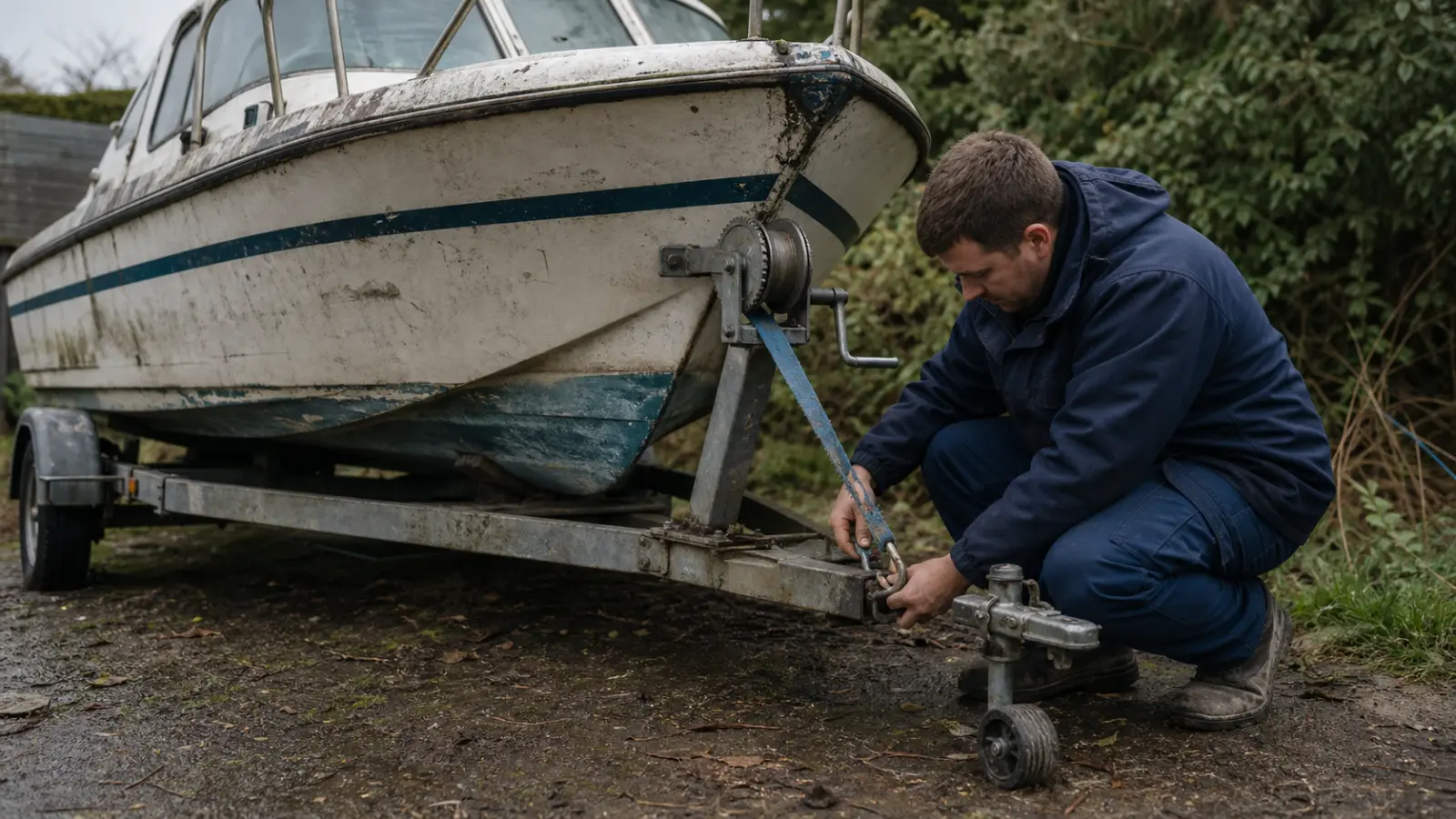
A heavy fiberglass hull sitting on an unregistered trailer behind a home often stays parked until the tires sink into the soil and rotting wood decking begins falling apart. In other situations, a local marina issues a formal notice demanding the immediate clearance of an unpaid slip, or a newly purchased property still has an unwanted cabin cruiser taking up space on the lot. When an old boat engine seizes and a mechanical rebuild costs vastly more than the market value of the vessel, the project shifts from a casual repair to an urgent need for professional boat removal.
Is there boat removal near me in Cambridge, MA? Boat Removal Experts provides scheduled marine extraction services across Cambridge, MA, handling the logistics of moving disabled hulls directly from yards, storage spaces, and waterfront access points.

When clearing an unwanted junk boat, establishing a clear release of liability protects the registered owner from future legal complications. While our process does not always involve a formal title transfer for every vessel, we consistently issue an official release of liability documentation upon extraction. Hauling away a hull through uninsured collectors without proper paperwork leaves the former owner legally responsible if that vessel is abandoned elsewhere, making verified liability releases essential before any work begins.
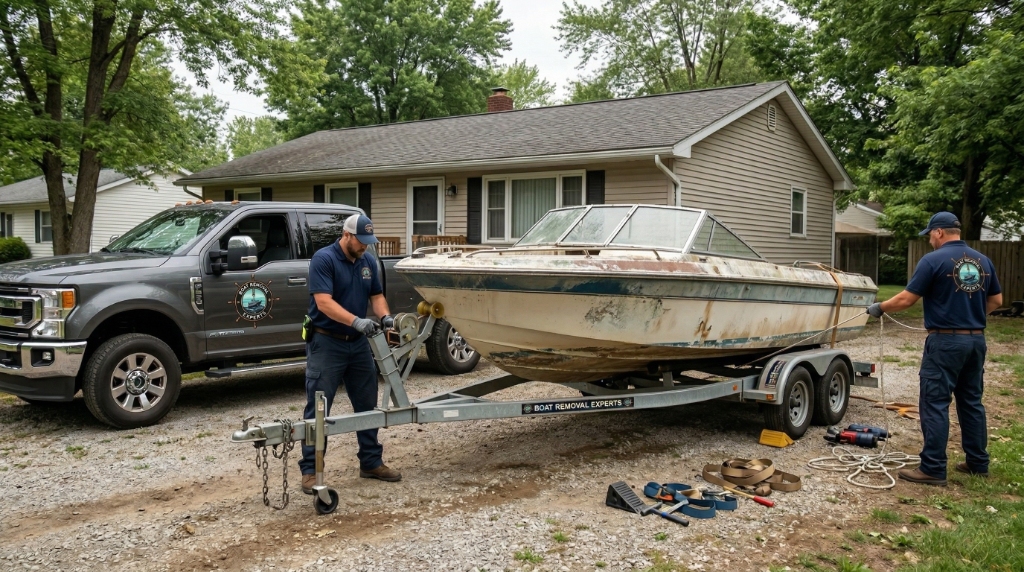
Transporting an old boat requires specialized knowledge because structural failures can occur during loading. Flat tires, rusted trailer axles, structural keel damage, or narrow residential gate clearances complicate standard towing. Heavy hulls resting on soft turf require specialized rigging to prevent trucks from becoming stuck during extraction.
Call (855) 765-7931 to start.
Send photos through the contact form.
What Is Boat Removal and When You Need It
Professional boat disposal covers significantly more than simply hooking a hitch to a bumper and driving away. When a derelict vessel sits on private land, in a backyard, or along a commercial driveway, complete extraction requires handling structural failures, clearing rotten interior gear, and securing fragile fiberglass components that might shear off during highway transport. Field teams evaluate structural integrity before applying winches, preventing a decayed hull from cracking in half during the lift process.
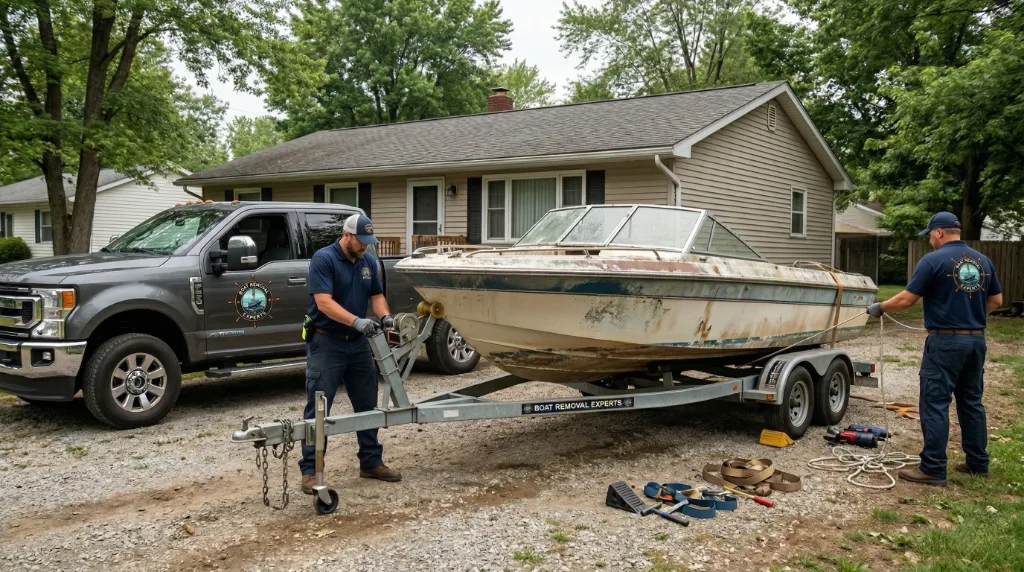
Paperwork dictates the administrative path taken for an abandoned boat removal project. When an owner possesses a clean title and matching legal registration, processing moves forward quickly. If documentation is lost, missing, or attached to a foreclosed property, alternative legal protocols establish ownership clearance or authorized municipal surrender. These steps ensure that an abandoned boat left on private commercial property or sitting in a delinquent storage space can be legally removed without exposing landholders to property disputes.
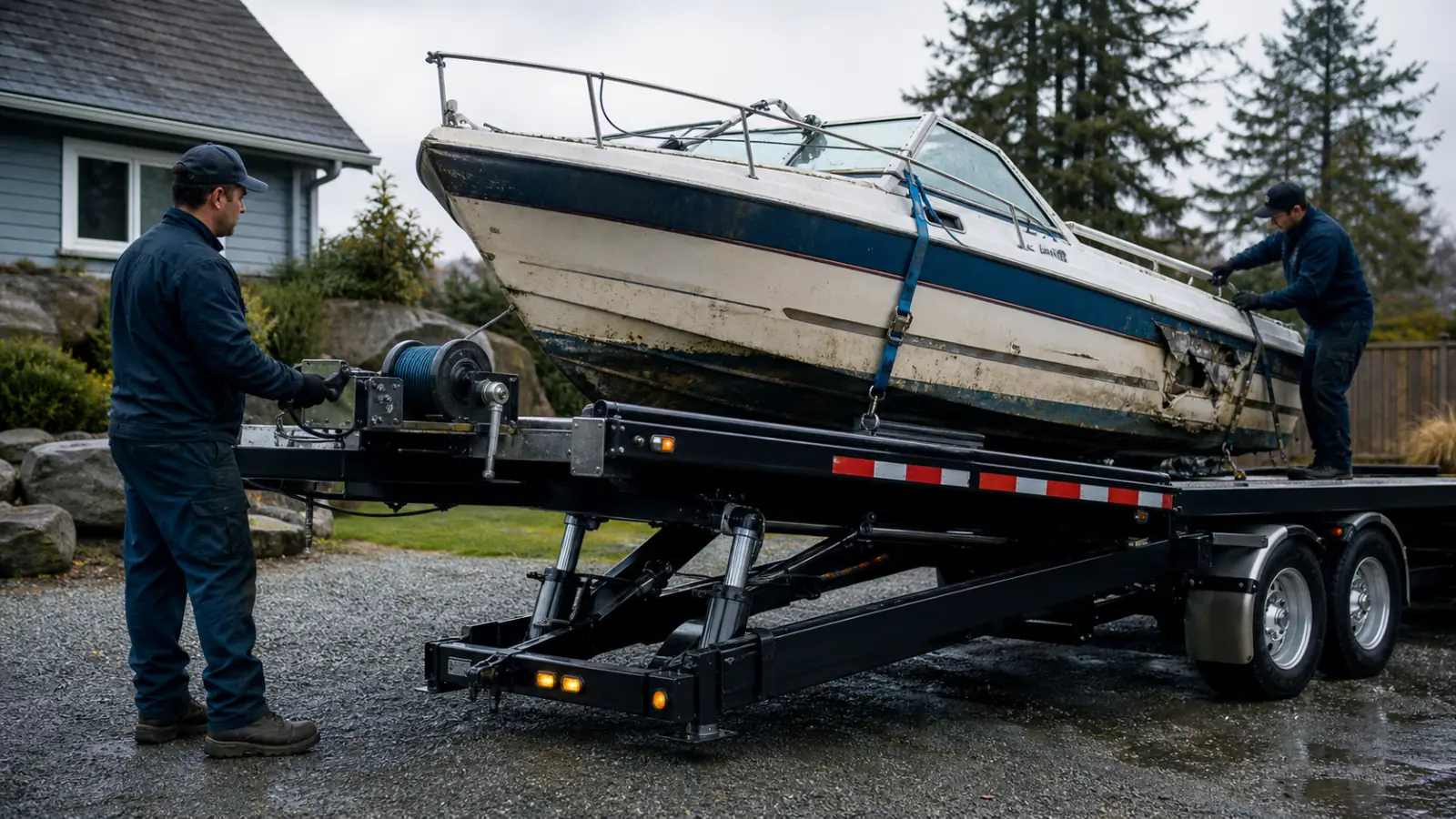
Physical condition determines whether a haul requires flatbed trailers, hydraulic cranes, or manual breakdown. Hulls taking on water while moored at a slip require bilge pumping before recovery. Vessels sitting on deteriorated wooden cradles require temporary structural bracing so hydraulic machinery can lift the weight safely without causing structural collapses on site.
When Cambridge Residents Call Us
Harsh outdoor exposure in Middlesex County rapidly damages unsecured marine structures over time. Continuous freeze-thaw cycles trap moisture inside tiny gelcoat fractures, causing deep fiberglass delamination across decks and hulls. Rainwater accumulating inside an uncovered boat rots internal back panel wood, saturates seat upholstery, and doubles the total weight of the vessel. This excess water stress strains lifting straps and makes wet hulls significantly more prone to breaking apart during extraction.
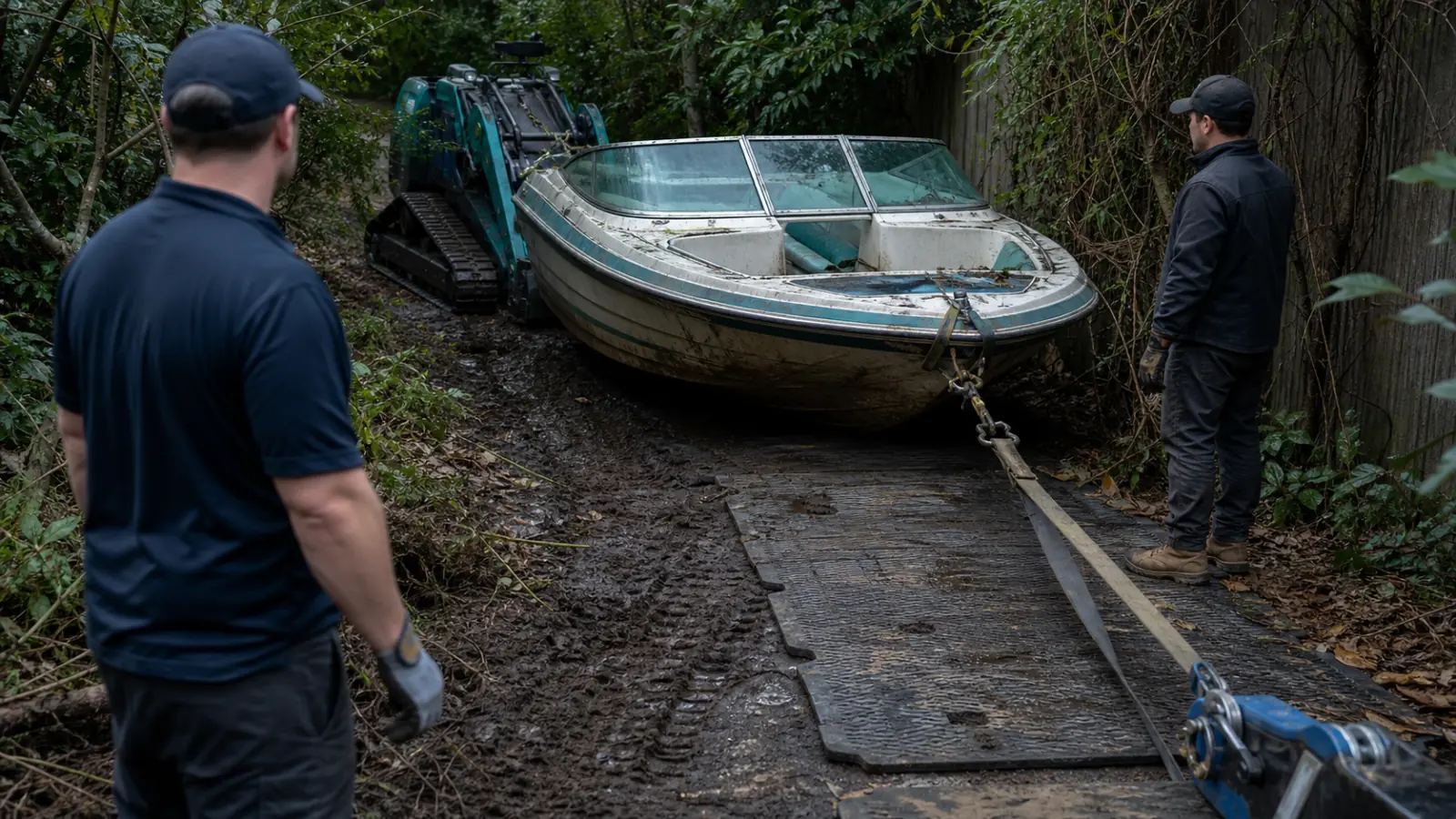
Site access conditions in Cambridge alter the strategy required for safe boat salvage operations. A compact fishing boat sitting on a rolling trailer in a wide driveway requires simple winch equipment. Conversely, a wide pontoon resting on blocks in a tight back garden, or a heavy sailboat with a deep keel positioned under low power lines, demands specialized clearance planning. Nearby properties in Somerville, Watertown, and Medford present similar tight physical footprints where overhead tree branches, narrow residential alleyways, and unpaved mud surfaces dictate whether a rig can pull right up to the craft or if secondary pulling lines must be rigged.
Navigating these tight physical boundaries ensures the surrounding landscape remains protected during heavy pulling. Crews adjust their approach based on ground firmness, structural hull strength, and clearance limits surrounding the workspace.
Every Type of Boat We Handle
- Sailboat & catamaran
- Motorboat, powerboat & cabin cruisers
- Fishing boats & bass boats
- Pontoon boats
- Jon boats & aluminum skiffs
- Large yachts
- Personal watercraft (jet skis)
- Houseboats
Situations We Handle
- Abandoned boat at marinas, docks, or boat lifts
- Unwanted boats on private property or in boat storage
- Vessels in backyards, fields, or vacant lots
- Derelict vessels blocking dock access or navigation
- Storm-damaged vessels requiring boat hauling
- Vessels without trailers or with flat tires
- Tight access locations (narrow driveways, wooded areas)
- Government or insurance-ordered cases
Need Help? We’re Ready.
Contact boat removers directly or request free quotes. We dispatch crews fast.
Our Step-by-Step Process

Assessment
We evaluate the boat’s size, current location, condition, and any environmental or access challenges before we schedule boat removal.

Planning
A detailed plan is built around your vessel — equipment, logistics, timeline, and safety. Services include drainage of oil and fuel before transport.

Execution
Our experienced crew mobilizes to your current location and we tow, haul, or dismantle the vessel using professional marine equipment.

Completion
The vessel is recovered, recycled, or routed to certified boat junkyards for environmentally responsible disposal. The site is left clean.
Equipment & Capabilities
When an aged vessel cannot roll on its own tires, custom machinery bridges the gap. Field crews utilize heavy winches, hydraulic drop-deck trailers, articulated crane booms, and pneumatic staging bladders to lift disabled hulls off ground blocks. If a vessel is structurally unstable or too wide to pass through narrow access gates, technicians dismantle the deck and superstructure on site using specialized cutting tools.
Before any physical hauling or cutting begins, safety crews systematically drain all hazardous materials from the vessel. Gasoline, diesel, engine oil, hydraulic fluid, black water, and heavy marine batteries are removed and contained according to strict environmental regulations. Navigation electronics, lead keel ballast, stainless steel hardware, and aluminum fittings are detached for targeted material recycling. The remaining fiberglass components are cut down into manageable sections to allow safe highway transport.
The choice between total site breakdown and complete vessel hauling depends on structural stability, overhead clearances, and transport route restrictions. After evaluating the vessel in person, technicians select the method that minimizes risk, cleans up scrap materials, and ensures compliant final processing at licensed industrial disposal facilities nearby Belmont and Arlington.
Our boat removal experience covers everything from start to finish assessment, planning, execution, dismantling, and final cleanup. Marina operators and property owners across Middlesex County trust us to get rid of your junk boat without damage to surrounding property.
FAQ
Boat Removal Questions - Frequently Asked
Common questions from property owners about our junk removal service, dismantling, and marine recovery.
What type of boat do you remove?
We handle every type of vessel — sailboat, pontoon, fishing boats, jon boats, yachts, and commercial craft. Whether your boat or sailboat floats (or used to), we’ll remove it from any current location.
Do you handle sunken or partially submerged vessels?
Yes. Sunken and partially submerged vessel recovery is a core part of our salvage work in Middlesex County. We use lift bags, salvage pumps, and marine cranes to safely raise vessels from underwater.
How quickly can you respond?
We respond to inquiries quickly — usually within hours, with same-day service available. For emergency situations, we mobilize as fast as possible. Call us directly for time-sensitive jobs.
Do you use subcontractors?
No. Every job is handled in-house by our own team and equipment. No middlemen, no handoffs, no surprises.
How much does cheap boat removal cost?
Cost depends on the boat’s size, current location, condition, and complexity of the job. We provide free assessments and free quotes for every case — contact us and we’ll give you an honest estimate.
Do you handle boat disposal and recycling?
Yes. Our boat removal and disposal services include hazardous materials handling, oil and fuel drainage, hull dismantling, and recycling at certified yards — all in compliance with environmental regulations and environmentally responsible standards.
Can you reach a hard-to-access location?
Absolutely. We regularly work in tight marinas, shallow waterways, private docks, backyards, and remote areas. We bring the right gear to reach any current location.
Do you work with insurance companies?
Yes. We frequently work with insurance adjusters on salvage and recovery claims and provide the documentation needed for your claim.
Other Boat Removal Locations
Browse Our Services - Ready to Get Started?
We handle everything from start to finish. Call us now or request a free quote – we’ll dispatch crews and haul your vessel away fast.