
Professional Boat Removal Services in Boston, MA

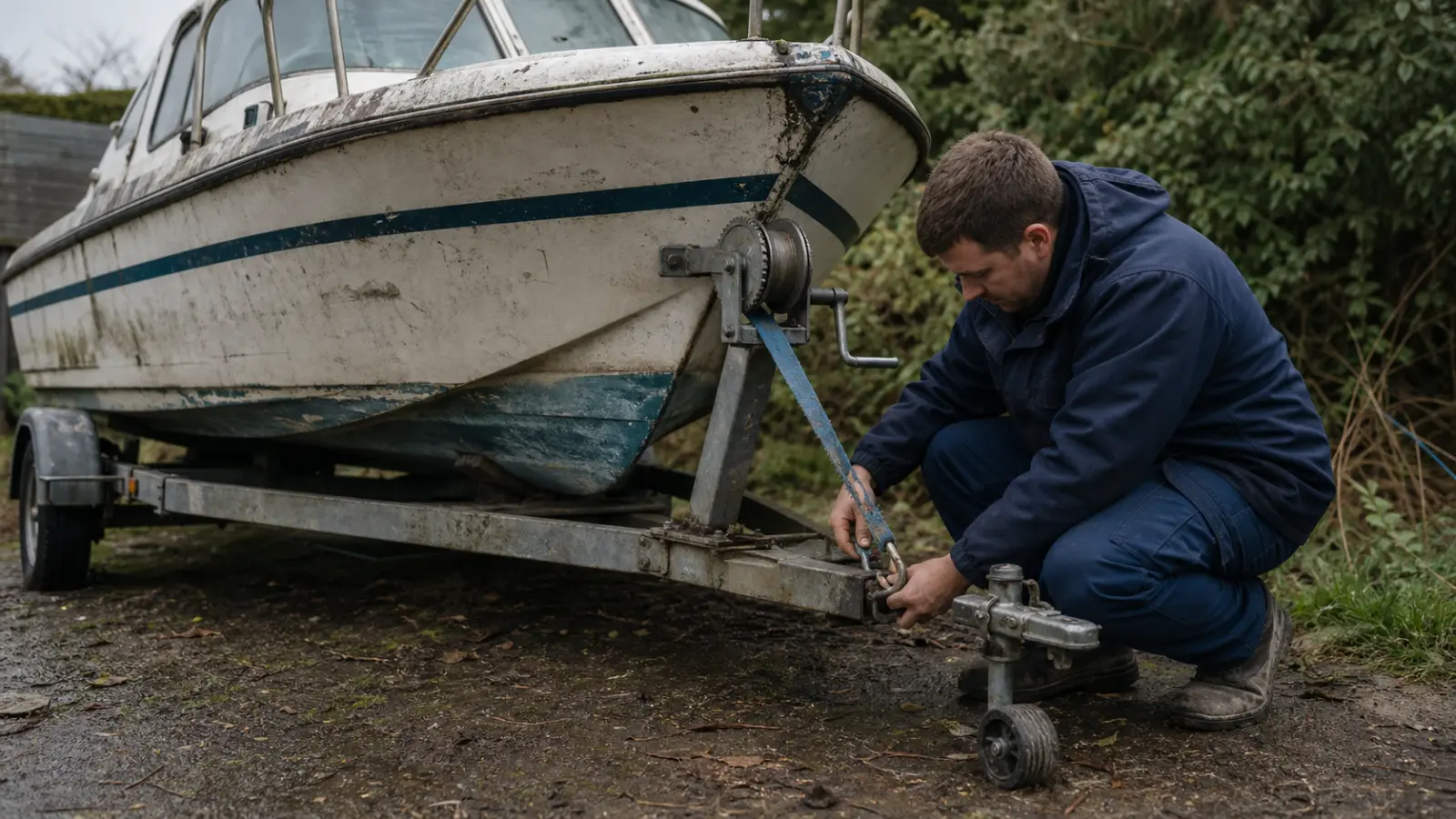
The fiberglass hull has rested on a rusting single-axle trailer behind your garage for six seasons, and the tires have flattened completely into the surrounding earth. In other cases, a local marina issues a notice regarding a slip that has gone unpaid, or an old boat remains on a parcel of property long after the deed changes hands. A quick attempt to turn over a dead engine reveals that the outboard seized completely, making a full mechanical rebuild cost significantly more than the watercraft is worth. When an old boat sits in a driveway, a yard, or an active slip without a working motor, the owner needs a clear plan for complete boat removal instead of another season of waiting.

Is there boat removal near me in Boston, MA? Boat Removal Experts handles full boat removal services directly in Boston, MA, offering straightforward hauling and site cleanouts for vessel owners who need an unserviceable craft hauled away safely from any residential lot, yard, or waterfront facility.

When our team clears a vessel from your land or slip, we do not always transfer the title into our name, but we always issue a written release of liability to the owner. Some low-cost outfits simply haul a vessel away with no paper record, which leaves the registered owner vulnerable to legal liability if that junk boat turns up dumped in public waters or on a roadside. Asking for an official release ensures you are protected once the haul out is finished.

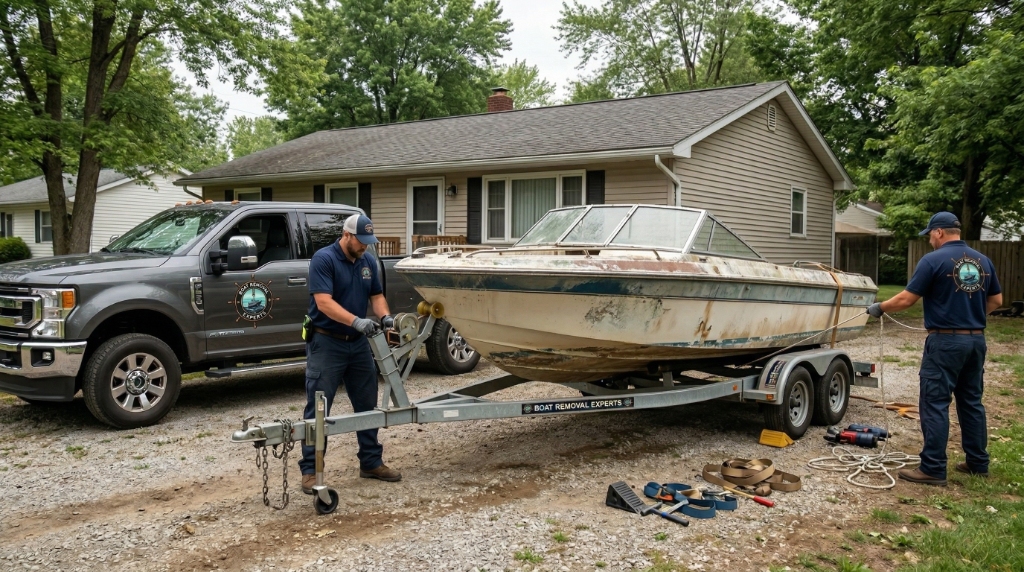
Moving a vessel is far more difficult than dragging a vehicle down a driveway. A trailer that will not roll requires specialized winches, while an oversized keel or heavy cradle can block a narrow egress route. If the beam measures wider than the gate opening, or if the hull rests on soft turf that a standard tow truck cannot cross, the extraction requires precise heavy equipment.

Call (855) 765-7931 to start.

Send photos through the contact form.

What Is Boat Removal and When You Need It

Professional vessel clearing covers far more than simply towing a boat away from a curb. An abandoned boat left in a rented storage yard or resting in a deep cradle requires specialized rigging, heavy machinery, and safe handling before it ever touches a flatbed. When a derelict vessel sits in an unpaid slip or on private land, property managers and owners must resolve the situation before fines accumulate or space remains blocked. Boat disposal addresses the logistical challenge of extracting heavy hulls from difficult footprints, ensuring the vessel is extracted cleanly without damaging surrounding structures, adjacent vehicles, or native vegetation.
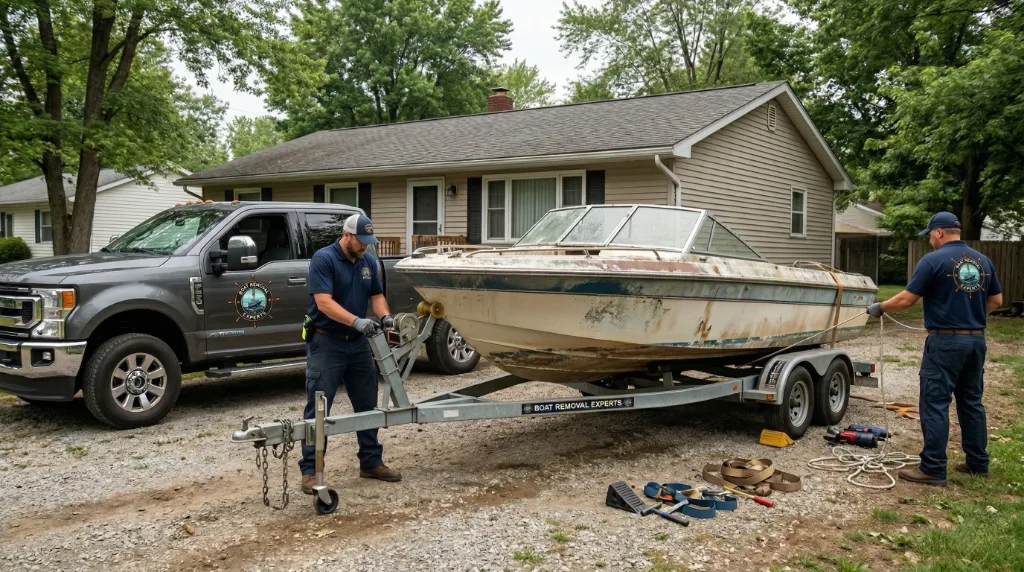
Paperwork dictates how the entire extraction process moves forward. When an owner possesses a clean title and clear registration, the logistics remain straightforward. If the paperwork is lost, or if the craft came with a recent land acquisition, the situation requires specific documentation steps. The legal status changes based on whether a vessel sits on private land, inside a commercial yard, or in a public waterway. An abandoned boat left on private property demands formal notification procedures to protect the landholder from ongoing liability. Whether dealing with a neglected cruiser or a sunk hull, proper boat disposal relies on verifying ownership rights, securing site access, and bringing the correct rigging to clear the lot permanently.
When Boston Residents Call Us

Property owners throughout Boston often call when a neglected vessel begins to deteriorate under the harsh regional weather. The severe climate in Suffolk County creates rapid decay on unmanaged craft, as freezing winter temperatures, ocean air, and standing rain break down the top gelcoat layer. Moisture trapped inside the fiberglass freezes and expands, causing deep stress cracks throughout the deck. Left uncovered, internal wood transoms rot out, upholstery fills with heavy mold, and an open hull fills with hundreds of gallons of trapped rainwater that drastically increases the total weight of the vessel.
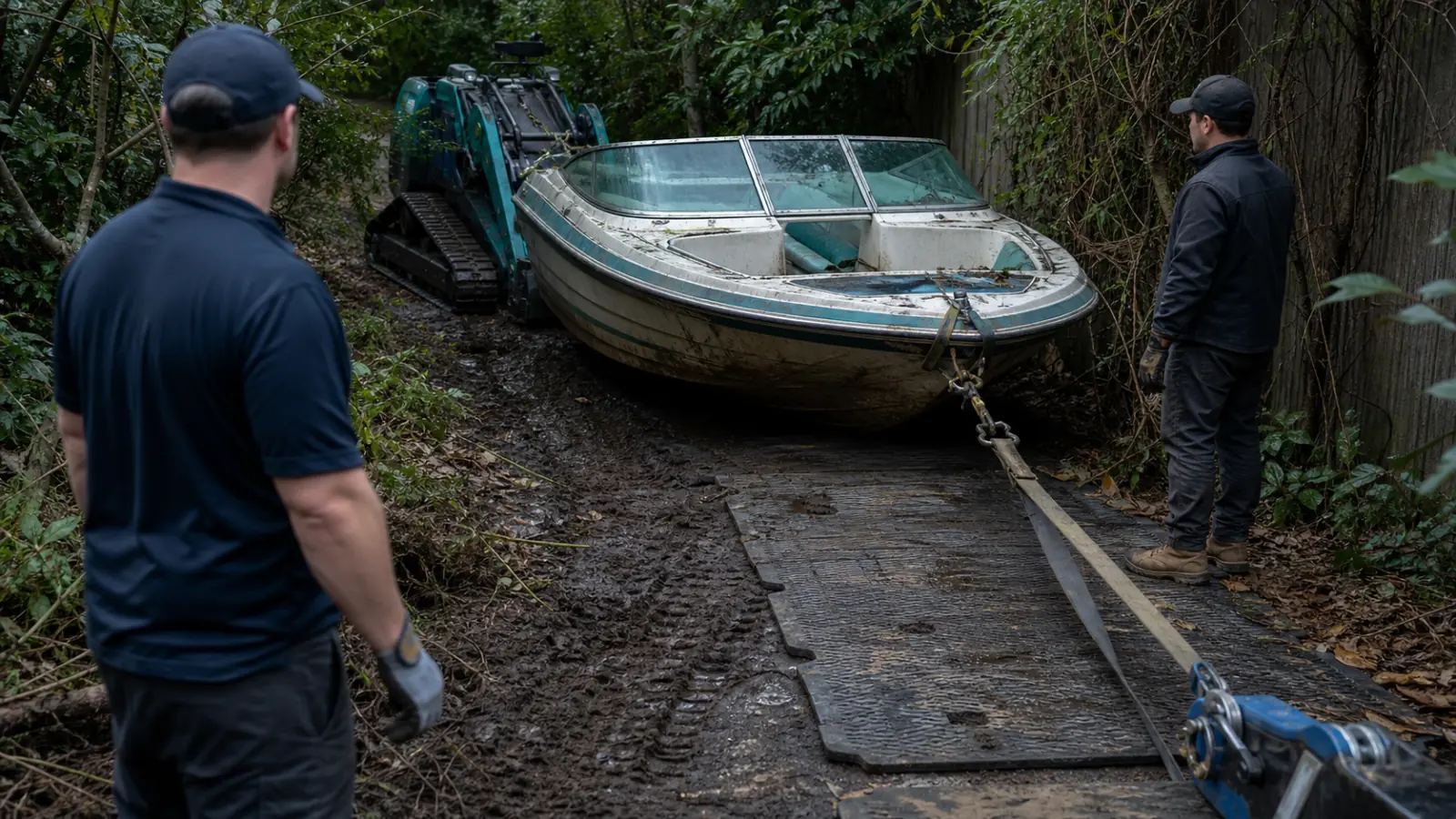
Local conditions in Boston dictate how an extraction crew approaches the property. Narrow alleyways, tight residential driveways, low-hanging overhead lines, and soft coastal soil change how heavy trucks maneuver around a target vessel. Whether a worn fishing boat sits on sunken trailer tires in a back lawn, a damaged pontoon rests on wooden blocks behind a garage, or an idle sailboat stays tied to a deep berth near Winthrop Town, Everett, Chelsea, Somerville, or Quincy, site access remains the biggest factor. A crew must evaluate whether the surrounding ground can support a heavy crane or rig before pulling the hull free from its footprint.
Every Type of Boat We Handle

Situations We Handle

Need Help? We’re Ready.

Contact boat removers directly or request free quotes. We dispatch crews fast.

Our Step-by-Step Process

Assessment

We evaluate the boat’s size, current location, condition, and any environmental or access challenges before we schedule boat removal.

Planning

A detailed plan is built around your vessel — equipment, logistics, timeline, and safety. Services include drainage of oil and fuel before transport.

Execution

Our experienced crew mobilizes to your current location and we tow, haul, or dismantle the vessel using professional marine equipment.

Completion

The vessel is recovered, recycled, or routed to certified boat junkyards for environmentally responsible disposal. The site is left clean.

Equipment & Capabilities

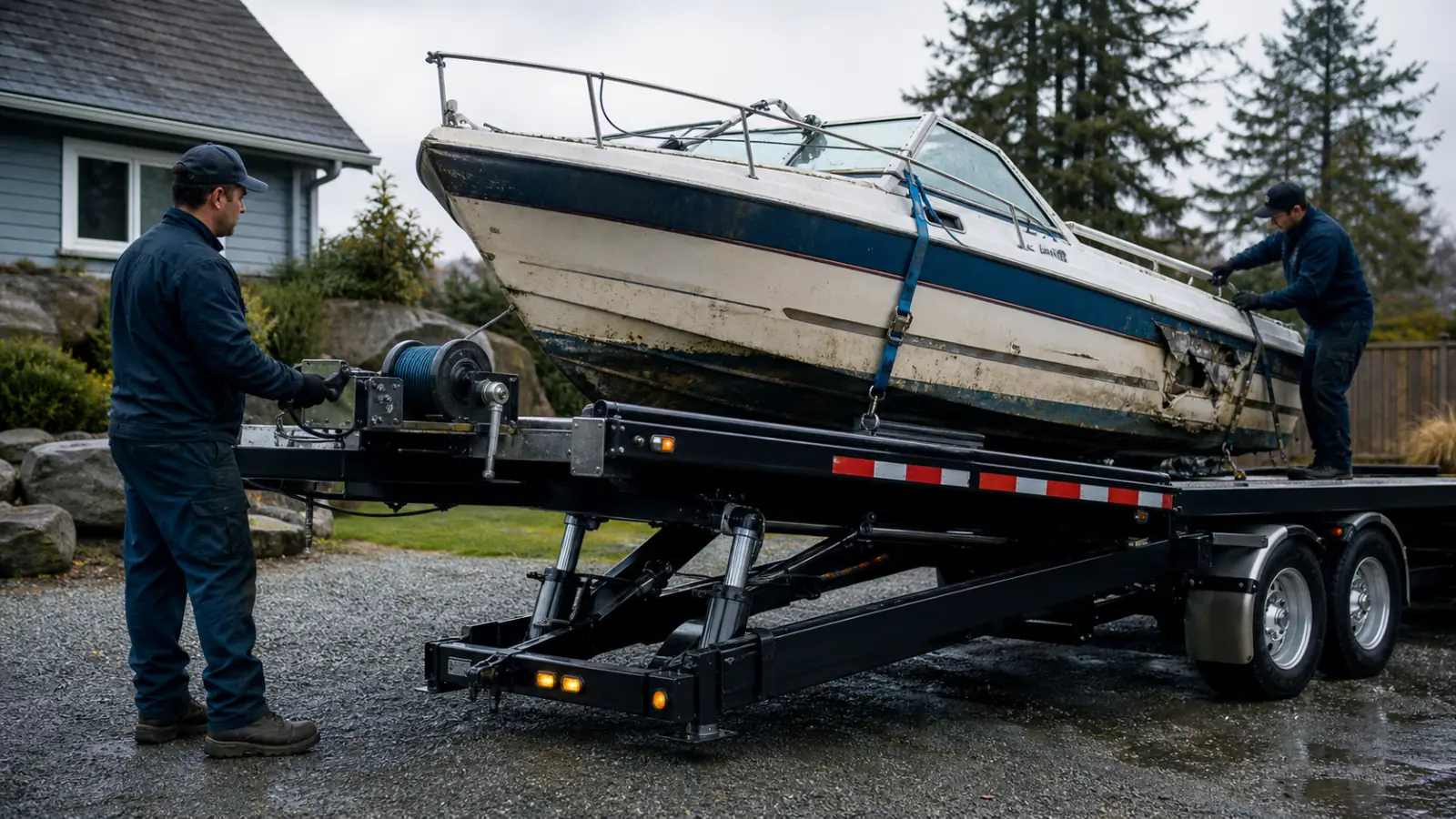
When a vessel cannot be towed on its own wheels, the recovery crew uses specialized flatbeds, hydraulic drop-deck trailers, and heavy winches to haul the structure cleanly. If a trailer tongue breaks or the axle collapses into the dirt, heavy-duty straps and temporary skids allow the machinery to pull the dead weight upward. In cases where trees have grown around the hull or the structure exceeds the dimensions of an alleyway, the crew must dismantle the fiberglass superstructure directly on site using commercial cutting equipment before loading the sections.

Before any transport happens, the team inspects the vessel to isolate hazardous materials that cannot enter a standard waste stream. Mechanics drain remaining fuel tanks, strip old crankcase oil, unhook marine batteries, and salvage electronics or lead ballast weights. Once all fluids and electrical systems are safely removed, the structural materials undergo sorting for scrap metal salvage, mechanical component recycling, or final transfer to an approved regional disposal facility. The exact sequence of processing depends on the physical condition of the hull, the access constraints of the loading zone, and local environmental handling requirements.

Our boat removal experience covers everything from start to finish  assessment, planning, execution, dismantling, and final cleanup. Marina operators and property owners across Suffolk County trust us to get rid of your junk boat without damage to surrounding property.

FAQ

Boat Removal Questions - Frequently Asked

Common questions from property owners about our junk removal service, dismantling, and marine recovery.

We handle every type of vessel — sailboat, pontoon, fishing boats, jon boats, yachts, and commercial craft. Whether your boat or sailboat floats (or used to), we’ll remove it from any current location.

Yes. Sunken and partially submerged vessel recovery is a core part of our salvage work in Suffolk County. We use lift bags, salvage pumps, and marine cranes to safely raise vessels from underwater.

We respond to inquiries quickly — usually within hours, with same-day service available. For emergency situations, we mobilize as fast as possible. Call us directly for time-sensitive jobs.

No. Every job is handled in-house by our own team and equipment. No middlemen, no handoffs, no surprises.

Cost depends on the boat’s size, current location, condition, and complexity of the job. We provide free assessments and free quotes for every case — contact us and we’ll give you an honest estimate.

Yes. Our boat removal and disposal services include hazardous materials handling, oil and fuel drainage, hull dismantling, and recycling at certified yards — all in compliance with environmental regulations and environmentally responsible standards.

Absolutely. We regularly work in tight marinas, shallow waterways, private docks, backyards, and remote areas. We bring the right gear to reach any current location.

Yes. We frequently work with insurance adjusters on salvage and recovery claims and provide the documentation needed for your claim.

Browse Our Services - Ready to Get Started?

We handle everything from start to finish. Call us now or request a free quote – we’ll dispatch crews and haul your vessel away fast.