
Professional Boat Removal Services in Chelsea, MA

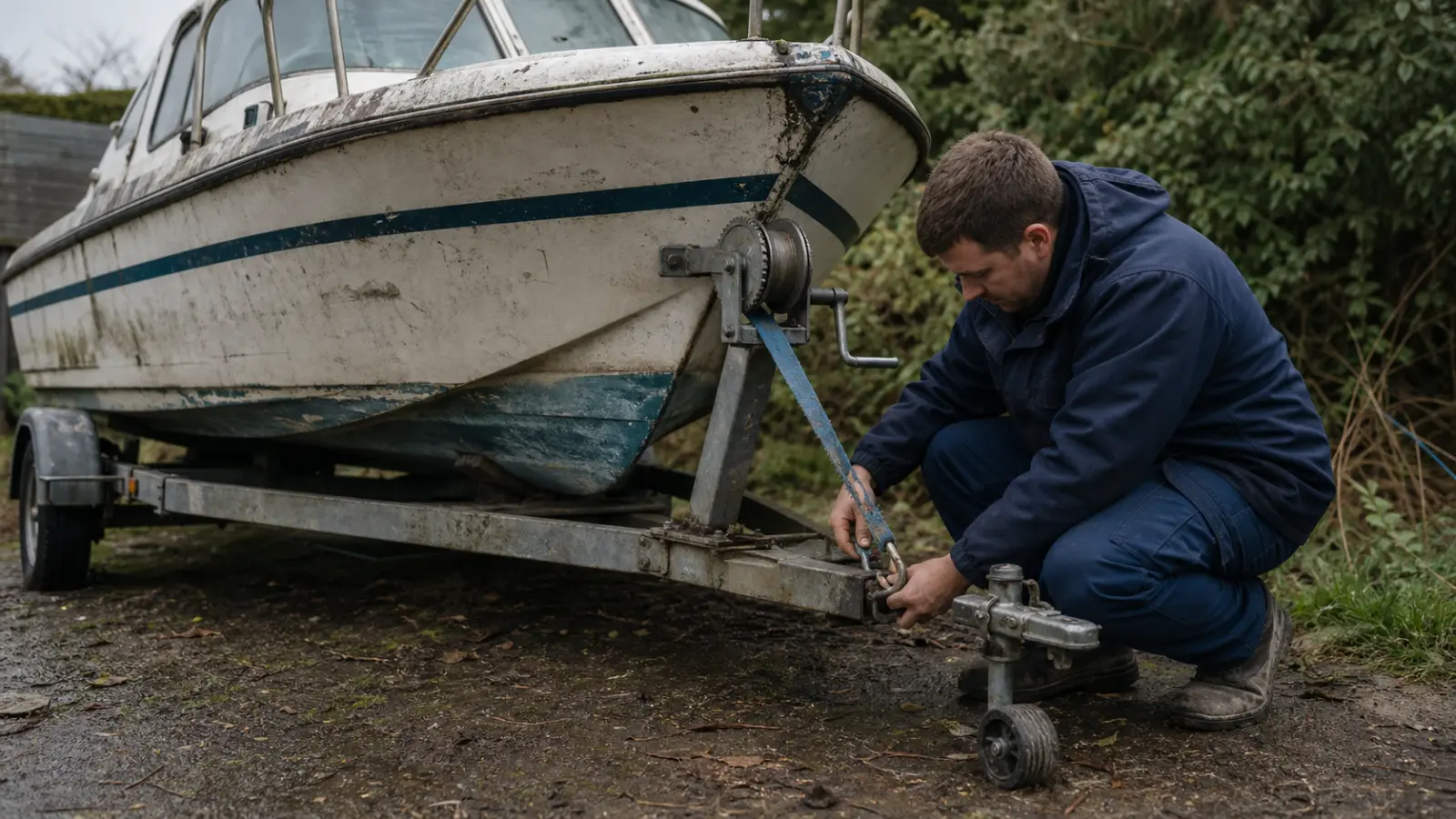
An old boat resting on a flat-tired trailer behind a garage quickly turns into a major burden. Across Chelsea, MA, property owners frequently find themselves stuck with an unwanted hull after a project loses momentum or a rebuild costs more than the craft is worth. A marina may issue a formal notice regarding an unpaid slip, or a newly purchased property might come with an abandoned vessel taking up valuable yard space. In these moments, standard towing options fall short, leaving you with a heavy fiberglass shell that cannot easily be moved or discarded.

How do I arrange junk boat removal near me in Chelsea, MA? Boat Removal Experts coordinates the entire haul, taking care of the logistics from initial rigging to site cleanup. You simply supply a few photos of the vessel and its location to receive a fast, free estimate covering the required labor and transport.

When booking a boat removal service, paperwork matters just as much as heavy equipment. While our company does not always transfer the title, we always issue a formal release of liability to protect the owner. Some haulers take a vessel away without completing proper documentation, leaving the original owner legally responsible if the hull is dumped. It is always worth asking a hauler how liability is handled before allowing any work to begin on your property.

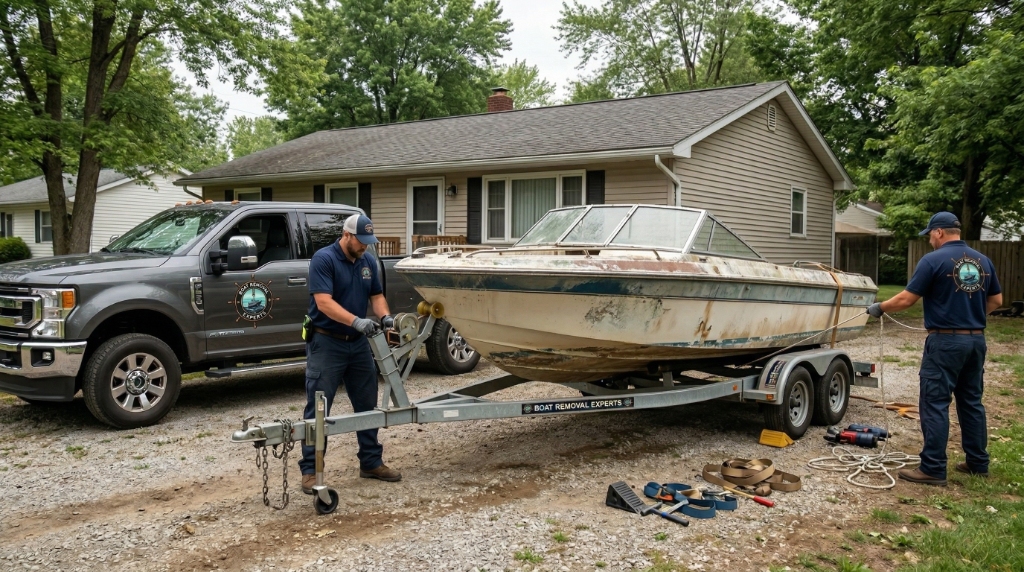
Getting a boat off a property involves much more than hooking up a trailer. Steering gears seize, tires rot into the mud, and broad beams often struggle to pass through tight fence gates. If a vessel rests on wooden blocks or a soft lawn, standard trucks risk getting stuck, requiring specialized rigging and specialized winches to safely relocate the weight.

Call (855) 765-7931 to start.

What Is Boat Removal and When You Need It

Professional boat disposal goes far beyond just pulling a craft down the highway. Complete removal requires assessing structural integrity, securing loose components, managing site safety, and organizing proper venue routing. When an abandoned boat sits on private property or occupies a commercial slip without payment, clearing the space becomes an urgent priority. The total effort required depends heavily on access conditions, vessel size, and whether the hull can still float or roll.
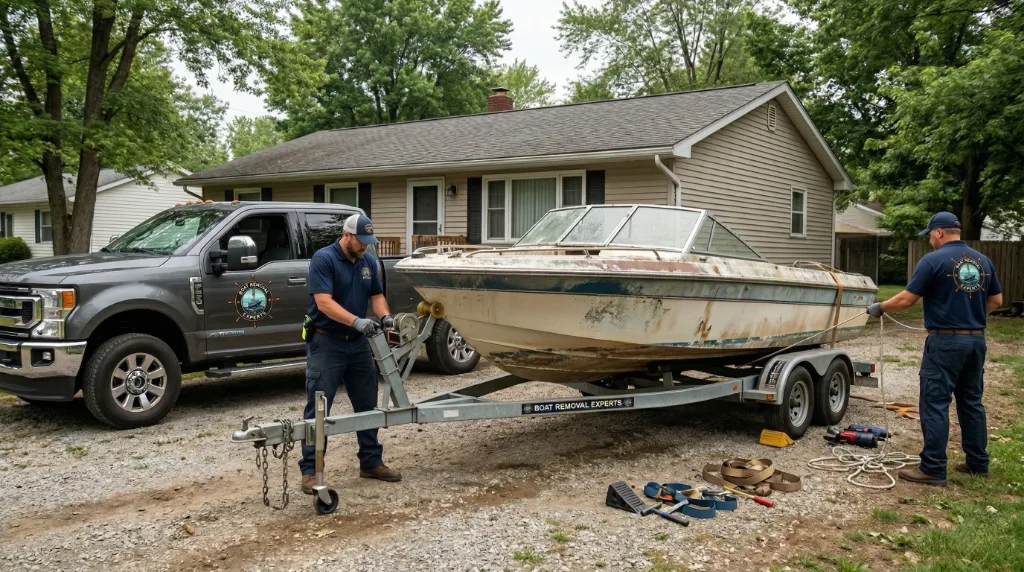
Paperwork dictates how a project proceeds. Having a clear title in hand simplifies the process, but missing documents or vessels acquired through land purchases require specific steps. When dealing with a derelict boat left behind by a previous owner or tenant, clear documentation helps establish legal authorization to haul the craft away. Resolving these title issues early ensures the extraction moves forward smoothly without legal complications for the property owner.

Whether dealing with a sunken hull, a dry-docked shell, or an abandoned boat in Suffolk County, physical accessibility drives the solution. Vessels located in tight urban driveways require different extraction methods than those sitting at launch ramps or inside storage yards. The presence of a usable trailer, functioning axle, or clear path to the main road directly impacts how the crew prepares the load for safe transit.
When Chelsea Residents Call Us

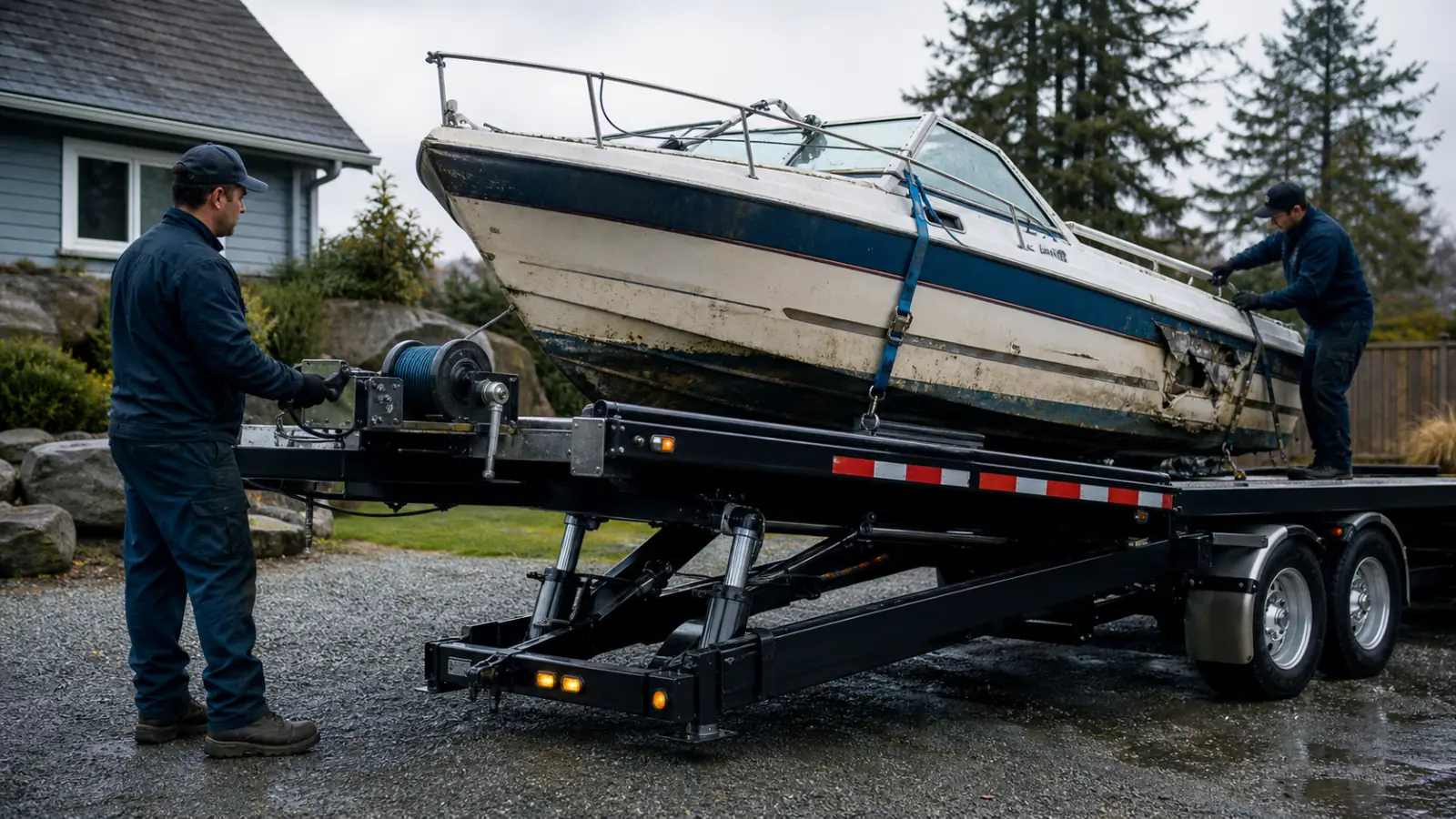
Coastal weather in Chelsea, MA takes a heavy toll on watercraft left out in the elements. Sunlight breaks down gelcoat finishes, while freezing winter water cracks fiberglass seams and rots interior wood support beams. Upholstery quickly holds moisture, inviting mold and adding substantial water weight to the structure. As rain fills an uncovered hull, the weakened frame can buckle, turning a routine transport job into a complex recovery operation that demands specialized lifting equipment.

Vessel type also dictates how the crew approaches the job. A lightweight aluminum fishing boat presents very different loading challenges than a wide-beam pontoon or a heavy, deep-draft sailboat with a cast-iron keel. A sailboat often requires unstepping the mast and securing overhead clearances before movement, while broad deck boats require wide-path planning through tight neighborhood streets. Nearby trips through Everett or Revere highlight how varied suburban road access can be when moving bulky marine loads.
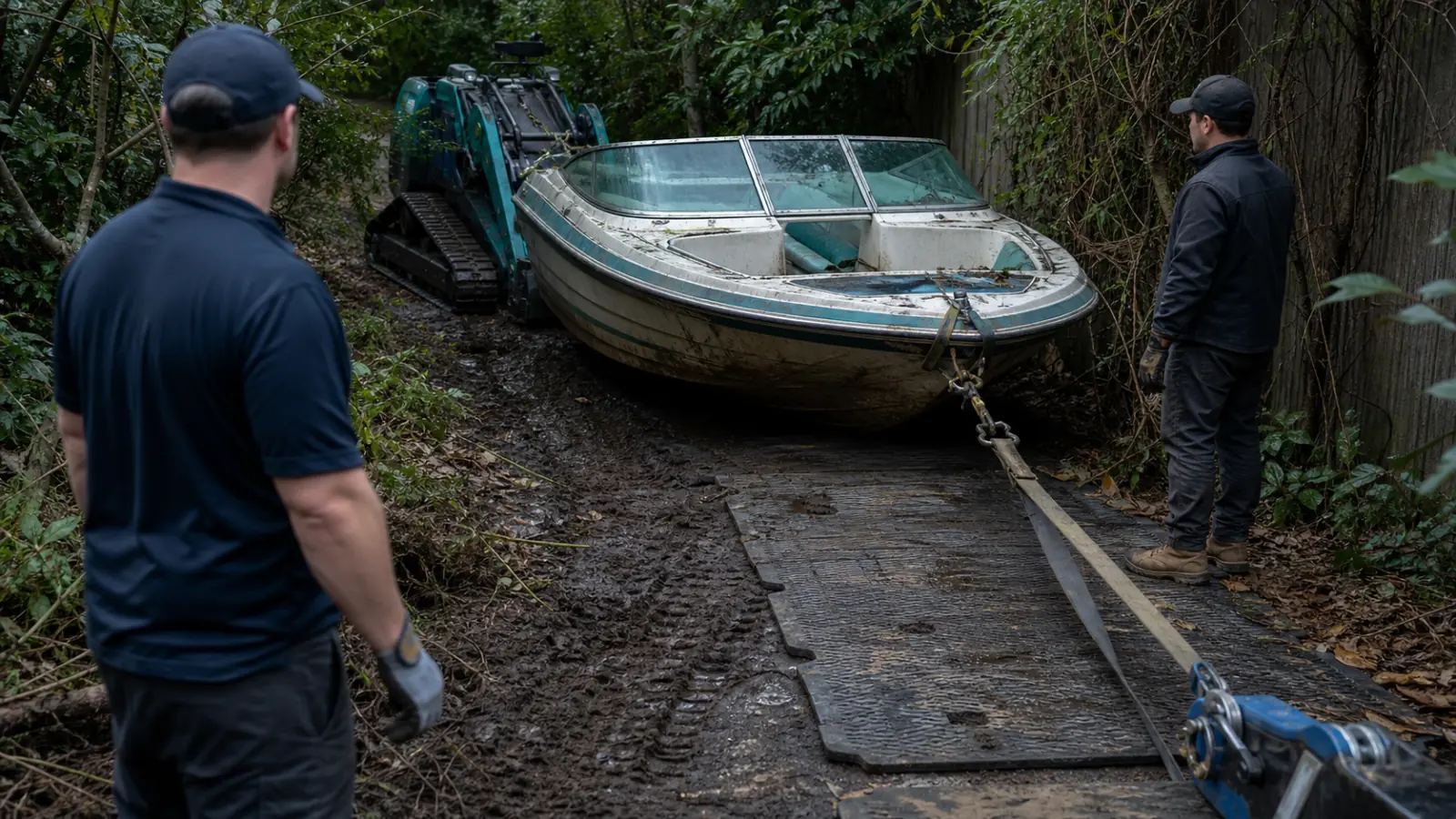
Site conditions dictate every step of the extraction process. Crews must carefully evaluate the ground surface beneath the craft, checking whether heavy equipment must cross soft dirt, cracked concrete, or tight gravel driveways. Nearby overhead utility lines, low tree branches, narrow gates, and tight corners present immediate hazards. A craft resting on functional tires moves easily, whereas a hull settled directly on rotted blocks or half-submerged near the shoreline requires dedicated winches and heavy rigging to shift safely.
Every Type of Boat We Handle

Situations We Handle

Need Help? We’re Ready.

Contact boat removers directly or request free quotes. We dispatch crews fast.

Our Step-by-Step Process

Assessment

We evaluate the boat’s size, current location, condition, and any environmental or access challenges before we schedule boat removal.

Planning

A detailed plan is built around your vessel — equipment, logistics, timeline, and safety. Services include drainage of oil and fuel before transport.

Execution

Our experienced crew mobilizes to your current location and we tow, haul, or dismantle the vessel using professional marine equipment.

Completion

The vessel is recovered, recycled, or routed to certified boat junkyards for environmentally responsible disposal. The site is left clean.

Equipment & Capabilities

When a vessel cannot be towed on its own wheels, specialized extraction gear becomes necessary. Heavy winches, hydraulic drop-deck trailers, and temporary transport dollies allow crews to lift and move stubborn hulls without risking damage to surrounding structures. If a craft rests in a confined space where a truck cannot reach, rollers and track systems help guide the weight toward open ground.

In cases where a vessel is too large to transport intact or has suffered severe structural failure, crews must dismantle the hull on site. Using heavy-duty cutting tools, workers carefully section the fiberglass or wood structure into manageable pieces. Before any cutting begins, workers inspect the vessel for environmental hazards. All hazardous materials, including residual fuel, engine oil, bilge water, lead ballast, and marine batteries, are safely drained, collected, and separated to comply with local environmental standards.

Once the vessel is disassembled and secured, the crew determines the appropriate destination for all materials. Useful metal components, such as aluminum rails, stainless steel cleats, and bronze props, are sorted for recycling. The remaining fiberglass debris and structural remnants are hauled to approved disposal facilities. This step-by-step approach ensures that every vessel is handled safely, responsibly, and in full compliance with regional disposal guidelines.

Our boat removal experience covers everything from start to finish  assessment, planning, execution, dismantling, and final cleanup. Marina operators and property owners across Suffolk County trust us to get rid of your junk boat without damage to surrounding property.

FAQ

Boat Removal Questions - Frequently Asked

Common questions from property owners about our junk removal service, dismantling, and marine recovery.

We handle every type of vessel — sailboat, pontoon, fishing boats, jon boats, yachts, and commercial craft. Whether your boat or sailboat floats (or used to), we’ll remove it from any current location.

Yes. Sunken and partially submerged vessel recovery is a core part of our salvage work in Suffolk County. We use lift bags, salvage pumps, and marine cranes to safely raise vessels from underwater.

We respond to inquiries quickly — usually within hours, with same-day service available. For emergency situations, we mobilize as fast as possible. Call us directly for time-sensitive jobs.

No. Every job is handled in-house by our own team and equipment. No middlemen, no handoffs, no surprises.

Cost depends on the boat’s size, current location, condition, and complexity of the job. We provide free assessments and free quotes for every case — contact us and we’ll give you an honest estimate.

Yes. Our boat removal and disposal services include hazardous materials handling, oil and fuel drainage, hull dismantling, and recycling at certified yards — all in compliance with environmental regulations and environmentally responsible standards.

Absolutely. We regularly work in tight marinas, shallow waterways, private docks, backyards, and remote areas. We bring the right gear to reach any current location.

Yes. We frequently work with insurance adjusters on salvage and recovery claims and provide the documentation needed for your claim.

Browse Our Services - Ready to Get Started?

We handle everything from start to finish. Call us now or request a free quote – we’ll dispatch crews and haul your vessel away fast.