
Professional Boat Removal Services in Malden, MA

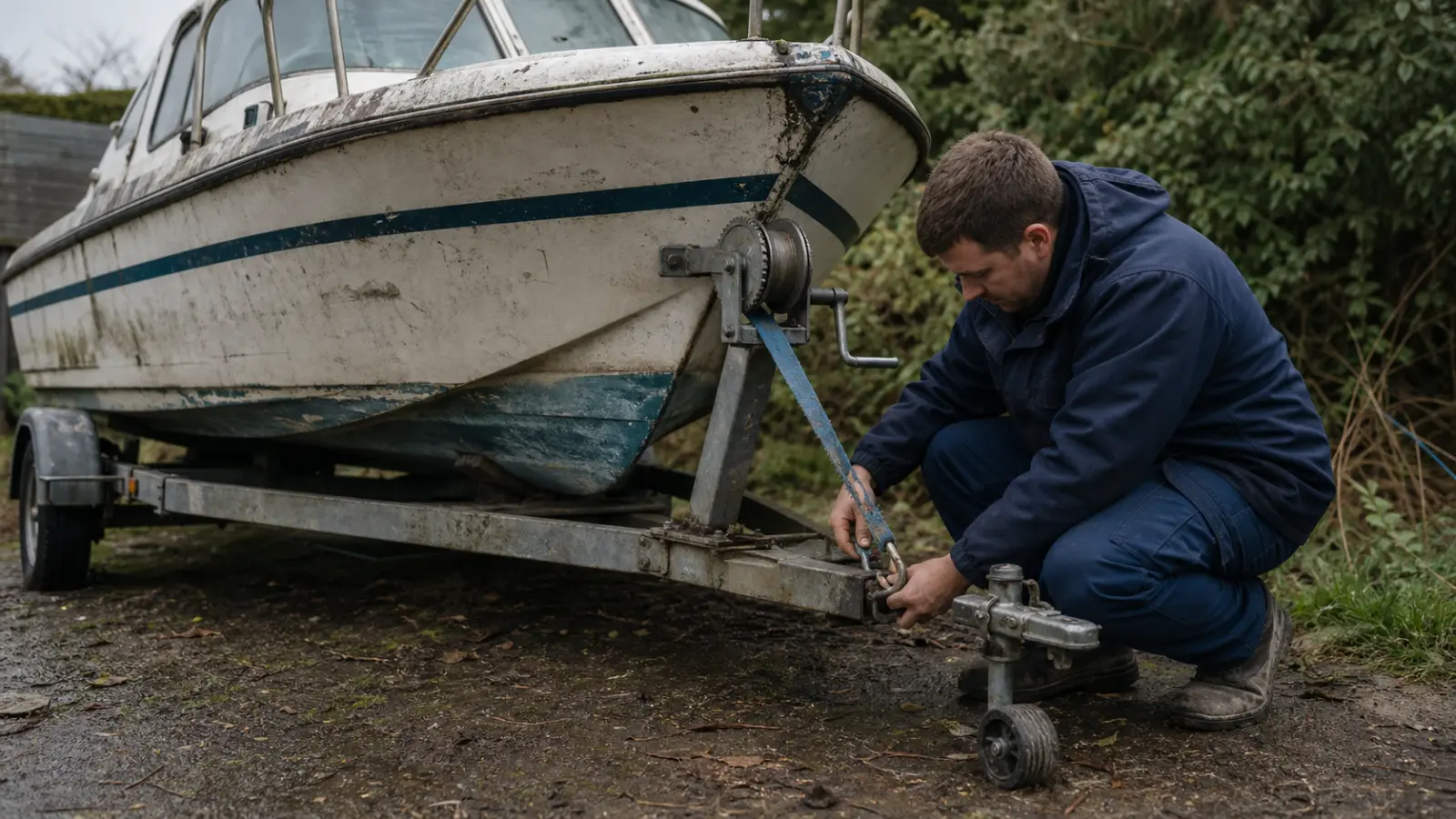
An old boat resting on a flat-tired trailer behind a garage can sit untouched for six full seasons while weeds choke the frame and rust binds the winch. In other cases, a notice arrives from a marina regarding an unpaid slip, or a home buyer inherits a property with a landlocked cabin cruiser tucked beside the shed. When an outboard engine seizes and a complete rebuild costs far more than the vessel is worth, the hull becomes a permanent burden on the yard. Keeping an unwanted vessel around creates safety hazards, takes up valuable storage space, and invites fines from municipal inspectors or property managers who want the eyesore gone.

Is there reliable boat removal near me in Malden, MA? Yes, Boat Removal Experts provides complete hauling, cleanup, and disposal options for property owners throughout Malden, MA who need an unseaworthy or unwanted vessel removed from their driveway, yard, or local slip quickly and efficiently.

Handling the legal transfer of an aging vessel requires proper documentation to protect the original owner from future claims. Our company position on liability is clear: while we do not always transfer the title into our name, we always issue a formal release of liability to the client upon taking possession. Some hauling outfits simply tow a vessel away without providing any paper trail, leaving the original owner liable if the hull is abandoned elsewhere. It is always worth asking a contractor how they document liability before allowing them to haul a hull off your lot.

Moving a vessel is far more complex than standard junk hauling because the load is top-heavy and awkwardly shaped. A trailer with dry-rotted tires, locked bearings, or a rusted tongue cannot be towed safely down public roads. Furthermore, a deep keel sitting on wood blocks, a wide beam that barely clears a backyard gate, or a heavy displacement hull resting on soft dirt can prevent ordinary towing trucks from even reaching the vessel.

Call 781-390-9598 to start.

Send photos through the contact form.

What Is Boat Removal and When You Need It

Professional boat disposal goes well beyond simply attaching a hitch and towing a vessel down the highway. A proper job involves evaluating structural integrity, securing loose equipment, extracting stagnant water from the bilge, and rigging specialized winch cables to load a vessel safely without damaging surrounding property. Whether dealing with a neglected runabout tucked behind a barn or an abandoned boat sitting on private land, dedicated removal services address every physical and logistical barrier to clear the site completely.

The documentation attached to a hull dictates how the removal process is managed. When an owner possesses a clear title, the paperwork moves forward without delay. However, when paperwork is lost, missing, or attached to a derelict vessel left behind by a former tenant or property owner, extra steps are required. In these situations, local abandoned boat regulations and property laws govern how notice is served and how ownership rights are cleared before crew members begin hauling the vessel away.
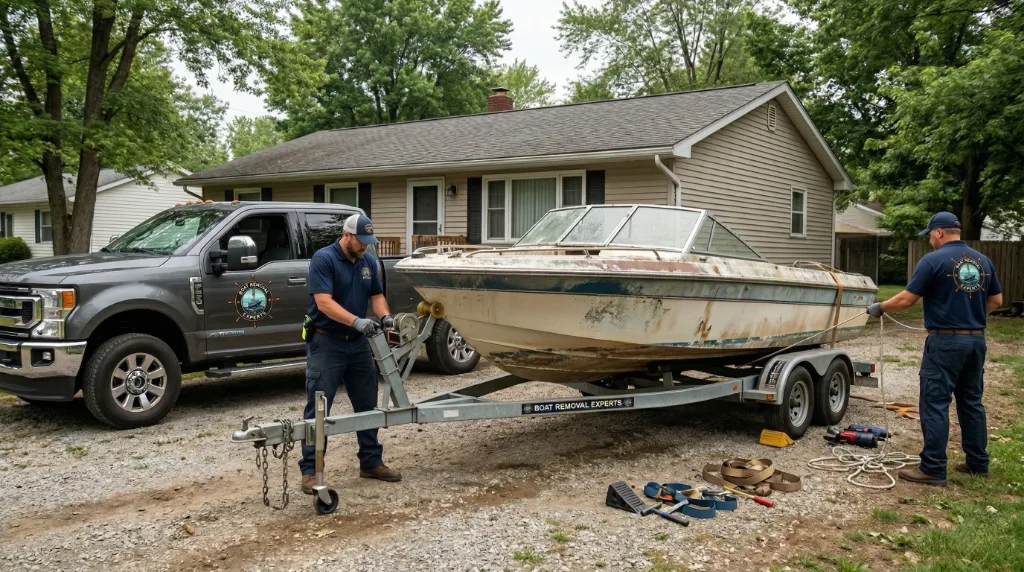
Vessels left in unpaid slips, storage yards, or commercial property present unique legal and physical challenges. A neglected vessel risks sinking, leaking fluids into the water, or causing physical damage to neighboring docks and slips. When an owner stops paying dockage or disappears entirely, property managers must take action to clear the space. The accessibility of the site, the presence of current registration, and the physical condition of the hull all determine whether the vessel can be loaded directly onto a trailer or must be broken down before transport.
When Malden Residents Call Us

Property owners throughout Malden call for professional assistance when the harsh New England climate takes its toll on parked vessels. Exposure to freezing winters, baking summer sun, and heavy rain causes severe fiberglass delamination, cracked gelcoat, and rotted wooden transoms. Upholstery holds moisture and sprouts heavy mold, while standing rainwater inside an uncapped hull adds thousands of pounds of dead weight that can breach the floorboards. In winter, freezing water expands inside internal cavities, splitting structural floor frames and turning a once-sturdy hull into a fragile shell that requires delicate handling during transport.
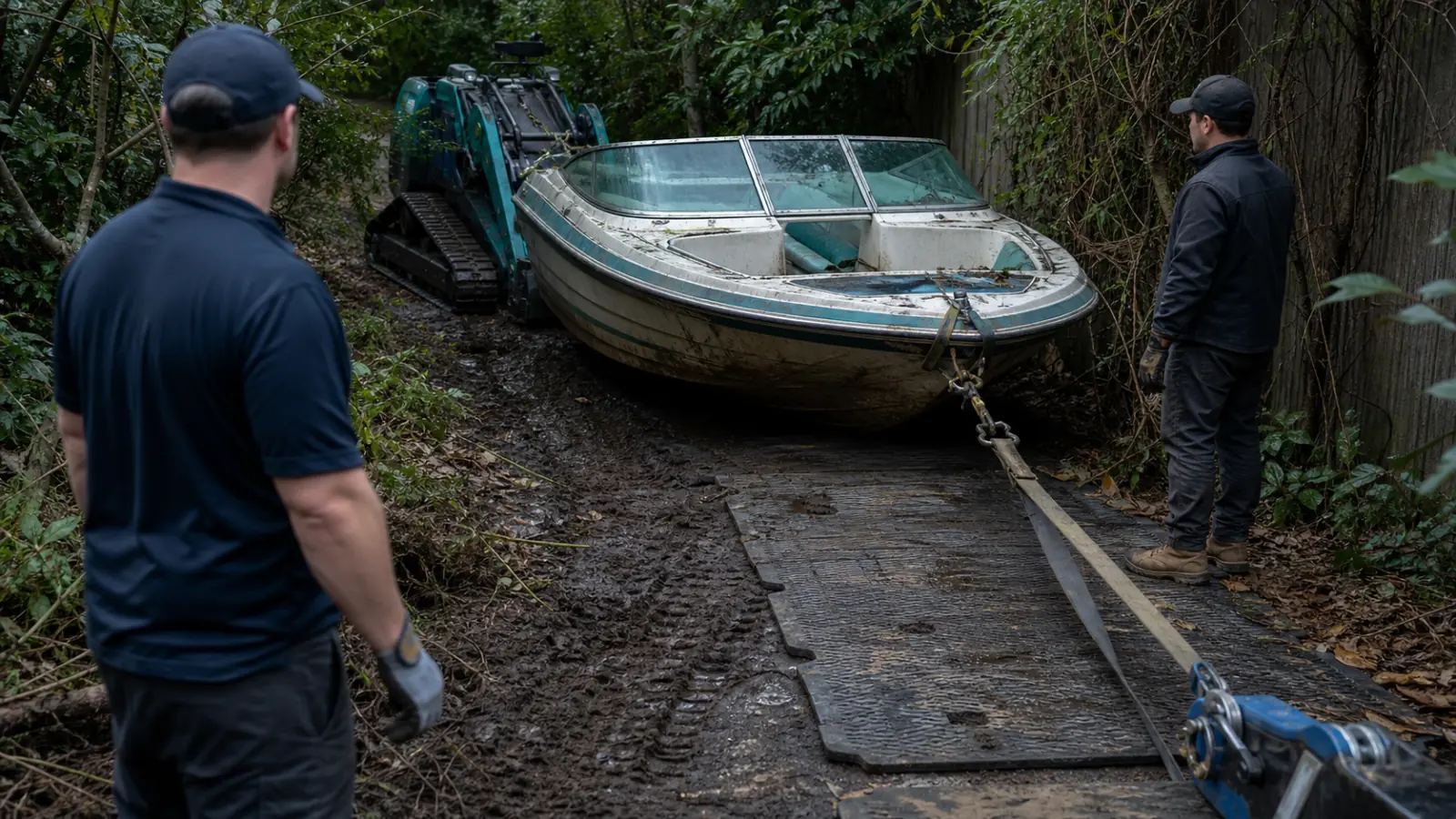
Site conditions in Middlesex County drastically influence how our crew plans a haul. Narrow suburban driveways, low-hanging tree branches, and overhead power lines often restrict access for heavy transport rigs. If a hull sits on soft dirt, mud, or unpaved lawn, heavy equipment can sink quickly, requiring protective ground mats or extended winch lines to haul the load out to paved ground. Whether the vessel rests on a degraded road trailer, sits high on wooden jack stands, or floats in a dock slip near Everett, Melrose, or Medford, our operators adjust their approach based on overhead clearance, ground surface stability, and physical proximity to nearby structures.

The type of craft also dictates the handling methods required. A light aluminum fishing boat requires different rigging than a wide-beam pontoon with hollow aluminum tubes or a deep-draft sailboat holding a heavy lead ballast. Sailboats often require unstepping the mast and removing standing rigging before highway travel is safe, while a drafty pontoon must be secured against high wind resistance during transit.
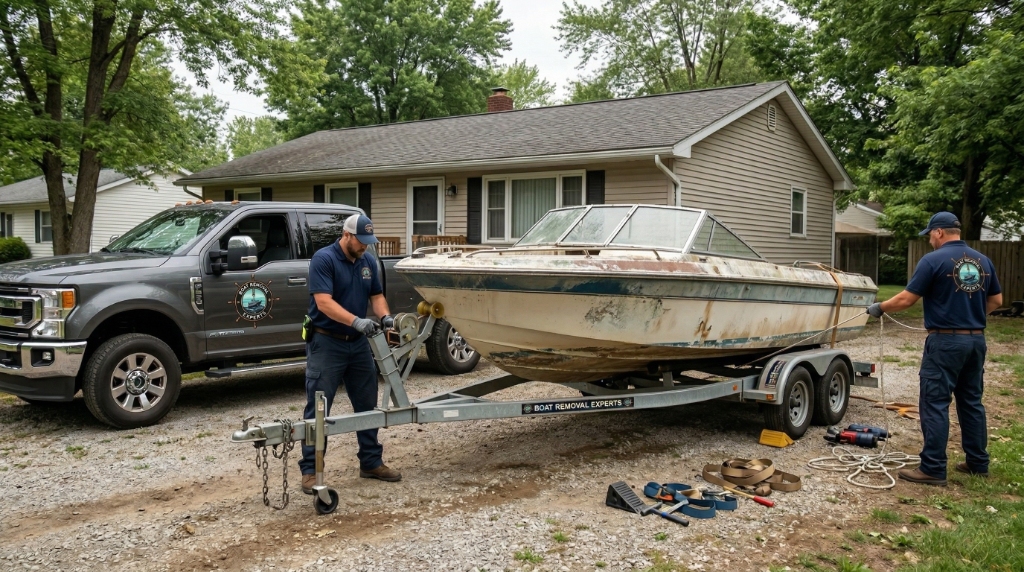
Every Type of Boat We Handle

Situations We Handle

Need Help? We’re Ready.

Contact boat removers directly or request free quotes. We dispatch crews fast.

Our Step-by-Step Process

Assessment

We evaluate the boat’s size, current location, condition, and any environmental or access challenges before we schedule boat removal.

Planning

A detailed plan is built around your vessel — equipment, logistics, timeline, and safety. Services include drainage of oil and fuel before transport.

Execution

Our experienced crew mobilizes to your current location and we tow, haul, or dismantle the vessel using professional marine equipment.

Completion

The vessel is recovered, recycled, or routed to certified boat junkyards for environmentally responsible disposal. The site is left clean.

Equipment & Capabilities

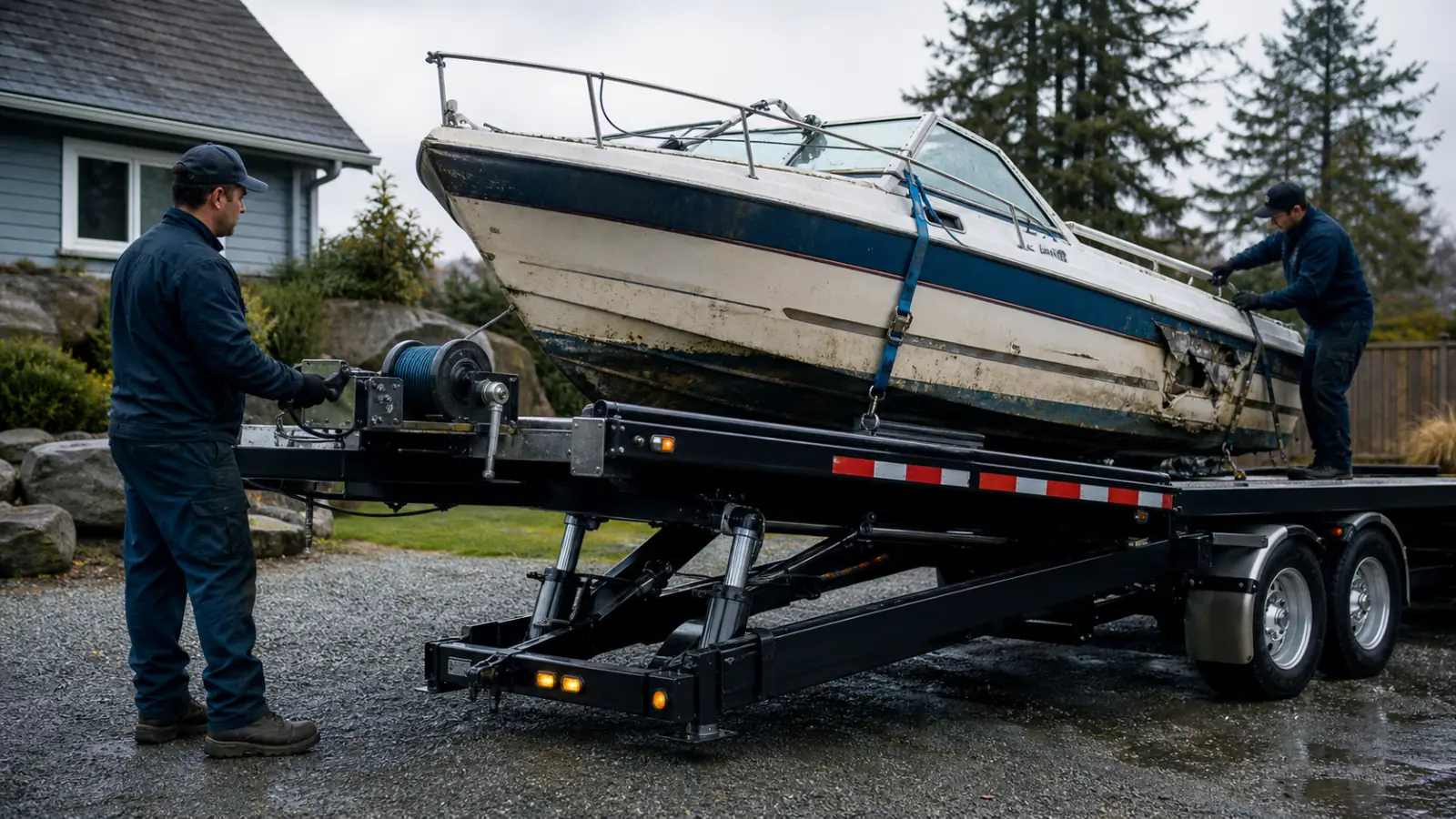
When a vessel sits on a frame with seized axles, missing wheels, or structural frame rot, standard towing methods are impossible. In these scenarios, crews utilize heavy-duty hydraulic flatbeds, specialized machinery dolly systems, and high-capacity hydraulic winches to slide the load safely onto a transport deck. If the vessel is located in a tight backyard with no direct clearance for heavy trucks, or if the hull is too wide to clear surrounding fences and building eaves, workers dismantle the structure on site using commercial saws and cutting tools, reducing the vessel into manageable sections that fit inside standard collection containers.

Before any physical hauling or cutting occurs, environmental protection takes priority. Crews must systematically drain all hazardous materials from the vessel. Gasoline, diesel fuel, motor oil, hydraulic fluid, black water, and bilge contaminants are pumped out and collected into approved containment drums. Marine batteries are disconnected and isolated, and pyrotechnic flares, fire extinguishers, and mercury-containing electronics are removed to prevent environmental contamination and meet strict transit safety standards.

Once all fluid hazards are mitigated and the hull is loaded, the material destination depends entirely on structural composition and salvageability. Solid aluminum hulls, stainless steel hardware, copper wiring, and bronze props are separated for metal recycling facilities. Fiberglass, rotted wood, saturated foam, and degraded interior components are routed to designated disposal facilities equipped for heavy bulk waste. The crew evaluates the vessel on site to determine whether full processing, material recovery, or bulk landfill disposal represents the safest and most efficient path forward.

Our boat removal experience covers everything from start to finish  assessment, planning, execution, dismantling, and final cleanup. Marina operators and property owners across Middlesex County trust us to get rid of your junk boat without damage to surrounding property.

FAQ

Boat Removal Questions - Frequently Asked

Common questions from property owners about our junk removal service, dismantling, and marine recovery.

We handle every type of vessel — sailboat, pontoon, fishing boats, jon boats, yachts, and commercial craft. Whether your boat or sailboat floats (or used to), we’ll remove it from any current location.

Yes. Sunken and partially submerged vessel recovery is a core part of our salvage work in Middlesex County. We use lift bags, salvage pumps, and marine cranes to safely raise vessels from underwater.

We respond to inquiries quickly — usually within hours, with same-day service available. For emergency situations, we mobilize as fast as possible. Call us directly for time-sensitive jobs.

No. Every job is handled in-house by our own team and equipment. No middlemen, no handoffs, no surprises.

Cost depends on the boat’s size, current location, condition, and complexity of the job. We provide free assessments and free quotes for every case — contact us and we’ll give you an honest estimate.

Yes. Our boat removal and disposal services include hazardous materials handling, oil and fuel drainage, hull dismantling, and recycling at certified yards — all in compliance with environmental regulations and environmentally responsible standards.

Absolutely. We regularly work in tight marinas, shallow waterways, private docks, backyards, and remote areas. We bring the right gear to reach any current location.

Yes. We frequently work with insurance adjusters on salvage and recovery claims and provide the documentation needed for your claim.

Browse Our Services - Ready to Get Started?

We handle everything from start to finish. Call us now or request a free quote – we’ll dispatch crews and haul your vessel away fast.