
Professional Boat Removal Services in Gloucester, MA
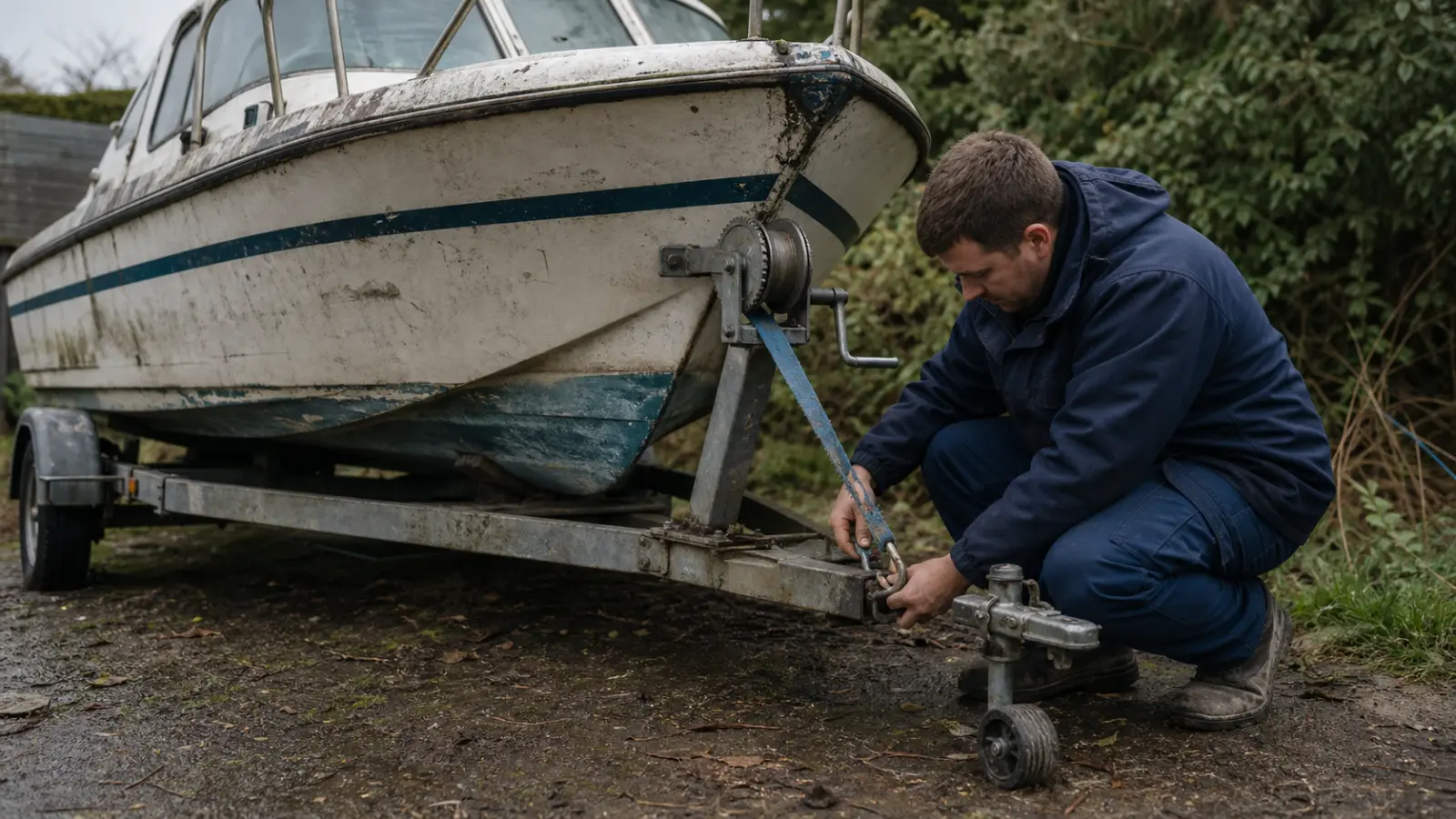
A fiberglass hull has rested on a wooden trailer behind the garage for six seasons, and the tires have flattened directly into the packed dirt. A local marina just issued a formal notice regarding an unpaid slip that needs to be cleared before the upcoming season. Perhaps a residential property was recently purchased with a heavy cabin cruiser left sitting on the lot, or an inboard motor seized entirely where a full rebuild costs significantly more than the vessel is worth. These situations leave owners with an unserviceable burden taking up valuable space, leaving many wondering how to handle proper junk boat removal without creating additional legal or physical complications on the property.
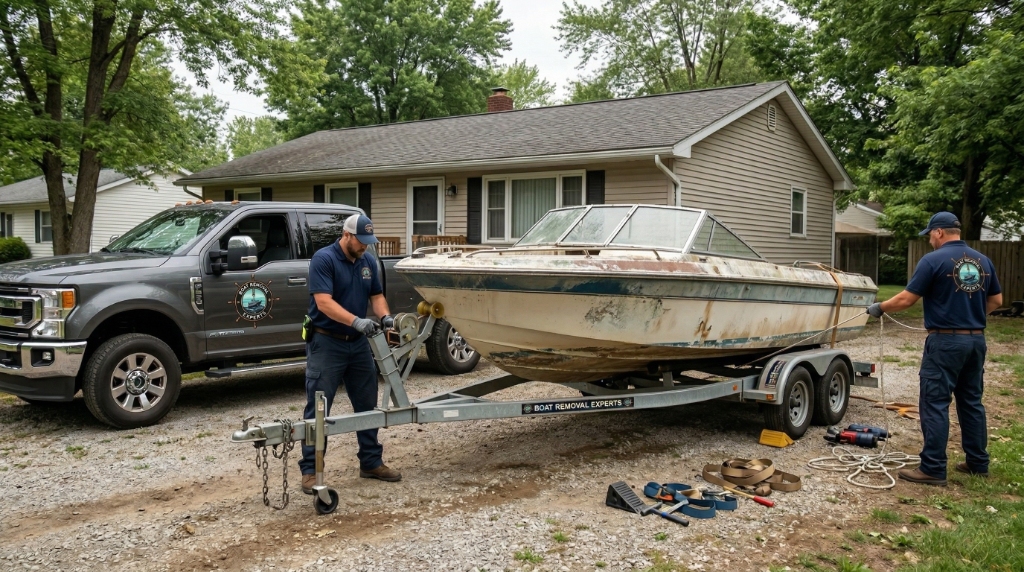
Is there boat removal near me in Gloucester, MA? Yes, Boat Removal Experts handles the complete rigging, loading, and transport of unwanted vessels directly from private yards, driveways, and local waterfront facilities throughout the municipality.

When our team removes an old boat, we issue a clear release of liability to ensure you are no longer legally responsible for the vessel. While our company does not always take over the registered title, this documented release protects you from future claims. Some haulers take a hull away without providing any formal paperwork, leaving the original owner exposed to legal liabilities if the vessel is later abandoned. It is always worth asking a hauler how liability is handled before letting them winch a craft onto a trailer.
Extracting a vessel is rarely a simple towing job. An old trailer often has rusted axles and rotted tires that will not roll, while a boat sitting on a cradle or wooden keel blocks requires heavy rigging equipment to shift. The beam of the hull is frequently wider than narrow access gates, and the total weight can easily sink a transport truck into a soft residential lawn.
Call 978-404-5860 to start.
Send photos through the contact form.
What Is Boat Removal and When You Need It
Professional boat removal covers far more than simply hitching a vessel to a truck and driving away. When an abandoned boat sits on private land or within a commercial slip, clearing it requires assessing the structural integrity of the hull, securing loose deck gear, and organizing specialized transport machinery. A derelict vessel often lacks functioning steering, making extraction from tight quarters a complex mechanical process. Whether a craft rests on a failing trailer, custom jack stands, or directly on the ground, the service ensures the vessel is safely hoisted and secured without damaging surrounding structures or landscaping.
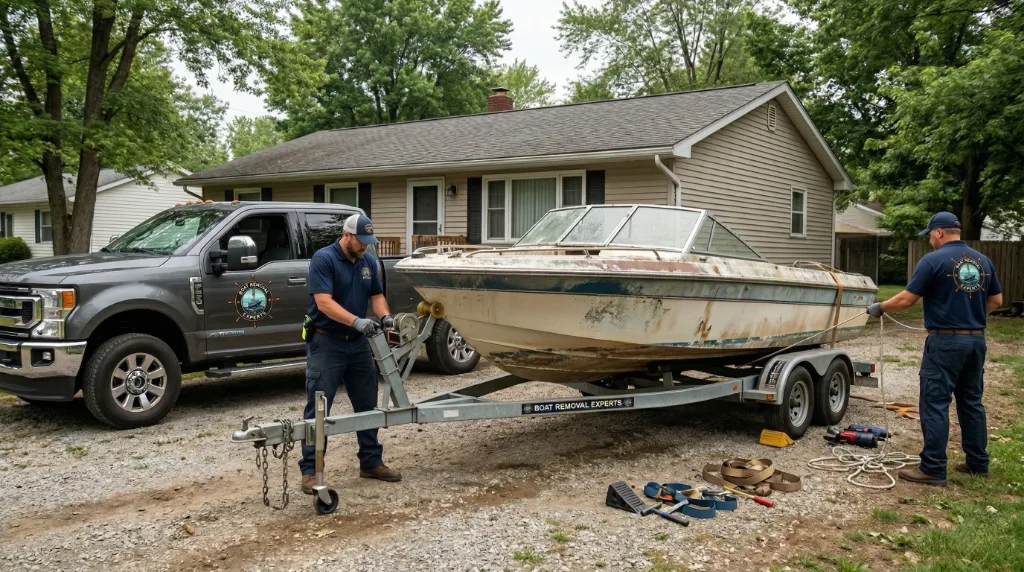
The paperwork status heavily dictates how the boat disposal process moves forward. When an owner possesses a clean title and matching HIN, the administrative steps are straightforward. However, when paperwork is lost, missing, or attached to a real estate purchase where an old vessel came with the lot, specific local protocol must be met to establish rightful disposal authorization. Vessels left on someone else's land or inside a marine facility with delinquent fees present additional administrative challenges. What affects the outcome is whether legal notices have been served, if possessory liens apply, and how quickly the state agency verifies the HIN records to clear the hull for transport and final boat disposal.
When Gloucester Residents Call Us
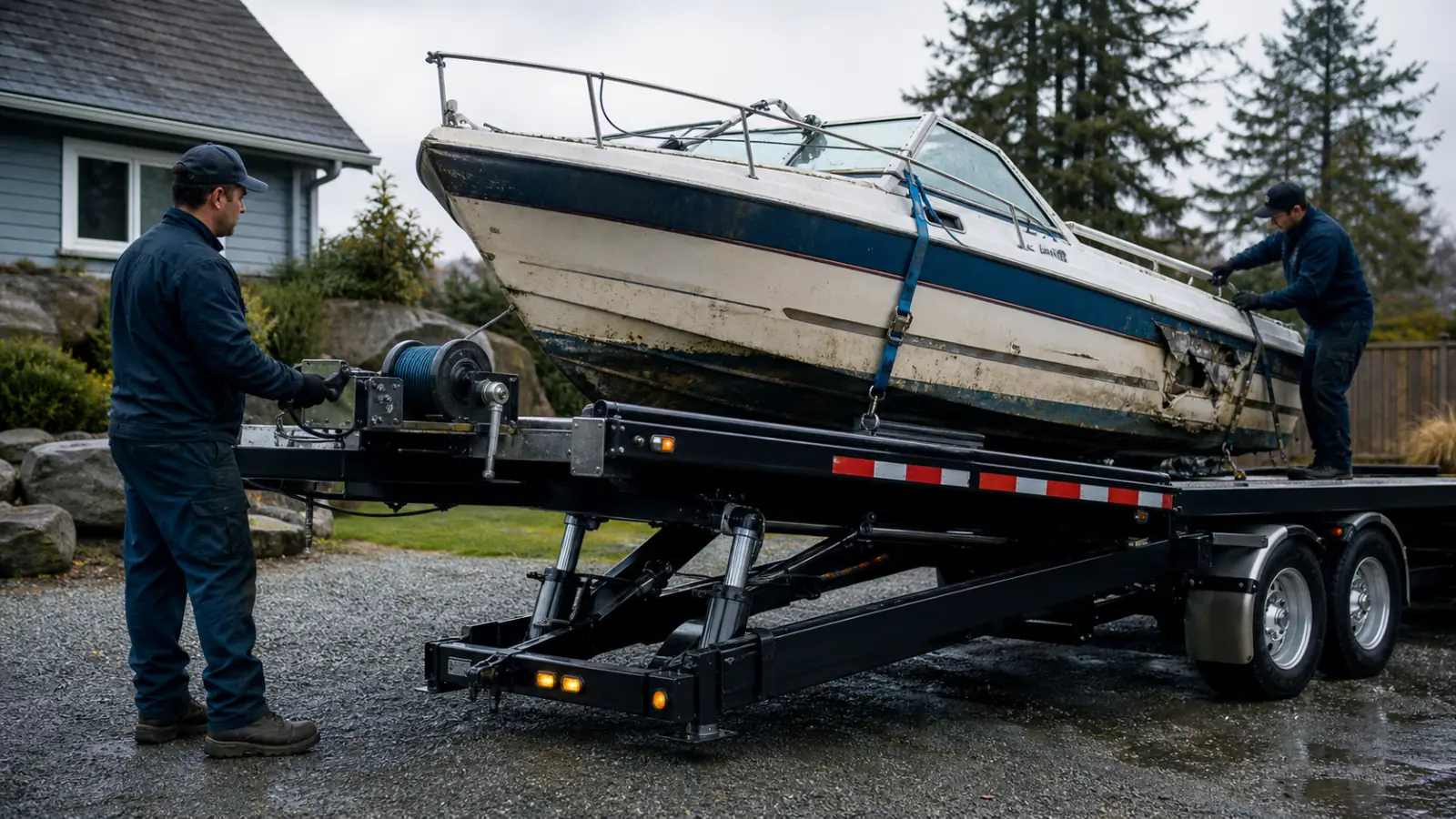
Owners in Gloucester call for transport assistance when prolonged exposure to harsh ocean air, heavy winter snowfall, and coastal winds turns an idle vessel into an unsafe eyesore. The Atlantic marine climate in Essex County rapidly degrades a neglected boat, causing gelcoat to crack, internal wood decking to rot, and upholstery to mold. When rainwater collects inside a hull that lacks an open drain plug, thousands of pounds of added liquid weight accumulate, softening the floorboards and stressing the structural floor frames. This added weight makes a neglected fishing boat, heavy pontoon, or deep-keel sailboat vastly more difficult to move without risking structural failure during the winch operation.
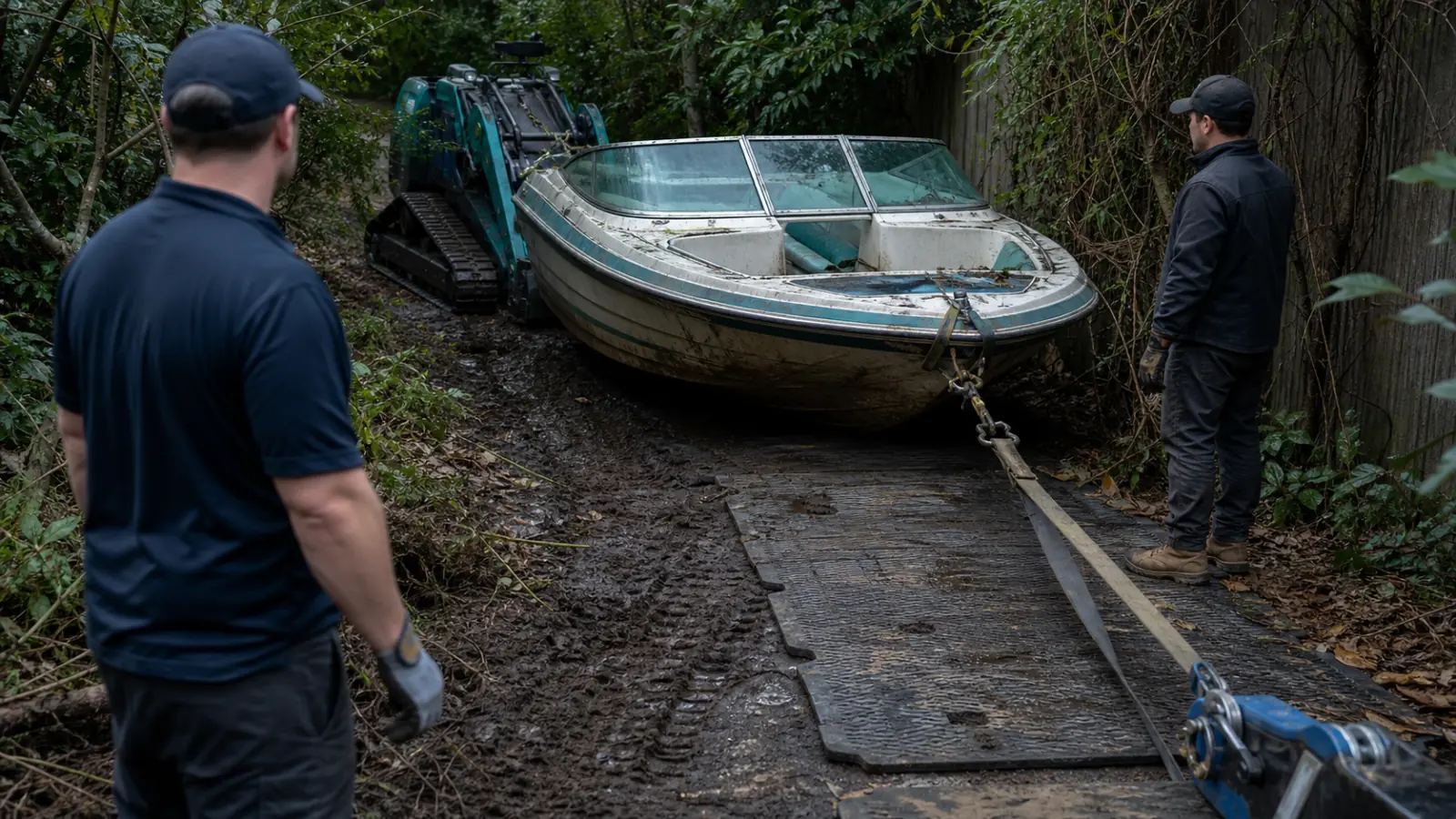
Local terrain and site access heavily influence how our crew plans an extraction. A vessel parked in a tight residential driveway near Rockport or Essex requires careful clearance around overhead power lines and narrow fences. If a craft rests on soft earth, mud, or unpaved inclines, heavy tow vehicles cannot simply back up to the hull without sinking into the ground. Whether the vessel sits on flat ground, raised blocks, a rotted trailer, or along the shoreline, the physical approach determines whether we use hydraulic jacks, portable dollies, or long-reach winch lines to bring the hull onto the transport deck safely.
Every Type of Boat We Handle
- Sailboat & catamaran
- Motorboat, powerboat & cabin cruisers
- Fishing boats & bass boats
- Pontoon boats
- Jon boats & aluminum skiffs
- Large yachts
- Personal watercraft (jet skis)
- Houseboats
Situations We Handle
- Abandoned boat at marinas, docks, or boat lifts
- Unwanted boats on private property or in boat storage
- Vessels in backyards, fields, or vacant lots
- Derelict vessels blocking dock access or navigation
- Storm-damaged vessels requiring boat hauling
- Vessels without trailers or with flat tires
- Tight access locations (narrow driveways, wooded areas)
- Government or insurance-ordered cases
Need Help? We’re Ready.
Contact boat removers directly or request free quotes. We dispatch crews fast.
Our Step-by-Step Process

Assessment
We evaluate the boat’s size, current location, condition, and any environmental or access challenges before we schedule boat removal.

Planning
A detailed plan is built around your vessel — equipment, logistics, timeline, and safety. Services include drainage of oil and fuel before transport.

Execution
Our experienced crew mobilizes to your current location and we tow, haul, or dismantle the vessel using professional marine equipment.

Completion
The vessel is recovered, recycled, or routed to certified boat junkyards for environmentally responsible disposal. The site is left clean.
Equipment & Capabilities
When a vessel sits on flat tires or lacks a rolling trailer, our crew uses heavy winch systems, hydraulic jacks, deck cranes, and specialized dollies to shift the weight and pull the vessel onto a haul truck. If a large cabin cruiser or wide sailboat cannot safely pass through narrow property gates or past low overhead lines, the team must dismantle the superstructure or saw the hull into manageable sections directly on site instead of hauling it whole. This step requires specialized cutting tools and heavy rigging gear to maintain total control of the heavy panels as they are detached.
Before any cutting or highway transport occurs, the team systematically removes all hazardous materials from the vessel. We drain remaining fuel from the tanks, extract engine oil, disconnect lead-acid batteries, and unbolt electronic displays or toxic fire suppression systems. Once these fluids and hazards are contained, the crew evaluates the stripped materials to determine where each component belongs. Metal hardware, aluminum rails, and clean lead keels are separated for metal recycling, while glass fiber, soaked wood, and mixed trash are directed to an authorized regional landfill. The precise layout of the yard, the condition of the floor frames, and the overall beam width dictate whether the crew hoists the vessel whole or cuts it down into smaller loads.
Our boat removal experience covers everything from start to finish assessment, planning, execution, dismantling, and final cleanup. Marina operators and property owners across Essex County trust us to get rid of your junk boat without damage to surrounding property.
FAQ
Boat Removal Questions - Frequently Asked
Common questions from property owners about our junk removal service, dismantling, and marine recovery.
What type of boat do you remove?
We handle every type of vessel — sailboat, pontoon, fishing boats, jon boats, yachts, and commercial craft. Whether your boat or sailboat floats (or used to), we’ll remove it from any current location.
Do you handle sunken or partially submerged vessels?
Yes. Sunken and partially submerged vessel recovery is a core part of our salvage work in Essex County. We use lift bags, salvage pumps, and marine cranes to safely raise vessels from underwater.
How quickly can you respond?
We respond to inquiries quickly — usually within hours, with same-day service available. For emergency situations, we mobilize as fast as possible. Call us directly for time-sensitive jobs.
Do you use subcontractors?
No. Every job is handled in-house by our own team and equipment. No middlemen, no handoffs, no surprises.
How much does cheap boat removal cost?
Cost depends on the boat’s size, current location, condition, and complexity of the job. We provide free assessments and free quotes for every case — contact us and we’ll give you an honest estimate.
Do you handle boat disposal and recycling?
Yes. Our boat removal and disposal services include hazardous materials handling, oil and fuel drainage, hull dismantling, and recycling at certified yards — all in compliance with environmental regulations and environmentally responsible standards.
Can you reach a hard-to-access location?
Absolutely. We regularly work in tight marinas, shallow waterways, private docks, backyards, and remote areas. We bring the right gear to reach any current location.
Do you work with insurance companies?
Yes. We frequently work with insurance adjusters on salvage and recovery claims and provide the documentation needed for your claim.
Other Boat Removal Locations
Browse Our Services - Ready to Get Started?
We handle everything from start to finish. Call us now or request a free quote – we’ll dispatch crews and haul your vessel away fast.