
Professional Boat Removal Services in Marblehead, MA
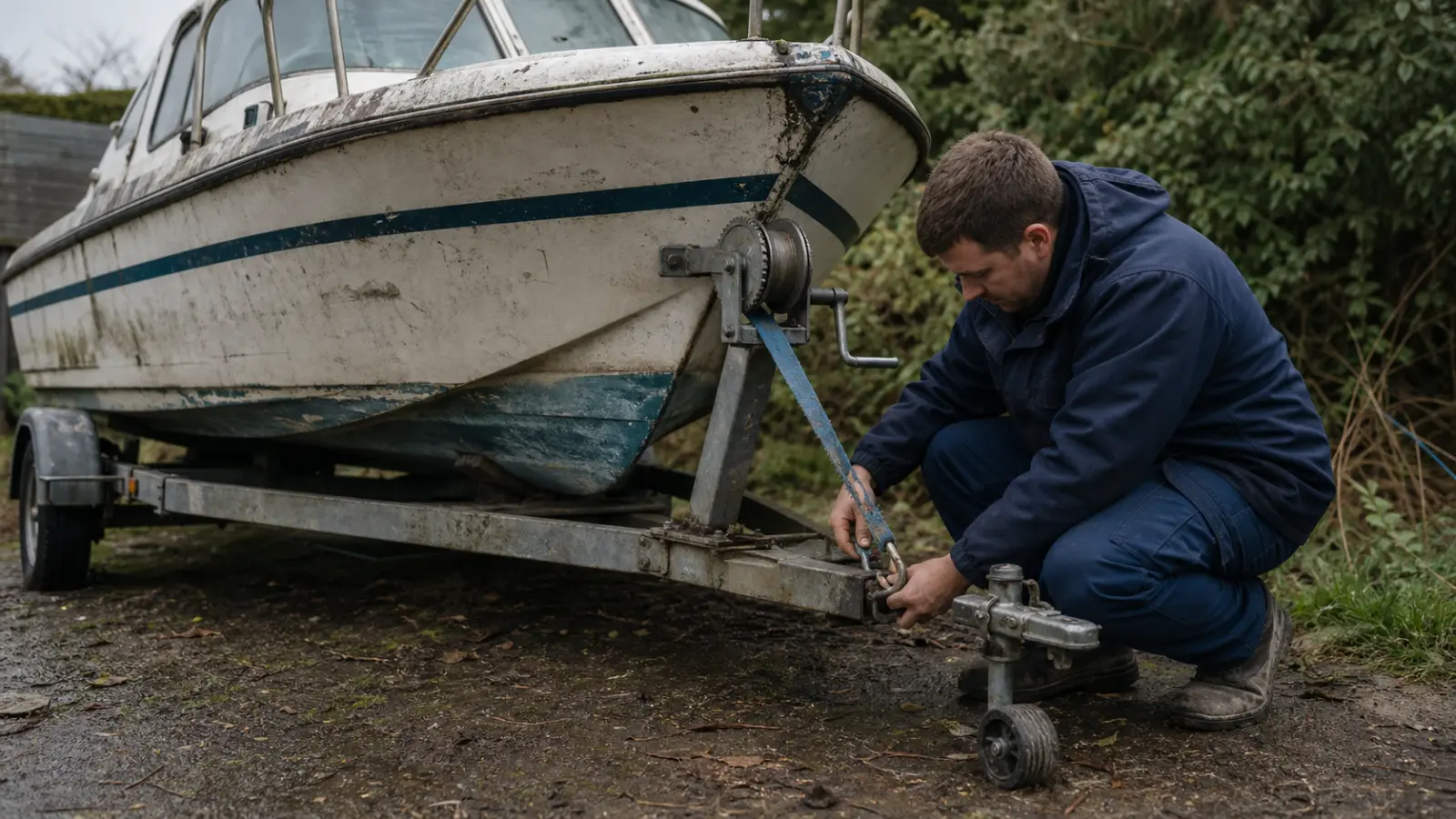
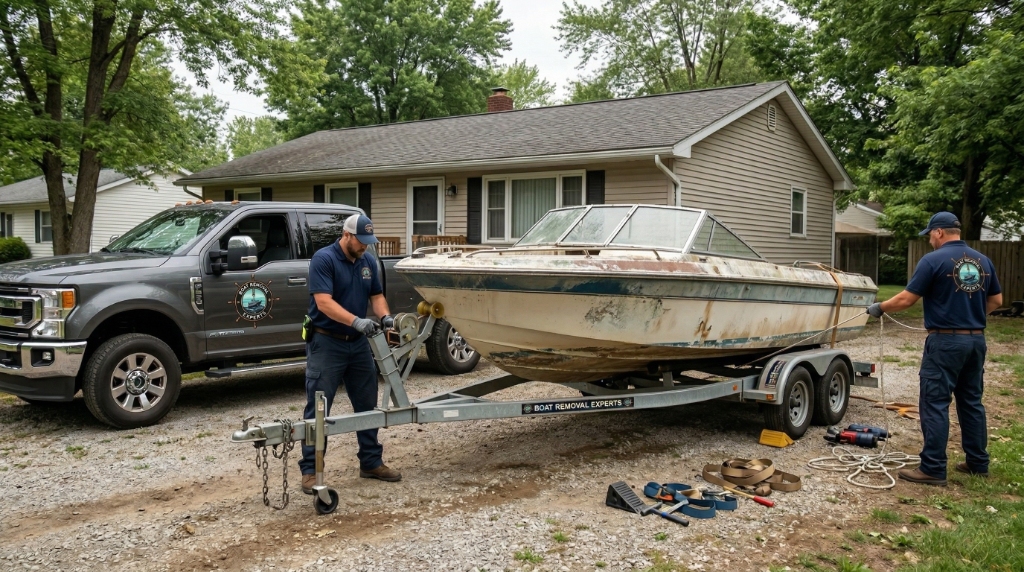
An old boat resting on flat tires behind a Marblehead garage often stays put for years while the yard grows up around the hull. Leaves gather in the cockpit, the rain fills the bilges, and an outboard motor that seized three seasons back makes a simple repair impossible because the parts cost more than the vessel is worth. Other times, a property transfer leaves a deep-draft cabin cruiser parked on a residential lot, or a local marina issues a formal notice regarding an overdue slip fee. Rolling the vessel out of the way is no longer an option when the trailer axle has rotted through, leaving the owner stuck with a heavy fiberglass shell that cannot be towed or legally abandoned anywhere in Essex County.
Is there boat removal near me in Marblehead, MA? Boat Removal Experts provides complete hauling, transport, and disposal solutions for property owners, buyers, and marina managers throughout the entire municipality and surrounding towns like Salem or Swampscott.

Transferring ownership paperwork is not always required to clear a vessel from your land, but securing a complete release of liability is essential. Some unverified haulers take away an old boat without issuing official documentation, which means future environmental fines or storage fees can still trace back to the registered title holder. Boat Removal Experts supplies formal liability documentation for every junk boat cleared, ensuring you are fully protected once the load departs.
Moving a vessel is far more complex than hooking up a standard utility trailer. Flat ground can turn soft under heavy wheels, keels rest deep inside customized wooden cradles, and wide beams frequently jam against tight residential gates or low-hanging branches, making professional equipment necessary for safe extraction.
Call 781-390-9598 to start.
Send photos through the contact form.
What Is Boat Removal and When You Need It
Professional boat disposal involves much more than hooking a winch line to a trailer tongue and driving away. When an old vessel sits undisturbed, nature takes over, turning structural fiberglass into a heavy liability. Complete vessel recovery requires managing structural integrity, clearing access paths, loading immobilized frames, and managing hazardous fluids safely. Whether the craft sits in a driveway, a commercial yard, or along a residential shoreline in Marblehead, specialized rigging and heavy machinery are frequently needed to extract a hull without damaging the surrounding ground or adjacent structures.
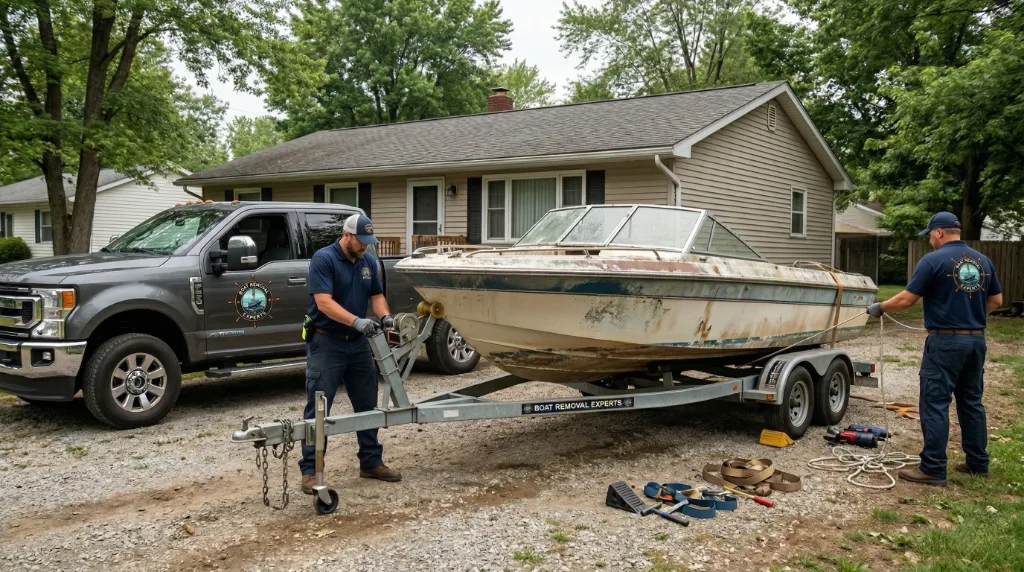
Paperwork dictates how an abandoned boat or neglected vessel must be handled. When an owner possesses a clear title, the dispatch process moves rapidly. However, titles are frequently lost, waterlogged, or left unsigned by previous landholders during real estate sales. In situations where an abandoned boat removal involves property acquisitions or long-term unpaid storage fees, alternative ownership verification methods and release forms must be established. Having a physical HIN plate attached to the back panel simplifies the identification process when matching state registration records.
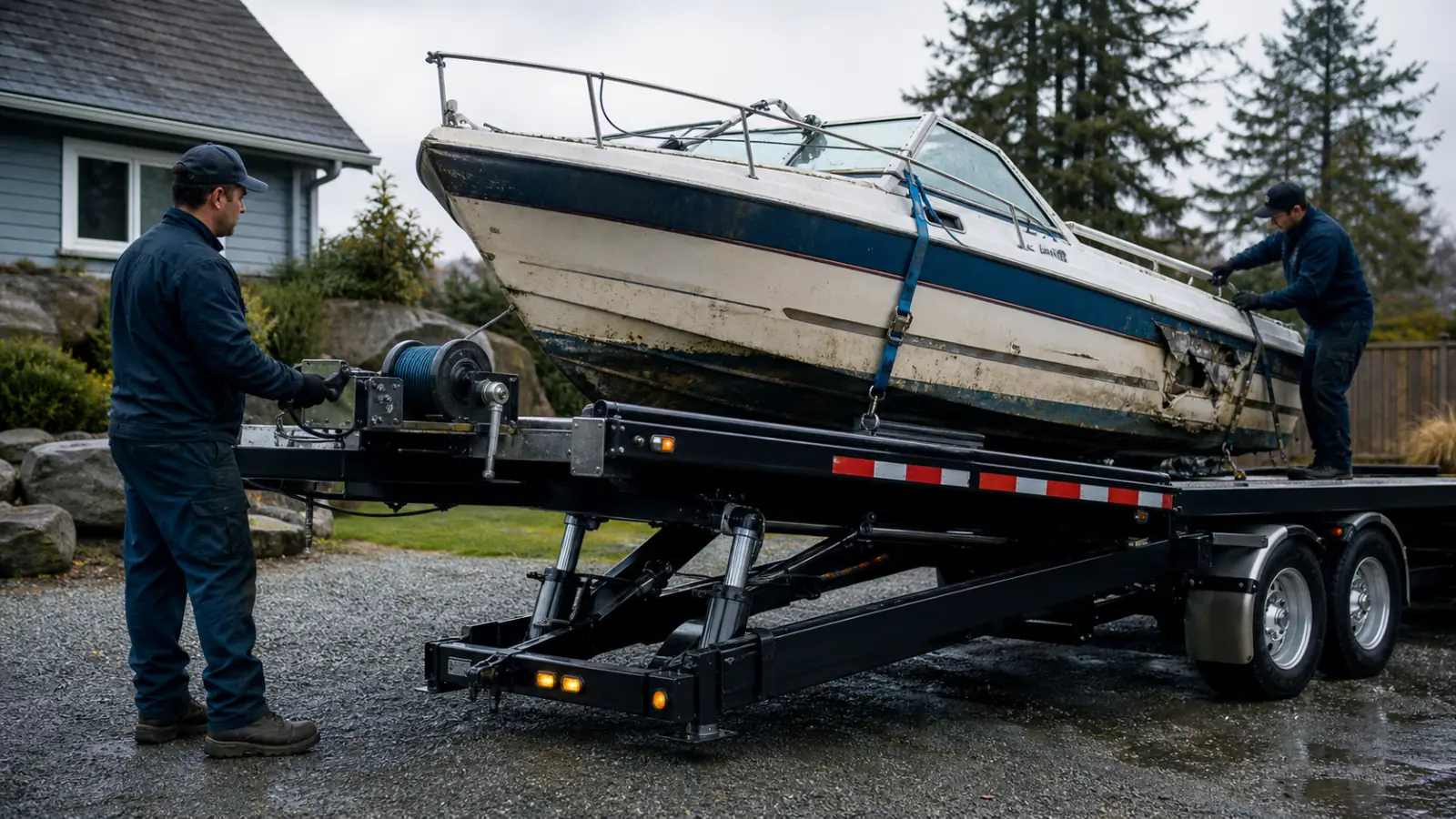
The exact condition of the hull, the location of the vessel, and the status of the trailer govern how a project is executed. A derelict craft sitting on blocks requires hydraulic lifts or crane machinery to transfer onto a flatbed, whereas a rotted hull resting directly on the ground might require controlled dismantling on site. Nearby coastal communities like Beverly, Lynn, and Nahant feature similar tight access corridors where haulers must evaluate overhead wire clearances, ground firmness, and gate widths before arriving with transport trailers.
When Marblehead Residents Call Us
Living near the Atlantic coast exposes vessels to severe weather cycles that accelerate structural decay. Sun damage breaks down protective gelcoat finishes, allowing freezing salt air and rainwater to seep deep into woven fiberglass layers. Once moisture penetrates interior wooden floor frames, floorboards, and back panel cores, structural rot sets in rapidly. A vessel left uncovered in Marblehead collects hundreds of gallons of trapped water inside the bilge, swelling the interior upholstery, corroding wiring harnesses, and adding thousands of pounds of unexpected weight that complicate boat removal procedures.
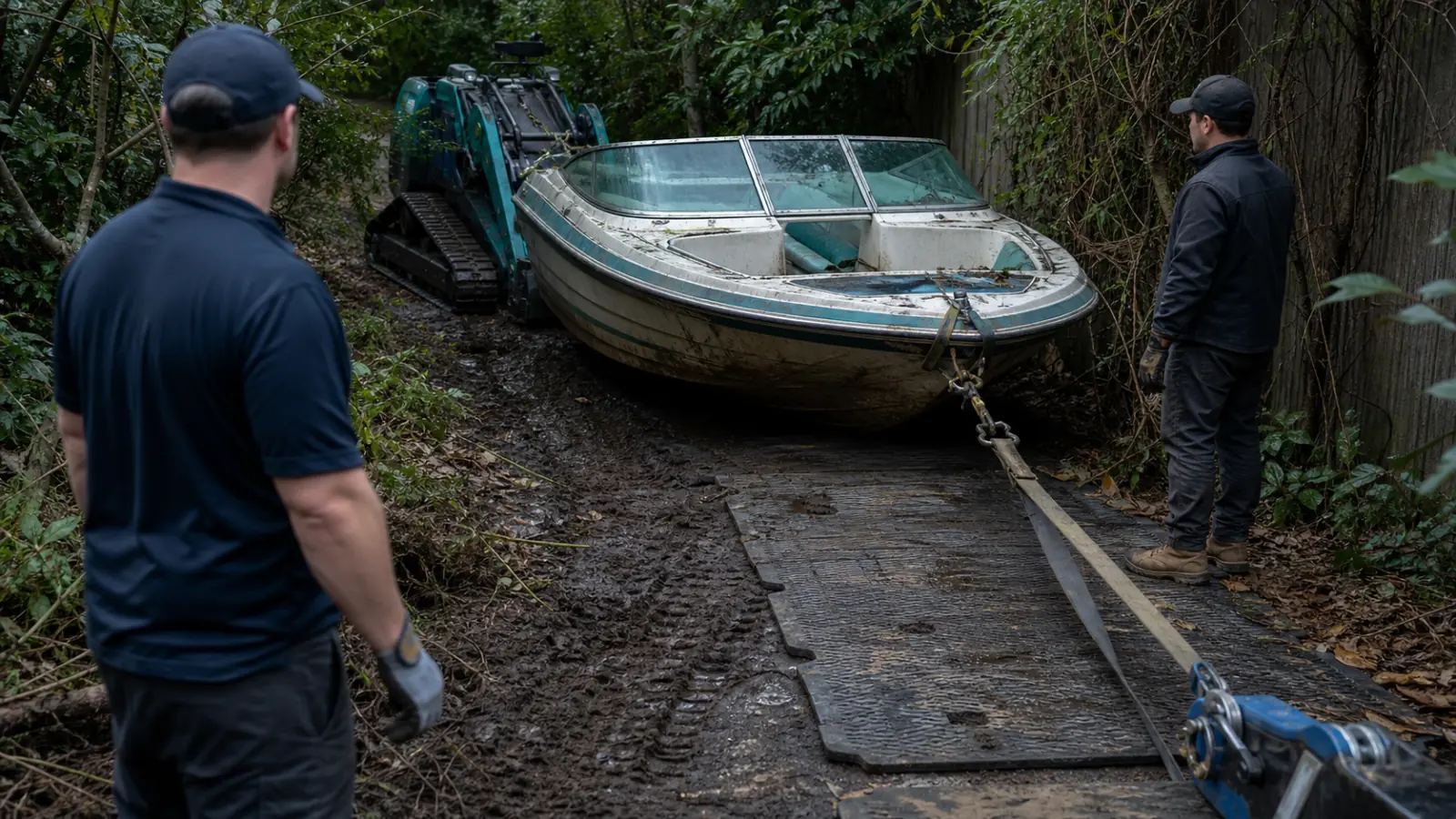
The site layout heavily dictates the equipment required to extract a sailboat, a heavy fishing boat, or a broad pontoon. Driveways in coastal neighborhoods often feature narrow entryways, overhanging tree branches, and tight turn radiuses that prevent standard transport trucks from backing up to the hull. If a vessel rests on soft turf, mud, or unpaved dirt, heavy equipment can sink quickly without specialized support mats. Crew members must evaluate whether a craft sits securely on an old road-worthy trailer, rests precariously on rotted wooden jack stands, or sits grounded along a tidal shoreline.
Vessels built with broad beams or deep full-length keels create additional clearance challenges when navigating narrow access roads. A deep-draft sailboat requires taller hydraulic trailers or careful lowering onto specialized bunking to pass beneath overhead utility lines. Meanwhile, a neglected pontoon with exposed aluminum tubes presents distinct balance points during winching operations, demanding custom rigging setups before any highway transport can begin.
Every Type of Boat We Handle
- Sailboat & catamaran
- Motorboat, powerboat & cabin cruisers
- Fishing boats & bass boats
- Pontoon boats
- Jon boats & aluminum skiffs
- Large yachts
- Personal watercraft (jet skis)
- Houseboats
Situations We Handle
- Abandoned boat at marinas, docks, or boat lifts
- Unwanted boats on private property or in boat storage
- Vessels in backyards, fields, or vacant lots
- Derelict vessels blocking dock access or navigation
- Storm-damaged vessels requiring boat hauling
- Vessels without trailers or with flat tires
- Tight access locations (narrow driveways, wooded areas)
- Government or insurance-ordered cases
Need Help? We’re Ready.
Contact boat removers directly or request free quotes. We dispatch crews fast.
Our Step-by-Step Process

Assessment
We evaluate the boat’s size, current location, condition, and any environmental or access challenges before we schedule boat removal.

Planning
A detailed plan is built around your vessel — equipment, logistics, timeline, and safety. Services include drainage of oil and fuel before transport.

Execution
Our experienced crew mobilizes to your current location and we tow, haul, or dismantle the vessel using professional marine equipment.

Completion
The vessel is recovered, recycled, or routed to certified boat junkyards for environmentally responsible disposal. The site is left clean.
Equipment & Capabilities
Before any vessel leaves its resting spot, crew members conduct a thorough evaluation to determine the safest method of transport. If the hull remains structurally sound and sits on a functioning rolling frame, the crew can winch the rig directly onto a tilt-bed transporter. When structural integrity is lost or the original trailer axle has rusted through, operators use hydraulic jacks, lift straps, or specialized machinery to hoist the vessel cleanly without causing ground damage or debris spills on the owner's land.
Environmental protection is the top priority before any haul begins. The crew carefully extracts all hazardous materials from the vessel, draining remaining fuel tanks, stripping crankcase oil, removing lead-acid batteries, and disconnecting electronic units containing heavy metals. If a large cabin cruiser or broad utility craft is too wide to navigate narrow access roads, workers dismantle the deck structures, remove top cabins, or cut down fiberglass sections directly on site using commercial tools. This process allows large hulls to fit safely within standard transport enclosures.
Once the vessel is loaded and secured, the materials are sorted for appropriate processing. Metal components like aluminum T-tops, stainless steel cleats, lead keel weights, and bronze propellers are separated for recycling channels. Modern processing facilities handle the leftover fiberglass sections, crushed hulls, and non-recyclable interior foam through regulated waste streams, ensuring full compliance with state waste disposal regulations from start to finish.
Our boat removal experience covers everything from start to finish assessment, planning, execution, dismantling, and final cleanup. Marina operators and property owners across Essex County trust us to get rid of your junk boat without damage to surrounding property.
FAQ
Boat Removal Questions - Frequently Asked
Common questions from property owners about our junk removal service, dismantling, and marine recovery.
What type of boat do you remove?
We handle every type of vessel — sailboat, pontoon, fishing boats, jon boats, yachts, and commercial craft. Whether your boat or sailboat floats (or used to), we’ll remove it from any current location.
Do you handle sunken or partially submerged vessels?
Yes. Sunken and partially submerged vessel recovery is a core part of our salvage work in Essex County. We use lift bags, salvage pumps, and marine cranes to safely raise vessels from underwater.
How quickly can you respond?
We respond to inquiries quickly — usually within hours, with same-day service available. For emergency situations, we mobilize as fast as possible. Call us directly for time-sensitive jobs.
Do you use subcontractors?
No. Every job is handled in-house by our own team and equipment. No middlemen, no handoffs, no surprises.
How much does cheap boat removal cost?
Cost depends on the boat’s size, current location, condition, and complexity of the job. We provide free assessments and free quotes for every case — contact us and we’ll give you an honest estimate.
Do you handle boat disposal and recycling?
Yes. Our boat removal and disposal services include hazardous materials handling, oil and fuel drainage, hull dismantling, and recycling at certified yards — all in compliance with environmental regulations and environmentally responsible standards.
Can you reach a hard-to-access location?
Absolutely. We regularly work in tight marinas, shallow waterways, private docks, backyards, and remote areas. We bring the right gear to reach any current location.
Do you work with insurance companies?
Yes. We frequently work with insurance adjusters on salvage and recovery claims and provide the documentation needed for your claim.
Other Boat Removal Locations
Browse Our Services - Ready to Get Started?
We handle everything from start to finish. Call us now or request a free quote – we’ll dispatch crews and haul your vessel away fast.