
Professional Boat Removal Services in Idaho Falls, ID

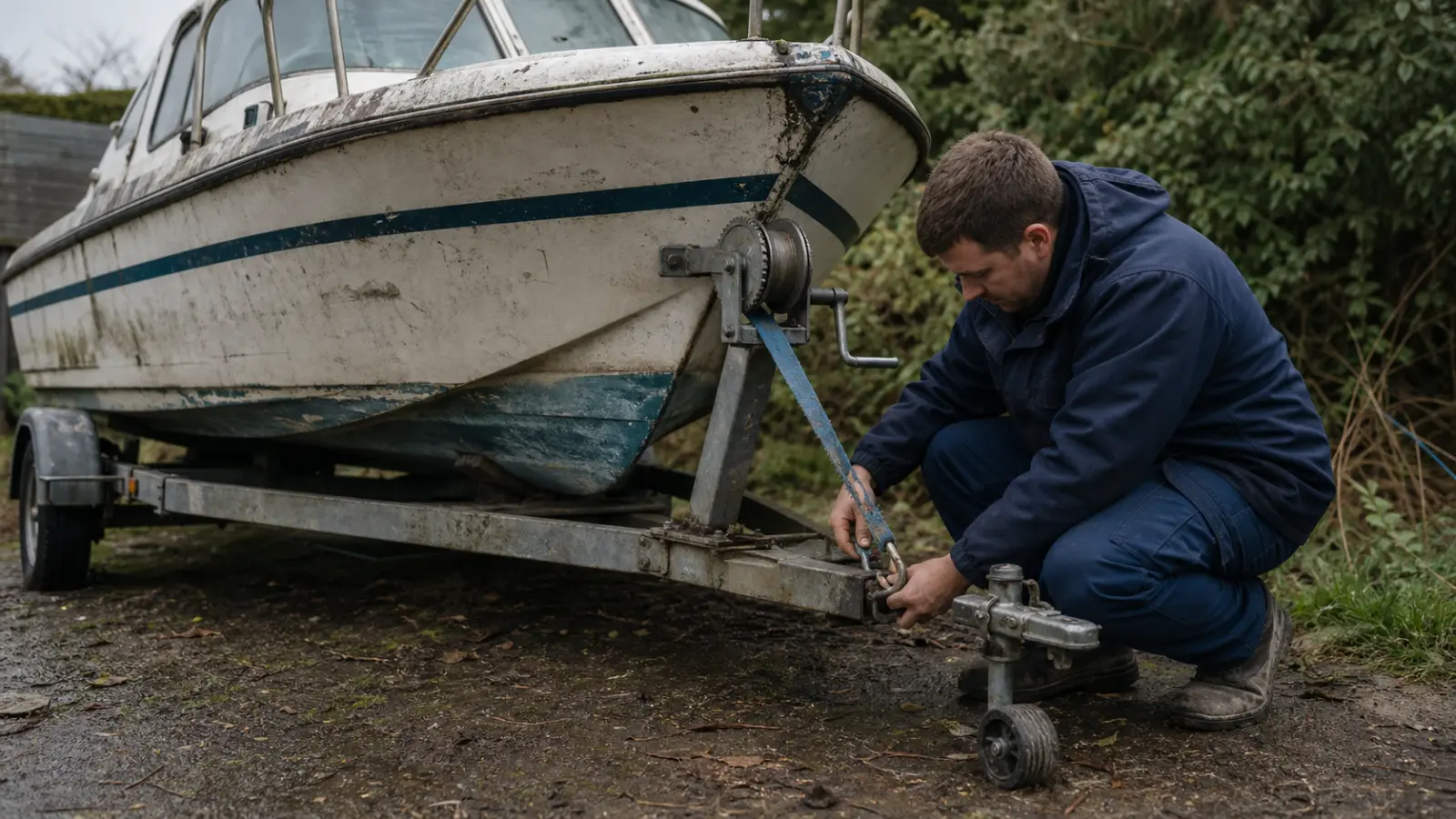
A hull sits behind a garage on tires that went flat three seasons ago, slowly settling into the soil while weather wears down the cover. In other yards, a property changes hands with a rotting cabin cruiser parked along the back fence, or an outboard engine seizes up and leaves behind a vessel that costs far more to repair than the structure is worth. Slips also pile up unpaid fees when an owner stops using a vessel, leaving managers looking for options. Whatever caused the project to stall, getting an old boat out of the way requires more than just hooking up a hitch and driving off, especially when years of neglect have left the underlying structure unsafe for the road.

Is there boat removal near me in Idaho Falls, ID? Yes, our crew handles the full process of hauling away unwanted vessels directly from private residential lots, commercial yards, and local storage facilities.

When a team hauls away a junk boat, legal responsibility remains a key concern for the owner. We do not always transfer the title, but we always issue a release of liability to ensure the owner is legally protected once the vessel leaves the property. Some operators simply load up a hull with zero documentation, which leaves the original owner vulnerable if that vessel is later abandoned on public land or sitting in a lot. Asking for clear liability paperwork before work begins is an essential step every boat owner should take.

Moving a vessel is rarely simple because physical obstacles constantly get in the way. A rusted trailer axle can snap, a wide beam might not clear a narrow residential gate, or a heavy keel resting on soft lawn soil can prevent standard tow vehicles from gaining traction.

Call 208-907-3626 to start.

Send photos through the contact form.

What Is Boat Removal and When You Need It

Complete boat disposal covers far more than pulling a vessel off a driveway. A specialized boat removal service handles structural evaluation, winching, surface protection, and moving non-running units safely off site without causing property damage. When an abandoned boat sits on land that was recently purchased, or when an old vessel sits in a yard without clear paperwork, the steps required to extract it change significantly. Possessing a clean title makes the extraction process straightforward, but lost titles or vessels inherited with real estate require proper documentation and a formal release of liability before transport begins.
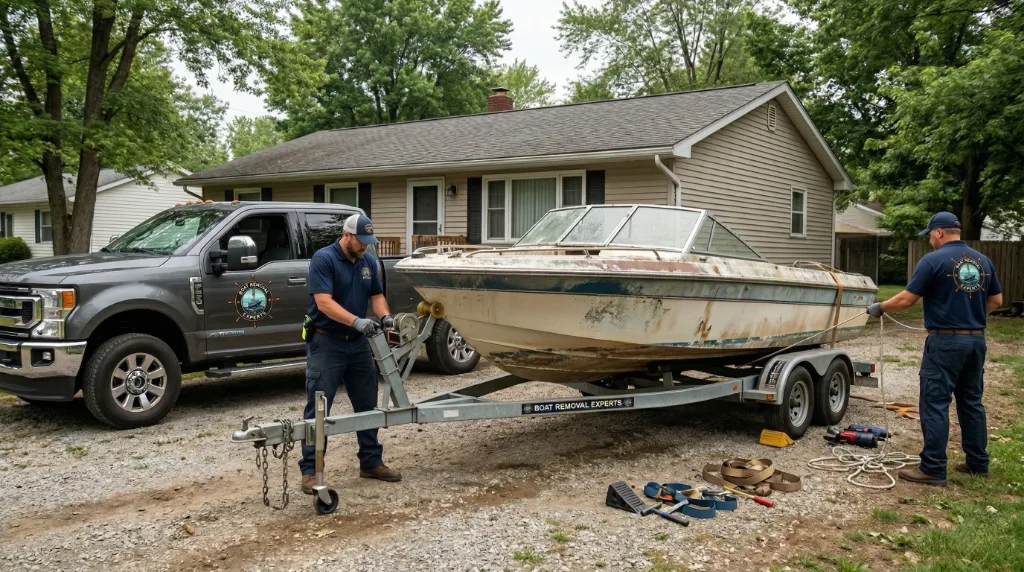
Different challenges arise when dealing with a derelict hull left on commercial property or inside a storage unit with unpaid fees. Landlords, property managers, and storage owners often need to clear out space occupied by abandoned watercraft that no longer run. The physical condition of the vessel, whether it sits on a crumbling trailer, rests directly on wooden blocks, or has structural rot in the back panel, dictates the heavy equipment needed for loading. Land access, surface stability, and physical clearance directly affect how a crew extracts a boat, ensuring the property stays protected throughout the entire removal process.
When Idaho Falls Residents Call Us

The climate in Idaho Falls takes a heavy toll on watercraft left outdoors through changing seasons. Harsh winter freezing and summer heat crack exterior gelcoat, rot wooden transoms, ruin interior upholstery, and cause rainwater sitting inside an open hull to freeze and expand. This water retention adds immense weight to a pontoon, sailboat, or fiberglass fishing boat while destabilizing the structural integrity of the floorboards. When an owner in Bonneville County decides to get rid of a sitting craft, these environmental factors mean the vessel may no longer be sturdy enough for traditional towing methods.
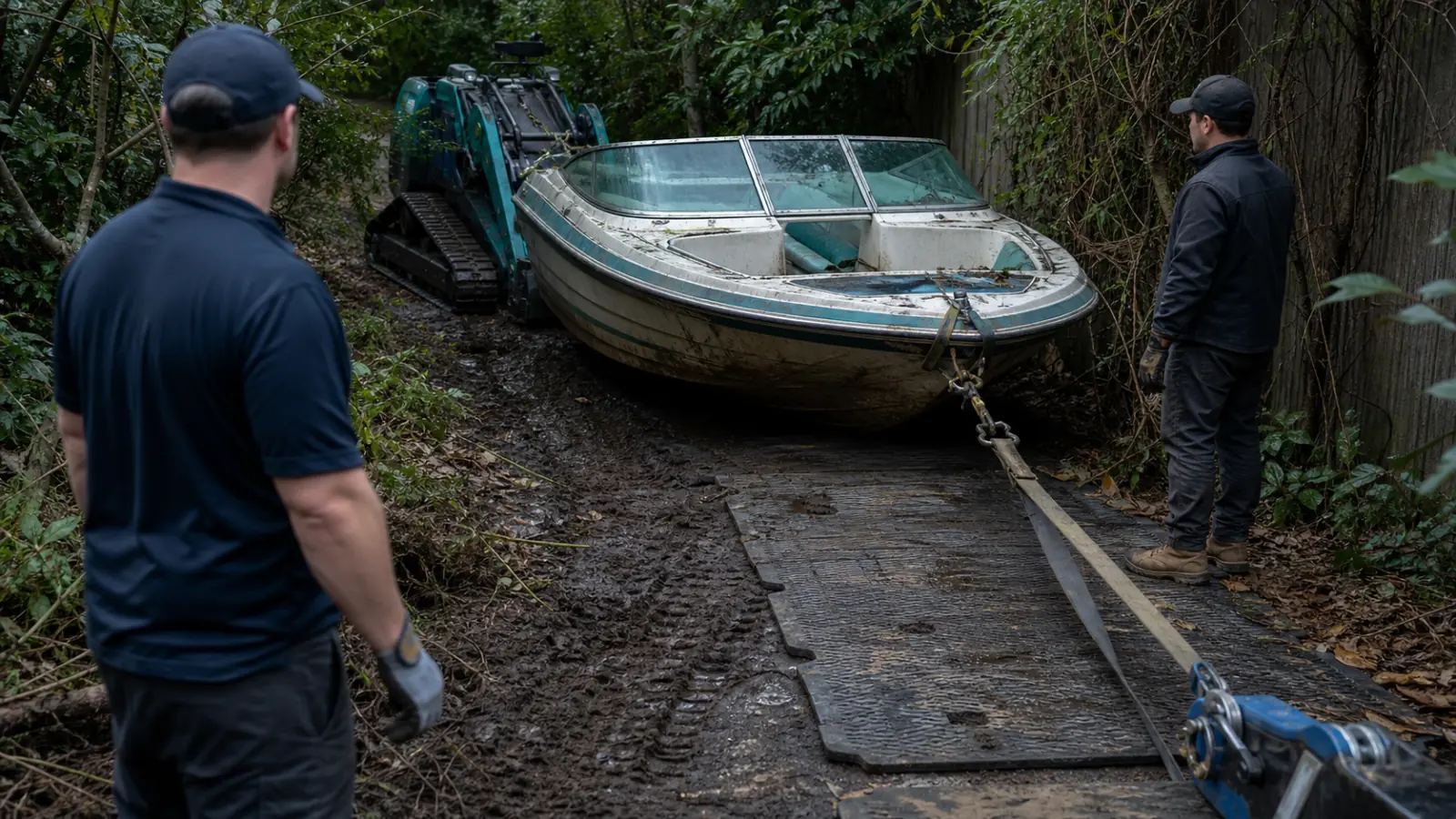
Site conditions heavily influence how our team approaches each job in nearby areas like Lincoln, Ammon, and Iona. A vessel resting on soft ground, tucked behind a garage, or blocked by low tree branches presents specific physical hurdles. Accessing a boat tucked away in Ucon or Shelley requires checking overhead lines, narrow alleyways, and gate widths before bringing in heavy haulers. Whether the hull sits on a rusted trailer with flat tires, rests directly on timber cradles, or remains moored in the water, the surrounding terrain dictates the rigging and winching setups necessary for a successful pull.
Every Type of Boat We Handle

Situations We Handle

Need Help? We’re Ready.

Contact boat removers directly or request free quotes. We dispatch crews fast.

Our Step-by-Step Process

Assessment

We evaluate the boat’s size, current location, condition, and any environmental or access challenges before we schedule boat removal.

Planning

A detailed plan is built around your vessel — equipment, logistics, timeline, and safety. Services include drainage of oil and fuel before transport.

Execution

Our experienced crew mobilizes to your current location and we tow, haul, or dismantle the vessel using professional marine equipment.

Completion

The vessel is recovered, recycled, or routed to certified boat junkyards for environmentally responsible disposal. The site is left clean.

Equipment & Capabilities

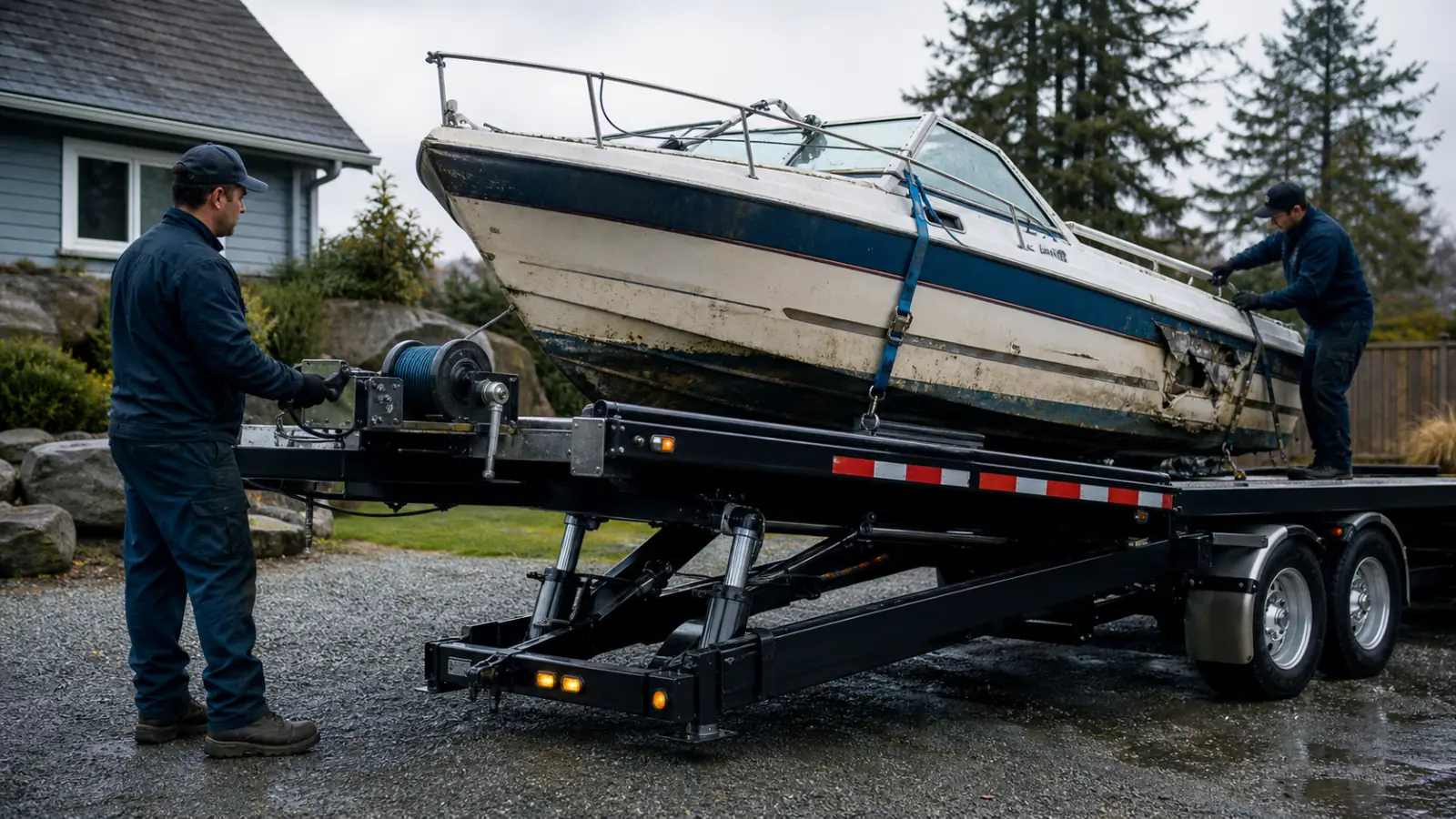
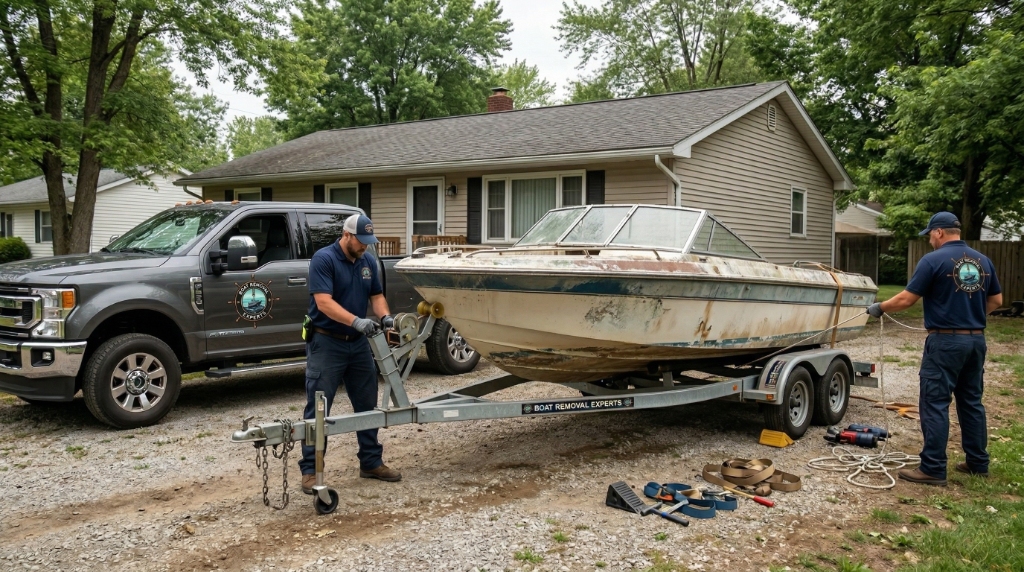
Extracting a vessel whose trailer is no longer roadworthy requires specialized machinery and heavy-duty winches. When flat tires, rusted axles, or broken frames prevent a hull from rolling, crew members use skids, cranes, or flatbed trailers to lift the structure safely off the ground. If a large vessel sits in a tight space where heavy trucks cannot maneuver, technicians may dismantle the hull on site using specialized cutting tools to break it into manageable pieces for transport.

Before any boat leaves the site, crew members focus on hazardous materials tucked inside the hull. Fuel tanks, engine oil, marine batteries, and electronic systems must be carefully drained, disconnected, and sorted to prevent leaks onto private ground or public roadways. Removing these fluids and electrical components protects the surrounding environment and ensures compliance with local transport safety standards.

Once the vessel is loaded and secured, the destination of the material depends entirely on the condition of the hull. Heavy fiberglass pieces, metal scrap, and usable hardware are separated so that qualified recycling facilities can process the raw materials, while non-recyclable debris goes to appropriate handling facilities. The crew evaluates the structural integrity and material composition of each vessel on site to determine the safest, most efficient path for final processing.

Our boat removal experience covers everything from start to finish  assessment, planning, execution, dismantling, and final cleanup. Marina operators and property owners across Bonneville County trust us to get rid of your junk boat without damage to surrounding property.

FAQ

Boat Removal Questions - Frequently Asked

Common questions from property owners about our junk removal service, dismantling, and marine recovery.

We handle every type of vessel — sailboat, pontoon, fishing boats, jon boats, yachts, and commercial craft. Whether your boat or sailboat floats (or used to), we’ll remove it from any current location.

Yes. Sunken and partially submerged vessel recovery is a core part of our salvage work in Bonneville County. We use lift bags, salvage pumps, and marine cranes to safely raise vessels from underwater.

We respond to inquiries quickly — usually within hours, with same-day service available. For emergency situations, we mobilize as fast as possible. Call us directly for time-sensitive jobs.

No. Every job is handled in-house by our own team and equipment. No middlemen, no handoffs, no surprises.

Cost depends on the boat’s size, current location, condition, and complexity of the job. We provide free assessments and free quotes for every case — contact us and we’ll give you an honest estimate.

Yes. Our boat removal and disposal services include hazardous materials handling, oil and fuel drainage, hull dismantling, and recycling at certified yards — all in compliance with environmental regulations and environmentally responsible standards.

Absolutely. We regularly work in tight marinas, shallow waterways, private docks, backyards, and remote areas. We bring the right gear to reach any current location.

Yes. We frequently work with insurance adjusters on salvage and recovery claims and provide the documentation needed for your claim.

Browse Our Services - Ready to Get Started?

We handle everything from start to finish. Call us now or request a free quote – we’ll dispatch crews and haul your vessel away fast.