
Professional Boat Removal Services in Jonesboro, AR

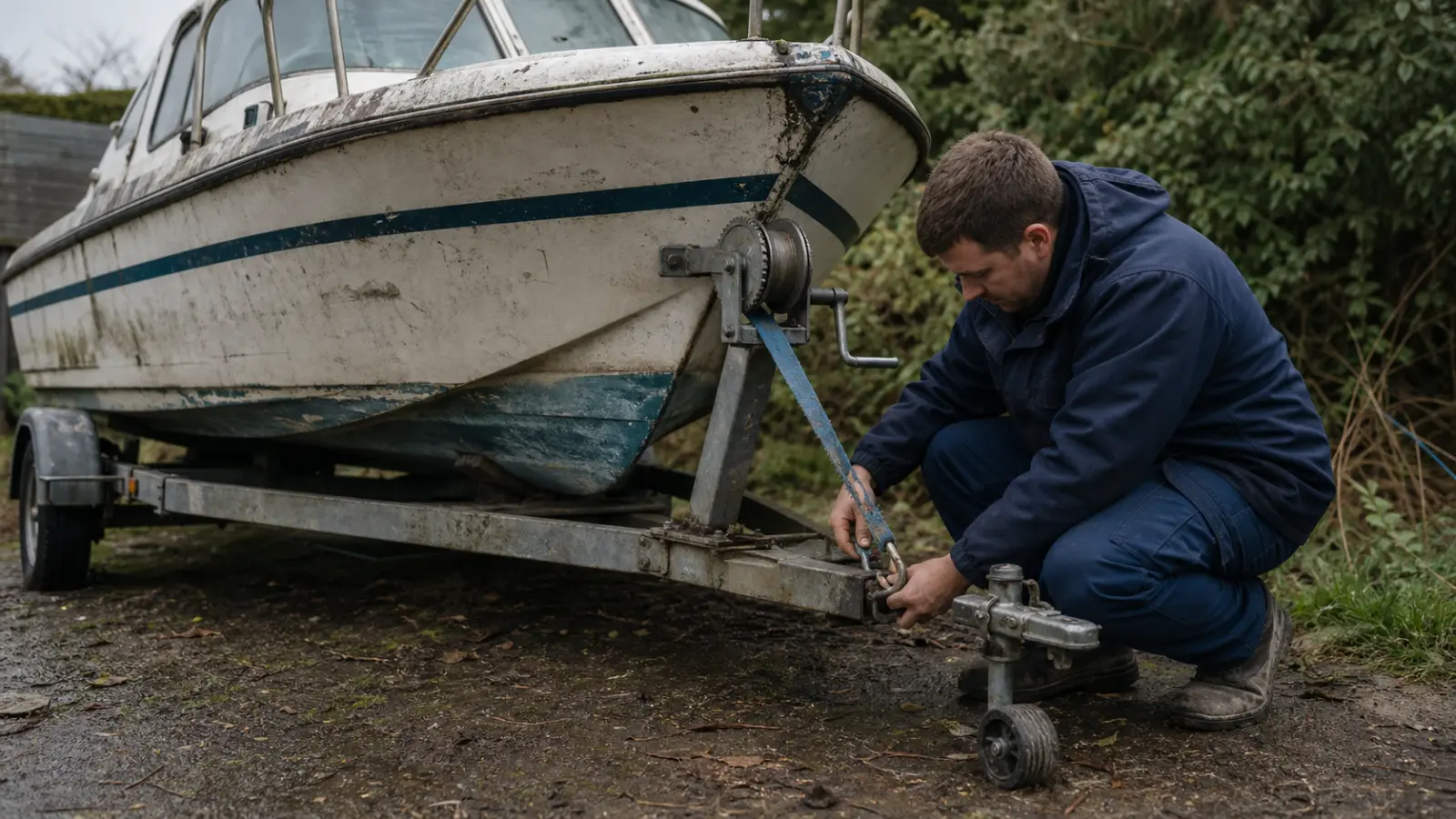
The hull has sat on a trailer behind the garage for six seasons in Jonesboro, AR, and the tires have flattened into the dirt until the rim sits directly in the mud. In other situations, a property was recently sold with an unwanted cabin cruiser left behind on the lot, or an old outboard motor seized up entirely and a mechanical rebuild costs vastly more than the vessel itself is worth. When a craft sits abandoned in a yard or driveway, an old boat quickly turns from a recreational asset into a persistent space liability that degrades nearby property values and collects stagnant water.

Is there professional boat removal near me in Jonesboro, AR? Yes, Boat Removal Experts manages complete extraction, hauling, and clearance services for non-running watercraft right from your private land or storage site.

A major concern when arranging junk boat extraction is ensuring you are completely clear of future liabilities. We do not always transfer the title into our name, but we always issue a formal release of liability to the property owner upon haul-away. Some operators simply haul a vessel off without providing official documentation, leaving the original owner vulnerable to future fines, abandoned craft citations, or storage fees if that hull is dumped down the road. Securing written documentation protects you completely.

Extracting a vessel is often much harder than it looks to an untrained homeowner. A rust-eaten trailer may have frozen hubs that refuse to roll, or a deep keel might sit on wooden cradles that cannot be shifted easily. Furthermore, the beam width might exceed narrow property gates, or the heavy boat might rest on soft lawn soil that a standard tow vehicle will sink right into.

Call 870-432-4585 to start.

Send photos through the contact form.

What Is Boat Removal and When You Need It

Professional boat disposal involves far more than simply hooking a hitch to a truck and towing a craft down the highway. When a hull has been neglected for years, structural integrity degrades, tires dry rot, and standard road transport becomes dangerous without specialized equipment. A full extraction service addresses the complete removal process, including winching non-rolling trailers, securing structural hulls, clearing peripheral marine gear, and taking care of the final disposal logistics so the owner does not have to worry about transport hazards.
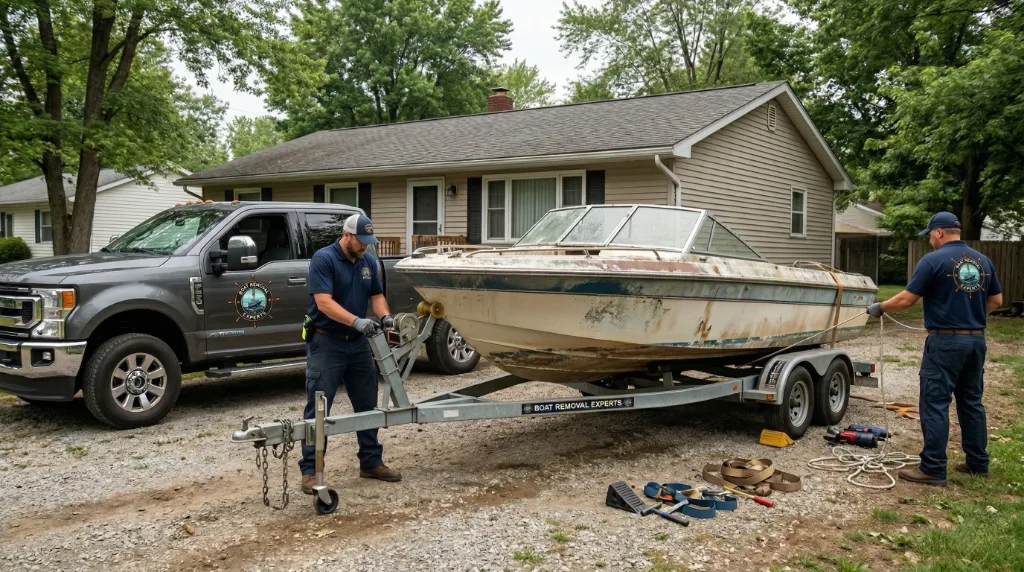
The exact paperwork required changes depending on the ownership situation of the abandoned boat. When an owner possesses a clean title or registration, the disposal process moves forward quickly. However, when paperwork is lost or when an old vessel came attached to a newly purchased real estate lot, alternative clearance steps are required. A derelict craft left behind by a former tenant, or a vessel sitting indefinitely in an unpaid storage slot, requires specific notification steps to ensure legal compliance before hauling takes place.

Physical condition, location, and legal standing dictate how a removal is handled. Whether dealing with an abandoned boat on rural land in Craighead County or clearing out a rotted deck sitting behind a garage, proper handling prevents environmental contamination and ensures the land is fully restored to a clean state.
When Jonesboro Residents Call Us

Leaving a vessel outdoors in Jonesboro exposes the fiberglass and wood to intense seasonal rain, heat, and cold weather cycles. Over time, the gelcoat cracks, allowing moisture to seep directly into structural floor frames and back panel cores. Once water rots the internal wood framework, a deck can easily cave in under human weight. Upholstery holds stagnant rainwater, creating breeding grounds for pests and accelerating structural failure. A waterlogged hull becomes significantly heavier than its original dry manufacturing weight, changing the rigging and lifting power required to transport the fishing boat or pontoon away safely.
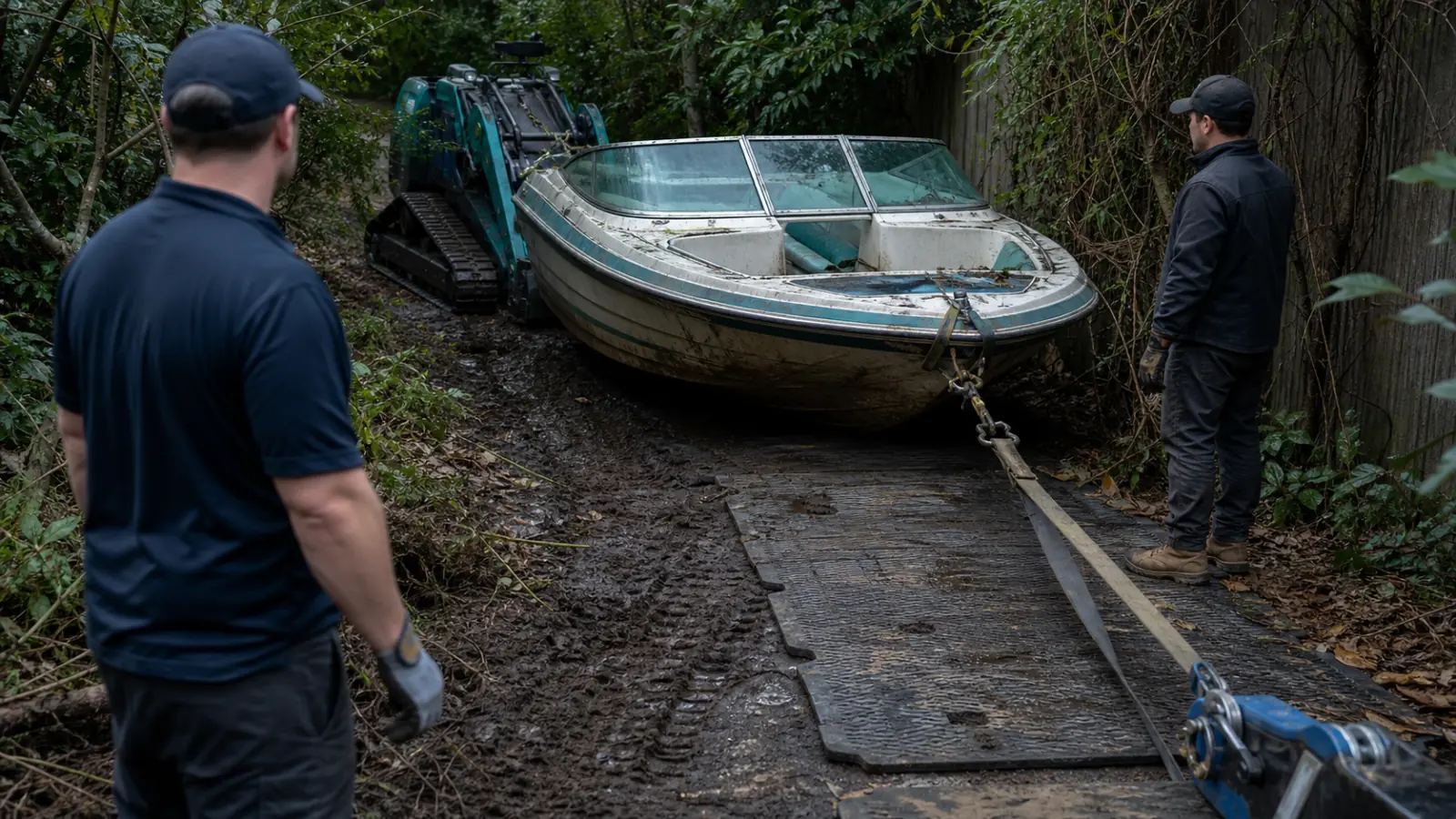
Site access heavily influences the strategy chosen by the field crew. In residential neighborhoods across Jonesboro or out in adjacent towns like Brookland, Bay, and Bono, an old sailboat might sit behind a fence, buried under low-hanging tree branches, or resting on soft soil that prevents heavy equipment from backing up directly to the site. Position matters immensely; a vessel sitting on a rotting trailer behaves differently during extraction than a craft resting on timber blocks or tied up along the shoreline near Bowman or Lake City. Navigating tight turn radii, overhead utility lines, and narrow gates requires precise planning before winching begins.
Every Type of Boat We Handle

Situations We Handle

Need Help? We’re Ready.

Contact boat removers directly or request free quotes. We dispatch crews fast.

Our Step-by-Step Process

Assessment

We evaluate the boat’s size, current location, condition, and any environmental or access challenges before we schedule boat removal.

Planning

A detailed plan is built around your vessel — equipment, logistics, timeline, and safety. Services include drainage of oil and fuel before transport.

Execution

Our experienced crew mobilizes to your current location and we tow, haul, or dismantle the vessel using professional marine equipment.

Completion

The vessel is recovered, recycled, or routed to certified boat junkyards for environmentally responsible disposal. The site is left clean.

Equipment & Capabilities

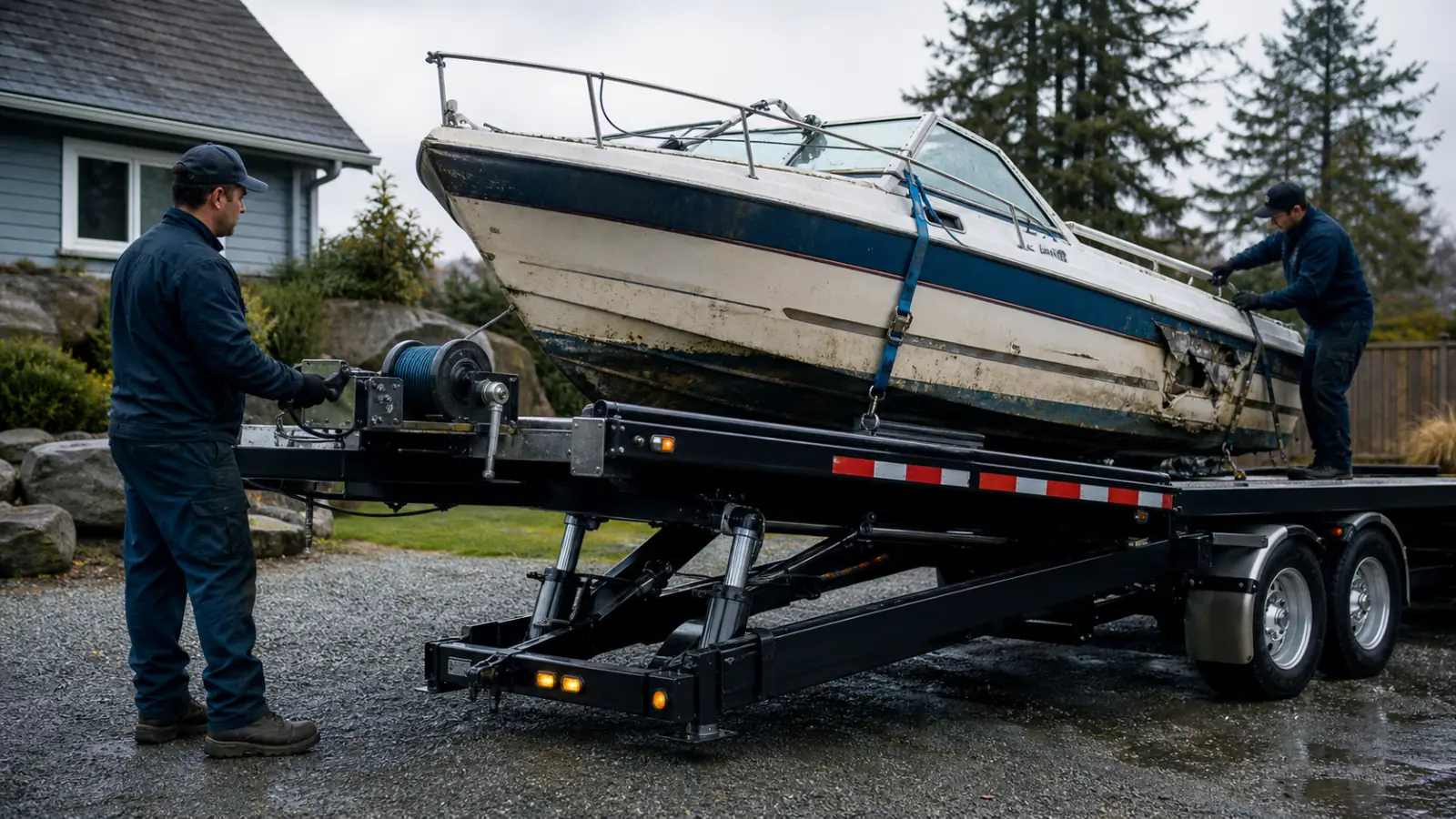
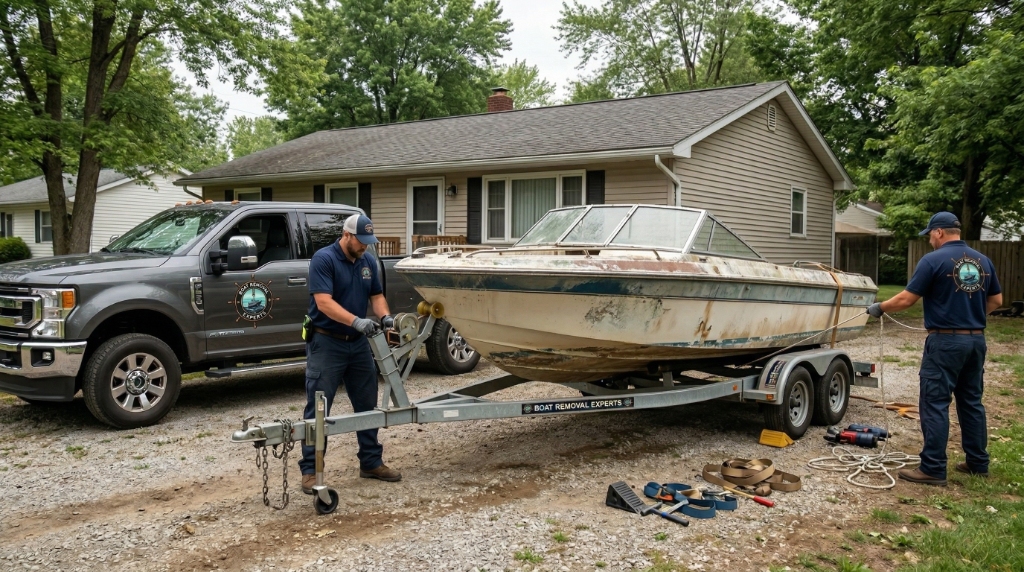
When a vessel sits on a trailer with flat tires, seized bearings, or a rotted axle, standard towing is impossible. In these scenarios, crews utilize heavy-duty winches, drop-deck trailers, or specialized skids to load the entire unit intact. When a massive craft is jammed into an enclosed space or lacks structural stability for transport, technicians dismantle the deck and hull on site using specialized cutting equipment to load the vessel in manageable sections.

Before any hull leaves the property or undergoes physical cutting, hazardous materials are carefully removed to meet local environmental standards. Fluids including residual gasoline, diesel fuel, crankcase oil, and hydraulic steering fluid are pumped out and stored in approved containers. Marine batteries, electronic displays, and flare kits are disconnected and set aside for dedicated hazardous waste processing. Once the fluids and toxic components are secured, the remaining fiberglass, scrap metal, and wood are separated. Metals like aluminum rails, stainless steel fittings, and bronze hardware are set aside for recycling, while non-recoverable composite materials are routed to designated waste handling facilities based on structural composition and local regulations.

Our boat removal experience covers everything from start to finish  assessment, planning, execution, dismantling, and final cleanup. Marina operators and property owners across Craighead County trust us to get rid of your junk boat without damage to surrounding property.

FAQ

Boat Removal Questions - Frequently Asked

Common questions from property owners about our junk removal service, dismantling, and marine recovery.

We handle every type of vessel — sailboat, pontoon, fishing boats, jon boats, yachts, and commercial craft. Whether your boat or sailboat floats (or used to), we’ll remove it from any current location.

Yes. Sunken and partially submerged vessel recovery is a core part of our salvage work in Craighead County. We use lift bags, salvage pumps, and marine cranes to safely raise vessels from underwater.

We respond to inquiries quickly — usually within hours, with same-day service available. For emergency situations, we mobilize as fast as possible. Call us directly for time-sensitive jobs.

No. Every job is handled in-house by our own team and equipment. No middlemen, no handoffs, no surprises.

Cost depends on the boat’s size, current location, condition, and complexity of the job. We provide free assessments and free quotes for every case — contact us and we’ll give you an honest estimate.

Yes. Our boat removal and disposal services include hazardous materials handling, oil and fuel drainage, hull dismantling, and recycling at certified yards — all in compliance with environmental regulations and environmentally responsible standards.

Absolutely. We regularly work in tight marinas, shallow waterways, private docks, backyards, and remote areas. We bring the right gear to reach any current location.

Yes. We frequently work with insurance adjusters on salvage and recovery claims and provide the documentation needed for your claim.

Browse Our Services - Ready to Get Started?

We handle everything from start to finish. Call us now or request a free quote – we’ll dispatch crews and haul your vessel away fast.