
Professional Boat Removal Services in La Crosse, WI

A fiberglass hull sits resting on flat tires behind a garage where it has collected fallen leaves and rainwater for six seasons. A marina issues an urgent notice regarding a forgotten slip where storage fees continue to accumulate. A property transaction stalls because a cabin cruiser remains resting on blocks in the backyard, or an outboard engine seizes, leaving a boat owner with a repair estimate that far exceeds the value of the vessel itself. These situations leave homeowners and property managers stuck with an unwanted craft that cannot easily be moved.

Is there boat removal near me in La Crosse, WI? Yes, Boat Removal Experts provides complete vessel extraction, hauling, and structural clearing directly from residential yards, commercial facilities, and local shorelines throughout the municipality.

When clearing a junk boat from a property, formal documentation matters just as much as physical transport. We do not always transfer the vessel title, but we always issue a written release of liability to the owner upon haulage. Certain haulers take away an old boat without providing formal paperwork, which leaves the original owner legally responsible if the registration remains active or if the hull is abandoned elsewhere. Confirming how documentation is handled protects you before any equipment arrives on site.

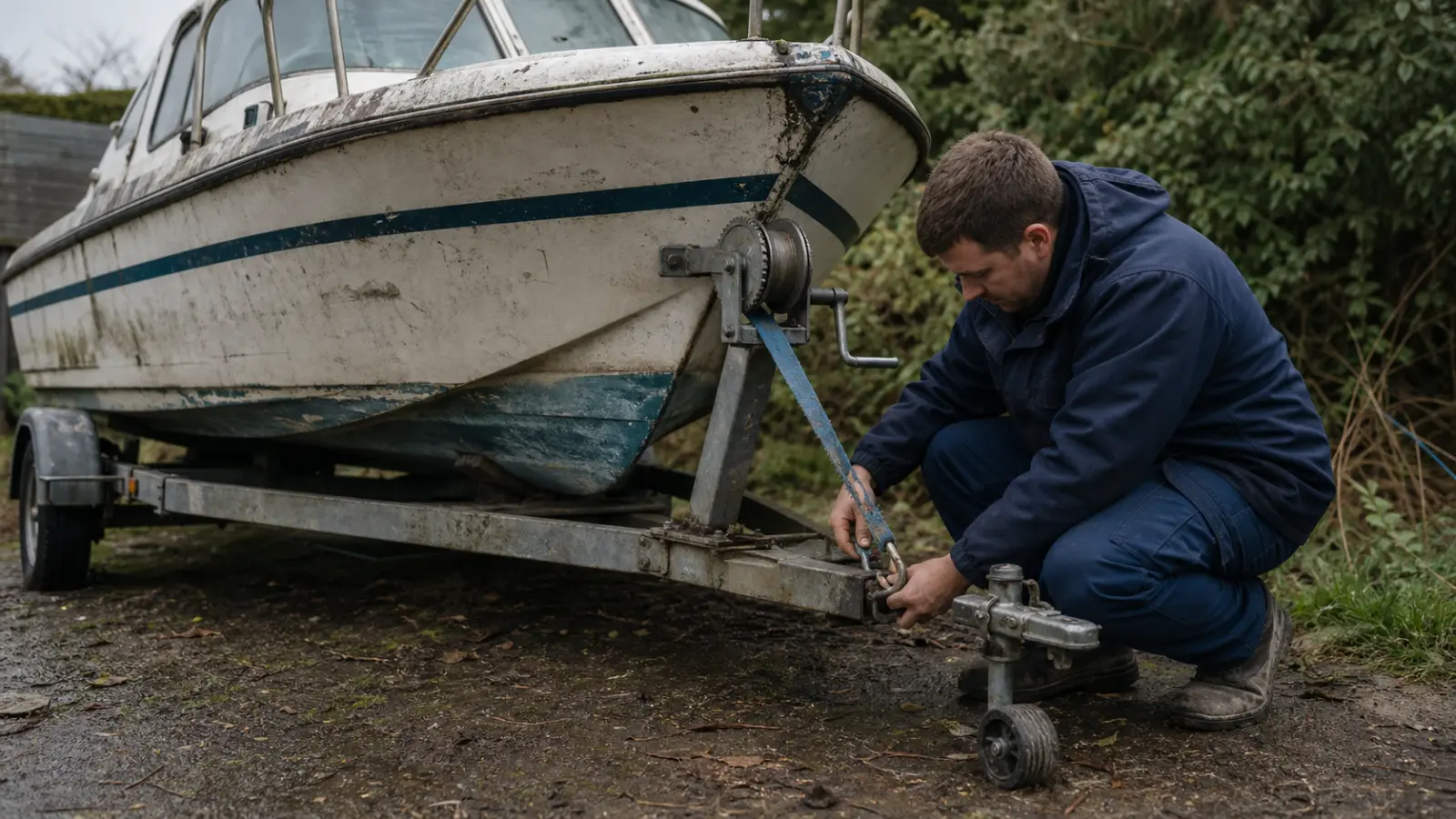
Transporting an old boat requires far more effort than hooking a standard trailer to a hitch. Wheel bearings often freeze completely in place, structural cradles deteriorate, and wider beams can block narrow side yard gates. Heavy hulls resting on soft dirt can sink over time, making standard vehicle access difficult without specialized winching gear.

Call 608-892-8595 to start.

What Is Boat Removal and When You Need It

Professional boat disposal involves far more than simply pulling a hull down the highway. A proper boat removal service manages the complete extraction of an unwanted craft, from winching a sunken unit out of soft ground to handling complex physical extractions. When an abandoned boat sits on private property or within a commercial facility, removing it requires carefully balancing structural handling with local transport regulations. Whether a vessel is fully intact, stripped of hardware, or reduced to a bare shell, the process clears the land entirely while ensuring the site remains undamaged.
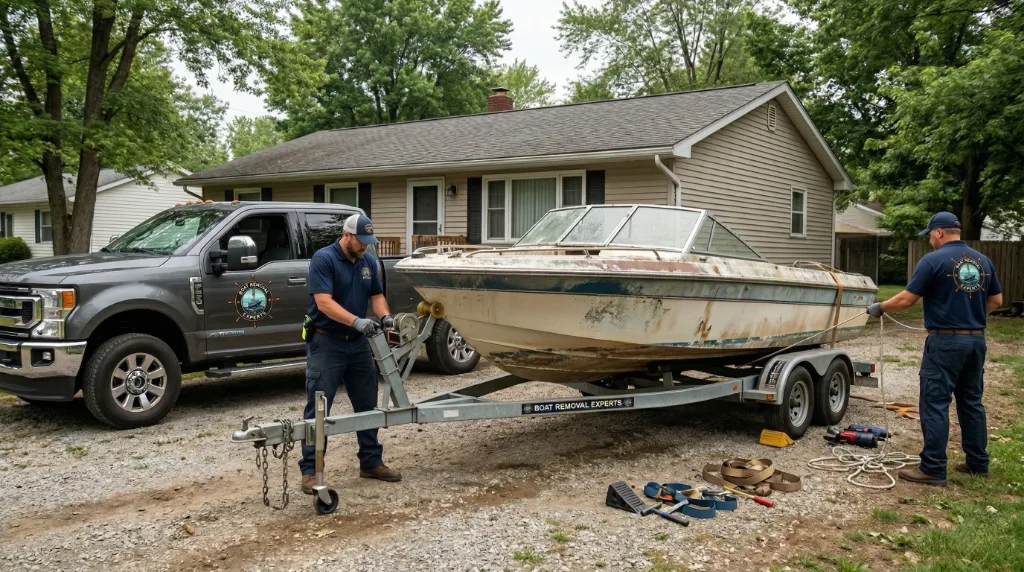
The overall approach for hauling a derelict vessel changes depending on the status of the documentation. When an owner holds a clean title or registered paperwork, clearing the vessel is straightforward. If the paperwork has been lost over time or a craft was inherited along with a real estate purchase, the situation requires establishing clear legal authorization before transport begins. Vessels left on non-paying slips or left behind on private land by past tenants demand specific legal notifications before haulers can physically load the vessel onto transport rigs.

Several physical elements dictate how a derelict vessel is processed once work begins. Hull integrity, overall length, beam width, and access clearance determine whether the craft can be transported intact or must be broken down on site. The presence of residual fluids, heavy inboard engines, or degraded structural supports also impacts the equipment needed to load and clear the vessel safely.
When La Crosse Residents Call Us

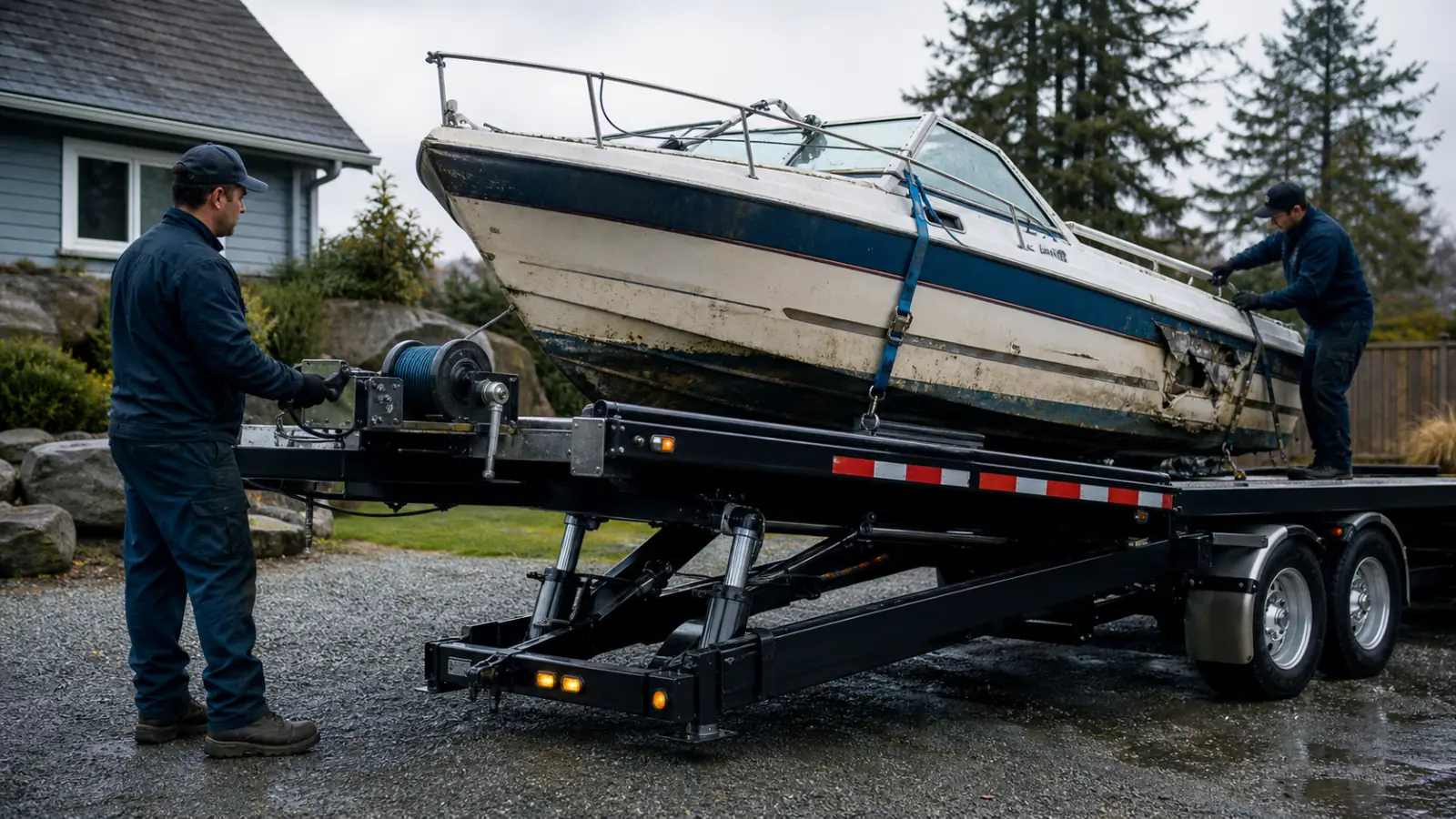
Harsh outdoor conditions in La Crosse, Wisconsin take a heavy toll on exposed marine vessels over time. Extended winter freeze-and-thaw cycles cause trapped rainwater to expand inside gelcoat cracks, creating severe structural delamination throughout the hull. Uncovered wood decking degrades, internal floor frames rot away, and interior upholstery holds moisture that rots surrounding bulkheads. When a long-neglected pontoon, heavy sailboat, or deep-v fishing boat sits exposed through multiple seasons, the weakened structural frame complicates how the unit must be lifted and secured for highway transport.
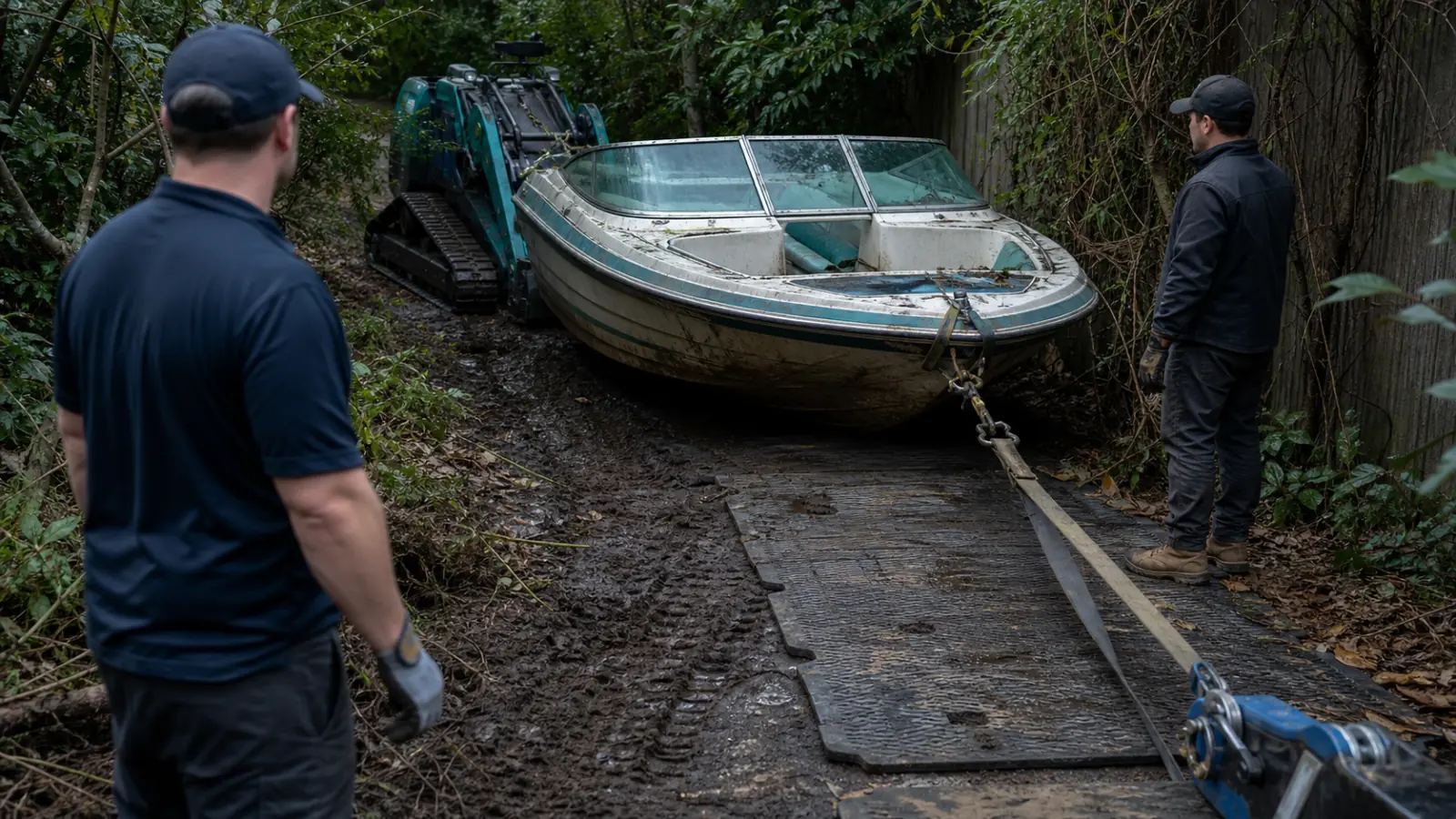
Property layout across La Crosse County also dictates the specific equipment required for a successful extraction. Crews frequently navigate tight residential alleys, narrow side gates, low overhead tree branches, and soft ground surfaces near French Island, Onalaska, and West Salem. Moving a heavy vessel parked on wet turf or soft mud requires specialized rigging so heavy transport trucks do not rut the lawn or become stuck during loading operations.

Physical positioning heavily influences the overall labor involved. An old hull resting on a functional, road-worthy trailer requires different handling than a craft sitting on rotting timber blocks, sunk into dirt, or moored along the water near Brice Prairie or St. Joseph. Each scenario dictates whether winches, hydraulic jacks, or heavy transport flatbeds are brought to the location to safely extract the craft.
Every Type of Boat We Handle

Situations We Handle

Need Help? We’re Ready.

Contact boat removers directly or request free quotes. We dispatch crews fast.

Our Step-by-Step Process

Assessment

We evaluate the boat’s size, current location, condition, and any environmental or access challenges before we schedule boat removal.

Planning

A detailed plan is built around your vessel — equipment, logistics, timeline, and safety. Services include drainage of oil and fuel before transport.

Execution

Our experienced crew mobilizes to your current location and we tow, haul, or dismantle the vessel using professional marine equipment.

Completion

The vessel is recovered, recycled, or routed to certified boat junkyards for environmentally responsible disposal. The site is left clean.

Equipment & Capabilities

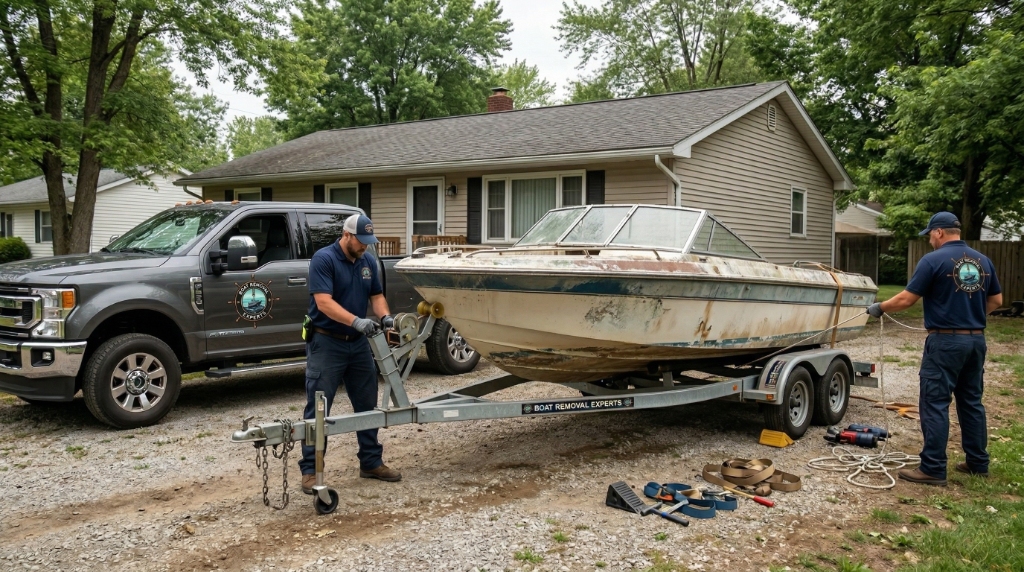
Removing a compromized hull requires heavy-duty recovery gear designed to handle awkward weight distributions and immobile running gear. When a vessel sits on flat tires, frozen axles, or no trailer at all, crews use heavy industrial winches, hydraulic jacks, and specialized skids to pull the craft safely onto transport flatbeds. The goal is to safely secure the vessel without causing damage to surrounding structures, fences, or residential landscapes.

Before any transport begins, crews evaluate the vessel for environmental hazards. All hazardous materials are isolated and drained according to environmental standards. This step includes carefully pumping out lingering fuel, capturing old engine oil, disconnecting lead-acid batteries, and stripping out outdated onboard electronics. Neutralizing these internal fluids prevents leaks while the craft is loaded and moved along public roads.

If a large craft cannot safely exit a site due to tight gate clearances, structural decay, or obstruction by building walls, crews dismantle the hull directly on location. Utilizing heavy cutting gear, workers carefully section fiberglass, aluminum, and timber framing into manageable pieces. Once crushed or sectioned, materials are loaded into high-capacity haulers and transported to authorized recycling facilities or processing centers based on construction type and local disposal guidelines.

Our boat removal experience covers everything from start to finish  assessment, planning, execution, dismantling, and final cleanup. Marina operators and property owners across La Crosse County trust us to get rid of your junk boat without damage to surrounding property.

FAQ

Boat Removal Questions - Frequently Asked

Common questions from property owners about our junk removal service, dismantling, and marine recovery.

We handle every type of vessel — sailboat, pontoon, fishing boats, jon boats, yachts, and commercial craft. Whether your boat or sailboat floats (or used to), we’ll remove it from any current location.

Yes. Sunken and partially submerged vessel recovery is a core part of our salvage work in La Crosse County. We use lift bags, salvage pumps, and marine cranes to safely raise vessels from underwater.

We respond to inquiries quickly — usually within hours, with same-day service available. For emergency situations, we mobilize as fast as possible. Call us directly for time-sensitive jobs.

No. Every job is handled in-house by our own team and equipment. No middlemen, no handoffs, no surprises.

Cost depends on the boat’s size, current location, condition, and complexity of the job. We provide free assessments and free quotes for every case — contact us and we’ll give you an honest estimate.

Yes. Our boat removal and disposal services include hazardous materials handling, oil and fuel drainage, hull dismantling, and recycling at certified yards — all in compliance with environmental regulations and environmentally responsible standards.

Absolutely. We regularly work in tight marinas, shallow waterways, private docks, backyards, and remote areas. We bring the right gear to reach any current location.

Yes. We frequently work with insurance adjusters on salvage and recovery claims and provide the documentation needed for your claim.

Browse Our Services - Ready to Get Started?

We handle everything from start to finish. Call us now or request a free quote – we’ll dispatch crews and haul your vessel away fast.