
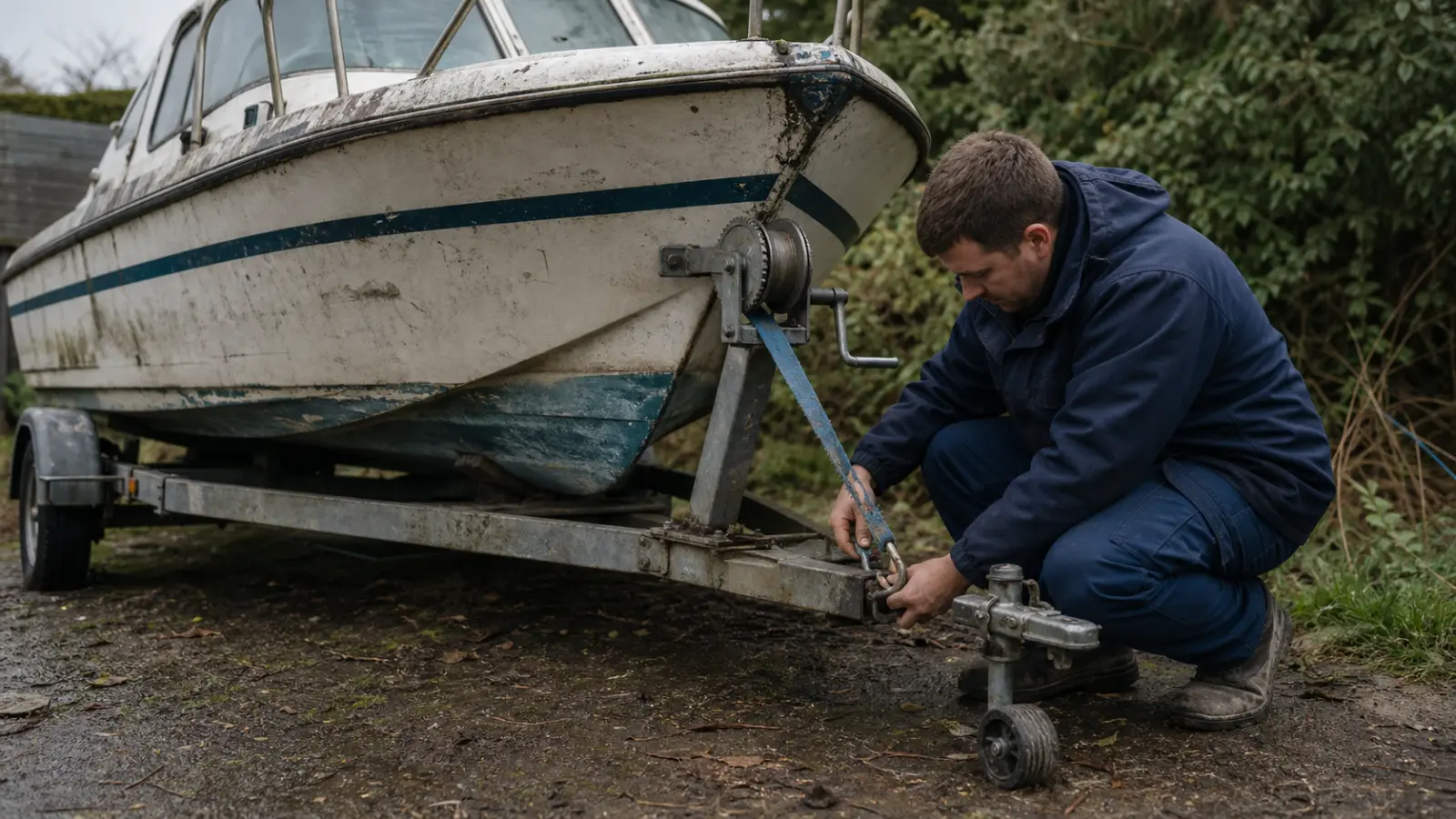
Professional Boat Removal Services in Perry Hall, MD

An old boat resting on a trailer behind a garage in Perry Hall, Maryland can sit untouched for six seasons until the tires flatten entirely into the dirt. A marina manager sends an urgent notice regarding an unpaid slip, or a commercial property changes hands with an abandoned cabin cruiser still sitting on the lot. In other cases, an inboard engine seizes, and the owner discovers that a complete rebuild costs far more than the entire vessel is worth. Finding a practical path forward for a non-running hull requires specialized help from Boat Removal Experts, especially when the craft cannot be towed away on its own wheels.

Is there boat removal near me in Perry Hall, MD? Yes, professional haulers collect stored, damaged, and unserviceable vessels directly from residential yards, commercial properties, and local waterfront locations throughout the region.

When clearing a junk boat from your property, liability management is critical. We do not always transfer the title into our name, but we always issue a written release of liability upon taking possession of the vessel. Some haulers simply tow a vessel away without providing proper documentation, leaving the original owner legally exposed if the hull is dumped illegally later. Requesting official paperwork protects you from future municipal fines and property disputes.

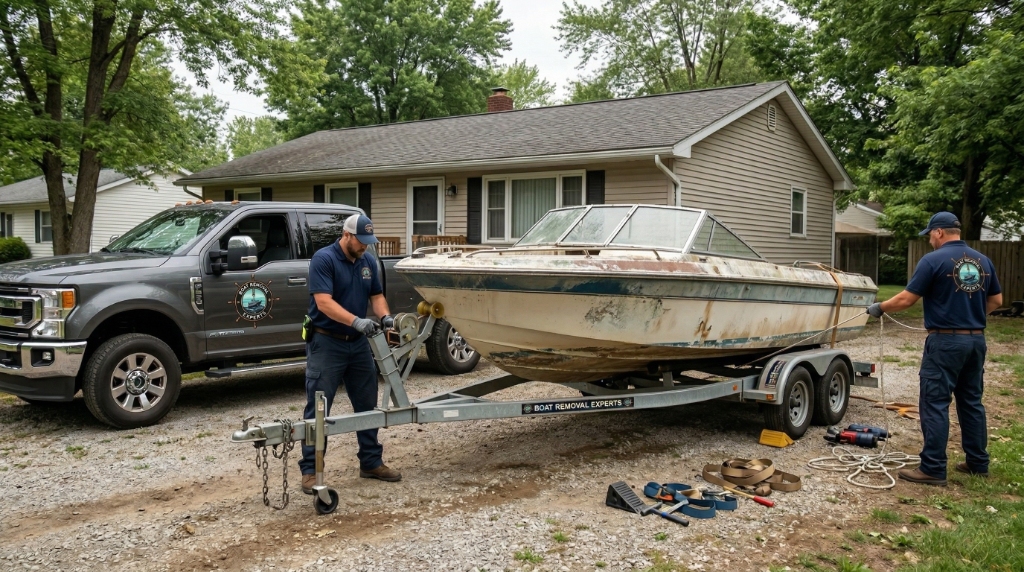
Moving a vessel is vastly more complex than hauling a standard road vehicle. A rotted trailer frame may collapse under tension, a deep keel requires specialized cradle support, or the beam might exceed the width of a narrow driveway gate. Furthermore, heavy equipment cannot easily cross soft lawns without sinking into the turf, demanding careful rigging strategies for a safe extraction.

Call (855) 765-7931 to start.

Send photos through the contact form.

What Is Boat Removal and When You Need It

Professional boat disposal involves far more than simply hitching a hull to a truck and driving away. Comprehensive service includes assessing structural integrity, securing loose components, managing site logistics, and transporting the vessel to an appropriate facility. When a vessel sits idle for years, structural points degrade, making basic winching dangerous without specialized rigging. Property owners in Baltimore County often need comprehensive assistance when clearing out overgrown backyard lots, inherited estates, or commercial storage yards where a derelict craft has been left behind.
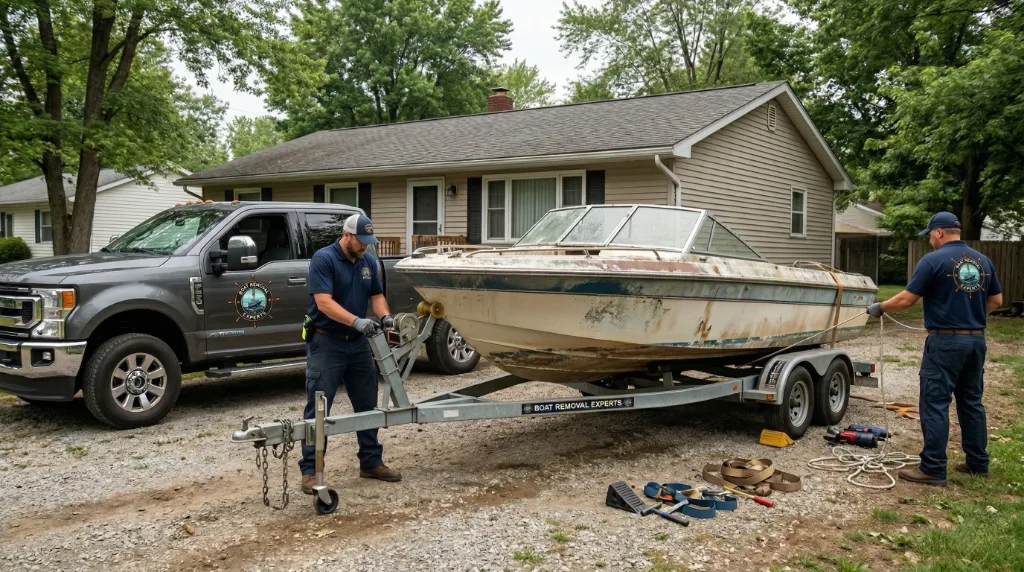
Paperwork dictates the specific handling strategy for each project. Having a clean title and matching HIN simplifies the transfer process, allowing rapid logistics planning. When paperwork is missing, lost, or attached to a real estate purchase, alternative documentation protocols must be established before moving the vessel. An abandoned boat left on private land or sitting in a delinquent slip requires specific notice periods and legal clearances before a crew can load the craft onto a trailer.

The total effort required to get rid of a boat depends on vessel construction, total weight, and site positioning. Fiberglass hulls demand different cutting or loading approaches than aluminum or wooden frames. Whether a vessel sits on flat pavement, deep mud, or inside a tight slip determines the exact equipment needed for clean extraction.
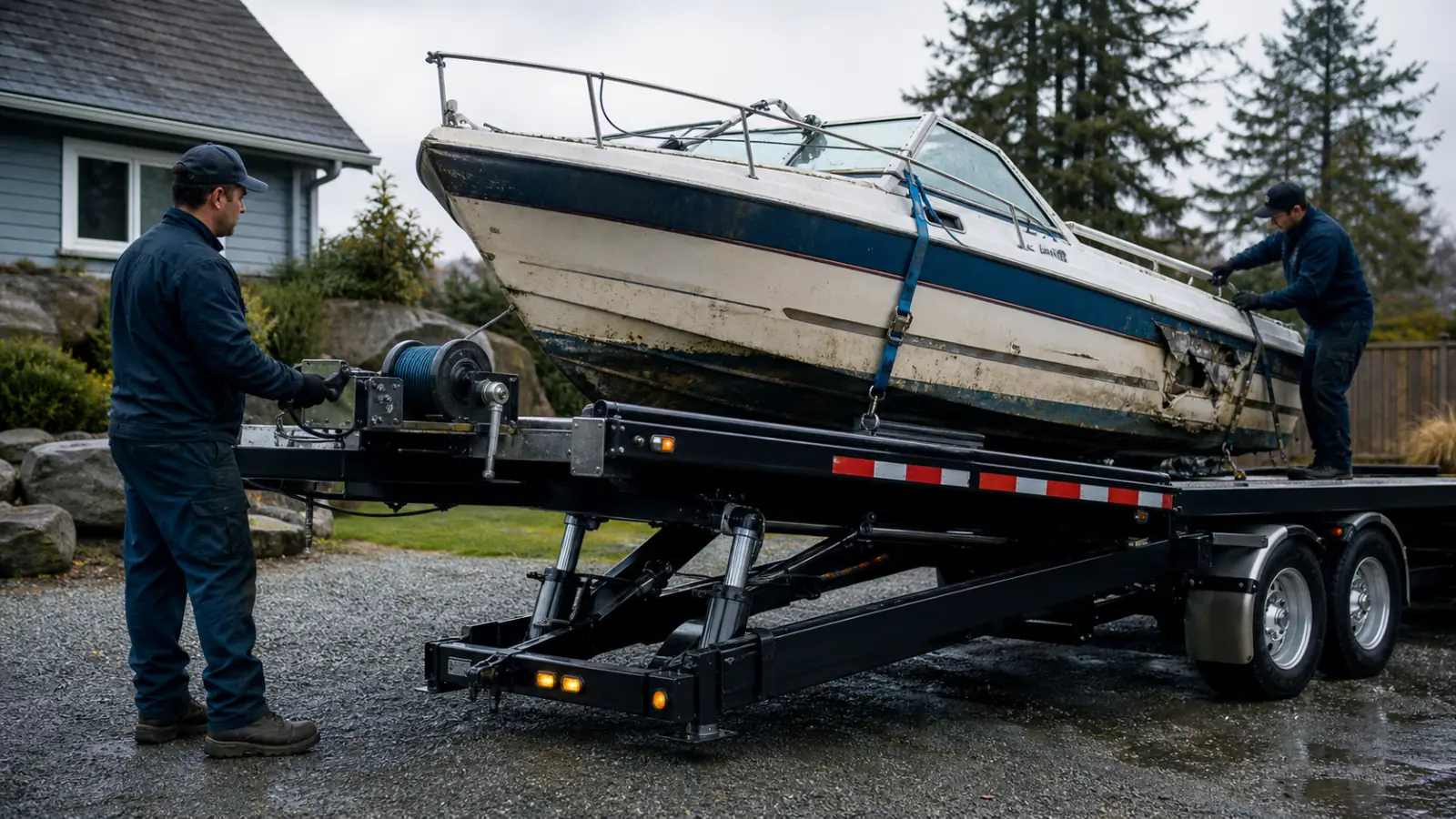
When Perry Hall Residents Call Us

Unused vessels in Perry Hall face severe degradation from regional weather patterns. Constant moisture, freezing winter temperatures, and summer heat break down protective gelcoat layers, rot wooden floor frames, and turn interior upholstery into soaked mold beds. A hull that collects rainwater over several seasons gains thousands of pounds in water weight, compromizing internal bulkheads and making standard transport impossible without first pumping out saturated compartments. A neglected sailboat, heavy pontoon, or small fishing boat stored outdoors quickly becomes a structural liability.
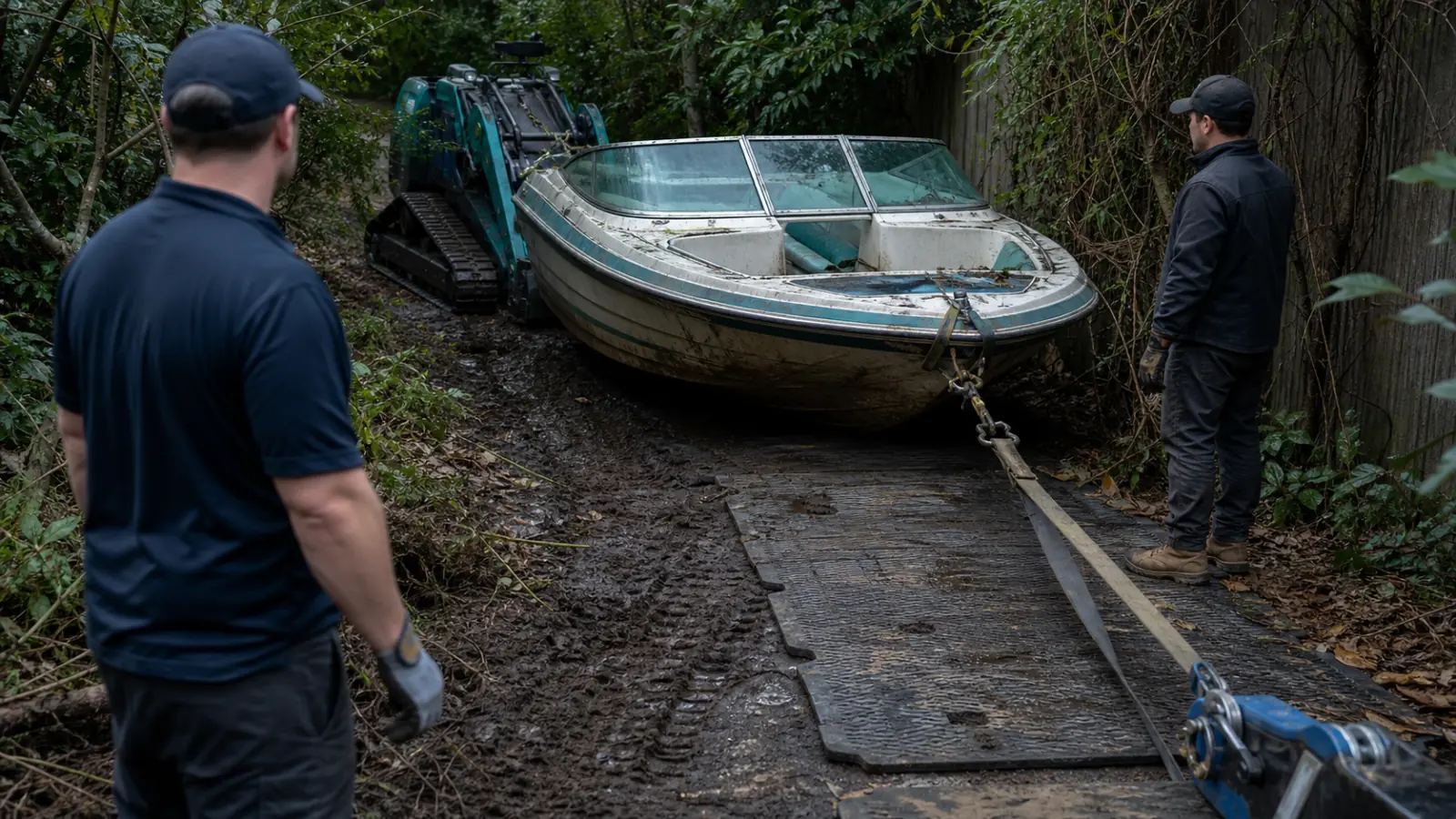
Site layout heavily influences how a crew approaches each job. Narrow residential streets, low-hanging overhead lines, and soft ground near places like White Marsh and Carney present distinct transport challenges. A truck cannot safely back over soft soil without risking severe rutting or getting stuck, requiring specialized winches, block-and-tackle setups, or crane lifts to bring a vessel onto firm ground.

Physical positioning dictates the handling method. A boat mounted on a rotted trailer demands secondary support structures, while a vessel resting on wooden blocks or cradles requires hydraulic jacking before winch lines attach. Hulls resting in water demand careful pump-out procedures before hauling begins near Overlea, Rossville, or Honeygo.
Every Type of Boat We Handle

Situations We Handle

Need Help? We’re Ready.

Contact boat removers directly or request free quotes. We dispatch crews fast.

Our Step-by-Step Process

Assessment

We evaluate the boat’s size, current location, condition, and any environmental or access challenges before we schedule boat removal.

Planning

A detailed plan is built around your vessel — equipment, logistics, timeline, and safety. Services include drainage of oil and fuel before transport.

Execution

Our experienced crew mobilizes to your current location and we tow, haul, or dismantle the vessel using professional marine equipment.

Completion

The vessel is recovered, recycled, or routed to certified boat junkyards for environmentally responsible disposal. The site is left clean.

Equipment & Capabilities

Extracting a vessel whose trailer has rusted through requires specialized recovery equipment. Crews utilize flatbed trailers equipped with high-capacity winches, temporary transport dollies, adjustable cradles, and heavy-duty spreading bars to safely lift and bind compromized hulls. When a craft sits in an enclosed space or behind permanent structures where heavy vehicles cannot enter, the crew must dismantle the hull on site using heavy saws and cutting tools to extract it in manageable sections.

Before any hull is removed, processed, or moved onto public roads, all hazardous materials must be carefully systematically drained and isolated. Fluids such as trapped fuel, engine oil, hydraulic fluid, and contaminated bilge water are pumped into sealed containers. Lead-acid batteries, flare kits, and electronic nav gear are removed to ensure full compliance with environmental safety standards.

Once fluids and electrical components are clear, material separation begins. Metal fittings, aluminum rails, and stainless hardware are prepped for metal recycling, while crushed fiberglass or decayed timber sections are routed toward certified processing facilities or designated landfill sites. Field crews inspect the vessel on site, evaluating hull composition, localized access limits, and structural decay to determine whether whole transport or on-site dismantling provides the safest outcome for the property.

Our boat removal experience covers everything from start to finish  assessment, planning, execution, dismantling, and final cleanup. Marina operators and property owners across Baltimore County trust us to get rid of your junk boat without damage to surrounding property.

FAQ

Boat Removal Questions - Frequently Asked

Common questions from property owners about our junk removal service, dismantling, and marine recovery.

We handle every type of vessel — sailboat, pontoon, fishing boats, jon boats, yachts, and commercial craft. Whether your boat or sailboat floats (or used to), we’ll remove it from any current location.

Yes. Sunken and partially submerged vessel recovery is a core part of our salvage work in Baltimore County. We use lift bags, salvage pumps, and marine cranes to safely raise vessels from underwater.

We respond to inquiries quickly — usually within hours, with same-day service available. For emergency situations, we mobilize as fast as possible. Call us directly for time-sensitive jobs.

No. Every job is handled in-house by our own team and equipment. No middlemen, no handoffs, no surprises.

Cost depends on the boat’s size, current location, condition, and complexity of the job. We provide free assessments and free quotes for every case — contact us and we’ll give you an honest estimate.

Yes. Our boat removal and disposal services include hazardous materials handling, oil and fuel drainage, hull dismantling, and recycling at certified yards — all in compliance with environmental regulations and environmentally responsible standards.

Absolutely. We regularly work in tight marinas, shallow waterways, private docks, backyards, and remote areas. We bring the right gear to reach any current location.

Yes. We frequently work with insurance adjusters on salvage and recovery claims and provide the documentation needed for your claim.

Browse Our Services - Ready to Get Started?

We handle everything from start to finish. Call us now or request a free quote – we’ll dispatch crews and haul your vessel away fast.