
Professional Boat Removal Services in Carney, MD

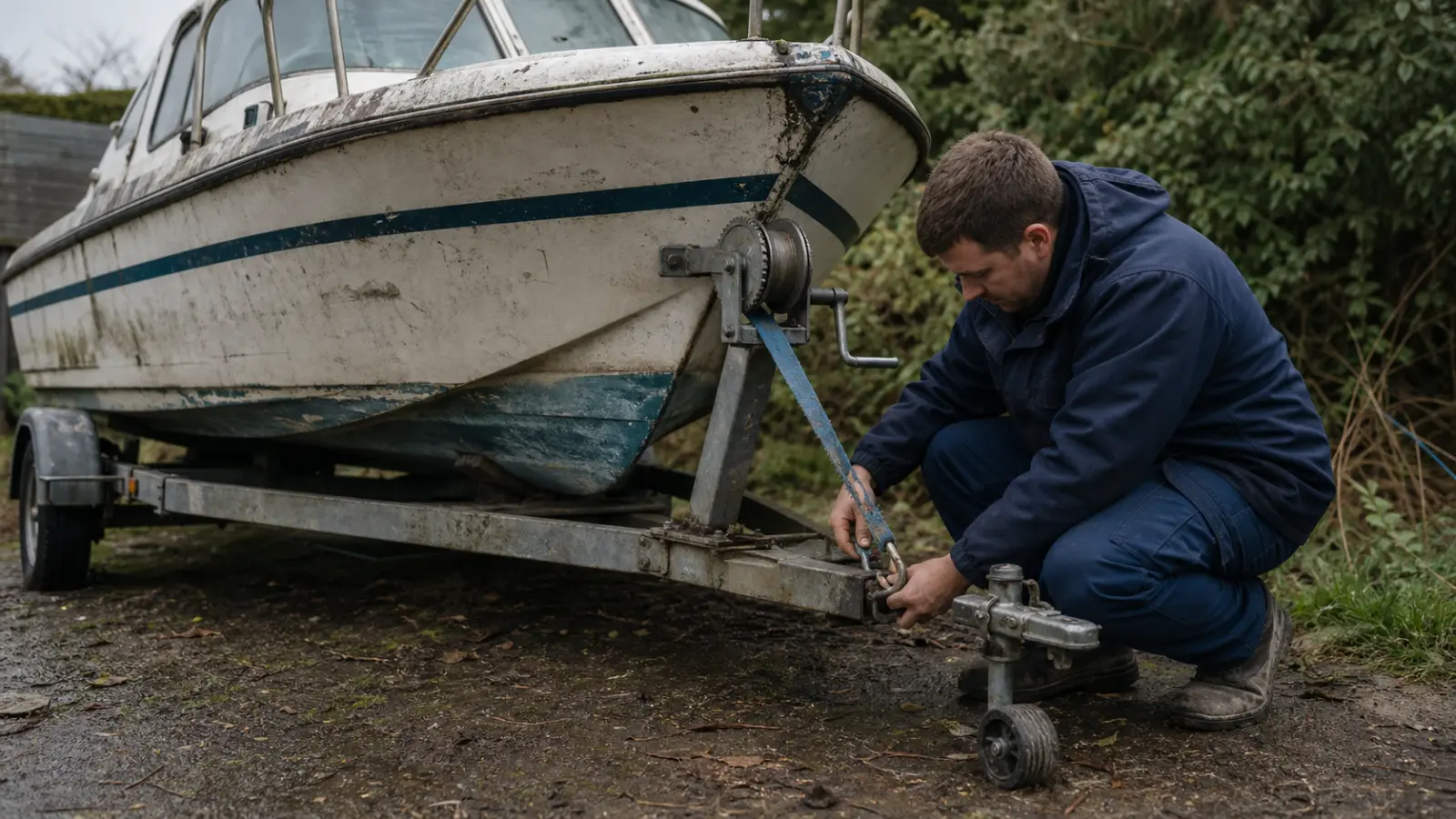
An old boat resting on a trailer behind a garage often stays there long after its last season on the water. Over six rainy seasons, the tires under the steel frame flatten into the soil, leaving a heavy fiberglass hull trapped in the earth. In other cases, a property owner inherits a lot where a cabin cruiser sits untouched, or an outboard motor seizes up completely when a mechanical rebuild costs far more than the entire craft is worth. A slip owner might also receive a notice regarding an unpaid slip where a vessel sits tethered and unattended. When these situations arise, getting the vessel cleared off the land becomes an urgent property issue.

Is there boat removal near me in Carney, MD? Boat Removal Experts provides complete vessel clearing and transport throughout Carney, MD to solve these exact property challenges.

When you hire a crew to transport a junk boat away from your property, paperwork matters just as much as heavy equipment. While Boat Removal Experts does not always transfer the title of every vessel pulled, our company always issues a formal release of liability to the owner. Some haulers take an old boat away without signing any documentation, which leaves the original owner legally responsible if that hull is dumped or neglected elsewhere. Verifying liability releases before anyone hitches up the trailer protects you long after the vessel leaves your driveway.

Moving a vessel is vastly more complicated than pulling an ordinary vehicle. Keels, custom cradles, and wide beams frequently demand more clearance than a standard driveway gate offers. Furthermore, locked or rotted trailer components can prevent wheels from turning, while heavy hulls resting on soft lawns threaten to sink secondary transport trucks straight into the mud.

Call (855) 765-7931 to start.

Send photos through the contact form.

What Is Boat Removal and When You Need It

Professional boat disposal involves far more than hooking a winch to a trailer and driving down the road. Complete boat removal includes evaluating structural integrity, clearing out peripheral marine equipment, managing complex logistics, and extracting an abandoned boat or broken vessel safely without causing damage to surrounding structures, lawns, or paved paths. Whether a vessel is parked deep on a residential lot or tied to a dock, extracting it requires specialized tools and careful planning.
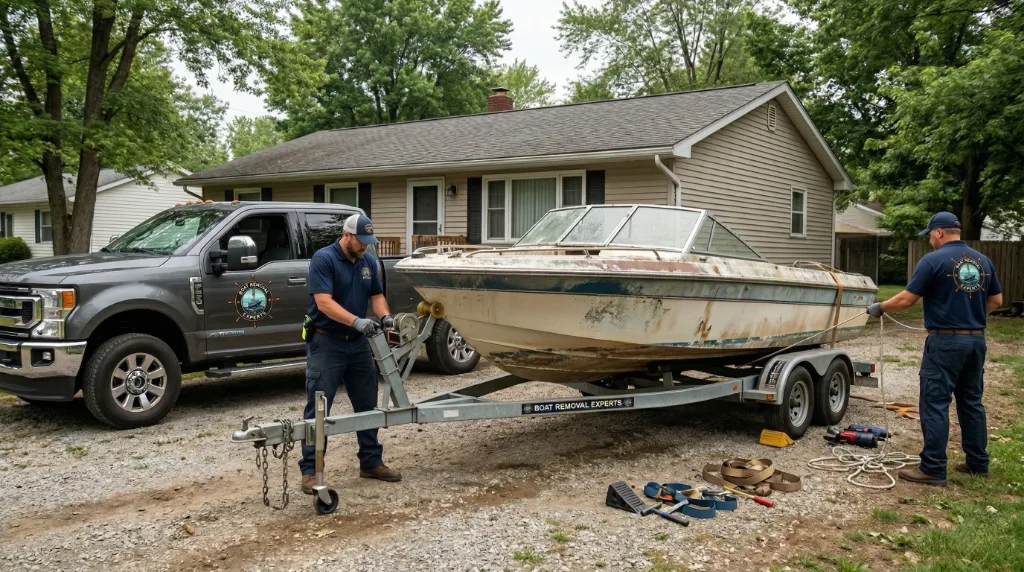
Paperwork issues heavily dictate how an extraction proceeds. When an owner possesses a clean title, transferring or clearing the vessel remains straightforward. However, when property owners inherit a derelict vessel through a land purchase, or when original registration papers are completely lost over time, alternative documentation paths must be established. Having an abandoned boat left on private property or sitting in a long-unpaid slip creates distinct legal responsibilities. The presence or absence of ownership paperwork directly affects which transport permits are required and how final processing is handled.

Physical access conditions also shape the overall scope of work. A vessel sitting intact on a functional rolling trailer requires a totally different extraction strategy than a cracked hull buried in brush or resting directly on wooden blocks. Each situation demands tailored extraction methods based on access, physical state, and legal status.
When Carney Residents Call Us

Boats exposed to regional seasonal weather experience rapid decline when left outdoors. Continuous rainfall fills open cockpits, accelerating floor rot and soaking interior foam core structures until thousands of pounds of hidden water weight accumulate inside the hull. Harsh winter freeze cycles expand trapped moisture, cracking fiberglass gelcoat, destroying transoms, and breaking down wooden floor frames. Meanwhile, intense summer humidity ruins upholstery, fosters deep mold growth, and corrodes exposed electrical wiring. A neglected fishing boat, broad pontoon, or heavy fiberglass sailboat sitting untended quickly turns into a severe structural hazard.
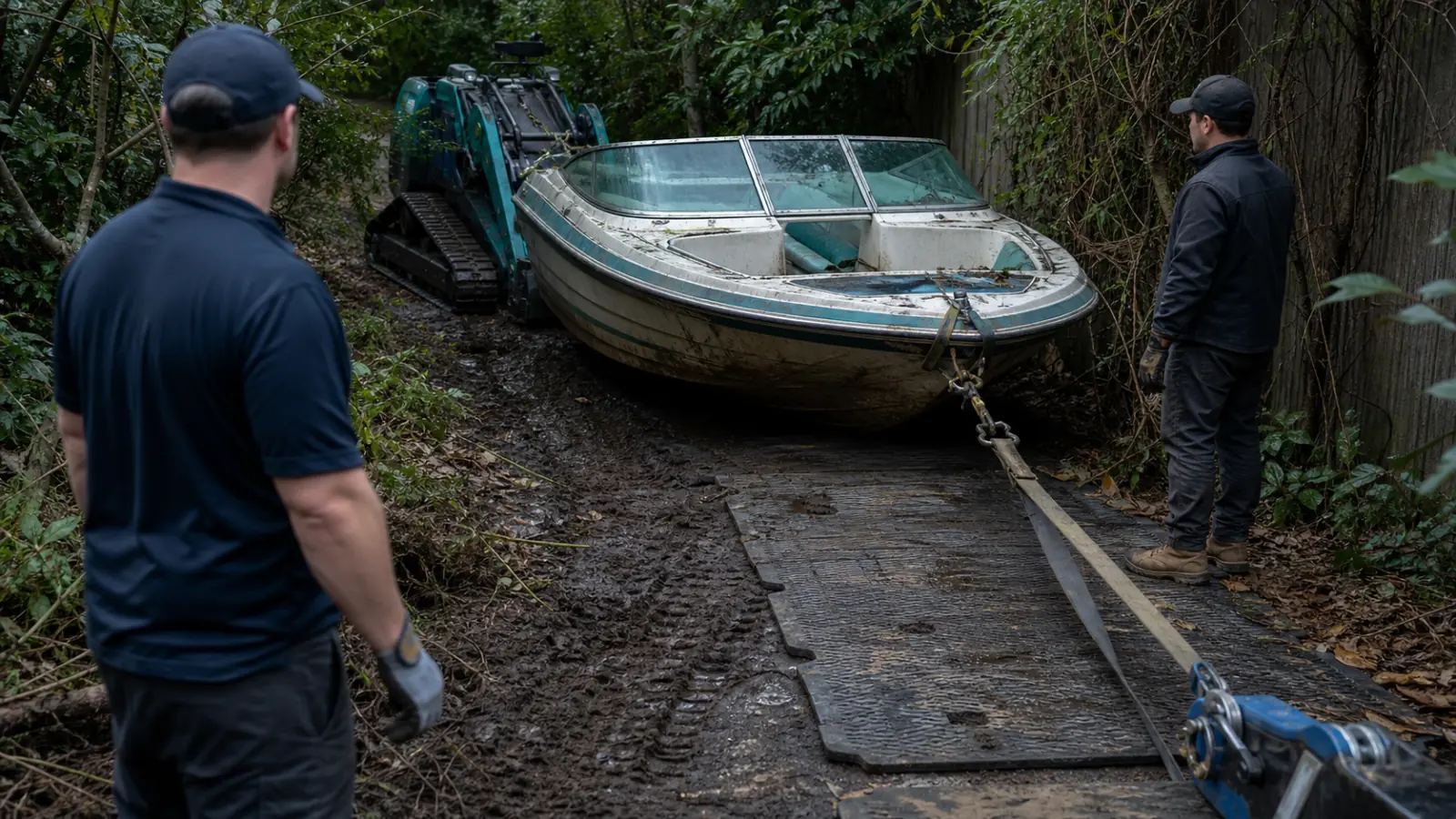
When property owners in Carney decide to clear these liabilities, ground conditions dictate how work gets done. Crews arriving at a job site must assess the physical approach long before attempting to hoist a hull. Tight suburban driveways, low-hanging tree branches, overhead utility lines, and narrow property gates all restrict access for heavy transport equipment. Soil conditions play a massive role as well; a heavy vessel resting on wet turf cannot be easily accessed by standard trucks without risking severe ground rutting or getting equipment stuck. Whether a craft sits on a flat paved apron, rotted wooden blocks, or submerged near the shoreline determines the exact rigging equipment required for safe extraction.
Every Type of Boat We Handle

Situations We Handle

Need Help? We’re Ready.

Contact boat removers directly or request free quotes. We dispatch crews fast.

Our Step-by-Step Process

Assessment

We evaluate the boat’s size, current location, condition, and any environmental or access challenges before we schedule boat removal.

Planning

A detailed plan is built around your vessel — equipment, logistics, timeline, and safety. Services include drainage of oil and fuel before transport.

Execution

Our experienced crew mobilizes to your current location and we tow, haul, or dismantle the vessel using professional marine equipment.

Completion

The vessel is recovered, recycled, or routed to certified boat junkyards for environmentally responsible disposal. The site is left clean.

Equipment & Capabilities

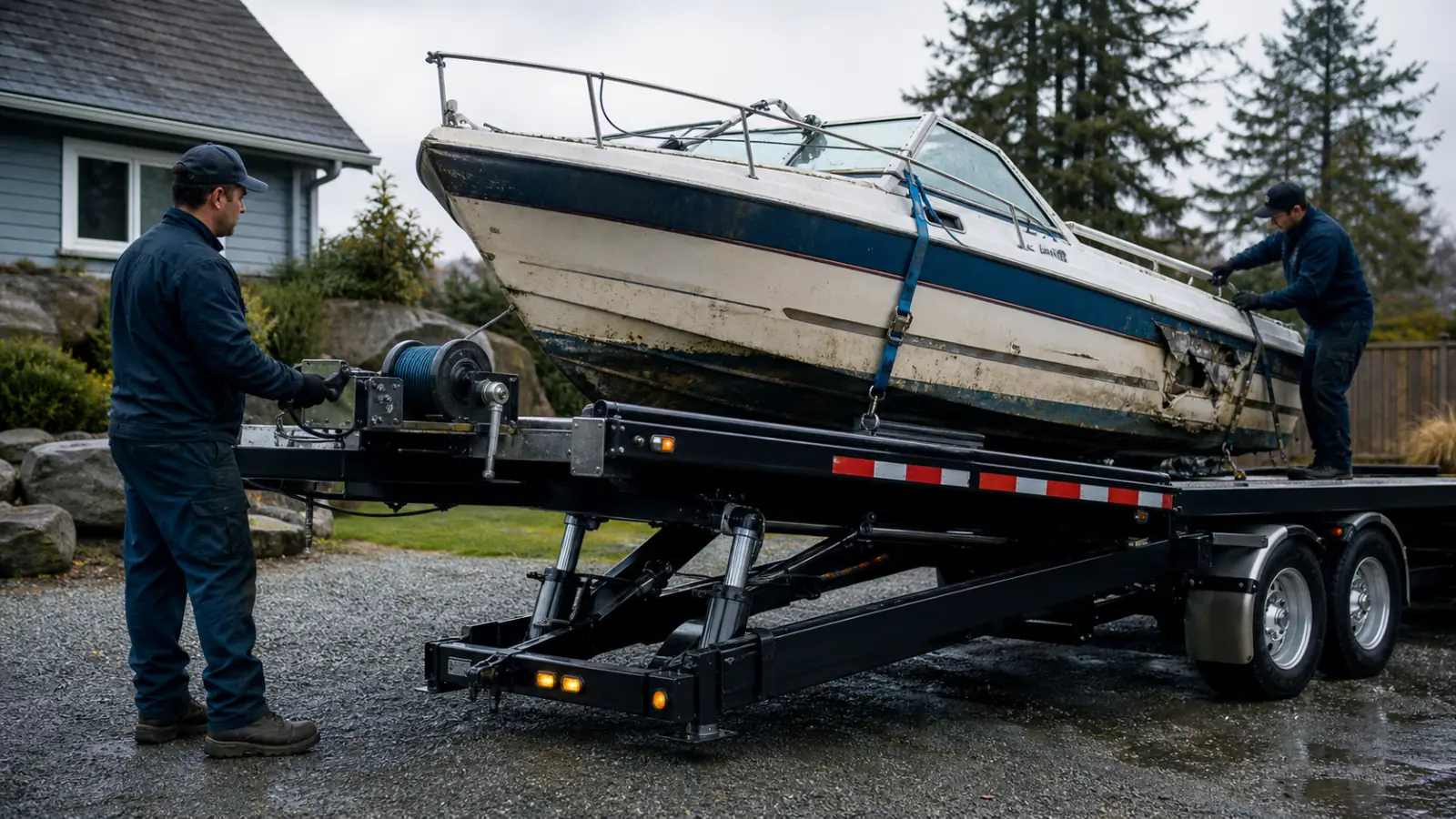
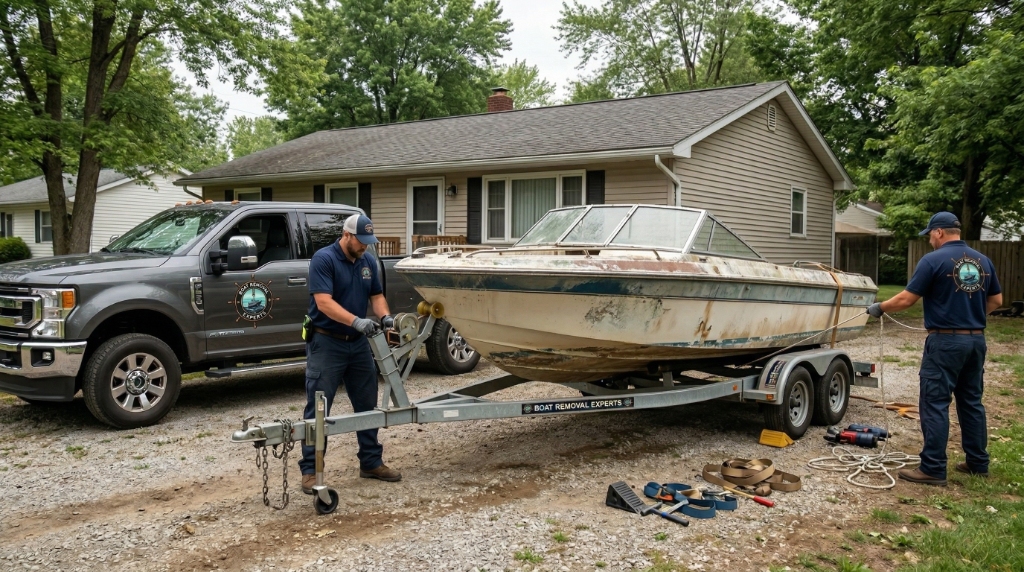
Extracting a compromized hull requires specialized equipment and adaptable tactics. When an old vessel has flat tires, seized wheel bearings, or no trailer at all, crews utilize specialized winches, hydraulic drop-deck trailers, and heavy crane hoists to lift and secure the structure. If a vessel is physically too wide to clear surrounding structures, or if the hull is structurally unseaworthy to transport intact, technicians dismantle the superstructure on site using industrial cutting tools to reduce it into manageable segments.

Before any hull cutting or transport takes place, fluids and hazardous materials must be systematically cleared. Crew members strip out remaining fuel from tanks, drain crankcase oil, remove heavy lead-acid marine batteries, and disconnect electronics or mercury switches. Managing hazardous materials prevents environmental contamination on your property during the extraction process.

Once fluids are contained and the vessel is loaded, the material destination depends entirely on what the crew discovers during physical inspection. Usable metal fittings, stainless steel rails, aluminum frames, and lead keels are separated for metal recycling. Remaining fiberglass, rotted wood, and degraded composite materials are transported to licensed containment facilities. Every extraction plan is custom-built around the physical condition of the vessel and the layout of the property.

Our boat removal experience covers everything from start to finish  assessment, planning, execution, dismantling, and final cleanup. Marina operators and property owners across Baltimore County trust us to get rid of your junk boat without damage to surrounding property.

FAQ

Boat Removal Questions - Frequently Asked

Common questions from property owners about our junk removal service, dismantling, and marine recovery.

We handle every type of vessel — sailboat, pontoon, fishing boats, jon boats, yachts, and commercial craft. Whether your boat or sailboat floats (or used to), we’ll remove it from any current location.

Yes. Sunken and partially submerged vessel recovery is a core part of our salvage work in Baltimore County. We use lift bags, salvage pumps, and marine cranes to safely raise vessels from underwater.

We respond to inquiries quickly — usually within hours, with same-day service available. For emergency situations, we mobilize as fast as possible. Call us directly for time-sensitive jobs.

No. Every job is handled in-house by our own team and equipment. No middlemen, no handoffs, no surprises.

Cost depends on the boat’s size, current location, condition, and complexity of the job. We provide free assessments and free quotes for every case — contact us and we’ll give you an honest estimate.

Yes. Our boat removal and disposal services include hazardous materials handling, oil and fuel drainage, hull dismantling, and recycling at certified yards — all in compliance with environmental regulations and environmentally responsible standards.

Absolutely. We regularly work in tight marinas, shallow waterways, private docks, backyards, and remote areas. We bring the right gear to reach any current location.

Yes. We frequently work with insurance adjusters on salvage and recovery claims and provide the documentation needed for your claim.

Browse Our Services - Ready to Get Started?

We handle everything from start to finish. Call us now or request a free quote – we’ll dispatch crews and haul your vessel away fast.