
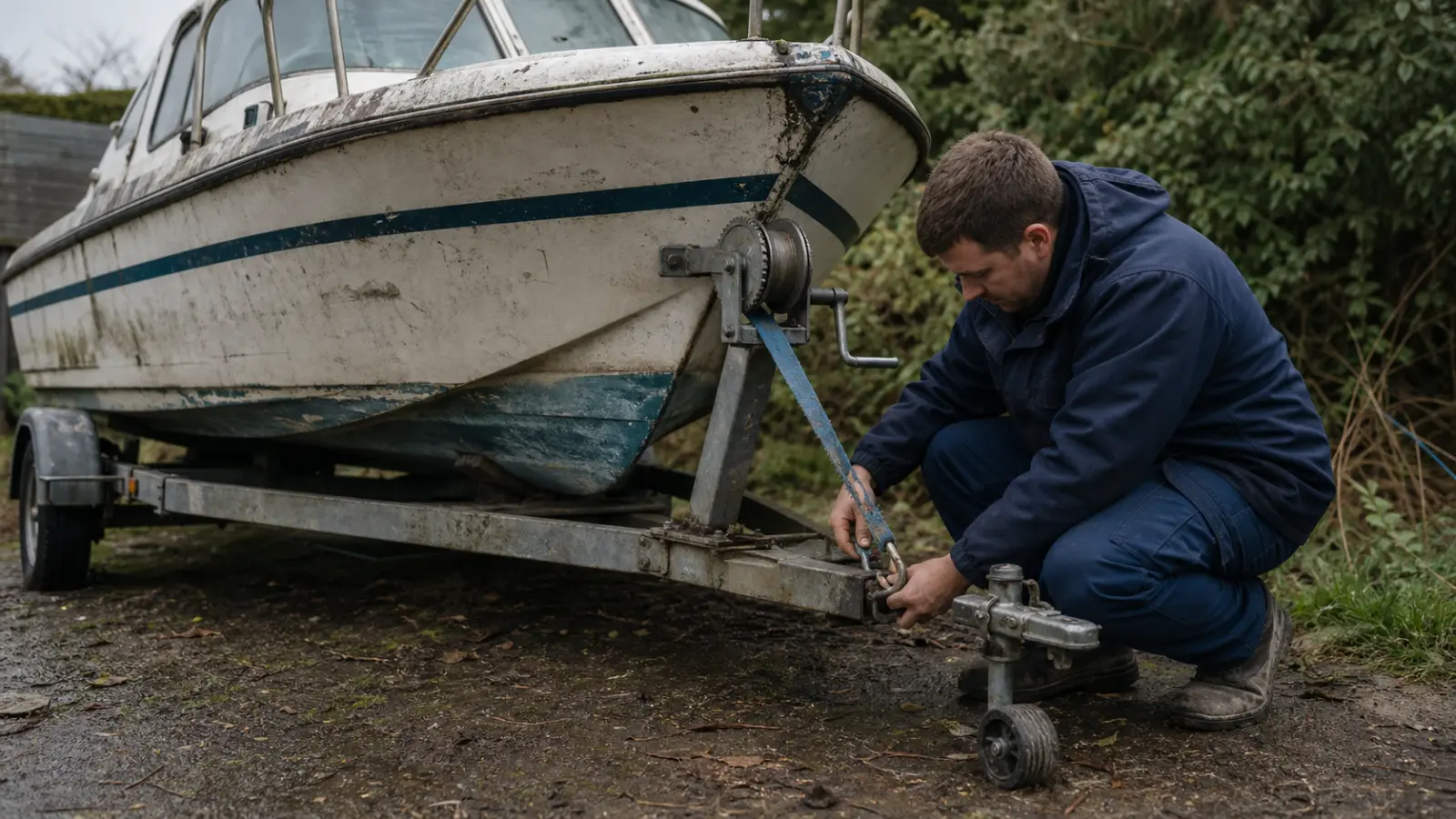
Professional Boat Removal Services in Portland, ME

The hull has sat on a trailer behind the garage for six seasons in Portland, ME, and the tires have flattened completely into the damp dirt. Down at the waterfront, a marina clerk just sent a final notice regarding an unpaid slip that is racking up storage fees. Perhaps a residential property was recently purchased in South Portland with an unuseable cabin cruiser sitting square in the middle of the back yard, or an old outboard motor seized up entirely and a mechanical rebuild costs vastly more than the vessel itself is worth. When a junk boat becomes an eyesore, a liability, or a physical barrier to using your own land, leaving the old boat in place only invites further structural decay and unwanted town code notices.

Is there professional boat removal near me in Portland, ME? Boat Removal Experts provides complete hauling, rigging, and transport solutions designed specifically to clean up residential lots, private yards, and commercial waterfront facilities safely and cleanly.

When you hire our team, we provide a complete release of liability for the vessel. While our company does not always take over the registered title, issuing a formal liability release protects you from future claims. Some haulers simply tow a vessel away without generating formal paperwork, leaving the legal liability attached to the original owner indefinitely if that vessel is later abandoned, which makes official documentation essential.

Moving a vessel is rarely as simple as hooking up a hitch. A trailer frame may be entirely rotted through, a heavy keel might require specialized cribbing, or the beam might be wider than the yard access gate. Furthermore, the overall hull weight often sits on soft ground where standard vehicles sink instantly.

Call 207-492-7205 to start.

Send photos through the contact form.

What Is Boat Removal and When You Need It

Professional boat disposal covers far more than simply hooking a hitch to a bumper and driving away down the road. When an abandoned boat sits on private property or within a commercial slip, clearing the site requires specialized rigging, flatbed transport, and heavy winching equipment. A derelict vessel often lacks structural integrity, meaning the fiberglass, back panel, or floorboards could buckle if pulled incorrectly. When an owner possesses a clear title and a matching HIN, the processing moves forward smoothly. However, when paperwork is missing, lost over decades, or inherited alongside a newly purchased parcel of land in Cumberland County, specific municipal notifications or property lien clearances must occur before the physical haul begins.
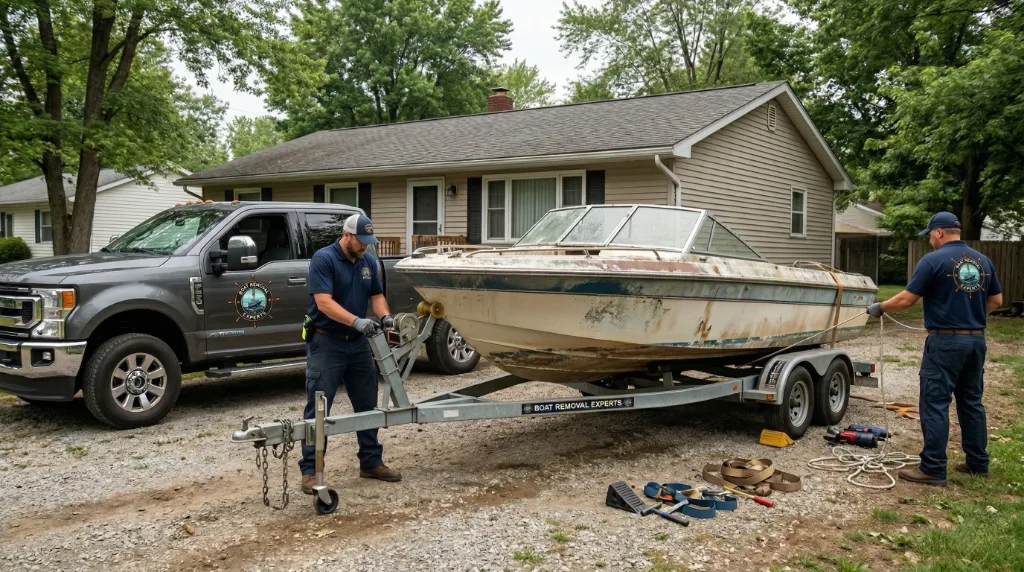
Vessels left stranded on private land or within unpaid marina slips create immediate financial and legal complications. What affects the ultimate removal strategy is the vessel's physical condition, whether the hull is afloat or grounded, and what documentation exists to establish legal possession. Whether dealing with a neglected runabout tucked behind a barn in Falmouth or an abandoned boat stranded on a cradled frame, proper equipment ensures the vessel is extracted without damaging the surrounding grounds, trees, or nearby structures. Proper site management guarantees that all debris, hardware, and broken fittings are cleared entirely from the property during the haul.
When Portland Residents Call Us

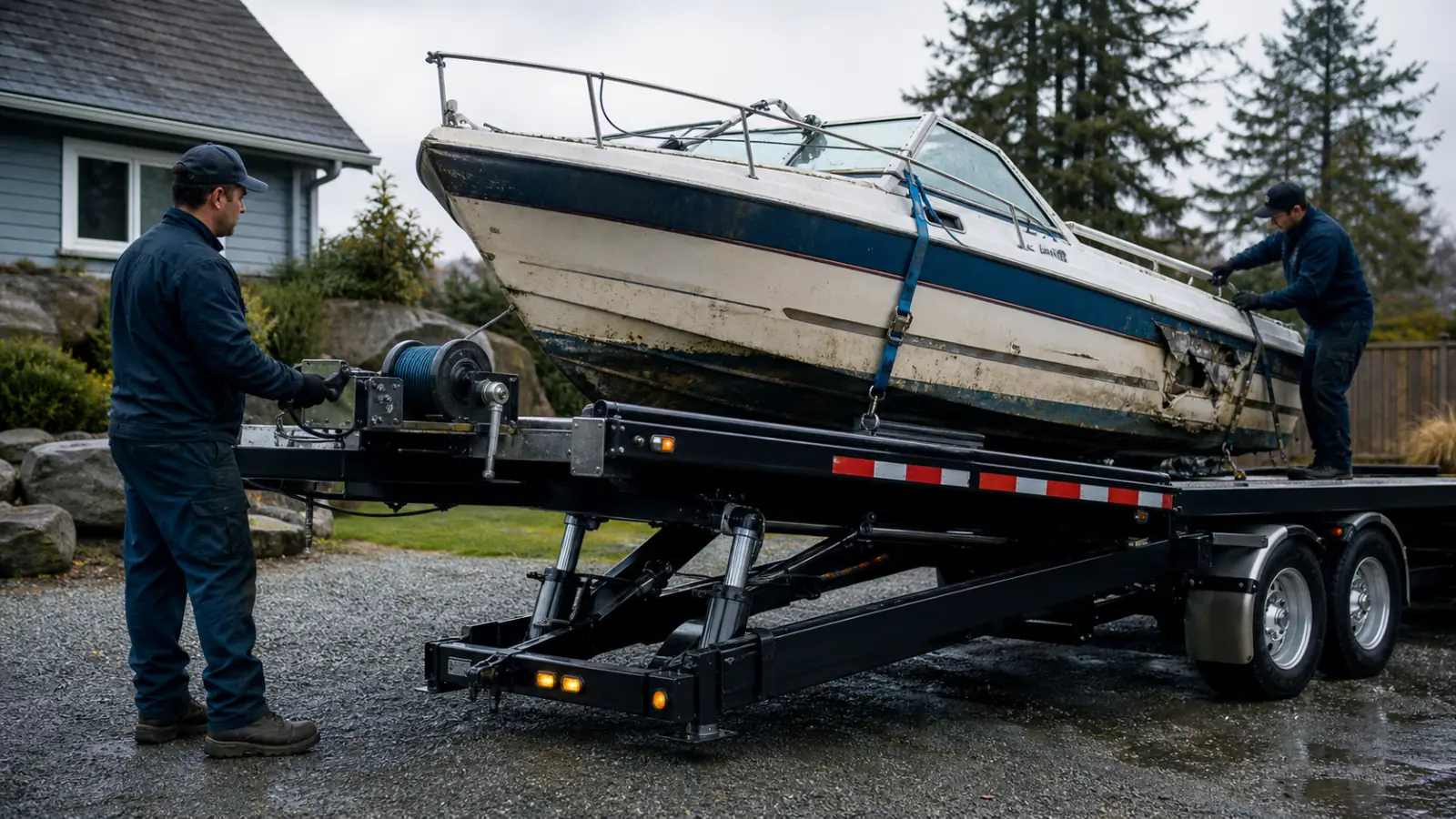
Coastal weather conditions take a heavy toll on hulls left sitting out in the open air around Falmouth Foreside and Oak Hill. Rainwater collects inside open cockpits, freezing and expanding through northern winters to crack internal floor frames, rot wooden decks, and delaminate gelcoat surfaces. Upholstery holds moisture and sprouts thick mold, while heavy rainwater accumulation doubles the overall weight of the vessel, making a neglected sailboat or pontoon far heavier than its original factory specifications. When a fiberglass hull or heavy timber fishing boat sits waterlogged for years, extracting it requires careful weight distribution and industrial winching so the structure does not split apart during transport.
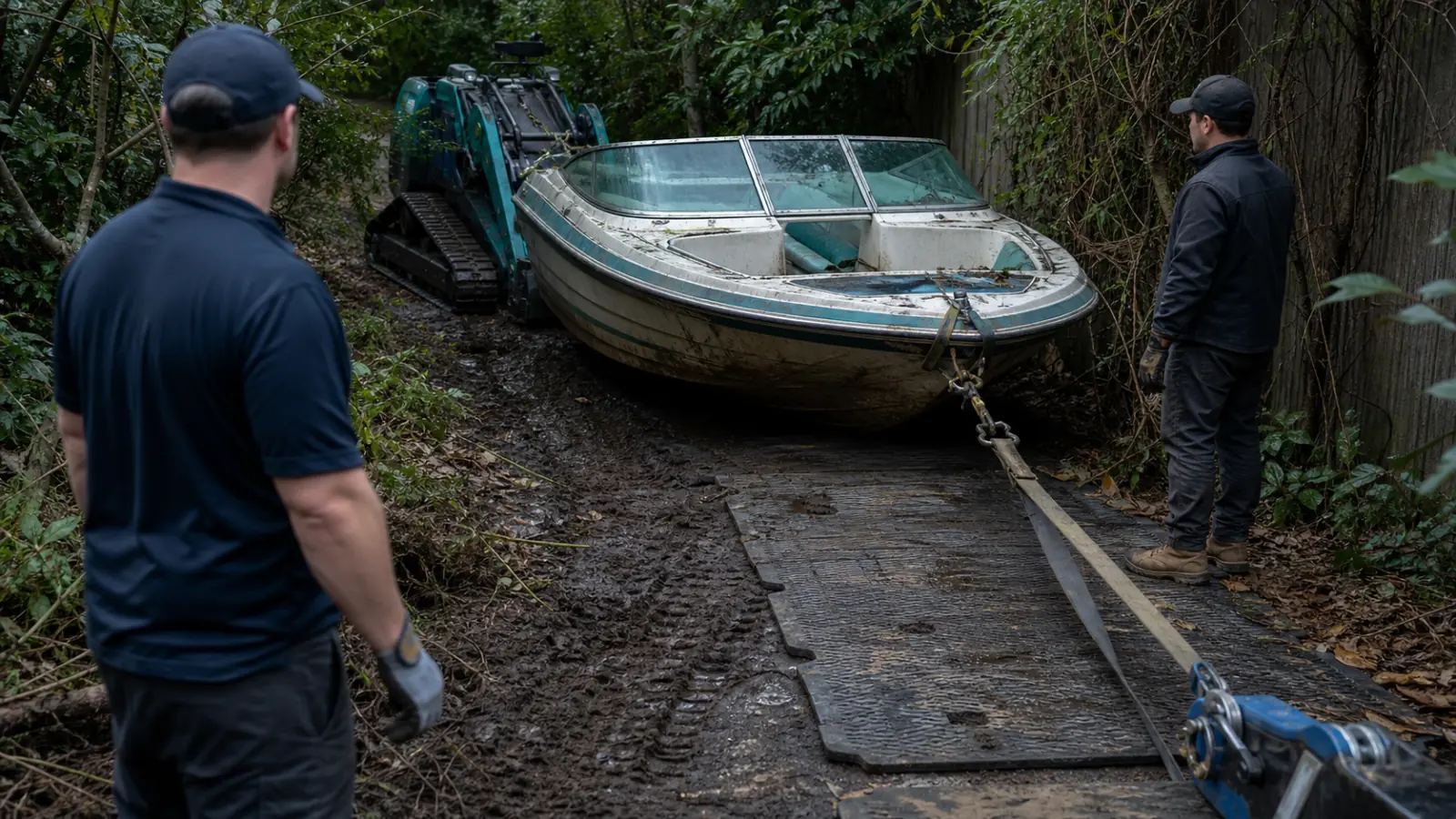
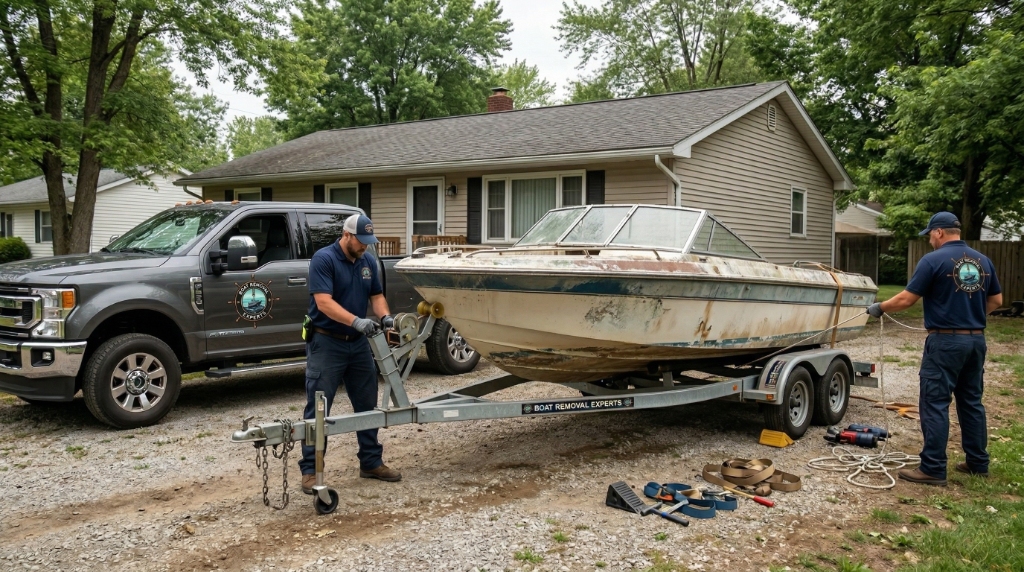
Site access heavily dictates how our crew approaches a job in Littlejohn Island. Narrow gravel driveways, low overhead utility lines, and tight residential fence gates prevent standard transport trucks from backing up close to the vessel. The ground surface beneath the hull also changes the operational plan. A vessel resting on solid concrete or a functional dual-axle trailer presents a straightforward haul. Conversely, a vessel resting directly on damp soil, sunken blocks, or floating in a shallow slip requires specialized blocking, heavy straps, and wide-track equipment to pull the hull out safely without tearing up the surrounding turf.
Every Type of Boat We Handle

Situations We Handle

Need Help? We’re Ready.

Contact boat removers directly or request free quotes. We dispatch crews fast.

Our Step-by-Step Process

Assessment

We evaluate the boat’s size, current location, condition, and any environmental or access challenges before we schedule boat removal.

Planning

A detailed plan is built around your vessel — equipment, logistics, timeline, and safety. Services include drainage of oil and fuel before transport.

Execution

Our experienced crew mobilizes to your current location and we tow, haul, or dismantle the vessel using professional marine equipment.

Completion

The vessel is recovered, recycled, or routed to certified boat junkyards for environmentally responsible disposal. The site is left clean.

Equipment & Capabilities

When an old trailer has rotted away or lost its axles entirely, the crew utilizes heavy hydraulic jacks, spreading beams, and industrial winches to transfer the hull onto a specialized flatbed or tilt-tray rig. If a large vessel sits in a tight backyard where physical access limits heavy vehicle entry, the team can safely dismantle the hull on site using specialized cutting tools, breaking the structure down into manageable sections. Before any hull transport or cutting begins, all hazardous materials are strictly mitigated. The crew systematically removes remaining fuel, motor oil, bilge liquids, marine batteries, and electronic components so no toxic substances leak onto the ground or during highway transit.

Where the recovered materials go depends entirely on what the crew discovers upon physical inspection. The vessel's primary construction material dictates the secondary processing stage. Heavy metal fittings, stainless steel rails, aluminum pontoon tubes, and bronze propellers are sorted directly for metal recycling. Fiberglass hull sections, degraded foam flotation panels, and ruined interior composites that cannot be reclaimed are processed for ultimate containment at a permitted disposal facility. The exact balance between material recovery and terminal landfill placement is determined once the crew evaluates the vessel's structural integrity, contamination level, and overall mechanical state on site.

Our boat removal experience covers everything from start to finish  assessment, planning, execution, dismantling, and final cleanup. Marina operators and property owners across Cumberland County trust us to get rid of your junk boat without damage to surrounding property.

FAQ

Boat Removal Questions - Frequently Asked

Common questions from property owners about our junk removal service, dismantling, and marine recovery.

We handle every type of vessel — sailboat, pontoon, fishing boats, jon boats, yachts, and commercial craft. Whether your boat or sailboat floats (or used to), we’ll remove it from any current location.

Yes. Sunken and partially submerged vessel recovery is a core part of our salvage work in Cumberland County. We use lift bags, salvage pumps, and marine cranes to safely raise vessels from underwater.

We respond to inquiries quickly — usually within hours, with same-day service available. For emergency situations, we mobilize as fast as possible. Call us directly for time-sensitive jobs.

No. Every job is handled in-house by our own team and equipment. No middlemen, no handoffs, no surprises.

Cost depends on the boat’s size, current location, condition, and complexity of the job. We provide free assessments and free quotes for every case — contact us and we’ll give you an honest estimate.

Yes. Our boat removal and disposal services include hazardous materials handling, oil and fuel drainage, hull dismantling, and recycling at certified yards — all in compliance with environmental regulations and environmentally responsible standards.

Absolutely. We regularly work in tight marinas, shallow waterways, private docks, backyards, and remote areas. We bring the right gear to reach any current location.

Yes. We frequently work with insurance adjusters on salvage and recovery claims and provide the documentation needed for your claim.

Browse Our Services - Ready to Get Started?

We handle everything from start to finish. Call us now or request a free quote – we’ll dispatch crews and haul your vessel away fast.