
Professional Boat Removal Services in Sanford, ME

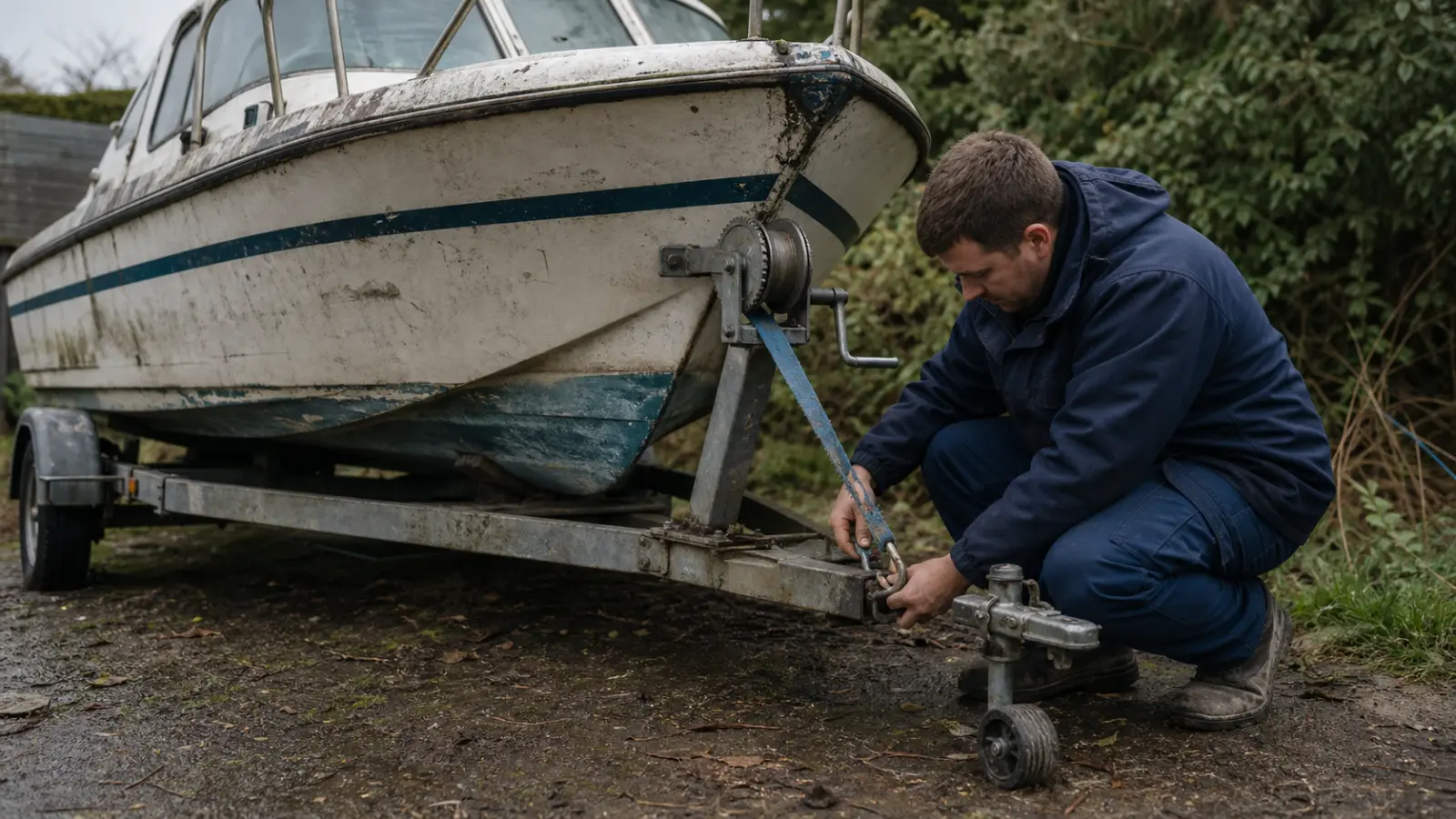
The hull has sat on a rusted trailer behind the garage for six seasons, and the tires have long since flattened into the dirt. A boat left in the yard steadily collects leaves, pine needles, and standing water until moving it feels like an overwhelming task. In other situations, a marina sends a formal notice about an unpaid slip, a property in Sanford, Maine is sold with a neglected cabin cruiser left behind on the lot, or an outboard engine seizes where the rebuild costs far exceed what the vessel is actually worth. When an old boat becomes an unwanted burden, clearing it off the land requires specialized equipment and proper planning.

Is there boat removal near me in Sanford, ME? Boat Removal Experts manages the entire process of hauling away unwanted vessels directly from residential yards, commercial properties, and waterfront facilities.

A primary concern for any owner is long-term liability after a vessel leaves the property. While Boat Removal Experts does not always transfer the title, we always issue a formal release of liability. Some outfits haul a junk boat away with no documentation whatsoever, leaving the registered owner legally exposed if the vessel is later abandoned on public land. Securing official paperwork is a critical step that should never be overlooked when arranging for an old boat to be taken away.

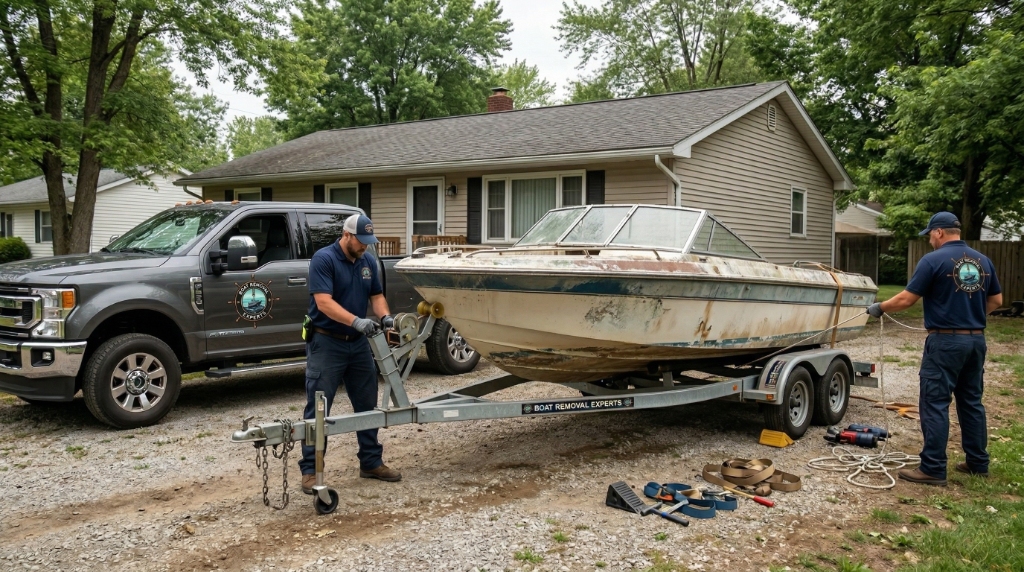
Extracting a vessel is rarely simple. A trailer with locked bearings will not roll, and narrow gates or low overhead branches frequently block the path. If a heavy keel or cradle sits on soft ground, a standard truck cannot cross without risking deep ruts or getting stuck, requiring specialized rigging to winches the weight out safely.

Call 207-492-7205 to start.

Send photos through the contact form.

What Is Boat Removal and When You Need It

Professional boat disposal involves far more than simply hooking a winch line to an old trailer and towing a vessel down the road. Comprehensive boat removal addresses structural containment, site protection, heavy equipment loading, and the legal documentation required to clear a vessel from land or water. When an abandoned boat sits on private land in York County or remains tied up in an unpaid slip, taking action requires navigating both physical haul-out logistics and proper property clearances.
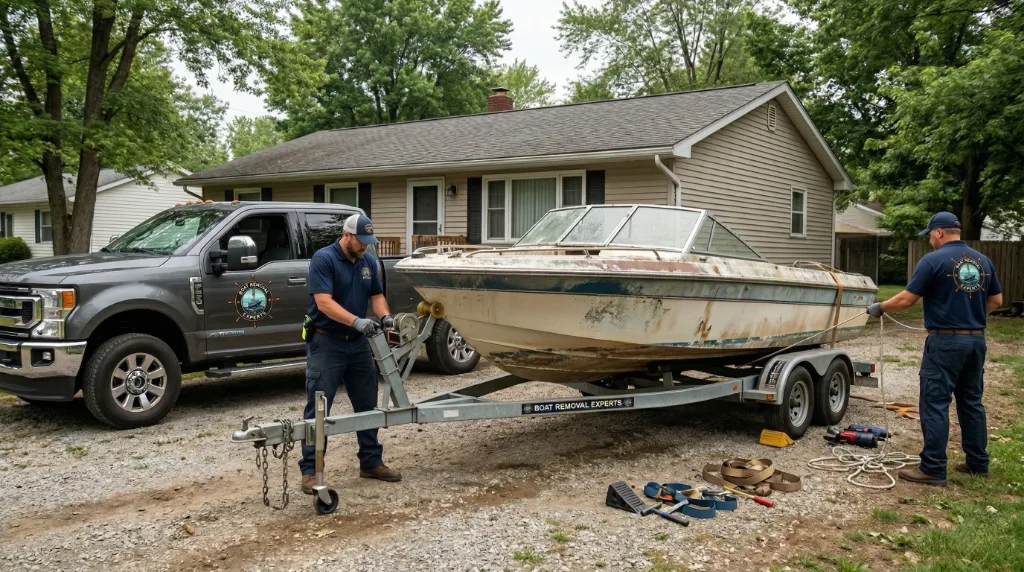
The overall process changes depending on the paperwork status of the vessel. When an owner possesses a clean title, clearing the record is straightforward. However, if the paperwork has been lost over decades or an abandoned boat came with a newly purchased property, additional verification steps are required before transport. If a vessel was left on someone else's property, specific notification rules apply before crew members can legally enter and load the hull.

Physical access drastically dictates how derelict haul-outs are handled. Vessels that have settled deep into mud, lost structural integrity, or sat filled with rainwater present unique loading challenges. Crew members must evaluate whether a vessel can withstand transport on a secondary trailer or if it must be secured on a flatbed. Addressing these mechanical and structural factors early prevents property damage and ensures the vessel is cleared safely.
When Sanford Residents Call Us

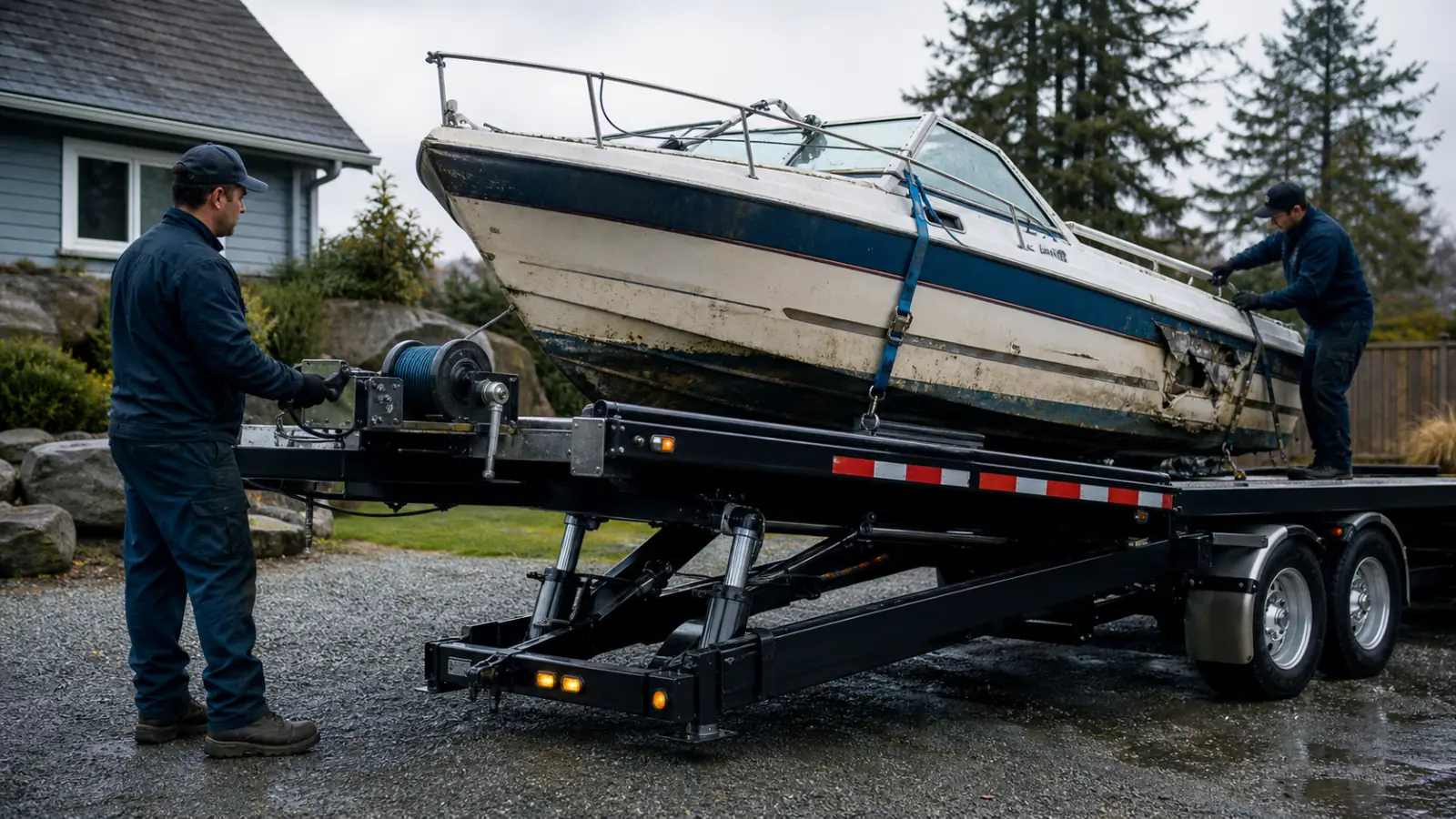
Harsh winter weather in Sanford takes a heavy toll on vessels that sit outside uncovered. Freezing temperatures cause trapped rainwater to expand inside small cracks, quickly delaminating the fiberglass gelcoat and rotting internal wooden floor frames. Over several seasons, upholstery degrades, decks soften, and a neglected hull fills with hundreds of pounds of hidden water weight. When a fishing boat, heavy pontoon, or deep-keel sailboat absorbs moisture year after year, the structural frame weakens, making traditional trailering impossible and requiring customized lifting strategies.
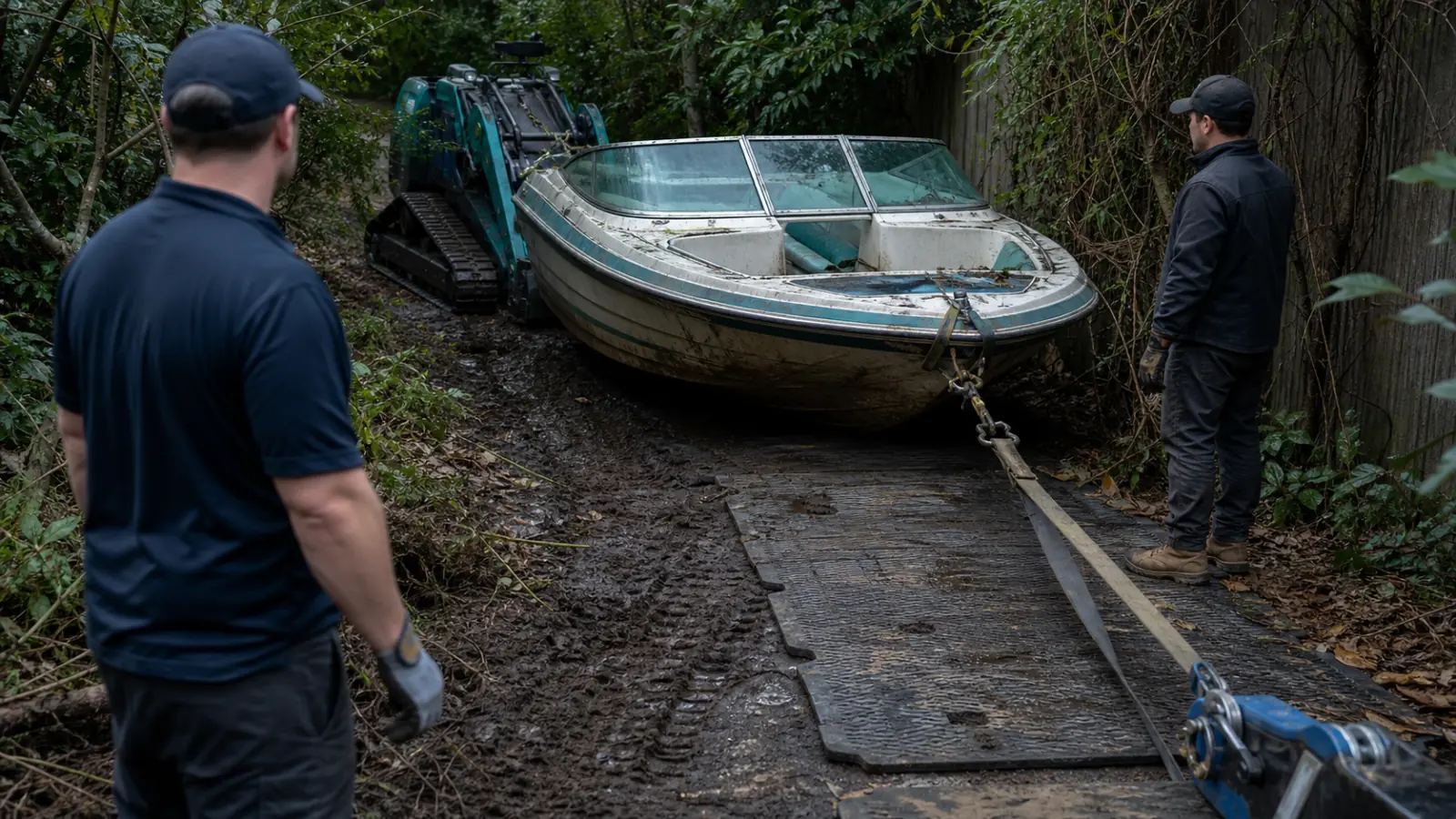
Local topography and property layouts in Sanford, Maine also dictate how a crew approaches each site project. Narrow residential driveways, tight turns near structures, overhead utility lines, and soft lawn surfaces dictate whether heavy transport equipment can reach the vessel. A sailboat resting on high wooden blocks in a backyard requires a completely different rig than a pontoon sitting on a flat trailer or a fishing boat moored near the water. Crews must carefully evaluate the ground firmness between Alfred and Kennebunk to prevent haul trucks from sinking into soft soil. Whether maneuvering past fences near Berwick or clearing trees near North Berwick and West Kennebunk, physical clearance determines the exact method chosen for haul-out.
Every Type of Boat We Handle

Situations We Handle

Need Help? We’re Ready.

Contact boat removers directly or request free quotes. We dispatch crews fast.

Our Step-by-Step Process

Assessment

We evaluate the boat’s size, current location, condition, and any environmental or access challenges before we schedule boat removal.

Planning

A detailed plan is built around your vessel — equipment, logistics, timeline, and safety. Services include drainage of oil and fuel before transport.

Execution

Our experienced crew mobilizes to your current location and we tow, haul, or dismantle the vessel using professional marine equipment.

Completion

The vessel is recovered, recycled, or routed to certified boat junkyards for environmentally responsible disposal. The site is left clean.

Equipment & Capabilities

When crew members arrive on site, they evaluate the vessel's structural condition, weight distribution, and surrounding obstacles to select the correct extraction tools. If a trailer's axle is snapped or its wheels are frozen solid, heavy-duty winches, hydraulic slide-axle trailers, or mobile crane lifts are used to raise and secure the vessel. When a large hull is squeezed between structures or locked behind immovable barriers, the crew may dismantle the deck and superstructure on site to extract the vessel safely without damaging surrounding real estate.

Before any transport or structural cutting occurs, all hazardous materials are systematically removed from the vessel. Fuel tanks are drained, motor oil is collected, marine batteries are disconnected, and onboard electronics are safely stripped to comply with environmental regulations. Eliminating fluids and electrical components first protects the surrounding soil and prevents contamination during highway transport.

Once the vessel is loaded and secured, the destination of the materials depends entirely on the hull's composition and condition. Wood, fiberglass, and composite hulls that cannot be salvaged are prepared for targeted sorting. Metal components, including aluminum pontoon tubes, stainless steel rails, lead ballast, and brass fittings, are separated for metal recycling. The final destination of each component is determined strictly by material type, local facility capabilities, and environmental guidelines once the crew completes their initial inspection.

Our boat removal experience covers everything from start to finish  assessment, planning, execution, dismantling, and final cleanup. Marina operators and property owners across York County trust us to get rid of your junk boat without damage to surrounding property.

FAQ

Boat Removal Questions - Frequently Asked

Common questions from property owners about our junk removal service, dismantling, and marine recovery.

We handle every type of vessel — sailboat, pontoon, fishing boats, jon boats, yachts, and commercial craft. Whether your boat or sailboat floats (or used to), we’ll remove it from any current location.

Yes. Sunken and partially submerged vessel recovery is a core part of our salvage work in York County. We use lift bags, salvage pumps, and marine cranes to safely raise vessels from underwater.

We respond to inquiries quickly — usually within hours, with same-day service available. For emergency situations, we mobilize as fast as possible. Call us directly for time-sensitive jobs.

No. Every job is handled in-house by our own team and equipment. No middlemen, no handoffs, no surprises.

Cost depends on the boat’s size, current location, condition, and complexity of the job. We provide free assessments and free quotes for every case — contact us and we’ll give you an honest estimate.

Yes. Our boat removal and disposal services include hazardous materials handling, oil and fuel drainage, hull dismantling, and recycling at certified yards — all in compliance with environmental regulations and environmentally responsible standards.

Absolutely. We regularly work in tight marinas, shallow waterways, private docks, backyards, and remote areas. We bring the right gear to reach any current location.

Yes. We frequently work with insurance adjusters on salvage and recovery claims and provide the documentation needed for your claim.

Browse Our Services - Ready to Get Started?

We handle everything from start to finish. Call us now or request a free quote – we’ll dispatch crews and haul your vessel away fast.